
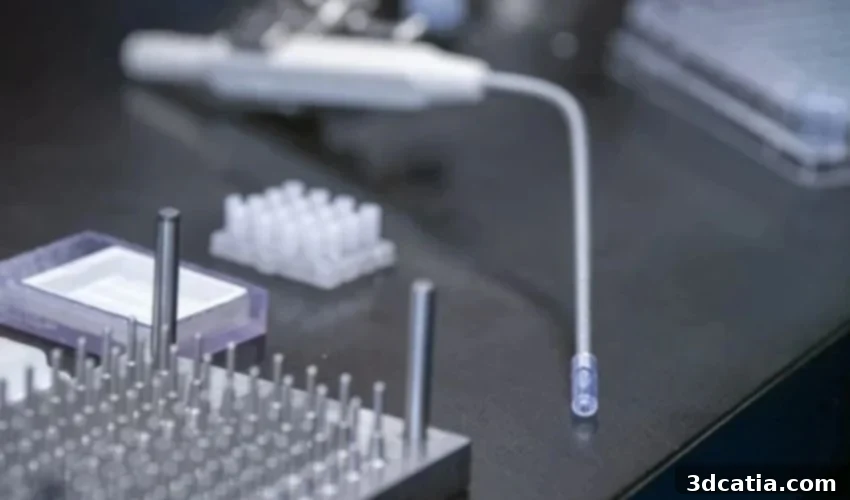
Revolutionizing Glioblastoma Research: The Innovative 3D-Printed Surgical Capsule
Additive manufacturing is increasingly recognized as a game-changing technology in the field of medicine. Its capacity to create personalized, reproducible, and affordable medical devices has propelled advancements in areas like neurosurgery, enabling solutions that were once considered impossible. A prime example of this innovation is the 3D-printed surgical capsule for biopsies, developed and patented by a team of clinical researchers at Kingston Health Sciences Centre (KHSC) and Queen’s University in Canada. This groundbreaking tool holds the promise of transforming the way glioblastoma, a highly aggressive and currently incurable form of brain cancer, is studied and treated.
Glioblastoma presents a unique challenge to researchers due to its heterogeneous nature. The cells within the tumor exhibit significant variations from one region to another, making it difficult for a single biopsy sample to accurately represent the overall state of the diseased tissue. Traditional biopsy methods, which involve taking samples from isolated locations, provide only a fragmented and incomplete picture of the tumor’s behavior. The newly developed 3D-printed capsule addresses this limitation by enabling the collection of multiple tissue samples during surgical procedures. These samples are then directly correlated with MRI images, providing researchers with a more comprehensive and organized understanding of the tumor’s behavior as a whole. This holistic view is crucial for developing effective treatment strategies.
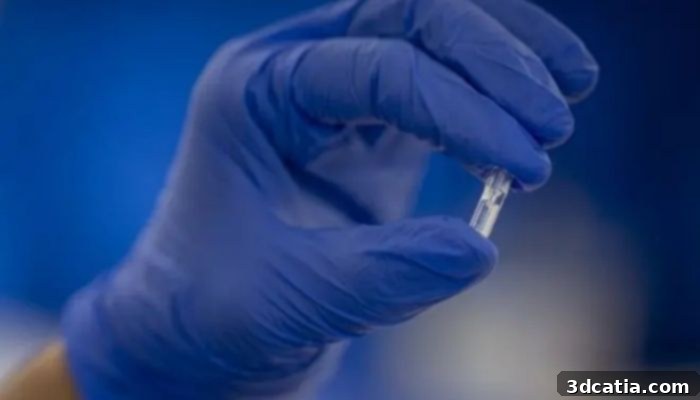
The 3D-printed surgical capsule used to perform tumor biopsies during surgery.
From a biomedical engineering standpoint, this 3D-printed surgical capsule represents a significant advancement. The device was meticulously designed with a focus on reproducibility and seamless integration into existing surgical workflows. This ensures that any medical center can readily adopt the technology without requiring specialized equipment or extensive training. The capsules are manufactured using readily available 3D printers and a streamlined manufacturing process, resulting in a remarkably low cost of approximately 30 cents per unit. This affordability makes the technology accessible to a wider range of research institutions and hospitals, regardless of their financial resources.
The 3D-printed surgical capsule facilitates the collection of numerous tissue samples from the tumor during surgery, allowing for precise identification of the origin of each sample within the brain. This enables the creation of detailed maps that illustrate the cellular variations across different regions of the tumor. With this information, scientists can more accurately investigate the genetic and behavioral differences between various tumor sectors, a task that was previously challenging using conventional biopsy techniques. Dr. Teresa Purzner, a neuroscientist involved in the project, aptly describes the limitations of traditional methods: “Glioblastoma tumors are incredibly complex and diverse. Traditionally, researchers have been limited to small tissue fragments collected somewhat arbitrarily, which is like trying to study an elephant using only snapshots of its toenail, trunk, or ear. Each one could suggest that you are looking at something completely different.” The 3D-printed capsule overcomes this limitation by providing a more comprehensive and representative picture of the tumor’s internal architecture.
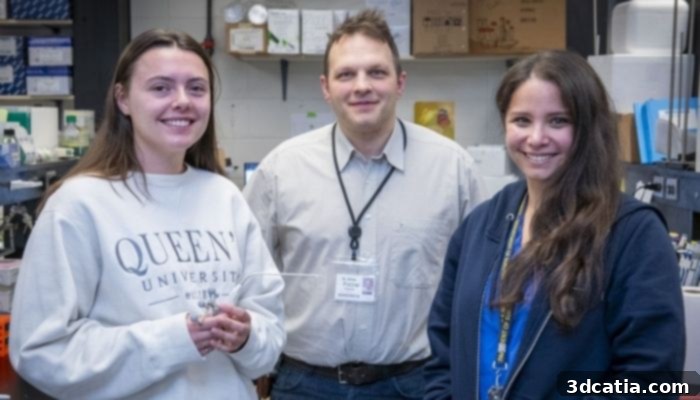
(From left to right) PhD student Kaytlin Andrews, Dr. James Purzner, and Dr. Teresa Purzner are the inventors of the biopsy capsule.
The 3D-printed capsule enables a more profound understanding of the intricate internal structure of glioblastoma, paving the way for the development of more targeted surgical approaches and improved planning for precise radiotherapy. Currently, KHSC stands as the sole medical center worldwide utilizing this innovative tool in actual surgical procedures. However, its widespread adoption is anticipated to occur rapidly, attributed to its affordability and the simplicity of 3D printing. The research team is actively engaged in establishing a collaborative network encompassing hospitals throughout Ontario and creating a comprehensive biobank dedicated to collecting patient samples. This initiative holds the potential to generate an unprecedented database on glioblastoma biology, thereby facilitating the identification of patterns and advancing our understanding of this devastating disease.
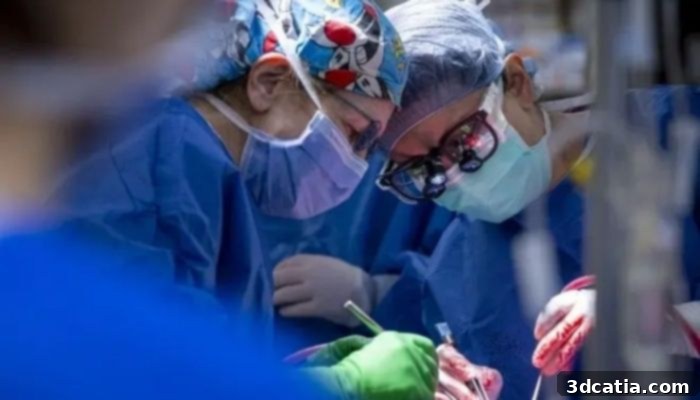
The capsule is already in use at Kingston Health Sciences Centre.
This example of the 3D-printed surgical capsule highlights how a meticulously designed and seemingly “simple” tool can unlock significant advancements in medical research and treatment. Additive manufacturing not only facilitates the creation of devices tailored to the specific requirements of a particular procedure, but also democratizes innovation by making it accessible to research centers and hospitals with limited resources. This fosters collaboration and accelerates the pace of discovery in the fight against challenging diseases like glioblastoma. You can learn more about the invention of the capsule HERE.
What are your thoughts on the potential of the 3D-printed capsule for glioblastoma biopsies? Share your insights and opinions in the comments section below. We also encourage you to connect with us on our LinkedIn and Facebook pages. To stay informed about the latest developments in 3D printing, subscribe to our free weekly Newsletter, which delivers the most relevant news directly to your inbox. You can also find a wealth of informative videos on our YouTube channel. If you’re particularly interested in the applications of 3D printing in the medical and dental fields, be sure to visit our dedicated page HERE, where you’ll find a comprehensive collection of articles, news, and resources.
*All Photo Credits: Kingston Health Sciences Centre