
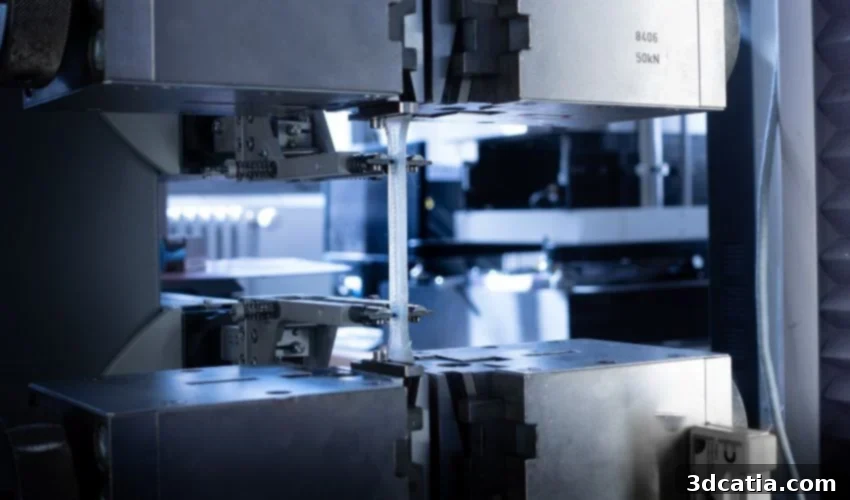
Advanced Additive: Revolutionizing 3D Printing with Optimized Software Solutions
Advanced Additive, a dynamic young company, is focused on optimizing extrusion-based 3D printing through innovative software solutions. The company recognizes that uncertainty during material deposition often leads to subpar part quality and inconsistent repeatability. To combat these challenges, Advanced Additive developed Project Path, a software designed to provide solutions by enhancing toolpath planning, ensuring precise material deposition, and ultimately yielding high-quality parts with superior mechanical properties. We had the opportunity to speak with Julia Paternoster, co-founder of Advanced Additive, to delve into the company’s origins and explore the functionality of Project Path.
3DN: Could you briefly introduce yourself and tell us how you got into 3D printing?
“My name is Julia Paternoster, and I am the co-founder of Advanced Additive. My role encompasses communication, marketing, and sales, where I actively shape our company’s public image and foster strong customer relationships. I work alongside our founder and CEO, Florian Aigner, who leads the technical aspects of the business. Together, we are dedicated to developing groundbreaking software solutions for additive manufacturing.”
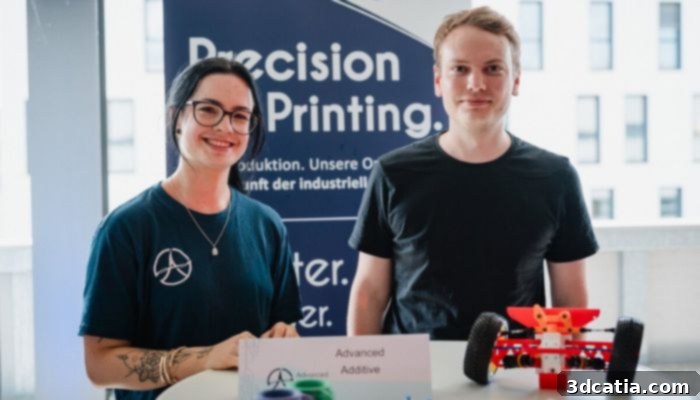
Julia Paternoster and Florian Aigner at the startup festival hosted by Stellwerk 18.
“Both Florian and I share a deep passion for technology and innovation. Florian’s interest in 3D printing was ignited during his studies and through various hands-on projects, where he immersed himself in the intricacies of the technology. I, on the other hand, was captivated by the potential of 3D printing to efficiently manufacture complex products and unlock a wide array of new application areas. The ability to transform digital designs into tangible objects with such precision and versatility is truly remarkable.”
3DN: How did the founding of Advanced Additive come about, and what have been the most important milestones since then?
“The genesis of Advanced Additive stemmed from a firm belief that software is paramount in optimizing additive manufacturing processes. We identified a significant opportunity to enhance the efficiency, reliability, and quality of 3D-printed parts through intelligent software solutions. The Technical University of Rosenheim and the ROCkET startup center played instrumental roles in our journey. The university provided an inspiring and collaborative environment for research and development, while the ROCkET startup center offered invaluable guidance and resources for launching our venture. Crucially, the university supported us in applying for the EXIST startup grant, a program designed to support innovative startups in Germany. This grant, along with the subsequent FLÜGGE grant, enabled us to establish the company and dedicate our efforts to the development of Project Path.”
“Completing the first prototype of Project Path marked a major milestone for us. This achievement demonstrated the feasibility of our vision and provided a tangible foundation for further development. Subsequently, our participation in the Formnext trade fair, a leading international exhibition for additive manufacturing, proved to be incredibly beneficial. We received invaluable feedback from industry experts and potential customers, which significantly shaped the evolution of Project Path. The connections we made at Formnext were instrumental in establishing strategic partnerships and expanding our network within the 3D printing community.”
“Following Formnext, we conducted a successful beta test of Project Path, where our software was evaluated in real-world applications by a select group of users. The results from the beta test were extremely encouraging, demonstrating the potential of Project Path to improve part quality, reduce material waste, and enhance process reliability. Based on the feedback and insights gained during the beta test, we further refined and finalized the software, ensuring that it met the stringent demands of our customers and provided a robust and high-performance solution. A crucial turning point in our development was the shift from a purely AI-centered approach to a more versatile software solution. This strategic decision broadened the scope of Project Path and allowed us to address a wider range of 3D printing applications. Support from partners such as Zortrax, along with the EXIST and FLÜGGE funding programs, has enabled us to not only refine our technical solutions but also broaden our industry network. The guidance and expertise of our partners have been invaluable in navigating the complexities of the 3D printing market and accelerating the development of Project Path.”
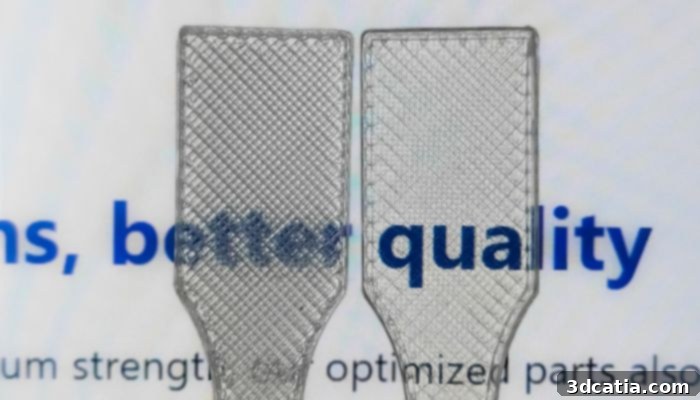
A Comparison of Cura (left) vs. Project Path (right), showcasing visual improvement of the parts.
3DN: Could you explain your work and Project Path in more detail?
“At Advanced Additive, our core mission is to develop software solutions that streamline and optimize the production process in additive manufacturing. We firmly believe that software represents the most significant untapped potential within the 3D printing ecosystem. While hardware advancements have undoubtedly propelled the industry forward, the intelligent use of software can unlock even greater efficiencies and capabilities. Therefore, we are diligently developing optimized toolpath planning algorithms that not only improve the mechanical properties of 3D-printed parts but also enhance their reproducibility. This heightened level of part quality opens up new possibilities for leveraging 3D printing across a broader range of applications, while simultaneously minimizing material waste stemming from failed prints. In collaboration with our development and collaboration partners, we are creating a software solution that transcends the limitations of specific machines, remaining entirely independent of both hardware and material constraints. This flexibility allows Project Path to seamlessly integrate with any slicer or platform, empowering users to optimize their 3D printing processes regardless of their chosen equipment or materials.”
“Project Path is a groundbreaking, universal software solution poised to revolutionize toolpath planning for 3D printing processes. By employing variable extrusion widths, Project Path ensures that parts are filled completely and precisely, resulting in substantial enhancements in mechanical properties, part quality, and overall process reliability. This innovative approach elevates 3D printing to a new echelon, delivering results that rival the quality and consistency achieved through traditional manufacturing methods such as injection molding. Our software seamlessly integrates into existing production environments as a plugin or post-processor, supporting widely used interfaces like Zortrax Z-Suite and remaining agnostic to both machine and material. Furthermore, we are actively pursuing additional optimizations, including advanced features like Brick Layers, Circular Infill, and speed optimization, all designed to further amplify efficiency and quality in 3D printing. Project Path effectively bridges the gap between design and manufacturing, empowering users to unlock the full potential of their 3D printers and achieve unparalleled results. Its capabilities extend beyond simple printing; it transforms the entire additive manufacturing workflow, enabling engineers and designers to create parts with greater confidence and precision.
By focusing on optimizing the underlying toolpaths, Project Path addresses some of the most pressing challenges in 3D printing, such as warpage, delamination, and inconsistent part density. The variable extrusion width technology ensures that material is deposited strategically to maximize structural integrity and minimize stress concentrations. This results in parts that are not only visually appealing but also possess the strength and durability required for demanding applications. Moreover, Project Path’s hardware and material agnostic nature makes it an incredibly versatile tool for a wide range of users, from small businesses to large-scale industrial manufacturers. The software is designed to adapt to different printing technologies and material types, ensuring optimal performance regardless of the specific setup. The continuous development of new features and optimizations underscores Advanced Additive’s commitment to pushing the boundaries of 3D printing technology and providing users with the most advanced tools available. The integration of features like Brick Layers and Circular Infill further enhances the precision and efficiency of the printing process, while speed optimization reduces production time without compromising part quality.”
3DN: Project Path is designed to prevent print errors directly in the G-code. How does that work?
“Our software generates optimized G-codes that facilitate more precise material deposition and ensure more consistent infill and surface quality. By carefully controlling the movement of the print head and the flow of material, Project Path minimizes the risk of common printing errors such as warping, stringing, and inconsistent layer adhesion. The enhanced precision and consistency translate directly into improved mechanical properties, reduced production errors, and expanded possibilities for industrial 3D printing applications. The ability to generate high-quality parts with minimal defects is particularly critical in industries where performance and reliability are paramount, such as aerospace, automotive, and medical device manufacturing.”
“One compelling example is the production of compressed air system components, which demand extremely precise control to prevent leaks and ensure optimal performance. Using Project Path, we were able to reduce the leakage rate in these components to a mere 0.019 bar/h, achieving outstanding airtightness. This level of performance is made possible by implementing innovative infill strategies with adaptive extrusion widths that precisely conform to the part geometry, guaranteeing maximum precision and minimizing the potential for leaks. The adaptive extrusion widths allow the software to adjust the amount of material deposited in different areas of the part, ensuring that the infill is both strong and lightweight. The result is a component that is not only airtight but also optimized for weight and performance. This demonstrates the potential of Project Path to solve real-world problems and enable the creation of high-performance parts for demanding applications.”
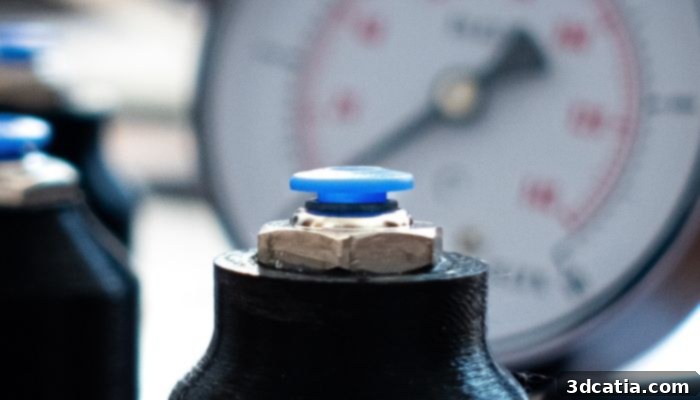
Another application example showcases airtight containers. The leakage rates were reduced to just 0.019 bar/h.
3DN: Which printing technologies can the software be used with?
“Currently, our primary focus is on extrusion-based processes, specifically Fused Deposition Modeling (FDM), Fused Layer Modeling (FLM), and Fused Filament Fabrication (FFF). We are particularly interested in addressing the challenges associated with the most demanding materials and applications, such as sintering materials and carbon-fiber-reinforced systems. These materials offer exceptional strength and durability but can be difficult to print consistently with traditional methods. Project Path is designed to optimize the printing process for these materials, ensuring that users can achieve the desired results with minimal defects.”
“However, it’s important to emphasize that our solutions are fundamentally toolpath planning algorithms, which means they offer optimization potential for any 3D printing process that relies on paths, regardless of the underlying technology. In the future, we envision expanding the application of Project Path to robotic systems such as Direct Energy Deposition (DED) and Wire Arc Additive Manufacturing (WAAM). These technologies offer the potential to create large-scale parts with complex geometries, but they also require precise control of the deposition process. With minor adjustments, Project Path could also be implemented in powder bed processes such as Selective Laser Sintering (SLS) and Laser Beam Melting (LBM), further broadening its applicability across the additive manufacturing landscape. The versatility of Project Path stems from its focus on optimizing the fundamental principles of toolpath planning, rather than being tied to a specific printing technology. This allows the software to be adapted to different processes with relative ease, making it a valuable tool for a wide range of users and applications.”
3DN: Do you have any closing words for our readers?
“We are currently actively seeking ten additional pilot customers and projects to collaborate with us in shaping the future of additive manufacturing. Our pilot program offers an exclusive opportunity to gain early access to our innovative software solution and actively contribute to its ongoing development. This is a chance to work closely with our team and influence the direction of Project Path, ensuring that it meets the specific needs of your organization. Together, we aspire to establish a new standard in industrial production – one that is precise, efficient, and independent of machine or material constraints. By participating in our pilot program, you can optimize your production processes, reduce material waste, and gain a competitive advantage in the rapidly evolving 3D printing landscape. We believe that collaboration is key to unlocking the full potential of additive manufacturing, and we are excited to partner with innovative companies that share our vision.
Your advantage: take the opportunity to optimize your production and become part of a technological revolution. By joining our pilot program, you will not only gain access to cutting-edge software but also become part of a community of innovators and early adopters who are shaping the future of 3D printing. We are confident that Project Path has the potential to transform the way parts are designed and manufactured, and we are eager to work with you to realize this vision. We are committed to providing our pilot customers with the support and resources they need to succeed, including dedicated training, technical assistance, and regular feedback sessions. We believe that a collaborative approach is essential to maximizing the benefits of Project Path and ensuring that it meets the specific needs of our users. For more information about our company and our pilot program, please visit our website.”
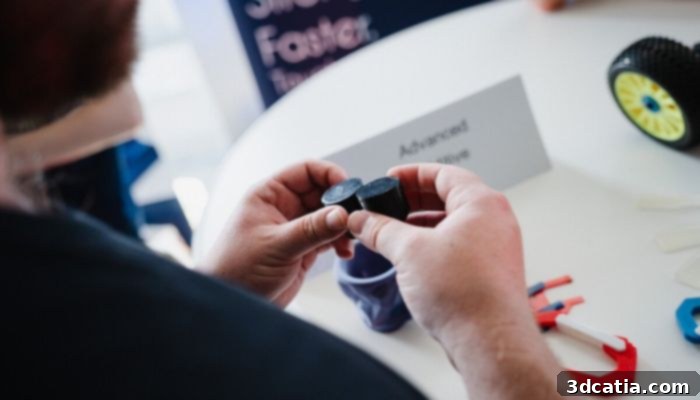
In the airtight containers, the leakage rate was significantly reduced thanks to Advanced Additive’s solution.
What do you think of Advanced Additive? Let us know in a comment below or on our LinkedIn and Facebook pages. Plus, sign up for our free weekly Newsletter to get the latest 3D printing news straight to your inbox. You can also find all our videos on our YouTube channel.
*Photo Credits: Advanced Additive, Cover image: Project Path In Testing – Tensile Tests Illustrating the Mechanical Improvements