
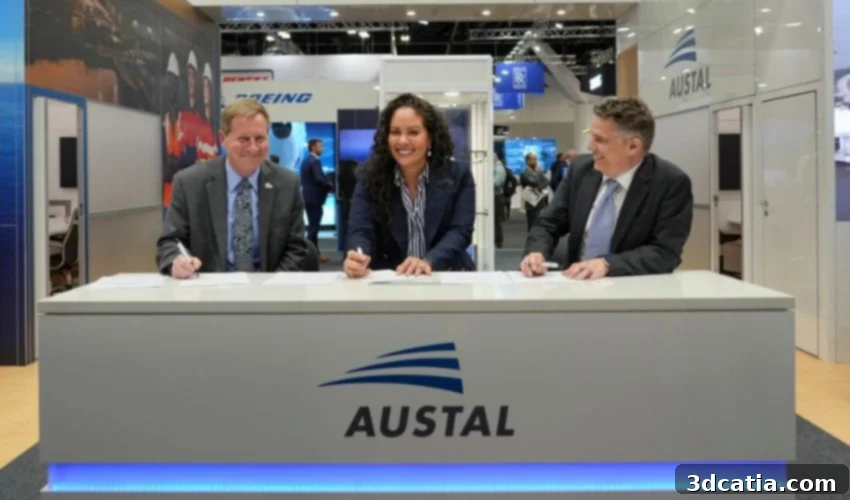
ASC and Austal Partner to Revolutionize Naval Programs with Additive Manufacturing
ASC and Austal have forged a strategic alliance, formalized through a new Memorandum of Understanding (MoU), to accelerate the integration of additive manufacturing (AM) technologies across Australia’s critical naval programs. This groundbreaking partnership, announced at the prestigious 2025 Indo Pacific International Maritime Exposition in Sydney, underscores a commitment to fortifying the domestic AM supply chain and cultivating a skilled workforce capable of supporting both the Collins Class and Virginia Class submarine programs. The collaboration also aims to scale the implementation of metal 3D printing in shipbuilding and sustainment operations, while simultaneously launching comprehensive training initiatives to equip technicians and engineers with expertise in advanced manufacturing technologies.
Danielle Bull, Chief Capability Officer of ASC, articulated the transformative potential of additive manufacturing for Australia’s maritime industry. “Additive manufacturing offers transformative potential for Australia’s maritime industry, enabling faster production, improved part performance, and greater flexibility in shipbuilding, maintenance, and sustainment,” she stated. Bull emphasized that ASC is actively exploring avenues to further integrate AM into submarine sustainment processes. The collaboration with Austal, she added, is poised to significantly accelerate these efforts across the broader Australian supply chain, fostering innovation and efficiency.
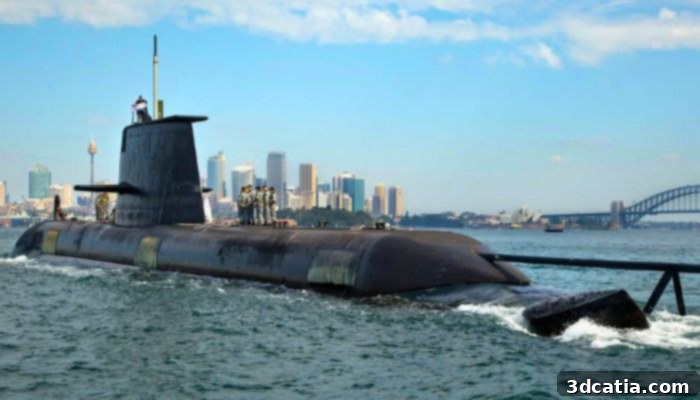
HMAS Waller, a Collins-class submarine, in Sydney Harbour. (Photo Credit: Royal Australian Navy)
Austal’s Expertise in Additive Manufacturing: A Decisive Advantage
Austal brings to the partnership a wealth of additive manufacturing expertise cultivated through its extensive operations in the United States. The company’s Advanced Technologies division spearheads the U.S. Navy’s Additive Manufacturing Center of Excellence, in collaboration with BlueForge Alliance. At this center, dedicated teams are focused on the rigorous qualification and scaling of 3D printed components for both submarine and ship platforms. This invaluable experience provides the ASC-Austal partnership with a robust technical foundation, ensuring the successful expansion of AM adoption across Australian naval programs.
Glenn Callow, Chief Technology Officer at Austal, emphasized the company’s long-term commitment to advanced manufacturing. “This partnership builds on our long-term investments into advanced manufacturing,” Callow stated. He highlighted Austal’s proactive engagement with partners as early as 2020, aiming to align 3D printing technologies with the specific demands of its maritime clientele. Callow underscored that this new partnership will amplify efforts to bolster Australia’s shipbuilding and sustainment capabilities throughout the entire supply chain, enhancing resilience and competitiveness.
Strengthening Australia’s Sovereign Naval Capabilities Through Innovation
Don Hairston, Vice President for Submarines and Advanced Technologies at Austal USA, underscored the significance of the collaboration, emphasizing the Additive Manufacturing Center of Excellence’s role in disseminating its expertise and lessons learned to ASC, Austal Australia, and their respective AM partners. He highlighted the immense value of transferring knowledge acquired through U.S. Navy programs, contributing to the advancement of Australia’s naval capabilities. According to Hairston, this strategic exchange will be instrumental in strengthening supply chain resilience for critical defense applications, ensuring the reliable availability of essential components.
The ASC-Austal MoU represents a concerted effort to deeply embed additive manufacturing into the core workflows of Australia’s naval sector, encompassing both critical sustainment and production processes. This strategic partnership is projected to drive modernization across shipbuilding and submarine maintenance operations, streamlining processes and enhancing efficiency. As the collaboration matures, it will contribute to the development of a more sovereign, agile, and technologically advanced maritime manufacturing ecosystem, securing Australia’s position as a leader in naval innovation.
Additive manufacturing offers numerous advantages over traditional manufacturing methods, including:
- Reduced lead times: 3D printing allows for the rapid creation of parts, significantly reducing the time required to manufacture components. This is particularly crucial for critical naval applications where timely repairs and upgrades are essential.
- Improved part performance: Additive manufacturing enables the creation of complex geometries and customized designs, leading to enhanced part performance and efficiency. This can result in improved vessel performance and reduced operational costs.
- Increased design flexibility: 3D printing provides unparalleled design freedom, allowing engineers to create innovative solutions that are not possible with traditional manufacturing methods. This can lead to the development of more advanced and capable naval vessels.
- Reduced material waste: Additive manufacturing processes minimize material waste, making them more environmentally sustainable than traditional manufacturing methods. This is an important consideration for the Australian government, which is committed to reducing its environmental impact.
- Localized production: 3D printing enables the localized production of parts, reducing reliance on foreign suppliers and strengthening Australia’s sovereign naval capabilities. This is particularly important in the current geopolitical climate, where supply chains are increasingly vulnerable.
The partnership between ASC and Austal is expected to have a significant impact on Australia’s naval industry, driving innovation and creating new opportunities for growth. By embracing additive manufacturing, Australia can enhance its naval capabilities, reduce costs, and strengthen its position as a global leader in maritime technology.
The successful implementation of additive manufacturing in the naval sector requires a multi-faceted approach, including:
- Investment in research and development: Continued investment in research and development is essential to advance additive manufacturing technologies and develop new applications for the naval sector.
- Workforce training and development: Training programs are needed to equip technicians and engineers with the skills and knowledge required to operate and maintain 3D printing equipment.
- Collaboration and knowledge sharing: Collaboration between industry, government, and research institutions is essential to accelerate the adoption of additive manufacturing in the naval sector.
- Standardization and certification: The development of industry standards and certification processes is crucial to ensure the quality and reliability of 3D printed parts.
The ASC-Austal partnership represents a significant step forward in Australia’s efforts to embrace additive manufacturing and strengthen its naval capabilities. By working together, these two companies can drive innovation, reduce costs, and create a more sovereign, agile, and technologically advanced maritime manufacturing ecosystem.
The adoption of additive manufacturing in the naval sector is not without its challenges. These challenges include:
- High initial investment costs: 3D printing equipment can be expensive, requiring significant upfront investment.
- Limited material selection: The range of materials that can be used in 3D printing is currently limited, although this is expanding rapidly.
- Scalability challenges: Scaling up 3D printing production to meet the demands of the naval sector can be challenging.
- Data security concerns: Protecting the intellectual property associated with 3D printed parts is crucial, requiring robust data security measures.
Despite these challenges, the benefits of additive manufacturing for the naval sector are undeniable. By addressing these challenges proactively, Australia can unlock the full potential of additive manufacturing and transform its naval capabilities.
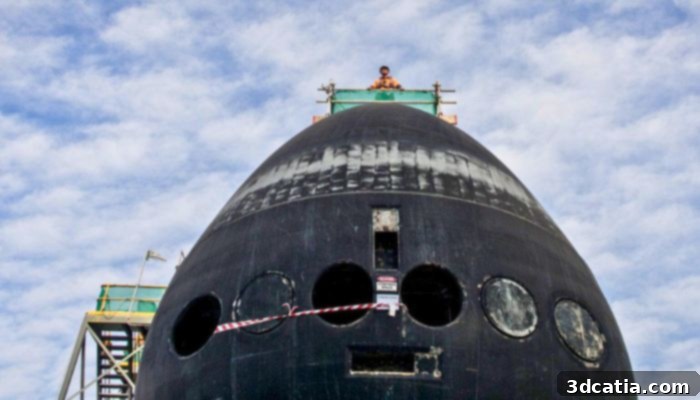
Collins Class Submarine Docked for Maintenance (Photo Credit: ASC)
What are your thoughts on this collaboration to advance additive manufacturing within Australia’s naval programs? Share your perspectives in the comments below or connect with us on LinkedIn or Facebook! To delve deeper into the details, access the complete press release here. Stay informed with the latest 3D printing news by subscribing to our free weekly Newsletter, delivered directly to your inbox. Explore our video content on our YouTube channel. For comprehensive coverage of 3D printing advancements in the aerospace and defense industries, visit our dedicated page HERE.
*Cover Image: Left to right: Austal USA Vice President Business Development & External Affairs, Lawrence Ryder, ASC Chief Capability Officer Danielle Bull, and Austal Australia Chief Technology Officer, Dr. Glenn Callow. (Photo Credit: Austal)