
Innovating Sustainable Storage: How Lea Randebrock’s 3D Printed Clay Containers Fight Food Waste
In the midst of the unprecedented global lockdown brought about by the COVID-19 pandemic, many found themselves navigating new challenges and adjusting to a transformed world. For Finnish-German designer Lea Randebrock, this period was not one of idleness or despair, but a profound opportunity to contribute meaningfully to a more sustainable future. Driven by a deep commitment to environmental responsibility, she channeled her creative energy into addressing a pressing global issue: food waste. The result of her dedication and ingenuity during these restrictive times was the creation of a remarkable line of 3D printed clay containers, meticulously designed to extend the freshness of fruits and vegetables, thereby significantly reducing household food spoilage. This endeavor, aptly named The Clay Pantry project, stands as a testament to innovation under constraint, as Randebrock, with limited access to resources beyond a personal 3D printer and just enough material, brought her visionary concept to life.
Lea Randebrock’s unique approach to design is deeply rooted in her diverse academic and cultural background. Having honed her skills in furniture design in Finland, she is currently advancing her studies at the prestigious Royal College of Art in London. Her design philosophy transcends mere aesthetics, aiming to challenge conventional perceptions of materials and forms. She draws inspiration from traditional manufacturing techniques and age-old wisdom gathered from various cultures across the globe, integrating these insights with modern technological advancements. At the core of her professional ethos is a steadfast commitment to sustainability, consistently rethinking how products are conceived, manufactured, and utilized throughout their lifecycle. The Clay Pantry project perfectly embodies this philosophy, blending ancient preservation methods with cutting-edge additive manufacturing to create truly eco-friendly and functional household items.
All image credits: Lea Randebrock
The innovative eco-friendly containers were produced using advanced 3D printing techniques with clay, specifically a highly porous terracotta material. The choice of terracotta is crucial to the functionality of these storage solutions. This particular material possesses natural evaporative cooling properties, a mechanism that has been utilized for centuries in various cultures for food and water preservation. The porous structure of the terracotta allows water to slowly evaporate from its surface. As water transitions from a liquid to a gaseous state, it absorbs latent heat from its surroundings, thereby drawing heat away from the stored produce and creating a cooler, more stable microclimate within the container. This process effectively lowers the internal temperature and increases humidity, mimicking the natural conditions ideal for many fruits and vegetables, significantly prolonging their freshness. In essence, these 3D printed clay containers operate much like living plants, requiring occasional watering to maintain their optimal performance and evaporative cooling effect. For instance, the Tempered Box, one of the collection’s key designs, is engineered to maintain a consistently cool and humid environment for its contents, whether it is placed inside or outside the refrigerator, offering versatile storage options.
The ingenious use of evaporative cooling addresses a fundamental challenge in food storage: preventing premature spoilage due to excessive heat and inadequate humidity. Many fruits and vegetables thrive in cool, humid conditions, which are often difficult to maintain consistently in standard kitchen environments or even conventional refrigeration, which can sometimes be too dry for certain produce. By leveraging the natural properties of terracotta through the precision of 3D printing, Randebrock has created a practical solution that reduces reliance on energy-intensive refrigeration for some items, offering an energy-efficient alternative for preserving freshness. This approach not only extends the shelf life of food but also aligns perfectly with a broader vision of sustainable living, encouraging consumers to adopt more mindful and resource-efficient habits in their homes.
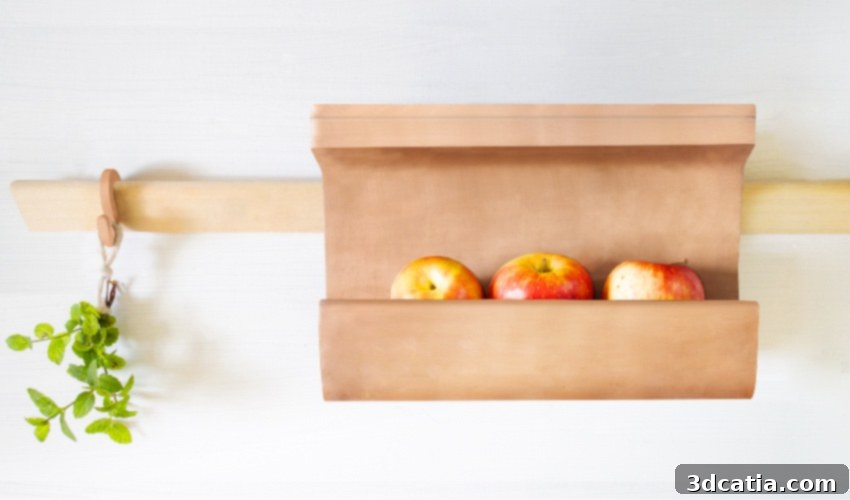
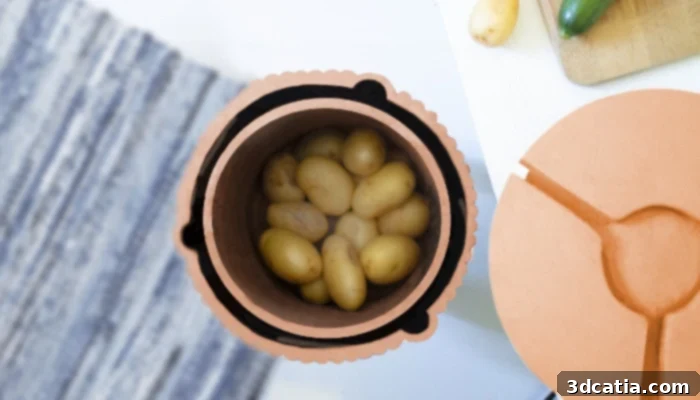
Currently, The Clay Pantry collection features three distinct and highly functional pieces, each tailored to the specific storage needs of different types of produce. These include the versatile Tempered Box, designed for items that benefit from a stable, cool, and humid climate; the elegant Fruit Shelf, prominently displayed on the article’s cover image, which provides aerated storage ideal for many common fruits; and the innovative Root Stool, ingeniously crafted for the optimal preservation of root vegetables. Root vegetables, unlike fruits, typically require a dry and dark storage location to prevent sprouting and decay. The Root Stool addresses this specific need with a design that creates precisely such an environment, ensuring vegetables like potatoes, carrots, and onions remain fresh for longer periods without refrigeration. Despite the severe limitations on resources and access to manufacturing facilities during the lockdown, Randebrock’s determination led to the successful creation of these prototypes. Each piece not only serves a practical purpose but also boasts a rather aesthetically pleasing design, seamlessly integrating into modern kitchen environments. The entire collection was efficiently produced using a desktop Anycubic 3D printer, demonstrating the accessibility and potential of additive manufacturing for individual designers to create high-quality, impactful products.
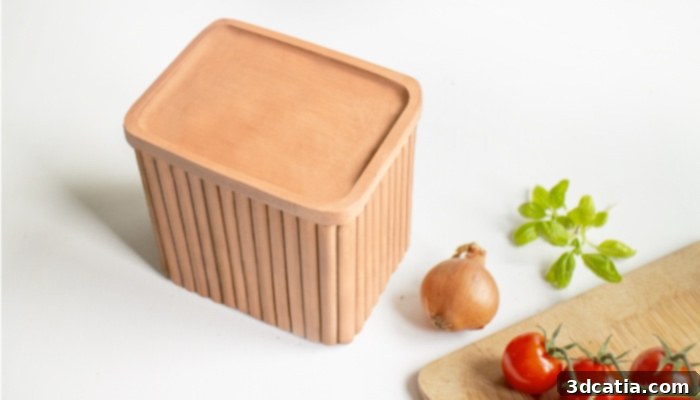
The Tempered Box provides a cool humid climate when inside or outside of the fridge.
While Lea Randebrock’s 3D printed clay containers may not single-handedly eradicate the immense global problem of food waste overnight, they represent a significant and inspiring stride towards a more sustainable future. This collection serves as a powerful catalyst, encouraging individuals and households to rethink their consumption habits, evaluate their lifestyles, and actively seek out and utilize objects that champion sustainability. The Clay Pantry project beautifully illustrates how thoughtful design, combined with innovative manufacturing techniques, can lead to tangible improvements in our daily lives and contribute to a healthier planet. It once again highlights the transformative power of 3D printing technologies, showcasing their remarkable ability to facilitate the easy creation of practical, beautiful, and eco-conscious pieces that enhance our living spaces and address critical environmental concerns. Beyond its immediate function, Randebrock’s work inspires a broader conversation about responsible resource management, consumer choices, and the potential for design to drive positive change. The collection is a testament to how accessible technology can be harnessed for impactful innovation, even under challenging circumstances, fostering a new wave of sustainable product development.
For those interested in delving deeper into the innovative world of Lea Randebrock, her complete portfolio of designs and projects is available for exploration on her official website. There, you can discover the breadth of her creative vision and her unwavering commitment to sustainability in design. Furthermore, for a fascinating glimpse into the meticulous process behind The Clay Pantry collection, the Royal College of Art has shared an insightful video documenting the making of these unique 3D printed containers. This video provides valuable insight into the design thinking, material selection, and additive manufacturing techniques employed to bring this vision to fruition, offering a behind-the-scenes look at sustainable innovation in action.
What are your thoughts on these groundbreaking 3D printed clay containers and their potential to impact household food waste? We invite you to share your perspectives and engage in the discussion by leaving a comment below. You can also connect with us and share your opinions on our Facebook and Twitter pages. Stay informed about the latest advancements and innovations in the world of additive manufacturing by signing up for our free weekly Newsletter, delivering all the essential news in 3D printing directly to your inbox!