
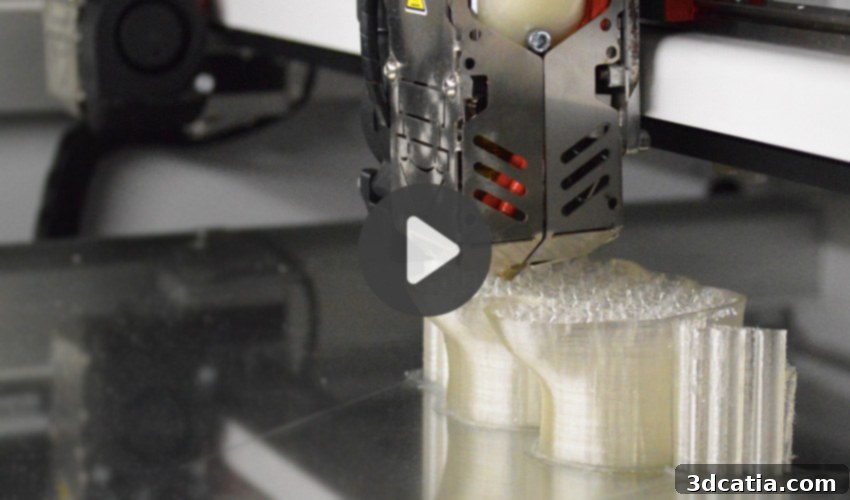
Unlocking Industrial Potential: A Deep Dive into Pellet Additive Manufacturing with Tumaker at Formnext
The latest edition of Formnext in Frankfurt once again showcased the cutting edge of additive manufacturing, and among the most prominent technologies to capture attention was pellet additive manufacturing, also known as granule 3D printing. This innovative approach offers significant advantages over traditional filament-based methods, paving the way for more industrial and cost-effective production. During this pivotal industry event, we had the exclusive opportunity to connect with Joao Haudenschild and Zoltan Matyas from the Tumaker team directly at their booth. Our insightful conversation delved deep into the intricacies of 3D printing with pellet materials, exploring its multifaceted benefits, Tumaker’s expertise in developing bespoke machinery, the diverse industrial sectors poised to benefit from this transformative process, and much more.
The Evolution of Additive Manufacturing: From Filaments to Pellets
For years, fused deposition modeling (FDM) has largely relied on thermoplastic filaments as its primary material input. While effective for many applications, especially in prototyping and consumer-grade 3D printing, filament comes with inherent limitations. These include higher material costs (due to the extrusion and winding process required to create filament), restricted material options, and a tendency for material degradation over time if not stored properly. Pellet additive manufacturing emerges as a powerful solution to these challenges. By utilizing raw thermoplastic pellets – the same granules used in conventional injection molding – this technology directly addresses industrial demands for lower costs, broader material compatibility, and enhanced mechanical properties.
The core principle of pellet extrusion is straightforward yet revolutionary. Instead of feeding a pre-formed filament into the print head, the system directly melts and extrudes raw plastic pellets. This fundamental shift opens up a vast array of possibilities, enabling manufacturers to work with a much wider range of engineering-grade and high-performance polymers, including those that are difficult or impossible to process into filaments. Furthermore, the ability to directly use bulk pellets significantly reduces material expenses, making large-scale production more economically viable and bringing industrial 3D printing closer to mainstream manufacturing processes.
Tumaker’s Pioneering Role in Granule 3D Printing
Tumaker has distinguished itself as a leading innovator in the field of industrial pellet 3D printing. Their presence at Formnext underscored their commitment to advancing this technology and making it accessible to a diverse range of industries. During our discussion, Joao Haudenschild and Zoltan Matyas elaborated on Tumaker’s unique approach, which centers on the development of custom machines tailored to specific industrial requirements. This bespoke strategy ensures that clients receive not just a 3D printer, but a comprehensive additive manufacturing solution perfectly aligned with their production goals, material preferences, and desired part characteristics.
The Tumaker team emphasized that their focus extends beyond simply building robust hardware. They are deeply invested in optimizing the entire pellet extrusion process, from material handling and melting to precise deposition and cooling. This holistic approach guarantees consistent print quality, reliability, and the ability to produce parts with superior mechanical integrity. Their machines are designed to be versatile, capable of handling a spectrum of polymer types, from standard ABS and PLA to advanced engineering plastics like PEEK, ULTEM, and even recycled materials or custom compounds. This flexibility is crucial for industries that demand specific material properties for their applications, whether it’s high heat resistance, chemical inertness, or exceptional strength-to-weight ratios.
Key Advantages of Pellet Additive Manufacturing
The transition to pellet-based 3D printing offers several compelling advantages that are driving its adoption in industrial settings:
Cost-Effectiveness and Material Savings
One of the most significant benefits is the substantial reduction in material costs. Raw plastic pellets are considerably cheaper per kilogram than their filament counterparts because they bypass the additional processing steps of extrusion into filament. For companies engaged in high-volume production or large-format printing, these savings can be immense, making additive manufacturing a more competitive option compared to traditional methods for certain applications.
Unparalleled Material Versatility
Pellet extruders can process a much broader range of materials. This includes not only common thermoplastics but also high-performance polymers, composites reinforced with carbon fiber or glass fiber, and even experimental blends. This expanded material palette allows engineers and designers to select the ideal material for specific functional requirements, opening doors to new applications in aerospace, automotive, medical, and consumer goods industries. Furthermore, the ability to directly use recycled pellets supports sustainable manufacturing practices and reduces environmental impact.
Enhanced Mechanical Properties and Part Quality
Printing directly with virgin pellets often results in parts with improved mechanical properties. The material experiences fewer thermal cycles compared to filament production, which can sometimes degrade polymer chains. This leads to stronger, more consistent parts with better interlayer adhesion and reduced internal stresses. Tumaker’s precision extrusion systems further ensure optimal material flow and deposition, contributing to higher quality prints that meet rigorous industrial standards.
Scalability and Speed for Large-Format Printing
Pellet extruders typically boast much higher melt flow rates than filament extruders. This increased throughput enables faster printing speeds and, crucially, the ability to print much larger objects more efficiently. For industries requiring the rapid production of substantial components, such as tooling, molds, or architectural elements, pellet additive manufacturing offers a scalable solution that was previously unattainable with conventional FDM technologies.
Industries Revolutionized by Granule 3D Printing
The transformative potential of pellet additive manufacturing extends across a multitude of industries. Tumaker’s custom machines are designed to meet the unique demands of these diverse sectors:
- Automotive: From rapid prototyping of complex components to manufacturing jigs, fixtures, and even functional end-use parts, pellet printing offers cost-effective solutions for the automotive supply chain. The ability to use performance plastics for lightweighting and durability is a major draw.
- Aerospace: High-performance polymers processed through pellet extrusion are ideal for aerospace applications requiring strength, light weight, and resistance to extreme temperatures or chemicals. This includes tooling, interior components, and specialized fixtures.
- Manufacturing and Tooling: Custom tools, molds, jigs, and fixtures can be produced quickly and affordably, significantly reducing lead times and operational costs in manufacturing plants.
- Construction and Architecture: Large-scale printing of architectural models, concrete formwork, and even structural elements is becoming feasible, pushing the boundaries of construction methodologies.
- Research & Development: Universities and corporate R&D departments can rapidly prototype new designs, test innovative material combinations, and accelerate product development cycles using flexible pellet systems.
- Marine: Components requiring high resistance to saltwater and UV radiation, often produced in specialized polymers, can be efficiently manufactured.
- Education: Bringing industrial-grade additive manufacturing capabilities to academic institutions allows students to gain hands-on experience with advanced technologies and materials, preparing them for future engineering challenges.
The Formnext Experience: Tumaker at the Forefront
Formnext consistently serves as the premier global platform for showcasing breakthroughs in additive manufacturing. Tumaker’s presence at the expo, highlighted by our interview with Joao Haudenschild and Zoltan Matyas, was a testament to the growing significance of pellet 3D printing. Visitors to their booth had the unique opportunity to witness firsthand the capabilities of their advanced systems and engage in discussions about the practical implementation of this technology. The live demonstrations and expert insights provided by the Tumaker team offered valuable perspectives on how industries can leverage pellet-based solutions to overcome current manufacturing bottlenecks and innovate more effectively. The video interview embedded above serves as a dynamic recap of these engaging discussions, capturing the essence of Tumaker’s vision and technological prowess.
The Future is Granular: What’s Next for Pellet AM?
The trajectory of pellet additive manufacturing points towards continued growth and innovation. As material science advances, we can expect an even wider array of engineering polymers and composites to become compatible with this technology. Furthermore, ongoing research and development in extruder design, thermal management, and software optimization will undoubtedly enhance print speed, accuracy, and reliability. Tumaker, with its commitment to custom machine development and deep understanding of industrial needs, is perfectly positioned to remain at the vanguard of this evolution. They are not merely selling printers; they are providing solutions that empower businesses to embrace a more flexible, cost-effective, and sustainable future for manufacturing.
The potential for pellet 3D printing to disrupt traditional manufacturing paradigms is immense. By bridging the gap between raw material efficiency and complex part fabrication, it offers a powerful tool for companies looking to optimize their production processes, innovate faster, and maintain a competitive edge in a rapidly changing global market. As Formnext demonstrated, the future of additive manufacturing is increasingly granular, and companies like Tumaker are leading the charge.
Did you have the chance to visit the Tumaker booth at Formnext and witness their impressive technology? We’d love to hear your thoughts and experiences! Share your insights in a comment below or connect with us on our LinkedIn, Facebook, and Twitter pages! For the very latest news and developments in the world of 3D printing, don’t miss out – sign up for our free weekly Newsletter here, delivered directly to your inbox. You can also explore all our insightful videos and interviews by visiting our YouTube channel.