
Julia Daviy: Pioneering Sustainable Fashion Through Revolutionary 3D Printing
The fashion industry, long characterized by its dynamic trends and creative flair, is undergoing a profound transformation thanks to the integration of 3D technologies. These advanced tools are not only empowering designers and stylists to unleash unprecedented levels of creativity and offer highly personalized products to consumers, but they are also addressing one of the industry’s most pressing challenges: waste. As a sector notoriously harmful to the environment due to its linear production models and excessive consumption of resources, the shift towards sustainable practices is crucial. It is precisely this imperative that inspired designer Julia Daviy to embrace 3D printing. Her pioneering collection of additively manufactured clothing is actively disrupting traditional production methods, offering a glimpse into a more sustainable and ethical future for fashion. We had the opportunity to speak with Julia Daviy to delve deeper into the innovative manufacturing processes behind her collection and to understand the myriad advantages that additive manufacturing brings to the forefront of the fashion world.
Julia Daviy’s Journey: Merging Clean Tech with Fashion Innovation
My name is Julia Daviy, and I am a designer specializing in 3D printed clothing, driven by a strong background as a clean tech specialist. My journey into the world of additive manufacturing began approximately three years ago when I made a dedicated plunge into learning 3D printing software and hardware. I immersed myself completely, undertaking every available course to acquire the necessary knowledge and practical skills. My home quickly became a vibrant hub of innovation, filled with an array of 3D printers, scanners, various types of filaments, and other essential materials. I devoured every book and magazine on 3D printing I could find, building a robust theoretical foundation. However, my most invaluable insights and practical expertise came from daily experimentations and the countless lessons learned from hundreds of mistakes along the way. This hands-on, iterative process was fundamental to my understanding and mastery of the technology.
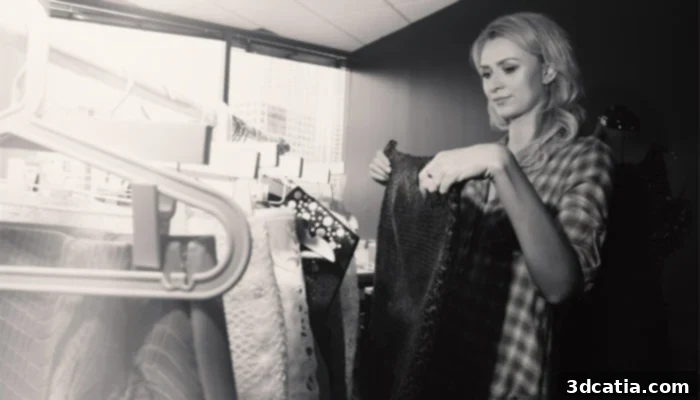
Julia Daviy | Photo Credits: Vita Zamchevska
My decision to learn and experiment with 3D printing was multifaceted, stemming from a desire to address significant shortcomings within the traditional fashion industry. Primarily, I was searching for a truly sustainable and waste-free method of producing clothing. The conventional textile industry is notorious for its environmental impact, and I sought a revolutionary approach. I also observed a fundamental shift in the very functions of clothing; it’s no longer solely about enhancing our appearance. Modern consumers seek garments that offer performance, protection, and new forms of expression, yet the current market struggles to meet these evolving demands. Beyond the product itself, I harbored a strong aversion to the non-intellectual, monotonous, and repetitive operations that often characterize traditional garment production, frequently relying on millions of low-paid, hardworking women and children. The complex and often inefficient logistics inherent in the traditional fashion supply chain also deeply bothered me. All these factors compelled me to seek a fundamentally better technology for clothing production. My professional background of over a decade in clean technology, particularly within the solar energy industry, had instilled in me a problem-solving mindset and a fearlessness when confronting new challenges. This experience prepared me to tackle the daunting complexities of applying advanced technology to a new field like fashion.
Unveiling “The Liberation”: A Groundbreaking 3D Printed Clothing Line
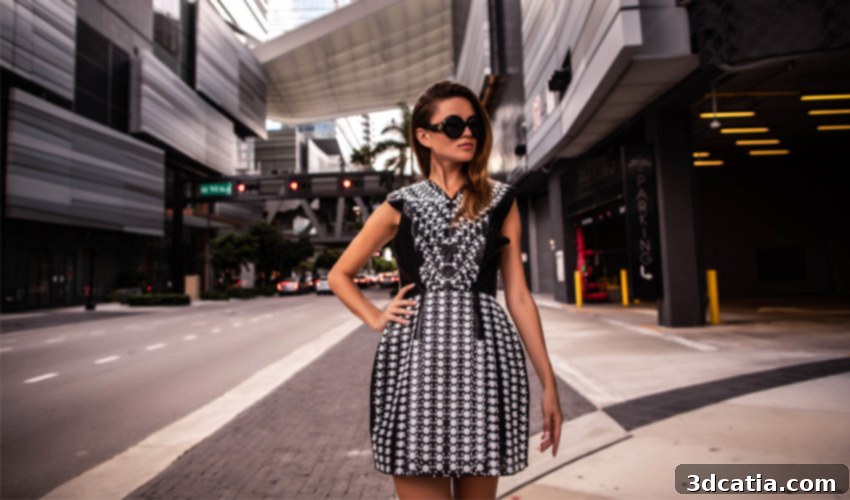
My inaugural 3D printed clothing line, aptly named The Liberation, marked a significant milestone in my journey. Eight distinct looks from this collection were produced using cutting-edge large-format 3D printers, showcasing the scalability of additive manufacturing in fashion. Additionally, one particular dress in the collection beautifully combined intricate SLA 3D printed patterns with a luxurious organic ahimsa silk organza lining, demonstrating the potential for hybrid designs. The year leading up to the creation of The Liberation was dedicated entirely to intense experimentation with various approaches to crafting 3D printed garments. During this exploratory phase, two primary challenges emerged as paramount. The first was to achieve a level of softness and wearability in 3D printed pieces that could rival traditional textiles, dispelling the common misconception that 3D printed items are inherently rigid. The second, equally critical challenge, was to fully harness the inherent benefits of 3D printing, specifically its capacity for zero-waste production and minimized manual labor, thereby optimizing efficiency and sustainability.
Through rigorous development and persistent iteration while working on my collection, I successfully devised a unique method for zero-waste 3D printing specifically tailored for clothing. This innovative process ensures that each garment produced is not only environmentally conscious but also possesses a desirable softness and flexibility, making it suitable for various occasions, such as receptions or other social events. My vision extended beyond mere technical innovation; I was determined that my 3D printed garments should appear as sophisticated and wearable as any item one might find in a high-end boutique. I deliberately steered clear of creating overly complex or overtly “futuristic” apparel models. While 3D printing offers virtually limitless opportunities for intricate design and avant-garde aesthetics, and indeed, the temptation to push these boundaries is immense, I prioritized creating pieces that would integrate seamlessly into a contemporary wardrobe, demonstrating the practical elegance of this new technology.

Photo Credits: Vita Zamchevska
The Creation Process: From Digital Design to Wearable Art
Creating a 3D printed garment involves a meticulous, multi-stage process that seamlessly blends digital design with advanced manufacturing. Generally, we delineate three principal stages, each critical to the final outcome. The initial phase is dedicated to comprehensive design, precise body measurements, and the intricate 3D modeling of the complete garment within specialized 3D modeling software. This stage demands exceptional attention to detail, ensuring that the digital representation accurately reflects the desired aesthetic and fit. Once the digital blueprint is finalized, we transition to the second stage: the actual additive manufacturing. Here, the digital files containing the meticulously crafted patterns of the garment are sent to 3D printers. This process brings the two-dimensional designs into a physical, three-dimensional form. The third and final stage encompasses the crucial finishing works, including final assembly, the addition of linings for comfort and structure, and any other necessary embellishments. This last step ensures the garment is complete, refined, and ready for wear.
Advanced Technologies and Sustainable Materials in 3D Printed Fashion
When exploring 3D printing technologies for fashion, I recognize the immense potential of Selective Laser Sintering (SLS technology) for its ability to create complex geometries and its inherent structural integrity. However, a significant drawback of SLS for my vision of sustainable fashion is the substantial material waste generated during the printing process. This prompted me to instead focus on advancing my approach to Fused Deposition Modeling (FDM 3D printing), which, with the right modifications and materials, offers a pathway to zero-waste production. We invested in one of the market’s leading large-format 3D printers and embarked on an intensive series of experiments. Our goal was to leverage very flexible filaments and implement my unique strategy: directly 3D printing ready-to-assemble patterns, rather than attempting to 3D print entire fabrics. This specific methodology posed numerous engineering challenges, requiring us to continually modify and refine the machines to overcome each obstacle. My foundational engineering knowledge proved incredibly helpful throughout this demanding process, and I am exceptionally fortunate to have a highly skilled engineer as my partner, whose expertise was indispensable in realizing these innovations.
Photo Credits: Vita Zamchevska
While FDM has been my primary focus, I am also continuously experimenting with Stereolithography (SLA) technology, recognizing its distinct advantages for fine detail, though it also presents its own set of limitations. In my quest for the ideal material, I have rigorously tested every flexible filament available for both FDM and SLA. Currently, my material of choice is a custom-formulated 70A TPE (Thermoplastic Elastomer). This specific formulation is produced for me on a pre-order basis by a manufacturer; I am hopeful that its superior qualities will lead them to eventually launch it as a product readily available to other designers, as achieving high-quality 3D printing for wearable garments without it is incredibly challenging. TPE, in general, stands out as an excellent material for contemporary 3D printed fashion, not least because it is 100% recyclable, aligning perfectly with my sustainability goals. For SLA applications, I am exploring the potential of flexible resin and silicon. It’s important to note that while materials are crucial, the overarching objective at this stage is to effectively implement 3D printing and expand its application across the fashion landscape. Once this foundational adoption occurs, I am confident that the range of specialized materials will naturally broaden. I firmly believe that in the very near future, we will see the widespread use of biodegradable, super-flexible, and truly textile-like materials, further bridging the gap between traditional and additive fashion.
The Transformative Benefits of Additive Manufacturing for Sustainable Fashion
From my perspective, and especially within the current global context, I view additive manufacturing as not just an option, but the only truly viable path for the sustainable development of the fashion industry. The advantages offered by 3D printing permeate many layers of the production process, creating efficiencies and new possibilities. From the initial stages, it facilitates unparalleled digitization, allowing for intricate designs to be conceptualized and refined with precision. It significantly streamlines and accelerates prototyping, reducing the time and resources traditionally required to bring new designs from concept to tangible form. Furthermore, 3D printing drastically minimizes the need for extensive manual labor. This reduction in low-skilled manufacturing tasks opens up more opportunities for creative development, not only for professional designers but for individuals at every level, empowering a broader spectrum of creators. The twin pillars of zero-waste and cruelty-free fashion represent a core dream of mine, a dream that is steadily manifesting with every new advancement in this technology. It is profoundly rewarding to contribute to a system that offers tangible good on so many levels—environmental, ethical, and creative. I sense that younger generations deeply resonate with this ethos; they understand that money can carry an ethical “smell,” and they actively seek ways to make their economic contributions positive. 3D printing offers us a powerful tool to achieve this, enabling a clean and conscious approach to commerce and creativity.

Photo Credits: Vita Zamchevska
Envisioning the Future: 3D Printing as the Core of Fashion Innovation
It is increasingly difficult for me to envision a truly progressive and beneficial future for the fashion industry without the integral adoption of 3D printing. This technology represents a vital, much-needed step towards realizing future advancements that will redefine how we create, distribute, and interact with clothing. These accomplishments include the seamless integration of digital logistics, which will revolutionize supply chains and reduce their environmental footprint. Moreover, 3D printing is crucial for the development of “smart clothing” – garments designed with embedded functionalities to protect, provide warmth, or offer cooling precisely when needed, adapting to the wearer’s environment and needs, and much more. This level of innovation transcends mere aesthetics, moving into functional performance.
To simply acquire 3D printers and continue applying outdated, conventional approaches would be a regrettable oversight, a lost opportunity. We are compelled to innovate, to leverage this transformative technology to create entirely new paradigms, not just incrementally better versions of what already exists. Therefore, it is imperative that we utilize 3D printing for the greater good: to foster a sustainable, cruelty-free, and ethically sound method of producing clothing, accessories, and beyond. This calls for a fundamental shift in mindset, moving away from destructive practices that have long plagued the industry.
A significant and persistent challenge remains the widespread use of materials like fur and leather in the fashion industry. These materials are among the first that absolutely must be replaced. Their production inflicts enormous suffering upon millions of animals annually and contributes massively to water, soil, and air pollution, often leading to severe health issues in surrounding communities. Furthermore, beyond the ethical and environmental costs, I believe these traditional materials inherently limit the creative scope of designers, trapping them in established aesthetics. 3D printing offers innovative, ethical, and aesthetically diverse alternatives that can spark new waves of creativity.
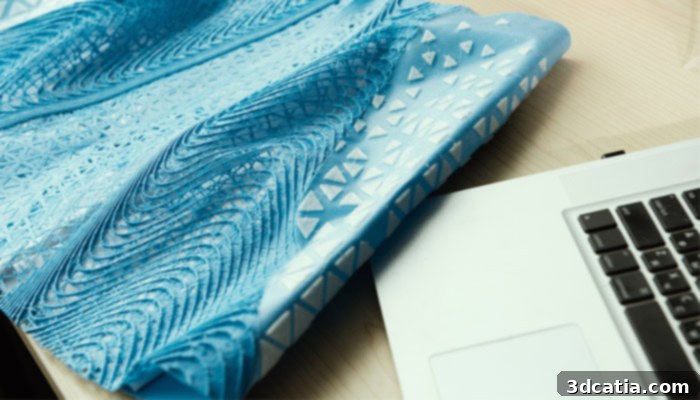
Photo Credits: Vita Zamchevska
Empowering the Creator Within: A Vision for Sustainable 3D Printed Fashion
Many designers often claim that 3D printing technology is still underdeveloped for comprehensive use in clothing production. However, it’s crucial to understand that 3D printing technology will not evolve in isolation; it will be developed by people. We, the collective of designers of 3D printed clothing, innovators of new materials, and engineers creating advanced 3D printers, are actively making this future a reality. With every experiment, every new design, and every refinement, we move closer to achieving sustainable 3D printed clothing production. This progressive journey is poised to bring an end to the unsustainable, planet-killing processes that have historically defined the fashion industry. Most importantly, this amazing technology holds the profound potential to help unleash the inner creator within every consumer, transforming them from passive buyers into active participants in the design and creation process. This shift will democratize fashion and foster a new era of personalized, sustainable style.
What are your thoughts on this insightful interview with Julia Daviy and her compelling vision for the future of the fashion industry? We invite you to share your perspective in a comment below or join the conversation on our Facebook and Twitter pages! Don’t forget to sign up for our free weekly Newsletter, ensuring you receive all the latest news and innovations in 3D printing delivered directly to your inbox!