
Abu Dhabi F1 Paddock Club™: A Landmark in 3D Printed Architectural Design
The landscape of architectural and interior design is undergoing a significant transformation, with additive manufacturing emerging as a pivotal technology for creating breathtaking decorative structures. We are increasingly witnessing the integration of 3D printing in commercial and high-traffic spaces, such as luxury stores and exclusive clubs, to imbue them with an unparalleled sense of elegance and sophistication. Recent years have showcased remarkable examples of this trend, from Dior’s innovative pop-up store, which leveraged eco-friendly 3D printing, to the stunning 3D printed facade of a Tiffany & Co. boutique in Singapore. What elevates 3D printing for these high-profile applications is its inherent capacity for design liberation. It grants designers and architects an extraordinary degree of creative freedom, enabling them to experiment with an expansive array of shapes, intricate geometries, and novel materials far beyond the limitations of conventional construction methods. This freedom facilitates the realization of truly unique and visually striking structural designs that were once considered impossible.
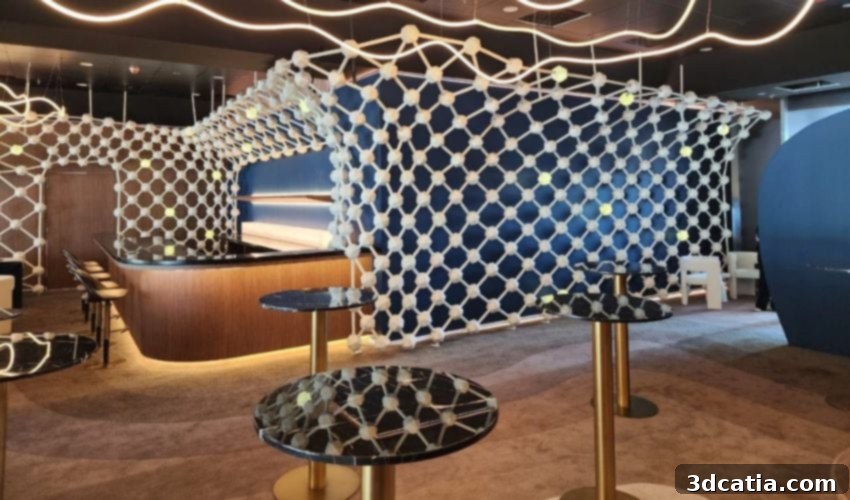
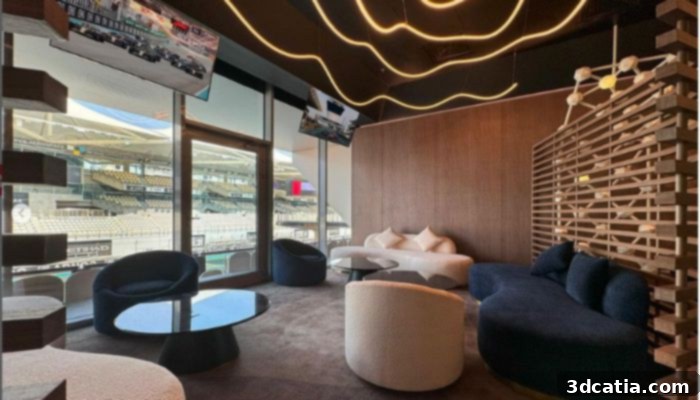
For aficionados of high-performance motorsports, particularly Formula 1, and those with a keen appreciation for cutting-edge design and construction, the recent 3D printed facade unveiled at the Abu Dhabi Formula 1 Grand Prix presents a fascinating case study. This geometrically intricate and fluidly designed 3D printed structure served as an impressive gateway, welcoming an exclusive cadre of racing enthusiasts to the prestigious Paddock Club™ venue. Nestled within the iconic Yas Marina Circuit, this facility stands as one of the United Arab Emirates’ premier sports and entertainment destinations. Situated on the picturesque Yas Island, the circuit plays host to the eagerly anticipated annual Abu Dhabi Formula 1 Grand Prix, alongside a diverse calendar of other major international events. Within its luxurious confines, the Paddock Club™ lounge offers unparalleled views of the track, allowing fans an intimate and immersive experience of the race. To further elevate its unique appeal this year, the bespoke 3D printed decorative elements adorning the club captured the imagination of attendees, becoming an attraction almost as captivating as the high-octane race itself.
A Symphony of Collaboration: 4SPACE Design & Proto21
The creation of this magnificent facade was the result of a synergistic collaboration between two innovative firms: 4SPACE Design, an acclaimed design studio based in Abu Dhabi, and Proto21, a leading 3D printing service provider operating out of Dubai. The most arresting feature of this architectural adornment is undoubtedly its sophisticated design, a testament to the seamless integration of parametric design and advanced 3D printing technologies. This powerful combination unlocked the potential for generating innovative, organic decorative elements that gracefully extend across both the ceiling and walls of the building, creating a cohesive and immersive environment. While specific details regarding the exact materials and precise manufacturing methods employed for this project remain largely undisclosed, its sheer complexity and rapid execution firmly establish it as a remarkable achievement in additive manufacturing, underscoring the critical importance of close teamwork among all involved companies.
Unprecedented Speed: Building a Complex Structure in Seven Days
Perhaps one of the most astounding aspects of this project was the incredibly compressed timeline for its realization. The entire elaborate structure was designed, manufactured, and meticulously installed in just over a week – a feat that speaks volumes about the efficiency and capability of modern 3D printing workflows. Achieving such rapid deployment for a structure of this scale and intricate design would be virtually impossible using traditional construction techniques, which typically involve extended lead times for fabrication, material sourcing, and on-site assembly. Additive manufacturing, however, excels in situations requiring speed and customizability, allowing for the prefabrication of complex components off-site and streamlined assembly. Following the successful completion of the project, Pir Arkam, the CEO of Proto21, took to LinkedIn to express his thoughts, stating, “An [extremely] challenging project for Proto21 to produce such a complex structure in a [short] time. A massive thanks to Blue Camel Design LLC for supporting our team to install with a record 7-day build period!“ This sentiment highlights not only the technical prowess of Proto21 but also acknowledges the vital role played by Blue Camel Design LLC in ensuring the swift and successful installation of the facade, demonstrating a truly collaborative spirit within the project team.
The Aesthetic Impact: A Captivating Lattice Design
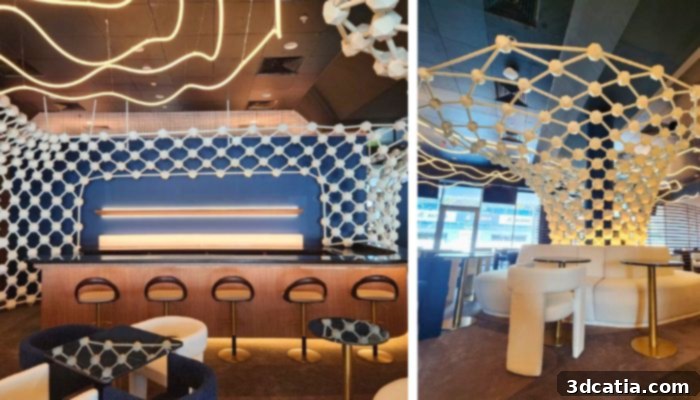
The decorative 3D printed structure, rendered in a pristine white finish, features an exquisite lattice design that appears to gracefully encircle the entire venue, from the vibrant bar counter to the more serene relaxation areas where spectators gather to witness the thrilling Formula 1 race. The visual effect is one of striking simplicity blended with profound complexity. The design’s organic, net-like embrace transforms the Paddock Club™ into an immersive, high-design environment, significantly enhancing the luxurious atmosphere. This project serves as a powerful demonstration of additive manufacturing’s immense potential, showcasing its capability to deliver exceptionally high-quality results in terms of aesthetic style, innovative design, and unparalleled customization options, all within remarkably short timeframes. The fluidity of the lattice patterns, which seems to mimic movement and speed, perfectly complements the dynamic energy of the Formula 1 event. Such bespoke architectural elements elevate the user experience, providing a truly memorable and exclusive setting. We certainly wish we could have been among the fortunate individuals who experienced this architectural marvel firsthand! To discover more about Proto21, the pioneering company behind the 3D printing aspect of this project, you can visit their website HERE.
Exploring Potential Materials and Fabrication Methods
While specific details about the materials and manufacturing processes for the Abu Dhabi Paddock Club™ facade were not disclosed, projects of this nature often require careful consideration of several factors: structural integrity, aesthetic finish, fire safety compliance for public spaces, and overall weight. Given the need for a large, complex, yet rapidly deployable structure, it is plausible that advanced polymers or composite materials were utilized. For instance, engineering plastics like ABS, PETG, or even high-performance nylon variants could be chosen for their strength, durability, and printability. Some projects might even incorporate flame-retardant additives into these polymers to meet safety regulations. The sheer size and intricate details suggest that large-format additive manufacturing techniques would have been employed. This could include industrial-scale Fused Deposition Modeling (FDM) or Fused Filament Fabrication (FFF), utilizing robotic arms for greater reach and speed, or potentially Selective Laser Sintering (SLS) for its ability to produce complex geometries without support structures, though SLS machines for such large-scale components are less common. The efficiency of 3D printing allows for the creation of lightweight, hollow structures that maintain strength, a crucial advantage for rapid installation and minimizing material usage, contributing to potentially more sustainable construction practices compared to traditional methods that might involve heavy, custom-fabricated metal or wood elements. The ability to iterate designs quickly through digital tools and then produce physical prototypes or final parts directly is where 3D printing truly shines in such bespoke architectural applications.
The Future of Architectural Adornment with Additive Manufacturing
The Abu Dhabi Paddock Club™ facade stands as a powerful emblem of the future of architectural design and event staging. This project not only pushed the boundaries of what is aesthetically and logistically possible but also established a new benchmark for how temporary or semi-permanent installations can be conceptualized and executed. Additive manufacturing is democratizing access to highly complex and customized designs, allowing for bespoke solutions that perfectly fit a client’s vision and brand identity, without the prohibitive costs and timeframes associated with traditional bespoke fabrication. Beyond event spaces, the implications for permanent architecture are profound, ranging from intricate facades and interior design elements to structural components optimized for material efficiency and performance. Furthermore, the inherent waste reduction capabilities of 3D printing, where material is only added where needed, offer a more sustainable alternative in an industry often criticized for its environmental impact. As materials science and 3D printing technologies continue to evolve, we can anticipate even more versatile, durable, and sustainable solutions for shaping our built environment. The ability to create dynamic, flowing forms and integrate them seamlessly into existing structures with such speed and precision is set to redefine luxury, functionality, and artistic expression in architecture for years to come.
What are your thoughts on this incredible 3D printed facade for the Abu Dhabi Paddock Club™? We’d love to hear your perspective! Share your comments below or engage with us on our Linkedin, Facebook, and Twitter pages! Don’t miss out on the latest advancements in additive manufacturing – subscribe to our free weekly Newsletter here and get 3D printing news delivered straight to your inbox! You can also explore all our insightful videos on our dedicated YouTube channel.
All photo credits: 4SPACE Design/Proto21