
Revolutionizing Medicine: The Future of Targeted Drug Delivery with 3D Printed Microrobots
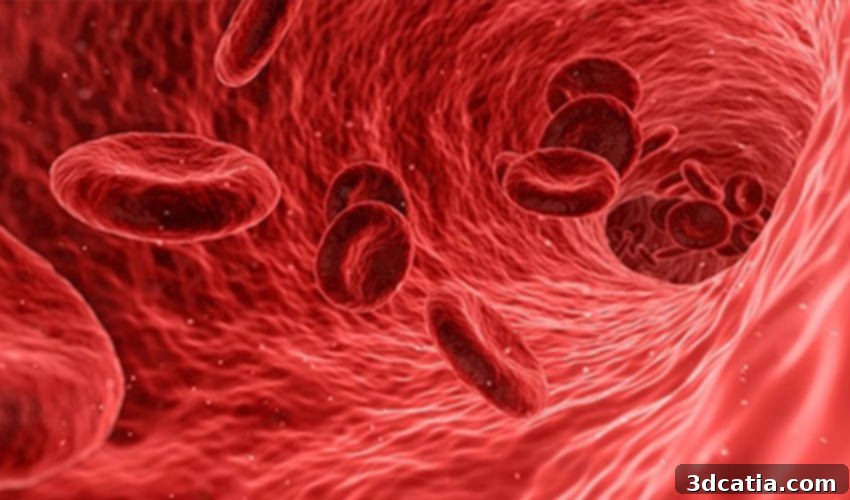
In a groundbreaking advancement that promises to reshape the landscape of medical treatment, researchers at ETH Zurich have successfully developed sophisticated 3D printed microrobots. These microscopic devices are engineered with the remarkable capability to navigate the intricate network of blood vessels within the human body, delivering precise drug payloads directly to diseased areas. This innovative leap is powered by a novel 3D printing technique that masterfully interlocks multiple materials in an incredibly complex and precise manner. The scientific community and medical professionals alike are brimming with optimism, as these tiny machines hold the potential to usher in a new era of targeted therapies, fundamentally revolutionizing how we approach medicine and patient care.
At the core of this pioneering manufacturing method lies the unparalleled expertise of ETH Professor Salvador Pané. For many years, Professor Pané has been at the forefront of high-precision stereolithography, a cutting-edge 3D printing technique specifically designed to fabricate complex objects at the minuscule micrometre level. His tireless dedication and profound understanding of micro-scale additive manufacturing have been instrumental in enabling this significant breakthrough. The ETH scientists adeptly applied this highly specialized method to construct a meticulous template for their groundbreaking micromachines. These templates feature incredibly narrow, intricately designed grooves that can be selectively filled with a diverse range of chosen materials. Through a meticulous process of electrochemical deposition, the scientists precisely infuse some of these minute grooves with various metals, while others are filled with specialized polymers. Once this precise material deposition is complete, the sacrificial template is carefully dissolved away using specific solvents, leaving behind a fully functional and intricately structured micromachine, ready for its intended purpose within the human body.
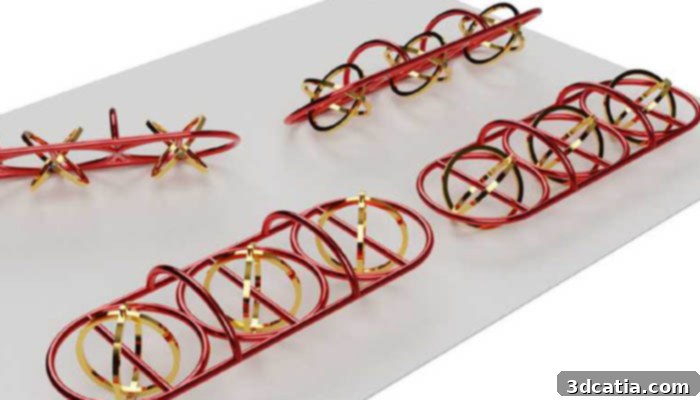
A computer graphic illustrating a sophisticated microvehicle featuring iron wheels (depicted in gold) and a resilient polymer chassis (shown in red). This advanced microrobot, capable of precision medical tasks, measures a mere 0.25 millimetres in length. Images via Alcântara et al. Nature Communications 2020, showcasing the intricate design potential of multi-material 3D printing.
One of the most remarkable aspects of these micromachines is their innovative propulsion system. Unlike traditional devices that might require internal power sources, these microrobots are externally powered and precisely controlled using applied magnetic fields. This necessitates the strategic integration of metal parts within their design, as metals are essential for responding to external magnetic forces, enabling directed movement and navigation through complex biological environments. Carlos Alcântara, one of the two principal authors of the pivotal research paper, elaborates on this crucial design philosophy: “Metals and polymers possess distinctly different properties, and each material offers unique advantages in the construction of micromachines. Our primary objective was to leverage the full spectrum of these properties simultaneously by intelligently combining both material types within a single, cohesive design.” This synergy is vital; while metals provide the necessary magnetic responsiveness for controlled movement and structural integrity, polymers offer a versatile array of benefits. Polymers can be engineered to construct soft, highly flexible components, which are crucial for navigating delicate biological structures without causing damage. Furthermore, certain polymers can be designed to dissolve harmlessly within the body, a feature that is particularly advantageous for drug delivery. By embedding medication or other active therapeutic substances within these soluble polymers, scientists can achieve unprecedented precision, enabling the selective and localized supply of active compounds directly to specific, targeted points within the body. This approach minimizes systemic exposure to drugs, thereby reducing potential side effects and enhancing therapeutic efficacy.
The current iterations of these advanced 3D printed microrobots already demonstrate impressive functionality. Some prototypes have been successfully propelled across glass surfaces, showcasing their controlled mobility. Depending on the specific polymer formulations utilized in their construction, other versions exhibit the ability to float freely within liquid mediums or even glide effortlessly on a liquid surface. These initial successes lay a robust foundation for future development. Looking ahead, the dedicated team of scientists is committed to continuously refining their sophisticated two-component micromachines. This ongoing research involves extensive experimentation with an even broader spectrum of materials, seeking to discover combinations that offer enhanced biocompatibility, durability, and functional versatility. Beyond material innovation, a significant research objective is to push the boundaries of geometric complexity. The team aims to engineer even more intricate shapes and complex machines, including revolutionary designs that possess the capability to fold and unfold themselves autonomously within the body. Such self-configuring microrobots could unlock entirely new possibilities for minimally invasive procedures and targeted therapies, offering unprecedented adaptability in dynamic biological environments. This relentless pursuit of innovation underscores the profound potential for these microscopic marvels to transform modern medicine.
The potential applications of these groundbreaking micromachines extend far beyond mere transportation devices for distributing active substances. While targeted drug delivery remains a primary and incredibly promising application, the future scope is vast and exciting. Imagine a future where these tiny robots could play a pivotal role in treating serious medical conditions such as aneurysms, which are dangerous bulges in blood vessels that pose significant rupture risks. By precisely navigating to the site of an aneurysm, these micromachines could potentially deliver reinforcing materials or localized treatments, obviating the need for highly invasive surgical interventions. Their precision could also pave the way for numerous other delicate surgical procedures performed with unparalleled accuracy at the micro-scale, reducing patient trauma and recovery times. Another compelling research goal is the development of self-unfolding stents. These tube-shaped vessel supports, essential for maintaining blood flow in narrowed arteries, could be designed to be delivered in a compact form and then precisely unfolded at a specific, diseased location within the body using external magnetic fields. This innovative approach promises enhanced placement accuracy and reduced procedural complexity compared to current methods. Such advancements represent a monumental step towards truly personalized and minimally invasive healthcare. For those keen to delve deeper into the scientific intricacies of this remarkable research, more comprehensive information can be found by following the link provided: HERE.
The implications of 3D printed microrobots in medicine are profound and far-reaching. They represent a significant paradigm shift from conventional systemic treatments, which often affect healthy tissues alongside diseased ones. By enabling precise, localized drug delivery, these tiny machines promise to dramatically reduce side effects, improve drug efficacy, and ultimately enhance patient quality of life. The ability to navigate microscopic pathways and perform complex tasks at the cellular level opens doors to treating diseases that are currently difficult to address with existing technologies. From precisely targeting cancer cells with chemotherapy to repairing damaged tissues or even performing intricate diagnostic procedures, the future possibilities are immense. This convergence of advanced additive manufacturing, nanotechnology, and biomedical engineering is poised to redefine what is achievable in healthcare, pushing us towards an era of highly personalized and ultra-precise medical interventions.
However, the journey from laboratory innovation to widespread clinical application involves overcoming several challenges. Rigorous testing for biocompatibility and long-term safety is paramount to ensure these microrobots interact harmoniously with the human body without adverse effects. Furthermore, scaling up production to meet future medical demands and navigating stringent regulatory approval processes will require significant effort and investment. Despite these hurdles, the pioneering work at ETH Zurich exemplifies the transformative power of cutting-edge research, offering a tantalizing glimpse into a future where microscopic robots could routinely monitor our health, deliver life-saving treatments, and perform intricate surgeries with unprecedented precision. The development of these multi-material 3D printed microrobots is not just an engineering marvel; it’s a beacon of hope for countless patients worldwide, promising less invasive, more effective, and truly revolutionary medical care.
What are your thoughts on these innovative 3D printed microrobots and their potential to transform medicine? We eagerly invite you to share your perspectives and comments below, or engage with us on our Facebook and Twitter pages! Don’t miss out on the latest advancements in additive manufacturing – be sure to sign up for our free weekly Newsletter, ensuring all the freshest news in 3D printing is delivered directly to your inbox!