
Westinghouse Pioneers Nuclear Safety with 1,000th 3D Printed Fuel Flow Plate for VVER-440 Reactors
In a monumental leap forward for additive manufacturing and the broader energy sector, Westinghouse Electric Company, a globally recognized leader in nuclear energy technology, has proudly announced the production of its 1,000th 3D printed fuel flow plate. These critical components are specifically designed for VVER-440 fuel assemblies, marking an unprecedented milestone. This achievement is particularly significant as it represents the nuclear energy industry’s first-ever instance of a safety-related 3D printed part successfully entering serial production. This accomplishment underscores the profound and expanding potential of advanced additive manufacturing technologies for highly critical, safety-demanding applications within the nuclear realm, setting a new benchmark for industrial adoption.
The integration of these newly developed 3D printed fuel flow plates into VVER-440 reactor assemblies has not only been seamless but has also led to a demonstrable enhancement in the overall operational performance and reliability of these vital systems. Fuel flow plates play a crucial role in regulating coolant flow within the fuel assemblies, ensuring optimal heat removal and maintaining safe operating temperatures. By precisely controlling the flow of water around the fuel rods, these plates prevent overheating and contribute directly to the efficiency and safety of the reactor. Leveraging the unparalleled capabilities of 3D printing, Westinghouse has once again reaffirmed its unwavering commitment to pioneering innovation, while simultaneously upholding the most stringent safety standards inherent in nuclear energy production. This dedication ensures that nuclear power remains a secure and efficient source of electricity for generations to come.
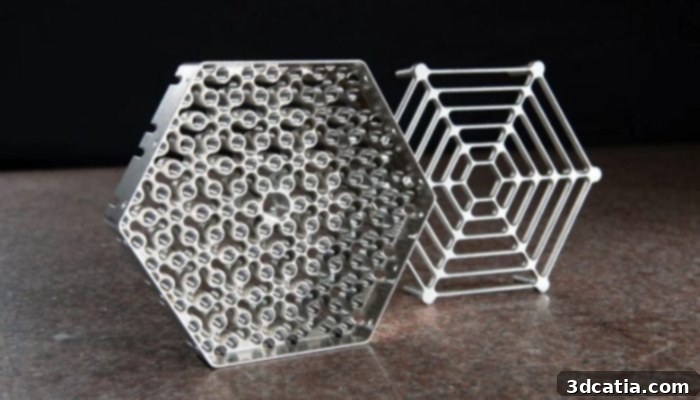
A 3D printed fuel assembly component from Westinghouse.
Lou Martinez Sancho, Westinghouse’s Chief Technology Officer and Executive Vice President, articulated the profound importance of this accomplishment. He emphasized, “This achievement showcases the development of additive manufacturing from prototyping to full-scale production, generating tangible value for our customers. This marks another Westinghouse pioneering achievement in AM Technology holding the commitment to strengthening safety, efficiency, sustainability and energy security.” His statement highlights the company’s strategic vision: to transition additive manufacturing from a specialized R&D tool into a cornerstone of its production processes, delivering real-world benefits across various operational aspects. This transition not only signifies technological maturation but also a significant shift in how critical components for the nuclear industry can be designed, produced, and deployed, ensuring greater resilience and adaptability in global energy infrastructure.
Westinghouse’s engagement with 3D printing technology dates back to 2015, demonstrating a consistent, long-term commitment to innovation in nuclear component manufacturing. Over nearly a decade, the company has diligently worked to integrate additive manufacturing into its operations, leading to significantly enhanced efficiency and productivity. This proactive adoption has simultaneously enabled the development of cutting-edge energy solutions tailored specifically for the rigorous demands of the nuclear sector. Prior to this latest achievement, Westinghouse marked another critical milestone with the installation of the industry’s first-ever safety-related additive manufacturing component, a Thimble Plugging Device (TPD), into a commercial nuclear reactor in 2020. The TPD serves a vital safety function: it holds nuclear fuel in place as it is lowered into the reactor core, and, crucially, it prevents nuclear debris from escaping during operations, thereby reinforcing safety protocols and integrity within the reactor.
The global landscape is currently witnessing an accelerated interest in cleaner, more sustainable energy solutions, placing nuclear power firmly in the spotlight as a low-carbon alternative. Concurrently, the adoption of 3D printing technologies within the nuclear sector has gained considerable and sustained momentum. This decade alone has showcased remarkable achievements made possible through the precise and versatile capabilities of 3D printing. These include the intricate fabrication of metal nuclear reactor cores, demonstrating the technology’s capacity for complex, high-tolerance manufacturing. Additionally, 3D printing has been instrumental in the production of robust fuel assembly brackets for the United States’ second most powerful nuclear reactor, ensuring structural integrity under extreme conditions. Furthermore, the innovative development of 3D printed microreactors in Indiana points towards a future of modular and distributed nuclear energy solutions. These diverse achievements collectively underscore the undeniable viability and significant potential of deploying certified 3D printed components within the highly regulated and safety-critical environment of the nuclear industry. The ability to produce parts with unprecedented geometric complexity, reduced lead times, and enhanced material properties is proving invaluable for modern nuclear applications.
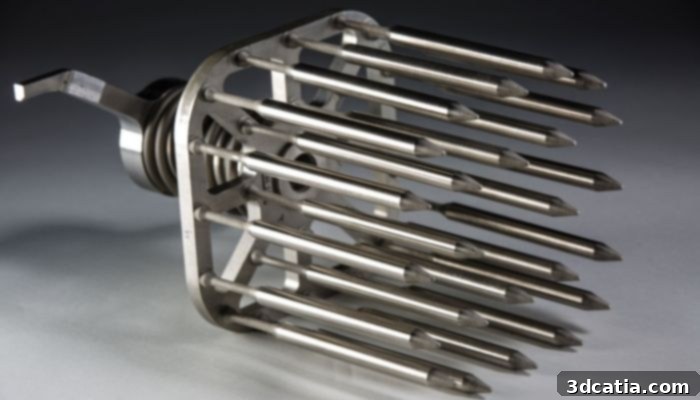
Westinghouse’s Thimble Plugging Device, used to hold nuclear fuel while it is lowered into the reactor core, and stop nuclear debris from escaping.
Westinghouse emphasizes that 3D printing, or additive manufacturing, offers a suite of unmatched benefits particularly well-suited for the nuclear industry. Its primary advantage lies in enabling the rapid production of complex components with intricate internal geometries that would be impossible or prohibitively expensive to create using traditional manufacturing methods. These components boast significantly improved durability and precision—essential factors for rigorously upholding the paramount safety and operational reliability standards of nuclear power plants. The ability to optimize designs for better performance, reduce material waste, and streamline supply chains are additional benefits. Moreover, additive manufacturing can significantly aid in the creation of materials and specialized tools that are inherently resistant to radiation, and which can be custom-designed for critical maintenance and repair tasks performed in highly radioactive settings. This capability allows for more efficient and safer handling of sensitive operations, minimizing human exposure and maximizing operational uptime. As leading nuclear powerhouses like Westinghouse increasingly embrace and integrate advanced manufacturing (AM) technology into their core operations, we can confidently anticipate witnessing even more substantial advancements and groundbreaking achievements within the nuclear sector in the years ahead, driving forward a new era of nuclear safety and efficiency.
The continued evolution of additive manufacturing in nuclear applications promises to revolutionize component design, material science, and operational logistics. The flexibility of 3D printing allows for rapid iteration of prototypes and optimization of parts, accelerating the development cycle for next-generation reactors and components. It also offers significant advantages in terms of supply chain resilience, enabling on-demand production of replacement parts, which can drastically reduce downtime and ensure continuous, safe operation of nuclear facilities. Furthermore, the environmental footprint can be reduced through optimized material usage and reduced waste generation during manufacturing. This strategic embrace of AM technology by Westinghouse not only reinforces their position as an industry pioneer but also paves the way for a more sustainable, secure, and efficient nuclear future. For those interested in delving deeper into this transformative milestone by Westinghouse and its broader implications, additional information can be found by clicking here.
What are your thoughts on Westinghouse’s innovative application of 3D printing to enhance overall safety and performance in the nuclear industry? We invite you to share your perspectives and insights in a comment below or join the conversation on our LinkedIn, Facebook, and Twitter pages! Additionally, don’t miss out on the latest advancements and news in the world of 3D printing; remember to sign up for our free weekly newsletter here, delivering the most important 3D printing news straight to your inbox! You can also explore all our insightful videos and engaging content on our dedicated YouTube channel.
*All Photo Credits: Westinghouse