
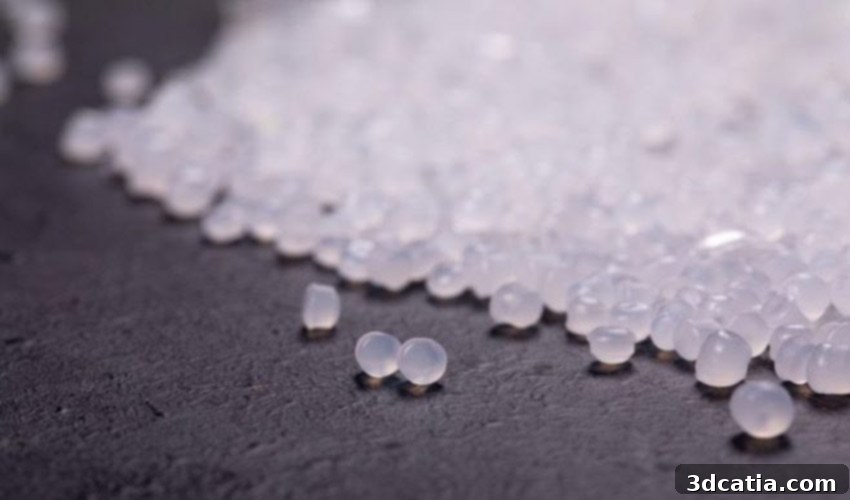
Pioneering Sustainable 3D Printing: MIT’s Cellulose Nanocrystal Composite Revolutionizes Materials
In a significant stride towards sustainable advanced manufacturing, a pioneering team of researchers at the Massachusetts Institute of Technology (MIT) has unveiled a novel composite material. This innovative material is ingeniously derived from a blend of a synthetic polymer and cellulose nanocrystals, showcasing a remarkable integration of natural abundance with synthetic precision. Developed in a versatile gel form, this composite has already demonstrated its potential by being successfully used to 3D print various intricate shapes, including a highly detailed dental tooth. This achievement not only highlights the material’s adaptability but also underscores its profound future applications, particularly in the realm of producing high-performance dental implants that boast exceptional strength and long-lasting durability, promising a new era for biomedical engineering and beyond.
The Power of Cellulose: A Sustainable Foundation for Advanced Materials
Cellulose stands as one of the most ubiquitous organic polymers on Earth, an essential structural component found abundantly in plants, trees, and various other living organisms such as algae and bacteria. Its sheer prevalence across our planet makes it an exceptionally compelling subject of study for scientists and engineers globally, who are tirelessly exploring its potential for diverse applications. The inherent renewability and biodegradability of cellulose position it as a cornerstone for developing environmentally friendly materials. For instance, the European project NOVUM, which we highlighted last year, exemplifies this global effort, focusing on transforming cellulose into viable 3D printing materials. Such initiatives are crucial in the quest for greener alternatives to conventional petroleum-based products, which often carry a substantial environmental impact across numerous industries, including the rapidly expanding field of additive manufacturing. The shift towards cellulose-based composites represents a pivotal step in mitigating ecological footprints and fostering a more sustainable industrial landscape.
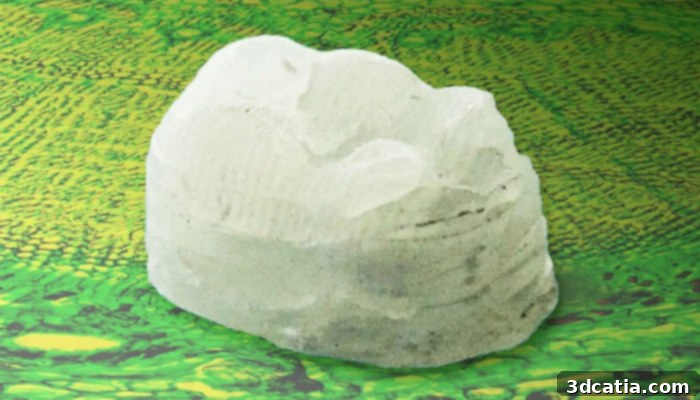
The MIT team successfully replicated the complex shape of a tooth using their innovative cellulose composite material, demonstrating its potential for intricate applications (photo credits: MIT)
Unlocking the Potential of Nanocrystalline Cellulose (CNC)
At the heart of MIT’s groundbreaking research lies nanocrystalline cellulose (CNC), a fascinating derivative of natural cellulose. The researchers meticulously describe CNC as organic polymer chains that are precisely arranged in nearly perfect crystal patterns. These remarkable nanostructures are typically extracted from cellulose fibers through a process known as acid hydrolysis, which isolates the crystalline regions, giving them their unique properties. CNCs are celebrated for an impressive array of characteristics, including exceptionally high strength, remarkable thermostability, and significant chemical reactivity. These inherent attributes make CNCs an ideal candidate for material enhancement, particularly in advanced composites. Recognizing this immense potential, the MIT team was driven to leverage the inherent strength of CNCs and delve into how this incredibly abundant and renewable material could be effectively exploited to create next-generation materials with superior performance and a reduced environmental footprint.
The MIT Composite: Formulation, 3D Printing, and Biomedical Promise
The innovative approach taken by the MIT researchers involved carefully mixing cellulose nanocrystals with a precisely chosen synthetic polymer. The critical step was identifying the optimal ratio between these two components, a balance that resulted in a uniquely formulated gel. This gel possesses ideal rheological properties, making it perfectly suited for extrusion-based additive manufacturing. It can be easily extruded through a bioprinter-type machine, which is equipped with a specialized pneumatic extruder, allowing for precise and controlled material deposition. While 3D printing is a key application, the team also emphasizes the material’s versatility, noting that it could equally be utilized through traditional manufacturing methods such as molding or machining, broadening its industrial appeal. For their demonstrations, the researchers meticulously deposited the gel layer by layer, progressively building various complex parts. A standout example was the precise reproduction of a tooth structure. This demonstration served as compelling evidence of the material’s significant utility in the medical sector, particularly for advanced applications like the production of robust and biocompatible implants. The physical properties of this organic composite are truly remarkable: its hardness is comparable to that of certain aluminum alloys, indicating exceptional wear resistance, while its resistance to breakage mirrors the impressive structural integrity found in the cell walls of wood, suggesting durability under stress. This combination of strength, biological origin, and printability opens exciting new avenues for biomedical devices and sustainable engineering solutions.
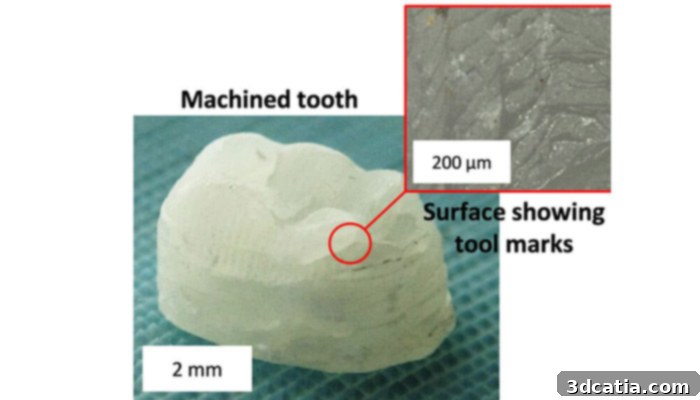
Microscopic view of cellulose nanocrystals, the foundation of MIT’s innovative composite material (Photo Credits: MIT)
Addressing Challenges and Envisioning a Sustainable Future
Despite the impressive advancements, the MIT researchers candidly acknowledge a critical challenge: the composite material undergoes shrinkage as it dries after extrusion, which can potentially lead to the formation of cracks, especially when attempting to create larger or more complex shapes. This post-extrusion shrinkage is a significant hurdle that the team is actively working to overcome, as it currently limits the scalability of the technology. Abhinav Rao, one of the lead researchers intimately involved in this transformative project, shared an optimistic perspective on future developments: “If you could avoid shrinkage, you could keep scaling up, maybe to the meter scale. Then, if we were to dream big, we could replace a significant fraction of plastics with cellulose composites.” This ambitious vision underscores the profound environmental implications of this research. Successfully addressing the shrinkage issue would not only enable the production of much larger components but also pave the way for a widespread adoption of cellulose-based composites across various industries. The substitution of petroleum-based plastics with sustainable alternatives like this composite material holds immense promise for reducing our global reliance on fossil fuels, mitigating plastic pollution, and significantly lowering the carbon footprint associated with material production. This innovative material thus represents a powerful tool in the global effort to create a more circular economy and foster a truly positive environmental impact for our planet, offering a greener future for manufacturing.
The potential applications of this cellulose nanocrystal composite extend far beyond dental implants. Imagine lightweight yet robust components for automotive and aerospace industries, biodegradable packaging solutions that leave no lasting trace, or even sustainable building materials. The versatility and eco-friendly nature of this composite position it as a frontrunner in the ongoing material revolution. Further research will undoubtedly focus on optimizing material properties, exploring new polymer combinations, and refining the printing process to unlock its full commercial and environmental potential. The journey from laboratory innovation to widespread industrial application is often challenging, but the foundational work by the MIT team offers a compelling glimpse into a future where sustainable materials are not just an aspiration but a tangible reality for advanced manufacturing.
Engage with the Future of Sustainable 3D Printing
What are your thoughts on this groundbreaking composite material, powered by the natural strength of cellulose nanocrystals? We invite you to share your insights and predictions for its impact in the comments section below. Join the conversation and connect with us on our social media channels: Linkedin, Facebook, and Twitter. Don’t miss out on the latest advancements and innovations in additive manufacturing – be sure to sign up for our free weekly Newsletter here to receive the freshest 3D printing news directly in your inbox! For more in-depth visual content, you can also explore all our videos on our dedicated YouTube channel. Discover more about the team’s pioneering work HERE.