
Beyond Plastics and Metals: A Deep Dive into Ceramic and Organic 3D Printing Materials
Over the past decades, additive manufacturing, commonly known as 3D printing, has witnessed an extraordinary evolution, transitioning from a niche prototyping tool to a powerful technology capable of producing functional components for diverse industries. This rapid growth has been fueled by continuous innovation in both printing technologies and, crucially, the materials available. Initially, the range of compatible materials was limited, primarily consisting of a few polymers such as PLA, ABS, various resins, and nylon. Soon after, metals entered the scene, opening up possibilities for high-strength, durable parts in aerospace, automotive, and medical fields. However, the true potential of 3D printing is continuously being unlocked with the integration of increasingly sophisticated and specialized materials. This article shifts its focus to two fascinating and increasingly vital material groups that are pushing the boundaries of what’s possible with additive manufacturing: ceramics and organic materials.
Ceramic Materials in 3D Printing: Precision, Durability, and Extreme Performance
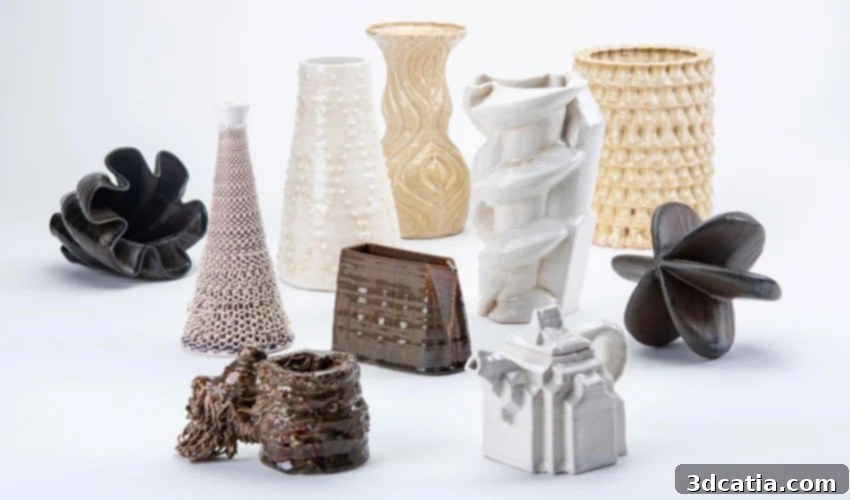
When the term “ceramics” comes to mind, many people envision traditional materials like clay pottery or fine porcelain. While these have their place, the world of 3D printable ceramics extends far beyond, encompassing advanced technical ceramics designed for high-performance applications. These materials are prized for their exceptional properties, including outstanding thermal stability, superior hardness, excellent wear resistance, chemical inertness, and often, electrical insulation properties. Such characteristics make ceramics indispensable for components operating in harsh environments where metals or plastics would fail.
Technical Ceramics: Engineering for Extreme Environments
The market for technical ceramics is broadly divided into two main categories: oxides and non-oxides. The oxide group includes materials such as alumina (aluminum oxide), zirconia (zirconium dioxide), and silica (silicon dioxide). Alumina is known for its high strength and excellent electrical insulation, often used in cutting tools, prosthetics, and electronic substrates. Zirconia offers remarkable toughness and fracture resistance, making it suitable for dental implants, medical devices, and wear-resistant parts. Silica, while less common in structural applications, is vital in refractory and thermal insulation products. The non-oxide group comprises materials like silicon carbide, silicon boride, and silicon nitride. Silicon carbide is celebrated for its extreme hardness, high thermal conductivity, and chemical resistance, finding applications in automotive brakes, ballistic vests, and semiconductor processing equipment. Silicon nitride provides superior strength and toughness at high temperatures, making it ideal for turbine components and bearings. These materials are perfectly suited for parts requiring exceptional resistance to high temperatures, corrosion, and abrasive wear, expanding their use in aerospace, biomedical, defense, and chemical processing industries.
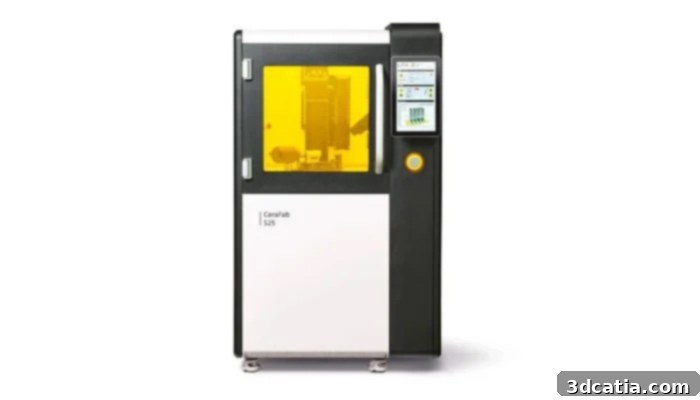
A ceramic 3D printer can employ various manufacturing processes to handle these challenging materials. Common techniques include binder jetting, where a liquid binding agent is selectively applied to a ceramic powder bed; stereolithography (SLA) or digital light processing (DLP), which use light to cure a ceramic-laden resin; and material extrusion (e.g., paste extrusion), where a ceramic paste is deposited layer by layer. Each method has its own advantages in terms of part complexity, surface finish, and material properties. Post-processing, often involving sintering at extremely high temperatures, is typically required to achieve the desired density and strength in ceramic parts. For those interested in the diverse range of available machinery, a comprehensive list of ceramic 3D printers on the market can provide further insights.
Sand: The Foundation for Advanced Casting
While often overlooked, sand is a ceramic material that has found a significant niche in additive manufacturing, particularly for its role in creating complex foundry molds and cores. Its application leverages the full benefits of 3D printing, enabling the rapid production of intricate geometries that would be impossible or prohibitively expensive with traditional methods. By 3D printing sand molds, manufacturers can achieve unparalleled design freedom, allowing for optimized internal structures and reduced material usage. This process significantly reduces waste, as only the necessary material is consolidated, leading to more sustainable manufacturing practices. Furthermore, the energy consumption for mold production is typically lower, and the manufacturing time is drastically shorter compared to conventional techniques, enabling faster iteration and time-to-market. Sand 3D printing is versatile, suitable for both mass production of finished castings and rapid prototyping, facilitating quick design verification and functional testing. Machines like ExOne’s S-Max Flex exemplify the capabilities in this sector, producing large-scale molds with impressive speed and precision. The video below showcases an excellent example of Sandhelden utilizing sand 3D printing to create sophisticated bathroom collections, demonstrating the aesthetic and functional potential of this material.
Concrete: Revolutionizing Construction with Additive Manufacturing
Concrete stands as another prominent ceramic material making a monumental impact, particularly in the construction sector. Its adaptation for 3D printing involves carefully formulated mixtures of stone aggregates, cement, and water, often with admixtures to optimize flow and setting times. This creates a uniform, printable mixture that can be precisely extruded layer by layer to form robust architectural structures. Additive manufacturing in construction has gained significant traction, promising a future of faster, more sustainable, and economically viable building practices. The primary advantages of using concrete 3D printing are manifold: it drastically accelerates construction timelines, with machines capable of erecting the walls of an entire house in as little as 48 hours. This speed translates directly into reduced labor costs and project overheads. Furthermore, concrete 3D printing minimizes material waste by depositing concrete only where it’s needed, allowing for highly efficient resource utilization. The technology also offers unprecedented design freedom, enabling architects to realize complex, organic, or custom geometries that would be challenging or impossible with traditional formwork. This opens doors for innovative architectural designs and the creation of highly customized living spaces. While the initial investment in concrete 3D printers can range from $180,000 to well over $1 million, the long-term economic benefits and efficiency gains are substantial. Key players in this emerging field include companies like Apis Cor, known for their house printers, and WASP, with their Crane series, which are actively shaping the future of building construction. These machines are not just building homes; they are redefining infrastructure and humanitarian aid, offering rapid deployment of housing in disaster-stricken areas or for addressing global housing shortages.
Stone Filaments: Aesthetics Meet Functionality
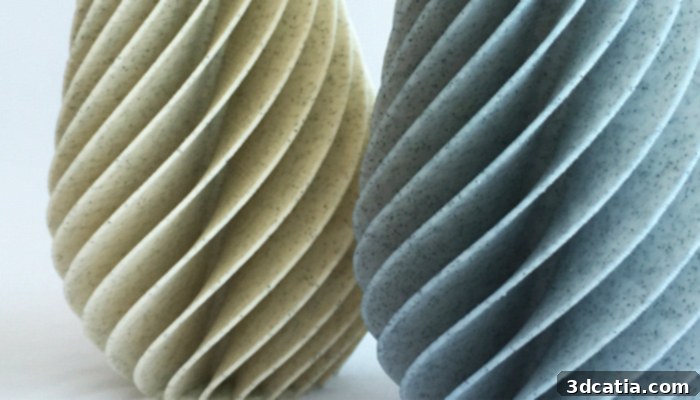
Stone, in a different form, also serves as a ceramic-compatible option for additive manufacturing, primarily through specialized filaments designed for FDM/FFF (Fused Deposition Modeling / Fused Filament Fabrication) 3D printers. These unique filaments are typically composed of a blend of finely ground stone or mineral powder, such as plaster or chalk, combined with a thermoplastic polymer binder like PLA or ABS. The resulting composite material allows for the traditional FDM printing process while imparting the aesthetic and tactile qualities of real stone. Manufacturers like ColorFabb and Formfutura have pioneered these stone-infused filaments. What makes these materials particularly appealing is their ability to produce prints that genuinely look and feel like natural stone, often exhibiting a matte, granular finish and a surprising heft. This characteristic makes them ideal for a wide range of decorative applications, architectural models, artistic sculptures, and prototypes where a natural, earthy appearance is desired. Post-processing techniques such as sanding, polishing, or even light tumbling can further enhance the stone-like texture and finish, allowing designers to create objects with a sophisticated and authentic natural appeal that belies their 3D printed origin. The ease of use with standard FDM printers, coupled with the striking visual and tactile results, has made stone filaments a popular choice for creators seeking to add an organic, tactile dimension to their 3D printed projects.
Organic Materials: Crafting Life and Sustainable Products
Beyond the robust and high-performance world of ceramics, additive manufacturing has also ventured into the fascinating realm of organic materials. This diverse category encompasses materials derived from living organisms or exhibiting organic properties, opening up entirely new applications from medicine to consumer goods and sustainable manufacturing. These materials often present unique challenges and opportunities due to their complex biological or chemical structures, offering functionalities impossible with traditional inorganic materials.
Biological Tissue: The Dawn of Bioprinting
Perhaps one of the most revolutionary applications of organic materials in 3D printing is bioprinting. This cutting-edge technology involves the 3D printing of “bio-inks” – complex formulations composed of living cells, growth factors, and biocompatible materials – to construct functional tissues and organs. The process typically involves depositing successive layers of these bio-inks through precision-controlled syringes or nozzles, carefully arranging cells and extracellular matrix components to mimic native biological structures. Current advancements in bioprinting have enabled the creation of various biological constructs, including skin grafts for burn victims, cartilage for joint repair, vascular tissues, and even preliminary attempts at printing complex organs like kidneys and hearts for research. While significant progress has been made, particularly in generating simple tissues and disease models for drug testing, challenges remain. These include achieving long-term cell viability, developing intricate vascular networks to sustain larger structures, and overcoming regulatory hurdles. Nevertheless, bioprinting holds immense promise for personalized medicine, organ transplantation, and the development of in vitro disease models, ultimately aiming to reduce the reliance on animal testing and address the critical shortage of donor organs. The journey is ongoing, but the scientific advances are tangible and inspiring.
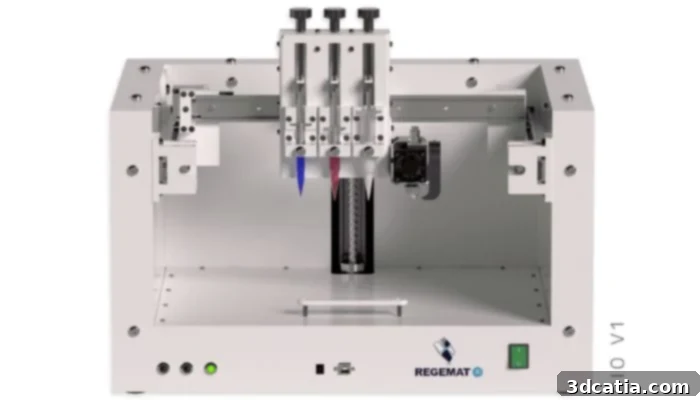
The BIO V1 3D bioprinter (photo credits: Regemat)
Wood: Sustainable Aesthetics and Functionality
Wood, as a natural organic material, has found its way into 3D printing in a couple of innovative forms. The most common application, similar to stone, is through specialized filaments for FDM/FFF 3D printers. These wood filaments are typically composite materials, containing a significant percentage (often 30-40%) of recycled wood fibers or sawdust mixed with a polymer binder (like PLA, ABS, or PETG, making up the remaining 60-70%). This composition allows the filament to be extruded like standard plastics while imparting the visual appeal, texture, and even scent of real wood. Manufacturers such as ColorFabb and Formfutura are leading providers of these materials, which can be post-processed by sanding, staining, or painting to further enhance their authentic wood appearance. These filaments are popular for creating decorative items, architectural models, prototypes requiring a natural look, and sustainable consumer products. Beyond filaments, more advanced solutions are emerging, such as Desktop Metal’s Shop System™ – Forust Edition. This system utilizes a binder jetting process to 3D print wood parts using sawdust and lignin (a natural polymer found in wood) as primary materials. This innovative approach addresses sustainability by upcycling wood waste from traditional manufacturing processes, transforming it into high-resolution, complex wood components. Wood 3D printing, especially via binder jetting, is opening doors for sustainable furniture production, unique architectural elements, and intricate decorative pieces, offering a truly eco-friendly alternative to traditional wood craftsmanship.
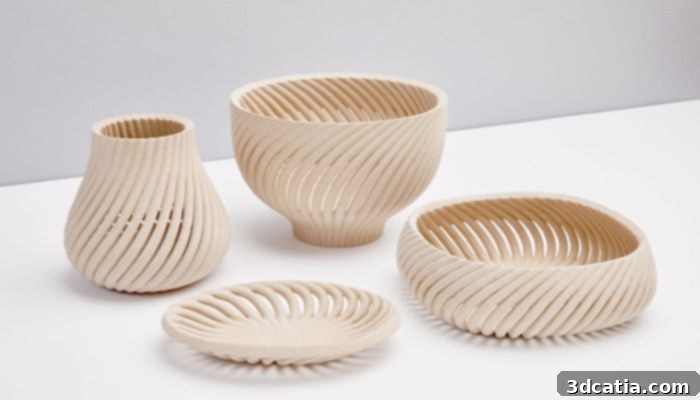
Photo Credits: Forust
Wax: Precision Patterns for Investment Casting
Wax is another organic material that plays a critical role in additive manufacturing, primarily serving as a versatile and precise material for creating patterns in investment casting. This “lost-wax casting” process is highly valued for its ability to produce intricate metal parts with excellent surface finish and dimensional accuracy. Wax 3D printing offers significant advantages over traditional wax pattern production by enabling the rapid creation of complex geometries that would be impossible or extremely time-consuming to achieve through injection molding or carving. The material properties of specialized 3D printable waxes, such as 3D Systems’ M3 Hi-Cast, are optimized for clean burnout, leaving minimal ash residue, which is crucial for flaw-free metal castings. These waxes are compatible with high-resolution 3D printers like 3D Systems’ ProJet MJP 3600W and 3600W Max, as well as the Project MJP 2500W, which are ideal for applications in jewelry making, dentistry, and small mechanical components. Stratasys, through its Solidscape brand, specializes in wax 3D printing machines with models like the 3Z Studio, 3Z Pro, and MAX2. These machines operate on a principle similar to FDM but include a milling tool for each layer, ensuring exceptionally smooth surfaces and precise dimensions, crucial for the fine details required in jewelry and dental prosthetics. Wax patterns are used across various industries, including the production of intricate mechanical parts, detailed artworks, precise dental restorations, and exquisite jewelry, where the ability to capture fine details and achieve smooth surfaces is paramount before the final metal casting.
Food: A Culinary Revolution Through 3D Printing
The concept of 3D printing food once seemed like science fiction, but it has rapidly become a delicious reality, revolutionizing the culinary landscape. From intricately shaped pasta and personalized chocolates to customized ice cream, savory bacon, and even plant-based meat alternatives, food 3D printing is transforming how we prepare and consume food. This innovative application leverages extrusion-based printing methods to deposit edible pastes, gels, powders, or liquids layer by layer, creating foods with unique textures, complex geometries, and tailored nutritional profiles. The benefits are numerous: it allows for unprecedented creativity in food design, enabling chefs and food scientists to craft visually stunning and architecturally complex dishes. It facilitates personalized nutrition, allowing for precise control over ingredients, nutrients, and even caloric content, which is invaluable for individuals with specific dietary needs, allergies, or health conditions. Food printing can also contribute to reducing food waste by utilizing ingredients more efficiently and enabling the use of alternative protein sources. For those wondering if specialized food printers exist, the answer is a resounding yes. Notable examples include the Foodini by Natural Machines, known for printing a wide variety of ingredients; Brill 3D Culinary Studio, offering gourmet possibilities; Mycuisini 2.0, providing versatility for home and professional use; and the Choc Creator V2 Plus, specifically designed for intricate chocolate creations. This technology is not just a novelty; it represents a significant step towards a future of customizable, sustainable, and innovative culinary experiences.
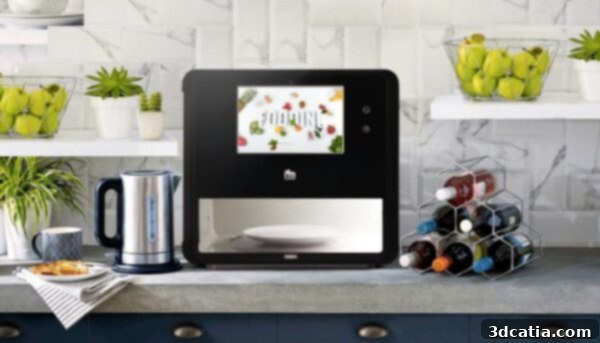
The Foodini 3D printer (photo credits: Natural Machines)
The world of additive manufacturing continues to expand at an incredible pace, and the advent of ceramic and organic materials marks a significant leap forward. These materials are not merely alternatives to plastics and metals; they represent new frontiers, enabling applications that demand extreme durability, biocompatibility, sustainability, and unprecedented creativity. From aerospace components built to withstand blistering temperatures to personalized organs and gourmet culinary creations, the possibilities are only just beginning to unfold. The ongoing research and development in these fields promise even more revolutionary breakthroughs, further integrating 3D printing into every aspect of our lives.
What do you think about ceramic and organic materials in 3D printing? Do you use them for your projects or foresee their widespread adoption? We’d love to hear your thoughts! Let us know in a comment below or join the conversation on our LinkedIn, Facebook, and Twitter pages! Don’t forget to sign up for our free weekly Newsletter here to get the latest 3D printing news delivered straight to your inbox! You can also find all our videos and more exciting content on our YouTube channel.