
Empowering the Visually Impaired: Artha France’s 3D-Printed Tactile Navigation System
The application of 3D printing in the disability sector is becoming increasingly diverse and impactful, continually offering innovative solutions that enhance lives. This includes the creation of customized prostheses, personalized hearing aids, and even specially adapted vehicles, showcasing the transformative power of additive manufacturing. In a remarkable development within this field, the Parisian startup Artha France, in collaboration with Sculpteo, a prominent leader in French 3D printing, has successfully completed the testing phase of an extraordinary new device. This product is specifically engineered to significantly improve the quality of life and independence for individuals with visual impairments.
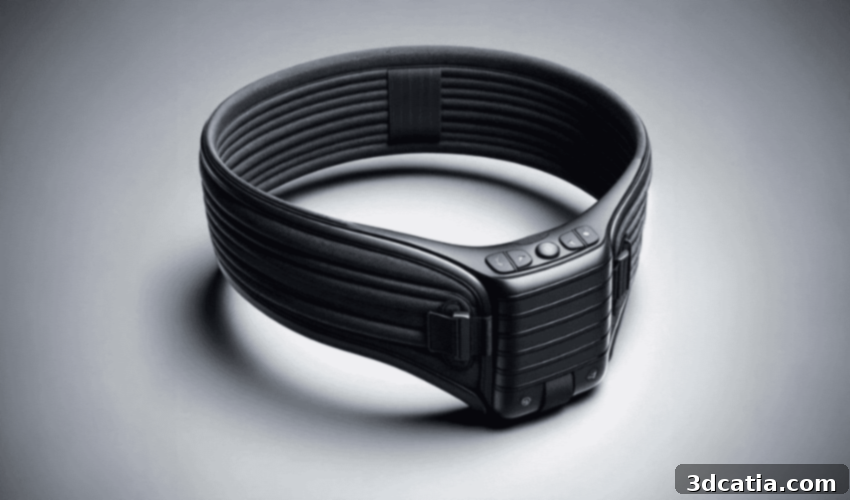
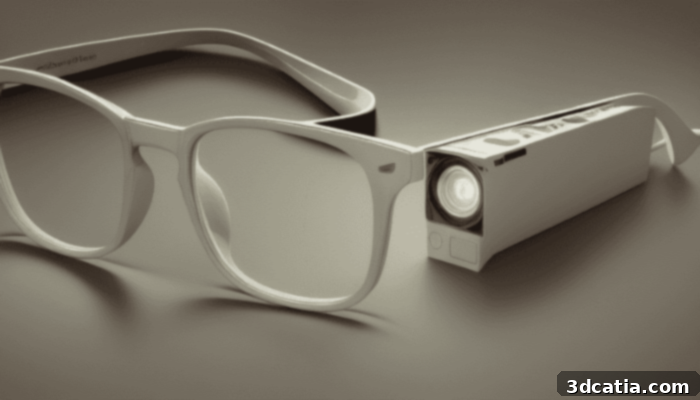
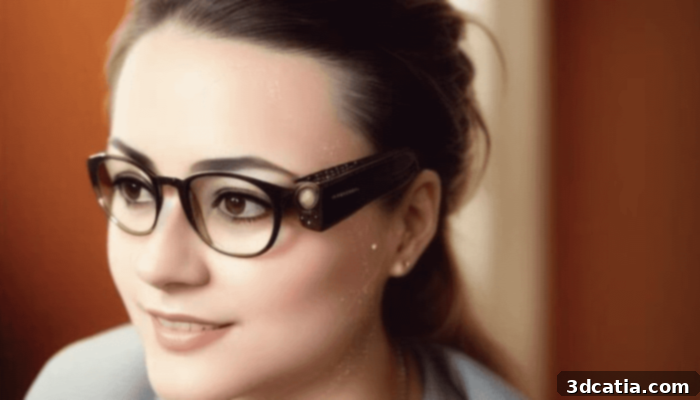
The innovative solution from Artha France consists of a discreet lumbar belt, equipped with a miniature camera that can be seamlessly attached to standard eyeglasses. This system is designed to provide real-time environmental feedback through tactile sensations. Since its development began in 2020, over 140 individuals have participated in extensive trials, testing the device in various everyday contexts. These scenarios ranged from using a computer and driving a car to navigating the complex and busy streets of Paris. This promising technological advance holds substantial potential as a valuable solution for increasing the autonomy and mobility of those affected by visual loss. Artha France is committed to making this innovation widely accessible, ensuring that its exceptional quality and performance are maintained throughout its lifecycle.
The strategic decision to utilize 3D printing technology has been pivotal in the manufacture of this lumbar belt. We recently had the exclusive opportunity to speak with Louis de Veron, co-founder of Artha France, to gain deeper insights into this breakthrough. Our conversation explored the intricate details of the device and how 3D printing plays a crucial role in enabling and refining this assistive technology, directly supporting individuals with disabilities. His perspective illuminated the profound impact of combining cutting-edge technology with a clear social mission.
Introducing Artha France: Revolutionizing Autonomy for the Visually Impaired
Artha France is a visionary company dedicated to pioneering innovative technological solutions that profoundly enhance the lives of visually impaired and blind individuals. Our project transcends simple technological innovation; it represents a genuine revolution for people who primarily rely on their tactile and auditory senses to perceive and interact with the world around them. Our overarching vision is to forge a future where autonomy and sensory perception are no longer confined or limited by visual impairment. We are passionately committed to enabling blind and visually impaired people to develop an entirely new and enriched perception of their environment, thereby gaining unparalleled independence in their daily movements and significantly improving their personal safety.
At Artha France, we firmly believe that every individual deserves the opportunity to live life to its fullest, regardless of their visual condition. Our journey towards realizing this belief has already seen several significant milestones. These include initial tests of a fully mechanical prototype, compelling proof-of-concept demonstrations that validated our core principles, and extensive experiments on movement and orientation conducted within immersive virtual environments. Pushing the boundaries of our device’s capabilities, we even undertook car driving tests, meticulously evaluating its performance and limits in complex, real-world scenarios. Each successful step reinforces our confidence in the transformative potential of our technology for the visually impaired community.
Detailed Functionality: How the Lumbar Belt Guides Visually Impaired Users
The Artha France lumbar belt is a sophisticated, integral component of our innovative assistive technology. Its core function involves ingeniously transforming visual images, captured by a compact mini-camera discreetly mounted on standard user eyeglasses, into interpretable tactile representations. This camera is precisely designed to continually scan and detect objects and potential obstacles within the user’s immediate environment. The captured visual data undergoes rapid, advanced processing to be converted into tactile information, primarily based on variations in depth perception. Instead of presenting conventional color images, our technology employs variations in depth to render an “image” of the surroundings, akin to a sophisticated black and white screen where changes in brightness are intelligently substituted by subtle yet discernible variations in depth.
Once the visual data has been thoroughly processed and translated, the resulting tactile information is wirelessly transmitted to the specialized lumbar belt worn by the user. This belt is equipped with an array of integrated mechanisms that generate gentle, precisely modulated pressure on the user’s skin. These haptic sensations collectively create a dynamic “image” of the environment, which the user perceives and interprets through their enhanced sense of touch. Essentially, the belt generates a spatial representation of surrounding objects and obstacles, allowing the user to literally “feel” their presence, proximity, and shape. The technology is meticulously designed to be intuitive and highly adaptable to the specific needs of each individual. Users or healthcare professionals can easily configure and customize settings via a dedicated mobile application, allowing for adjustments based on individual characteristics, preferences, and environmental conditions. Furthermore, a crucial and advanced feature of the belt is its ability to intelligently filter and selectively transmit only the most relevant tactile information. This critical function enables the user’s brain to focus on pertinent details, such as immediate obstacles, while effectively minimizing less crucial information, thereby significantly reducing cognitive overload and promoting a more efficient and less fatiguing navigation experience. This intelligent filtering is key to ensuring the system is both effective and comfortable for continuous use.
The Strategic Choice: Why 3D Printing Outperforms Traditional Manufacturing
The decision to adopt 3D printing for the Artha France lumbar belt project was fundamentally driven by two compelling factors: the promise of significant cost reduction and an unparalleled degree of flexibility throughout the product’s development and rigorous testing phases. One of the most notable and immediate advantages of 3D printing for this specialized project was the considerable reduction in manufacturing costs. In fact, additive manufacturing proved to be more than ten times cheaper than conventional production techniques. This substantial saving is particularly vital for an innovative device like the tactile lumbar belt, where meticulous cost control is crucial for making such advanced assistive technology genuinely accessible and affordable to a wider population of users who stand to benefit immensely.
Beyond the financial benefits, another pivotal advantage of this technology is the remarkable speed with which design modifications can be implemented, prototyped, and subsequently tested. With 3D printing, it is entirely feasible to transition from a conceptual idea for a structural alteration to having a fully functional, physical part ready for evaluation in under 24 hours. This extraordinary flexibility and responsiveness are absolutely essential in the development cycle of a cutting-edge technological product. In such an environment, rapid iterations, immediate testing, and quick feedback loops are not just desirable but fundamental to continually refining and optimizing both the design aesthetics and the core functionality of the device. This iterative capability dramatically accelerates the journey from initial concept to a refined, user-ready product, allowing Artha France to adapt and improve based on real-world user feedback with unprecedented agility.
Furthermore, 3D printing inherently allows for an exceptional level of component customization, which is incredibly valuable for a device designed to assist individuals with unique physical characteristics. The ability to precisely tailor the lumbar belt to the specific anatomical contours and functional needs of each individual user ensures maximum comfort, optimal efficacy, and true personalization—a feat that would be prohibitively expensive and time-consuming using traditional mass-production methods. Additive manufacturing also significantly speeds up the prototyping stage, empowering designers and engineers to swiftly explore and validate various configurations, ergonomic shapes, and material properties. This rapid prototyping capability not only shortens the overall development timeline but also provides invaluable, actionable feedback on the product’s functionality, durability, and user ergonomics from the earliest design stages. Lastly, 3D printing promotes greater sustainability by substantially reducing material waste; it operates on an “add-on” principle, producing only the exact amount of material required for each component, thereby minimizing surplus and environmental impact. In summary, 3D printing offers an unrivaled combination of cost efficiency, accelerated development, design flexibility, and personalized customization, making it the ideal manufacturing paradigm for the unique and critical requirements of Artha France’s innovative lumbar belt project.
Materials and Production: Leveraging TPU and Sculpteo’s Expertise
For the precise and consistent manufacturing of their innovative lumbar belts, Artha France has established a strategic partnership, entrusting its 3D printing requirements to Sculpteo. Sculpteo, widely recognized for its advanced additive manufacturing capabilities, utilizes Thermoplastic Polyurethane (TPU) as the primary material for these crucial components. The selection of TPU is deliberate and meticulously chosen due to its exceptional combination of flexibility and inherent robustness. These dual properties are paramount for a wearable device that must conform comfortably to the body while enduring the stresses of daily use and ensuring long-term reliability.
The superior flexibility of TPU allows the lumbar belt to adapt seamlessly to various body shapes and movements, ensuring an ergonomic and non-restrictive fit for a diverse user base. Its inherent durability guarantees that the belt can withstand the rigors of everyday activities, providing a long-lasting and dependable assistive solution for visually impaired individuals. By strategically leveraging Sculpteo’s specialized expertise in industrial 3D printing and their state-of-the-art production facilities, Artha France is able to consistently produce belts that embody these critical characteristics: flexibility, resilience, and superior user comfort. This collaborative approach not only streamlines the manufacturing process but also ensures that the final product adheres to the highest standards of quality and performance, directly contributing to the effectiveness and widespread adoption of this transformative assistive technology. This partnership exemplifies how combining innovative design with advanced manufacturing techniques can lead to groundbreaking products.
Final Thoughts from Artha France: The Power of Iteration and Experimentation
Louis de Veron, co-founder of Artha France, offers a powerful piece of advice for aspiring innovators and entrepreneurs: “Don’t hesitate to make numerous iterations in your projects. It is often much faster and more efficient to test an idea directly rather than spending a lot of time on lengthy studies to find out if it will work.” This profound wisdom underscores a fundamental principle of modern innovation and agile development. In today’s rapidly evolving technological landscape, the traditional approach of conducting exhaustive preliminary studies can often lead to stagnation, delaying market entry and potentially causing missed critical opportunities. Instead, a dynamic strategy that prioritizes rapid prototyping and direct experimentation offers a significantly more potent and efficient pathway to success.
By embracing frequent iterations, developers and designers can quickly transform theoretical concepts into tangible prototypes, gather immediate, real-world feedback from users, and meticulously refine their designs in a continuous, responsive cycle. This iterative process fosters an invaluable culture of continuous learning and improvement, allowing teams to swiftly identify flaws, discover unforeseen functionalities, and optimize performance much more efficiently than through purely theoretical analysis. Experimentation and learning through trial and error are not merely components but the very essence of innovation itself, acting as powerful catalysts that drive progress and enable the creation of truly impactful, user-centric solutions. Artha France’s remarkable success with their 3D-printed lumbar belt stands as a compelling testament to the transformative power of this philosophy in bringing revolutionary assistive technology to life.
We invite you to share your valuable thoughts and insights on Artha France’s pioneering work in the comments section below. Engage with us and the vibrant 3D printing community on our LinkedIn or Facebook pages! For the absolute latest updates and breaking news in the exciting world of additive manufacturing, don’t forget to sign up for our free weekly Newsletter, delivered directly to your inbox. You can also explore all our insightful video content, interviews, and demonstrations on our dedicated YouTube channel. Additionally, if you’re keen to delve deeper into the cutting-edge advancements and news within medical and dental 3D printing, be sure to visit our specialized page HERE for comprehensive coverage and expert analysis.