
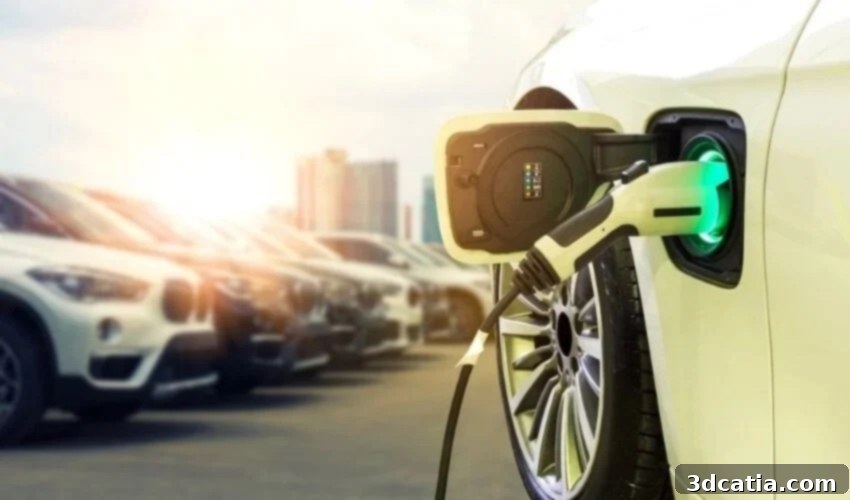
Revolutionizing Electric Vehicle Batteries: The Power of 3D Printing for a Sustainable Future
For many years, the environmental impact of vehicles with internal combustion engines, which are significant producers of polluting emissions, has been a major concern for our planet. This growing awareness naturally fuels an increasing interest in electric vehicles as a cleaner alternative. The environmental advantage of EVs is clear: they offer eco-friendly driving with zero local CO2 emissions. However, the environmental narrative shifts significantly when we consider the production of the batteries that power these vehicles. The journey towards a truly green future necessitates addressing these manufacturing challenges. In a significant step towards this goal, the U.S. Department of Energy (DOE) has awarded approximately $1.5 million in funding to Ampcera and Lawrence Livermore National Laboratory (LLNL). This vital funding aims to dramatically improve the performance and energy density of lithium-ion batteries through advanced additive manufacturing techniques, ultimately making them more economical, sustainable, and powerful.
The Core Challenge: Making Lithium Batteries Truly Green
Lithium-ion batteries are undeniably the heart of any electric vehicle, largely dictating its range, performance, and overall operational efficiency. While they enable the environmentally conscious operation of EVs, their production process comes with its own set of significant environmental and logistical drawbacks. These include the often environmentally unfriendly and resource-intensive extraction of raw materials such as lithium, cobalt, and nickel, which can have considerable ecological footprints and raise ethical sourcing concerns. Furthermore, lithium-ion batteries are known for their flammability and require complex, heavy, and energy-consuming cooling systems to operate safely and efficiently, adding to the vehicle’s weight and cost. Addressing these inherent limitations is crucial for the widespread adoption and long-term sustainability of electric transportation.
Recognizing these critical challenges, the U.S. Department of Energy has intervened with strategic funding and support. Their initiative is designed not just to incrementally improve existing battery technology, but to fundamentally transform how these essential components are manufactured. By focusing on cutting-edge research and development, the DOE aims to mitigate the environmental impact of battery production, enhance safety, and boost performance, thereby paving the way for a new generation of electric vehicles that are truly sustainable from conception to operation. This ambitious project underscores a global commitment to clean energy and the continuous innovation required to achieve it, pushing the boundaries of what’s possible in energy storage and material science.
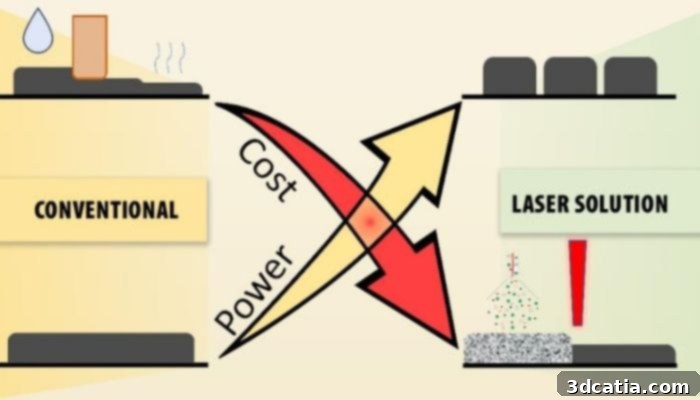
The goal is to reduce costs and increase performance through innovative manufacturing (photo credits: LLNL)
Additive Manufacturing: The Key to Next-Generation Lithium Batteries
Unlocking Potential with 3D Printing Technology
Ampcera, a recognized innovator and supplier in the advanced lithium battery market, is at the forefront of this transformative project. In close collaboration with Lawrence Livermore National Laboratory (LLNL), their joint effort stands as one of six energy systems projects specifically selected for an award from the DOE’s Advanced Manufacturing Office. The overarching objective of this critical initiative is to significantly reduce industrial emissions associated with battery production and, consequently, accelerate the development and deployment of truly clean energy technologies. This ambitious goal is to be realized through the strategic application of additive manufacturing, commonly known as 3D printing, a process celebrated for its exceptional energy efficiency and precision.
The integration of additive manufacturing into lithium battery production promises a paradigm shift in the industry. Experts anticipate a drastic reduction in manufacturing costs—by more than 50%—making batteries more accessible and affordable for a wider range of electric vehicles. Furthermore, the efficiency gains are projected to be substantial, with additive manufacturing expected to be more than 10 times more efficient than conventional, traditional battery manufacturing methods. This leap in efficiency not only translates to cost savings but also to a more resource-efficient and environmentally responsible production process. Beyond economics and efficiency, 3D printing is also set to dramatically boost the performance metrics of lithium batteries. The project aims to increase energy density to over an impressive 450 Wh/kg, which would allow for significantly longer driving ranges for electric vehicles, and reduce costs to less than US$75 per kWh, a crucial threshold for widespread EV adoption. While the exact proprietary process used by Ampcera and LLNL for this innovative manufacturing remains under wraps, the potential implications for the electric vehicle industry and sustainable energy storage are profound.
Designing for Performance: The Role of 3D Cathode Structures
Lawrence Livermore National Laboratory (LLNL) is particularly keen on leveraging additive manufacturing due to its inherent environmental friendliness and its unparalleled ability to process large, intricate 3D cathode structures with exceptionally high capacities. This capability is a game-changer for battery design. Traditional battery manufacturing limits the complexity of internal structures, often resulting in suboptimal energy flow and slower charging rates. However, with 3D printing, researchers can design and produce cathodes with highly optimized, three-dimensional architectures. These complex geometries significantly increase the surface area available for electrochemical reactions and reduce the path length for lithium ions, facilitating much faster ion transport. The result is a battery that can absorb and release energy far more efficiently.
The practical implications of such advancements are revolutionary for electric vehicle owners. It means that lithium batteries could achieve a rapid 80 percent charge in a remarkably short period—as little as 15 minutes or even less. This dramatically reduces range anxiety and makes EVs a more viable option for long-distance travel and daily use, matching or even surpassing the refueling times of conventional gasoline vehicles. Hui Du, chief technology officer and co-founder of Ampcera, expressed profound optimism regarding the partnership with LLNL, emphasizing the synergy between their expertise. “The partnership between LLNL and Ampcera will accelerate the development and commercialization of the ultra-fast and low-cost L-PBF (Laser Powder Bed Fusion) additive manufacturing technology for high-performance lithium battery manufacturing,” Du stated. This specific additive manufacturing technique allows for the creation of incredibly detailed and precise structures, which is critical for optimizing battery components at a microscopic level.
Du further elaborated on the ambitious roadmap: “After developing 3D-structured cathodes, we expect to expand the technology to anode design and also further explore its application in all-solid-state Li metal batteries with even higher energy and power densities.” This vision extends beyond current lithium-ion technology to the next frontier of battery innovation. All-solid-state lithium metal batteries are considered the holy grail of energy storage, promising significantly higher energy density (meaning more power in a smaller, lighter package), enhanced safety due to the elimination of flammable liquid electrolytes, and even faster charging capabilities. By leveraging additive manufacturing for both cathode and anode design, and ultimately for solid-state architectures, Ampcera and LLNL are not just improving existing technology; they are laying the groundwork for a future where electric vehicles are more efficient, safer, and truly sustainable. This collaborative effort, supported by the DOE, represents a monumental step towards decarbonizing transportation and creating a cleaner, more energy-independent world. If you’d like to learn more about this innovative green project, click HERE for further details directly from LLNL.
The Broader Impact: Towards a Truly Sustainable EV Ecosystem
The advancements pioneered by Ampcera and LLNL, with the crucial backing of the U.S. Department of Energy, extend far beyond just improving battery specifications. They represent a fundamental shift in the approach to energy storage, one that prioritizes sustainability, efficiency, and performance in equal measure. By significantly reducing the manufacturing cost and environmental footprint of lithium-ion batteries, this initiative makes electric vehicles more accessible and attractive to a broader consumer base. Cheaper, faster-charging, and longer-lasting batteries are key enablers for widespread EV adoption, which is critical for achieving global climate goals and reducing reliance on fossil fuels.
Moreover, the research into all-solid-state lithium metal batteries via additive manufacturing opens up a future where batteries are not only powerful but also inherently safer and more durable. The elimination of liquid electrolytes mitigates the risk of thermal runaway and associated fire hazards, leading to safer vehicles and energy storage solutions for homes and grids. The increased energy density means that future EVs could offer ranges comparable to or exceeding gasoline cars, removing a significant barrier for many potential buyers. This research also has implications for other sectors requiring high-performance energy storage, such as renewable energy grid integration, portable electronics, and even aerospace applications. The ability to customize battery structures with such precision through 3D printing could lead to tailored battery solutions for virtually any application, optimizing performance and material use.
This collaborative effort underscores the critical role of public-private partnerships and scientific innovation in tackling some of the world’s most pressing environmental and technological challenges. By investing in advanced manufacturing techniques like 3D printing for battery development, the DOE and its partners are not just building better batteries; they are building the foundation for a sustainable, electric future that benefits everyone. The implications for job creation, technological leadership, and environmental protection are immense, demonstrating how targeted research and development can catalyze profound positive change across industries and society.
What are your thoughts on these innovative 3D printed lithium batteries and their potential to transform electric vehicles? We’d love to hear from you! Let us know in a comment below or join the discussion on our Linkedin, Facebook, and Twitter pages! Don’t forget to sign up for our free weekly Newsletter here to receive the latest 3D printing news straight to your inbox! You can also find all our videos and interviews on our YouTube channel, showcasing the cutting edge of additive manufacturing technology.