
Revolutionizing Thermal Management: The Integrated 3D-Printed Pipe Segment for Next-Generation Heat Exchange
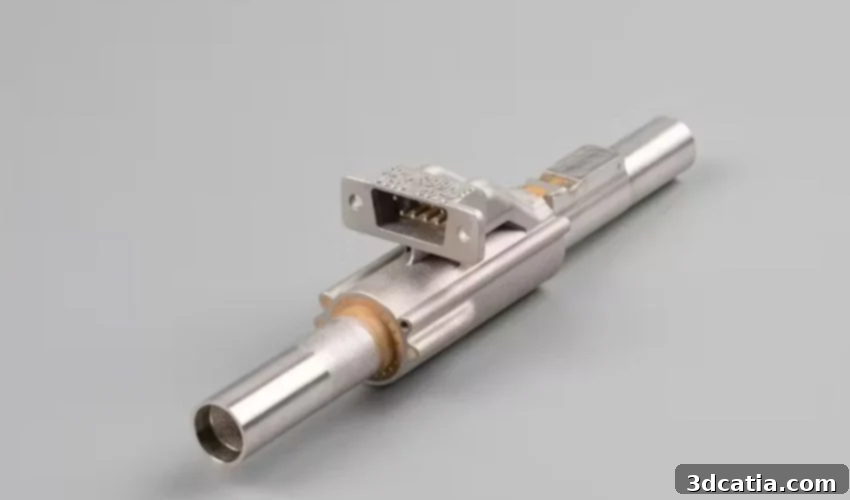
Traditional thermal control systems, essential for maintaining optimal operating temperatures in various advanced applications, have long been plagued by significant drawbacks. They are often heavy, bulky, and necessitate a complex web of connecting cables, leading to increased installation time, higher failure rates, and reduced overall efficiency. Recognizing these limitations, the European Union’s ambitious AHEAD (Advanced Heat Exchange Devices) project embarked on a mission to optimize these critical systems. This groundbreaking initiative has now unveiled a remarkably promising result: an innovative 3D-printed pipe segment designed to efficiently heat liquids within Mechanically Pumped Loops (MPLs) while simultaneously measuring their temperature with precision.
This pioneering pipe segment is the result of a collaborative effort between the renowned Swiss Technology Innovation Center CSEM, LISI Aerospace Additive Manufacturing, and Thales Alenia Space France. What truly sets this 3D-printed component apart is its ingenious integration of both heating elements and temperature sensors into a single, compact unit. This unique capability signifies a massive leap forward, particularly for demanding applications like satellite thermal control systems. Satellites orbiting Earth face extreme temperature fluctuations, constantly transitioning between the intense heat of direct sunlight and the extreme cold of deep space. Preventing overheating on one side and freezing on the other is paramount for mission success, and this integrated solution offers an unprecedented level of control and reliability.
Beyond the unforgiving environment of space, the implications of this advanced pipe segment extend to a myriad of terrestrial applications. It is poised to play a pivotal role in the burgeoning fields of the Internet of Things (IoT) and Industry 4.0, where precise thermal management solutions are becoming increasingly vital. In these sectors, maintaining stable operating temperatures for sensitive electronics and machinery is crucial for enhancing the reliability, longevity, and performance of various processes. From smart factories to advanced sensor networks, the ability to heat and monitor temperatures within a single, streamlined component promises to revolutionize how thermal challenges are addressed.

The segment weighs 115 grams, is 150 millimetres long and can operate at temperatures ranging from -65 °C to +85 °C and at a pressure of up to 48 bars (photo credits: CSEM)
Understanding Mechanically Pumped Loops and the Role of the 3D-Printed Segment
To fully appreciate the significance of this innovation, it’s important to understand the context of Mechanically Pumped Loops (MPLs). MPLs are closed-loop systems that circulate fluids, such as ammonia or other coolants, to efficiently transport heat from hot areas to colder ones. They are widely used in applications where precise temperature regulation is critical, including advanced spacecraft, cooling systems for high-performance computing, and certain industrial processes. The core function of the newly developed 3D-printed pipe segment within these loops is twofold: it effectively heats the circulating coolant when needed and, simultaneously, accurately measures its temperature. This integrated capability allows for unprecedented control over thermal regulation, ensuring that the system operates within optimal parameters at all times, preventing both undercooling and overheating.
The Power of Additive Manufacturing: How the Pipe Segment is Produced
The manufacturing process behind this advanced pipe segment is as innovative as the product itself. Crafted from robust 316L stainless steel, a material known for its excellent corrosion resistance and mechanical properties, the pipe was produced using laser powder bed fusion (LPBF). LPBF is a highly precise additive manufacturing technique that builds parts layer by layer from metal powder using a laser. This method proved instrumental in achieving the complex integrated design of the pipe segment.
The adoption of 3D printing fundamentally transformed the assembly process. Traditionally, integrating heating elements and sensors into a pipe would require multiple separate components, each needing to be glued, welded, or wired into place. This often involved intricate manual labor, increasing the risk of errors such as faulty connections, delamination, or cable separation, which could severely compromise the reliability of the MPL system. By leveraging LPBF, the need for these separate components and the associated complex wiring processes was dramatically reduced, if not entirely eliminated. This not only simplifies the installation of MPLs but also significantly lowers the overall risk of system failure, leading to a more robust and dependable thermal control solution.
Hervé Saudan, project manager at CSEM, further underscored the advantages of this design. He highlighted that the innovative structure ensures remarkably uniform heat transfer. This is achieved by optimally arranging the heating wires around the tube during the printing process. Unlike traditional methods where heating elements might be attached externally or in a less integrated fashion, this precise embedded arrangement prevents localized hot spots or inefficiencies. The seamless integration eliminates common errors like delamination or cable separation that can occur in assembled systems, guaranteeing consistent performance and extended operational life.
Overcoming Manufacturing Challenges: Precision and Insulation
While additive manufacturing offers unparalleled design freedom, the production of this sophisticated pipe segment was not without its significant challenges. One of the primary hurdles was the task of 3D printing long electrical wires that needed to remain completely electrically insulated from the main metallic tube structure. Given that the entire component is made from a conductive material (316L stainless steel), achieving this insulation internally during a layer-by-layer printing process required ingenious engineering.
To address this, the development team engineered “sacrificial bridges.” These are temporary design elements that are printed alongside the main structure. They serve to maintain electrical insulation between the embedded wires and the surrounding metal tube structure throughout the printing and initial post-processing phases. Crucially, these sacrificial bridges are designed to be easily removed during the curing or final finishing stages, leaving behind the insulated wires perfectly integrated within the pipe. This clever design solution was paramount in enabling the successful integration of conductive elements within a metallic printed part without short-circuiting.
Another critical challenge revolved around the extreme precision required for laser powder bed fusion, particularly concerning the minute gaps between the structure and the embedded wires. The tolerance for these gaps was incredibly narrow. If the gaps were too constricted, it could lead to excessive material fusion, potentially compromising the insulation or the structural integrity of the embedded wires. Conversely, if the gaps were too wide, it would adversely affect the efficiency of heat transfer from the heating wires to the fluid inside the tube, reducing the system’s overall performance. Achieving the perfect balance required meticulous design iterations and precise control over the LPBF parameters. The success in navigating these complex manufacturing and design obstacles has led to the protection of these innovative processes by a patent, underscoring the novelty and proprietary nature of this advanced thermal solution.
Future Horizons: Materials and Applications
Looking ahead, the potential for this 3D-printed pipe segment is immense. For future space applications, where every gram of weight is critical, the structure of such pipe segments could be made from alternative materials like aluminum. Aluminum offers significant weight reduction benefits compared to stainless steel, which could lead to substantial fuel savings and increased payload capacity for spacecraft. Beyond the primary structural material, the integration of other advanced materials is also being explored. For instance, glass ceramics could be utilized as insulating material for even greater thermal and electrical isolation, offering enhanced performance in extreme environments. Similarly, advanced resins might be incorporated for specific applications requiring different material properties or ease of fabrication for certain embedded components.
The core advantage of integrated cables and components within a 3D-printed structure paves the way for a vast array of further applications in the field of heating and thermal management. This technology could be adapted for use in compact medical devices, advanced automotive systems, high-efficiency energy transfer systems, and even specialized industrial equipment where space is at a premium and reliability is non-negotiable. Hervé Saudan from CSEM confirms the ongoing development: “We have several running projects but at this time I’m afraid they remain confidential.” This statement hints at the continuous innovation taking place and the potential for even more groundbreaking applications leveraging this integrated 3D printing approach. For those interested in delving deeper, more information about this particular pipe segment can be found HERE.
Join the Conversation
What are your thoughts on the production and potential impact of this revolutionary 3D-printed pipe segment? We’d love to hear your perspective! Let us know in a comment below or connect with us on our LinkedIn, Facebook, and Twitter pages! Don’t forget to sign up for our free weekly Newsletter here to receive the latest 3D printing news straight to your inbox! You can also find all our videos, including more innovations in additive manufacturing, on our YouTube channel.
*Cover Photo Credits: CSEM