
Transforming Industries: Top 5 Additive Manufacturing Innovations in Action
This week, we delve into the groundbreaking world of 3D printing, showcasing the top five videos that highlight how additive manufacturing is fundamentally reshaping global production paradigms. This revolutionary technology has seamlessly infiltrated a multitude of sectors, from cutting-edge medical applications to sophisticated automotive advancements, demonstrating its unparalleled versatility and transformative potential. Our carefully curated selection offers a comprehensive glimpse into the latest innovations and breakthroughs in the 3D printing landscape. Stay informed and inspired by checking out these must-watch videos, designed to keep you abreast of the rapid evolution in this dynamic field. For those eager to explore even more captivating content, our YouTube channel hosts an extensive library of 3D printing videos. We hope you enjoy this insightful journey into the future of manufacturing and have a fantastic Sunday!
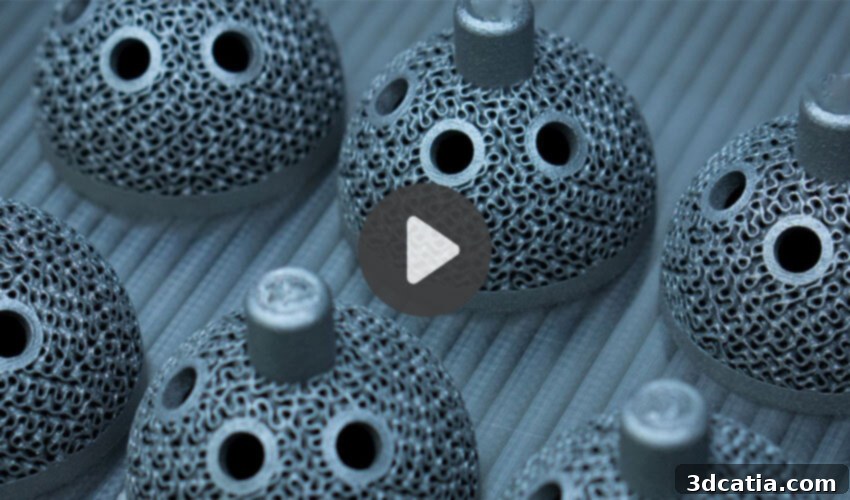
Top 1: 3D Printed Orthopaedic Implants for Croom Precision Medical
In the highly critical field of orthopaedic implant manufacturing, unwavering reliability and consistent quality are not merely desirable attributes but absolute necessities. These factors directly impact patient outcomes and the long-term success of medical procedures. To uphold these stringent standards and achieve superior, repeatable results, Croom Precision Medical (CPM) strategically partnered with Renishaw, a pioneer in advanced manufacturing technologies, to leverage their expertise in 3D printing orthopaedic implants. This collaboration represents far more than a simple acquisition of technology for CPM; it is viewed as a prudent and smart financial investment, underpinning a long-term strategic vision rather than just a short-term tactical move. By embracing the power of additive manufacturing technology, CPM is proactively working towards significant reductions in the cost of goods, an essential objective in today’s healthcare market. Simultaneously, this advanced approach ensures the production of exceptionally high-quality orthopaedic implants, offering unparalleled precision, customization, and performance. 3D printing enables the creation of complex geometries and patient-specific designs that would be impossible or prohibitively expensive with traditional manufacturing methods, thereby enhancing surgical success rates and patient recovery times. This shift not only optimizes their operational efficiency but also solidifies their commitment to delivering state-of-the-art medical devices that benefit both patients and healthcare providers.
Top 2: Data Management in Additive Manufacturing
Additive Manufacturing (AM) is fundamentally revolutionizing the way products are designed, developed, and brought to market, offering unprecedented flexibility and complexity in production. However, amid the excitement surrounding its transformative capabilities, the critical importance of robust data management in AM often goes unaddressed. The immense amount of data generated at every stage of the AM process – from initial design and material selection to process parameters, build monitoring, post-processing, and quality assurance – necessitates a sophisticated and integrated approach to data handling. Without effective data management, achieving repeatability, ensuring traceability, validating processes for certification, and scaling AM operations efficiently become significant hurdles. This insightful video from ASTM International’s Additive Manufacturing Center of Excellence sheds light on this crucial topic, outlining a comprehensive roadmap for effective data management in additive manufacturing. It highlights how standardized data protocols and integrated platforms are essential for capturing, storing, analyzing, and leveraging this data to optimize processes, improve part quality, and drive innovation. The video features compelling interviews with leading AM professionals from esteemed organizations such as NASA, Siemens, and GE, offering invaluable perspectives on the challenges and solutions related to data integrity, security, and accessibility within the additive manufacturing ecosystem. Their expertise underscores the fact that the future success and widespread adoption of AM heavily depend on robust, intelligent data management strategies.
Top 3: Ultimaker: Flame Retardant Materials for 3D Printing
The demand for advanced materials with specific performance characteristics is continuously growing across various high-stakes industries. Among these, flame-retardant materials stand out as critical for applications where safety and regulatory compliance are paramount. These specialized polymers enable advanced applications in sectors such as aerospace, where fire safety is non-negotiable; automotive, for interior components and electrical systems; railway, for public transport safety; and electronics, to prevent the spread of fire in devices. The integration of 3D printing with these high-performance materials opens up new frontiers for design and production, allowing engineers to create lightweight, complex parts with enhanced safety features. In this illuminating video, leading 3D printing experts from Clariant and DSM, prominent innovators in material science, discuss the manifold advantages of utilizing such flame-retardant materials. They delve into diverse applications, showcasing how these materials can be effectively employed to meet stringent industry standards while offering the design freedom inherent in additive manufacturing. Furthermore, the discussion highlights the pivotal role of Ultimaker, a key player in the desktop 3D printing market, in facilitating the adoption and accessibility of these advanced materials through their open material platform and strategic collaborations. This synergy between material developers and printer manufacturers is accelerating the development and widespread use of safer, more reliable 3D printed components across critical industries, pushing the boundaries of what’s possible with additive manufacturing.
Top 4: Customer Success Story: Re3DTech and Paperless Parts
In the rapidly evolving landscape of modern manufacturing, efficiency, security, and compliance are paramount, especially for companies providing prototyping and production services. Paperless Parts has emerged as a disruptive force, offering a secure, ITAR registered, and compliant cloud-based platform that is revolutionizing how manufacturing businesses operate. This innovative software platform streamlines the entire quoting and order management process, transforming traditionally complex and time-consuming workflows into agile and transparent operations. Its impact is vividly demonstrated through the success story of Re3DTech, a company specializing in advanced prototyping and production services, which has significantly enhanced its capabilities by integrating Paperless Parts into its daily operations. The video vividly illustrates the tangible benefits Re3DTech experiences, showcasing how the software empowers them to generate faster, more accurate quotes, manage intricate projects with greater ease, and improve communication channels with their clients. The core value of Paperless Parts lies in its ability to digitize and automate critical functions, from intelligent part analysis and pricing to secure data transfer, which is particularly vital for ITAR-compliant projects. This digital transformation allows companies like Re3DTech to boost their competitiveness, reduce lead times, minimize human error, and allocate more resources to innovation and customer satisfaction. Discover in this compelling video how Paperless Parts works collaboratively with Re3DTech to deliver exceptional customer success, setting new benchmarks for efficiency and reliability in custom manufacturing and additive manufacturing service bureaus.
Top 5: Siemens Energy Innovation Center | 3D Printing for Production
The Siemens Energy Innovation Center stands as a beacon of advanced manufacturing, a unique facility expertly designed to seamlessly integrate cutting-edge design capabilities with state-of-the-art production processes. This center is at the forefront of industrial innovation, implementing sophisticated robotics, rapid prototyping methodologies, and robust on-site metal additive manufacturing capabilities. Such integration is critical for accelerating product development cycles and realizing complex designs that traditional manufacturing methods simply cannot achieve. Siemens Energy, a global powerhouse in industrial technology, recognized the immense potential and tangible capabilities of Markforged 3D printers after thorough evaluation. This led to their strategic decision to acquire these industrial-grade machines, primarily to enhance their rapid prototyping efforts and explore their potential for producing final, end-use components. The initial investment was driven by the desire to quickly iterate on designs, test concepts, and bring innovative solutions to market faster. However, the success and versatility of Markforged industrial printers have since transformed their role within the Center. These printers now function as a critical “digital factory” for the employees, empowering them to produce functional prototypes, specialized tooling, jigs, fixtures, and even spare parts directly on-site. This capability significantly reduces reliance on external suppliers, cuts down lead times, and provides an unparalleled level of agility in production. The Siemens Energy Innovation Center’s adoption of industrial 3D printing exemplifies how additive manufacturing is evolving beyond mere prototyping to become an integral, indispensable part of mainstream production lines for large-scale industrial applications, showcasing the true power of on-demand, digital manufacturing.
We hope these incredible videos have provided you with a deeper understanding and appreciation for the dynamic advancements happening in the world of 3D printing and additive manufacturing. From revolutionizing medical implants and optimizing industrial data management to pioneering flame-retardant materials and streamlining production workflows, 3D printing continues to push the boundaries of innovation across countless sectors. What were your thoughts on these insightful videos? We invite you to share your feedback and comments below, or connect with us on our Facebook and Twitter pages! Don’t miss out on the latest news, trends, and breakthroughs in the 3D industry – be sure to sign up for our free weekly Newsletter to have all the essential updates delivered straight to your inbox, keeping you at the forefront of additive manufacturing evolution!