
ING3D Pioneers Mineral 3D Printing: Unveiling the Revolutionary MDLS Process for Sustainable, Ultralight, and Heat-Resistant Parts
In the dynamic landscape of additive manufacturing, innovation continues to redefine what’s possible. Our startup spotlight shines this month on ING3D, a German-based trailblazer that has developed a groundbreaking mineral 3D printing process. Inspired by traditional powder sintering, ING3D’s patented method is known as Mineral Direct Laser Sintering (MDLS). This pioneering technology enables the creation of exceptionally lightweight and non-flammable components, dramatically reducing printing costs by a factor of ten and significantly accelerating the overall manufacturing timeline. A key material in ING3D’s process is perlite, a naturally occurring volcanic rock renowned for its high water content and excellent insulating properties. While currently in the prototype phase, the sophisticated MDLS machine developed by ING3D promises to deliver transformative solutions across numerous industries, particularly those with a critical need for producing heat-resistant objects. We recently had the opportunity to connect with David Manjura, the visionary founder of ING3D, to delve deeper into this innovative technology and explore the exciting future projects on the horizon for his forward-thinking startup.
3DN: Can you briefly introduce yourself and explain your connection to 3D printing?
Hello, my name is David Manjura. I am a materials engineer with a specialized focus on lightweight inorganic materials, and I bring over eleven years of experience from my professional career in the construction industry. My initial encounter with 3D printing occurred in 2015, sparked by a request from the Technical University of Munich to develop an innovative lightweight concrete. From that pivotal moment, the fascinating field of additive manufacturing captivated my interest and has remained a central part of my professional endeavors. Over the years, I’ve had the privilege of collaborating with leading experts in 3D printing, actively participating in numerous trade shows, engaging in vibrant forums, and attending insightful conferences. Through these experiences, my conviction has only deepened: additive manufacturing possesses the profound potential to become a decisive technological advancement, offering robust solutions to a myriad of pressing global challenges—be they environmental, economic, or even cultural in nature. This belief fuels my work and the mission of ING3D.

The founder of ING3D, David Manjura, proudly holding a part printed in 3D with the revolutionary MDLS process (Photo Credit: ING3D)
3DN: How was ING3D born? Can you explain Mineral Direct Laser Sintering (MDLS) in more detail?
During my early observations of the additive manufacturing sector, I noticed a significant trend: the industry primarily focused on metals and plastics. Only a very small percentage of research and development was dedicated to inorganic materials such as concrete and ceramics, leaving a considerable void. More specifically, the crucial subject of 3D printed inorganic lightweight materials had, at that time, not been extensively explored or documented in existing patents or academic theses. Recognizing this untapped potential and the immense value it could bring, I made a decisive move in 2016. I embarked on the first series of independent experiments, separate from my professional work at the time, to rigorously investigate the feasibility of such a specialized form of 3D printing. These initial trials laid the foundational groundwork for what would eventually become the innovative MDLS (Mineral Direct Laser Sintering) technology.
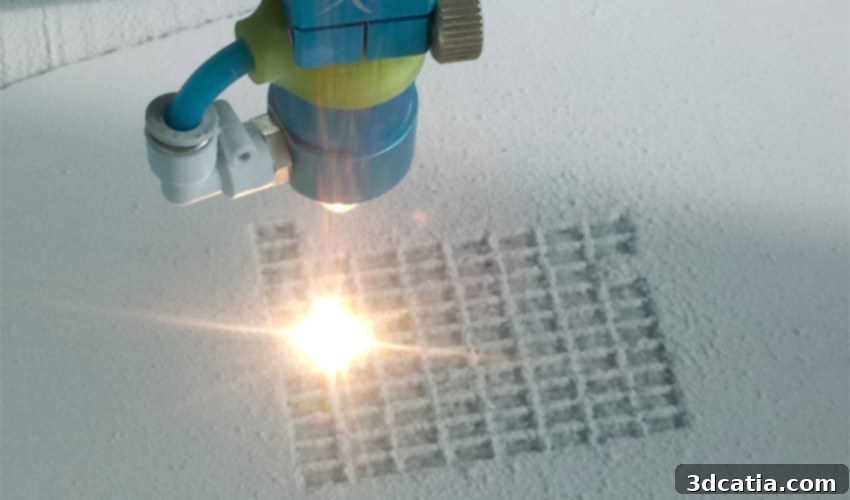
The MDLS process represents a significant advancement in additive manufacturing. It involves the precise sintering of light mineral materials, with a particular emphasis on perlite, utilizing a focused CO2 laser. This powerful laser is seamlessly integrated with the well-established powder bed fusion process. What truly differentiates MDLS is its efficiency: it achieves complete sintering in a single, streamlined step, critically eliminating the need for any subsequent post-sintering processes that are often required in other methods. This unique, binder-free approach not only simplifies the manufacturing workflow but also ensures the purity and integrity of the final mineral product. By combining the benefits of laser technology with carefully selected lightweight inorganic powders, MDLS enables the creation of structures with exceptional properties that were previously challenging, if not impossible, to achieve through conventional additive manufacturing techniques.
3DN: You describe your solutions as sustainable, heat resistant, and ultralight. How can these properties be obtained?
The exceptional properties of our MDLS-printed solutions—sustainability, heat resistance, and ultralightness—are directly inherent in our unique process and the materials we utilize. Firstly, sustainability is a core tenet of our technology. Since the MDLS sintering process operates without the addition of any chemical coatings or binders, the raw mineral material, such as perlite, remains in its purest form. This purity carries a significant environmental benefit: after its intended period of use, the material can be disposed of without complex recycling processes. In many instances, it can even be safely returned to organic waste streams, serving as a beneficial soil conditioner, thereby closing the loop in a truly eco-friendly manner. This stands in stark contrast to many additive manufacturing processes that rely on synthetic binders or additives, which often complicate end-of-life disposal and material recovery.
Secondly, the inherent properties of our chosen raw materials play a crucial role. Perlite, for example, is naturally temperature-stable and exceptionally light. The true innovation, however, lies in how we leverage these intrinsic material characteristics through the precise control of the MDLS 3D printing process. By employing binder-free shaping and meticulously designing internal infill structures and external contours, we can engineer parts with specific performance attributes. This allows us to transform these basic mineral materials into high-performance fire protection elements that meet stringent building material class A1 standards, indicating non-combustibility. Similarly, we can produce highly effective furnace insulation components. The ability to precisely control the internal geometry and material density during printing is what enables us to achieve both the ultralightness and the superior heat resistance that are critical for these demanding applications. The open porosity created during the sintering further contributes to the insulating capabilities, trapping air and reducing thermal conductivity, while the structural design ensures robustness despite the minimal material usage. This synergistic combination of pure materials, advanced process control, and intelligent design is key to delivering these outstanding properties.
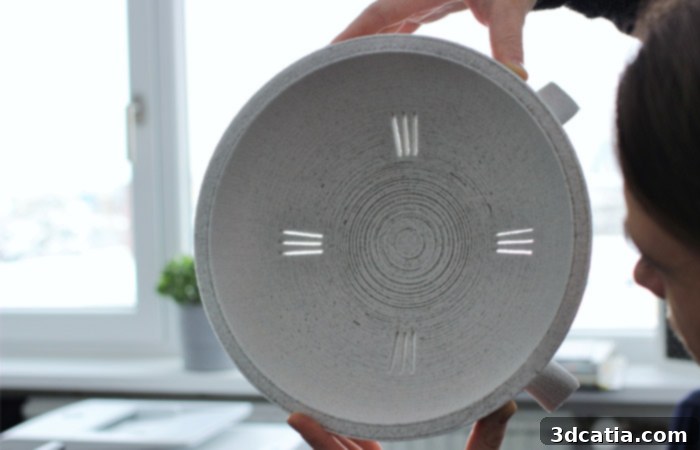
Photo Credit : ING3D
3DN: What challenges did you have to overcome during development?
The journey of developing MDLS technology was undeniably fraught with significant challenges, primarily because we were venturing into largely uncharted territory. Initially, there was virtually no existing literature or scientific precedent to guide us on how light mineral materials would react to laser sintering. This meant starting from an almost blank slate, undertaking extensive empirical research. For over a year, we meticulously studied and tested dozens of different mineral materials, often utilizing the simplest available means, just to understand their fundamental responses to laser energy. This laborious phase was crucial for identifying suitable materials and establishing basic parameters.
Once we achieved our initial successes and validated the core concept, the next monumental task was to build a functional prototype system. This involved not only the complex engineering challenge of design and assembly but also the crucial hurdles of securing adequate financing and forging strategic partnerships for development and validation. We began by dramatically simplifying an existing laser cutting system, stripping it down to its absolute minimum essential components. Simultaneously, we had to conceptualize, develop, and implement a bespoke powder application system and rudimentary software tailored specifically for our unique sintering process. This iterative process of creation and refinement led to the first technical specifications and subsequently to initial pre-product ideas, which we then rigorously tested on our nascent prototype machine.
Achieving consistent, high-quality printing results and developing viable end products demanded an immense investment of time and effort. Thousands of dedicated man-hours were poured into optimizing countless technical parameters within a compressed timeframe. We had to meticulously fine-tune everything from material shrinkage rates and necessary support structures to the optimal laser power density and scan speed. Each of these parameters interacts in complex ways, and finding the right balance required extensive experimentation and data analysis. This iterative optimization process was critical to consistently produce parts with desired structural integrity, dimensional accuracy, and material properties. Beyond the technical complexities, the overall development of ING3D as a company presented its own set of challenges, including navigating the intricacies of patent applications, identifying and engaging potential clients, and securing vital investments to fuel our ongoing research and expansion. Each step, from scientific discovery to market readiness, has required persistence, adaptability, and unwavering dedication.
3DN: For which applications do your customers use ING3D technology? What are the benefits to them?
Currently, ING3D is predominantly in the product development phase with our valued customers. We anticipate that once our industrial pilot plant is fully operational, we will be able to scale production and deliver the expected quantities of finished products to the market. Despite being in early development, the range of potential applications for our MDLS technology is remarkably diverse and promises significant benefits to our clients.
One primary application area revolves around high-performance insulation, particularly for furnaces. In these demanding environments, electronics and sensitive sensors require robust protection against extreme temperatures. Our technology enables the creation of complex, custom-designed insulation components that precisely fit specific geometries, offering superior thermal management and structural integrity where conventional materials often fall short. The ability to tailor designs allows for optimized performance in complex, high-temperature applications, enhancing efficiency and extending the lifespan of critical equipment. Another promising field is water and air filtration. Due to the inherent open porosity of our mineral materials, they are fundamentally very efficient at filtration. Through the precise structural design capabilities afforded by 3D printing, we can engineer intricate pore networks that significantly enhance filtration efficiency and durability. This means filters can be custom-made for specific contaminant sizes or flow rates, offering a more effective and longer-lasting solution than standard filtration media, leading to reduced maintenance and improved operational performance.
Finally, ING3D’s technology also opens doors to exciting biotechnological applications. For instance, our 3D printed mineral structures can serve as natural coral substrates. These artificial yet biologically compatible structures provide an ideal foundation for the reforestation of marine reefs, acting as stable anchoring points for heat-resistant coral larvae. This innovative approach offers a sustainable solution to aid in the restoration of threatened coral ecosystems, leveraging the material’s inertness and porous nature to mimic natural habitats. In all these applications, the key benefits for our customers include the ability to create customized, high-performance, ultralight, and heat-resistant components that are also environmentally sustainable, driving efficiency, longevity, and innovation in their respective fields.
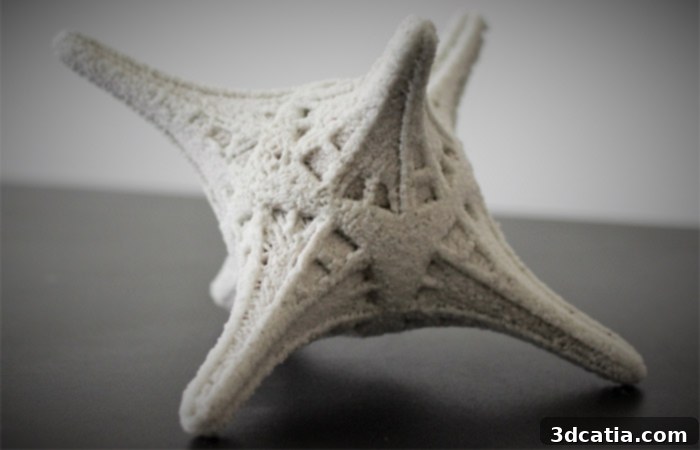
ING3D’s cutting-edge technology enables the design and production of innovative biotechnology applications. (Photo Credit : ING3D)
3DN: What are the future projects of ING3D?
Looking ahead, ING3D has an ambitious roadmap focused on both immediate commercialization and long-term scientific advancement. In the medium term, our primary objective is the sustained manufacturing and continuous development of at least three distinct finished products leveraging our MDLS technology. This critical step will lay the groundwork for our market entry and establish our production capabilities. Following this, we plan to significantly scale our operations by developing series factories specifically designed to meet the demands of our B2B customers, ensuring consistent quality and volume. These factories will represent a major investment in infrastructure and production efficiency.
Beyond scaling production, a cornerstone of ING3D’s future vision is a renewed and substantial investment in the research and development of light mineral materials. We firmly believe that, despite our current breakthroughs, we have only just begun to scratch the surface of what is possible with these incredible materials. Our scientific team is actively exploring new compositions, processing parameters, and structural designs to unlock even greater potential. We anticipate at least two or three more major scientific breakthroughs in this field within the next few years, each with the potential to open entirely new application areas or dramatically enhance existing ones. And of course, our ultimate goal is to remain at the absolute forefront of this exciting and rapidly evolving science, continuously pushing the boundaries of mineral 3D printing and driving innovation that makes a tangible difference.
3DN: A final word for our readers?
We at ING3D are incredibly excited about the future of mineral 3D printing and the vast possibilities it presents. We warmly invite our readers to engage in a lively discussion and exchange of ideas on this pioneering topic, exploring new application possibilities for our technology, and contributing to the broader dialogue surrounding the ever-evolving 3D printing market. Communities like 3Dnatives serve as an invaluable platform, offering essential insights into this growing industry and empowering both producers and customers to make informed decisions. We believe that collaborative discourse is crucial for accelerating innovation and fostering a deeper understanding of additive manufacturing’s transformative power. For those eager to learn more about our innovative processes and projects, we encourage you to visit our official website.
What are your thoughts on ING3D’s groundbreaking 3D printing minerals technology? We’d love to hear your insights and opinions. Please share your comments below or connect with us on our Facebook and Twitter pages. And don’t forget to sign up for our free weekly newsletter to receive all the latest news and updates in the world of 3D printing directly in your inbox!