
Exploring the Cutting Edge: Top 5 Additive Manufacturing Videos of the Week
Welcome to our weekly exploration of the most compelling innovations in 3D printing! This week, we’ve curated the top five videos that showcase how additive manufacturing is not just changing production, but fundamentally reshaping industries across the globe. From critical medical applications to pioneering advancements in the automotive sector and beyond, 3D printing continues to infiltrate diverse sectors, offering unprecedented flexibility and efficiency. These innovations are not just theoretical; they are tangible solutions impacting real-world challenges. Our selection aims to keep you informed and inspired by the rapid evolution of this transformative technology. Don’t forget, you can discover even more captivating 3D printing videos on our YouTube channel. We hope you enjoy this week’s roundup and have an insightful viewing experience!
Top 1: 3D Printing Against COVID-19 – A Testament to Agility
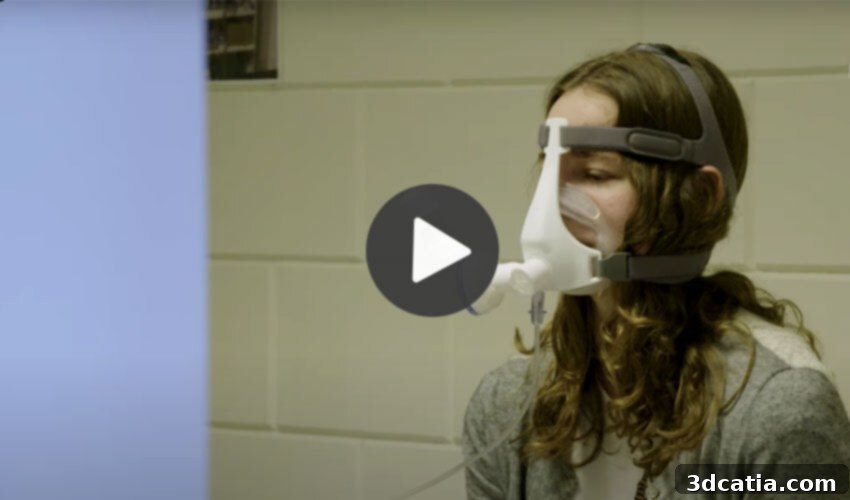
The early months of the COVID-19 pandemic presented an unprecedented global crisis, exposing critical vulnerabilities in traditional supply chains, particularly within the healthcare sector. Hospitals worldwide faced overwhelming demand and severe shortages of essential medical equipment, most notably Personal Protective Equipment (PPE). This scarcity left countless medical professionals dangerously exposed to the virus, highlighting an urgent need for rapid, decentralized production capabilities. In response, the additive manufacturing (AM) community demonstrated remarkable agility and solidarity, mobilizing quickly to bridge these gaps. Individuals, small businesses, universities, and large corporations alike leveraged 3D printing technology to design, prototype, and mass-produce desperately needed items. From face masks and visors to ventilator splitters and even components for respirators, 3D printers became a lifeline, enabling the localized production of vital medical supplies. This collective effort not only protected patients and healthcare staff but also underscored the immense potential of 3D printing to respond swiftly to emergencies and revolutionize traditional manufacturing paradigms. The video below showcases how the AM community rose to this challenge, launching various initiatives to fight the shortage and safeguard frontline workers.
Top 2: MakerBot Launches METHOD Carbon Fiber Edition 3D Printer – Stepping Up Performance
Innovation in material science and hardware design continues to push the boundaries of what’s possible with 3D printing. A prime example of this advancement is the professional machine recently launched by manufacturer MakerBot: the METHOD Carbon Fiber Edition 3D printer. This cutting-edge solution is engineered to print carbon fiber reinforced nylon, a high-performance composite material developed in tandem by MakerBot itself. The METHOD Carbon Fiber Edition builds upon the robust foundation of the METHOD platform, which was initially introduced in December 2018. What sets this new edition apart is its preconfigured setup with a specialized new extruder, specifically designed to handle the unique properties of composite materials. This extruder is not exclusive to the new machine; it will also be available as an upgrade for existing METHOD and METHOD X machines, offering current users a path to enhanced capabilities. The integration of carbon fiber significantly boosts the strength-to-weight ratio and stiffness of printed parts, opening up new possibilities for functional prototyping, tooling, and even end-use parts in demanding sectors such as automotive, aerospace, and robotics. This enables engineers and designers to create parts that are robust enough to replace traditional metal components, yet light enough to improve efficiency and performance. In the video below, you can witness the METHOD Carbon Fiber Edition in action, precisely 3D printing a three-blade propeller, a perfect demonstration of its ability to produce high-performance functional components with advanced materials.
Top 3: 3D Printing Medical Parts – Precision and Biocompatibility
The medical sector is one of the most exciting and impactful frontiers for 3D printing technology, driven by the need for customized solutions, rapid prototyping, and sterile environments. Leading the charge in this field is manufacturer 3D Systems, which presents its innovative Med Amber 10 material. This advanced material is specifically engineered for compatibility with their Figure 4® range of machines, offering a robust and reliable solution for a myriad of medical applications. Med Amber 10 stands out due to its unique combination of properties, which are critical for healthcare environments. It is sterilizable, ensuring it can be safely used in clinical settings without risk of contamination. Its rigidity provides structural integrity, crucial for functional medical devices, while its transparency allows for clear visualization, which can be invaluable for surgical planning and anatomical study. Most importantly, Med Amber 10 is biocompatible, meaning it can safely come into contact with human tissue, meeting stringent regulatory requirements. Primarily, this material is utilized for the manufacture of precision surgical guides, which assist surgeons in achieving greater accuracy and improved patient outcomes during complex procedures. It is also ideal for creating highly detailed anatomical models, invaluable tools for pre-surgical planning, patient education, and medical student training. Crucially, Med Amber 10 meets the rigorous ISO 10993-5 & -10 standards, affirming its biological safety and suitability for medical applications. These standards ensure that the material does not induce cytotoxicity or sensitization, providing peace of mind for medical professionals. The following video offers a comprehensive look at the characteristics and potential of this groundbreaking material.
Top 4: A 3D Printed Cabin Made from Unusable Wood – Sustainable Construction
In an age where sustainability and resourcefulness are paramount, the concept of reusing waste materials to create new structures is gaining significant traction. What if we could transform wood waste, often considered unusable, into functional and aesthetically pleasing small houses and other innovative constructions? This pioneering idea is at the heart of the Ashen Cabin project, a visionary structure conceptualized by the acclaimed HANNAH design studio. This project tackles the ecological challenge posed by emerald ash borer infestations, which render vast quantities of ash wood unusable for traditional lumber. Instead of discarding this infested wood, the American company behind Ashen Cabin employs a sophisticated combination of 3D printing technology and advanced robotics. This innovative approach allows them to process and precisely assemble the otherwise discarded timber, transforming it into the structural components of a striking cabin nestled in the heart of the forest. The synergy between 3D printing and robotics enables a high degree of customization and efficiency in construction, demonstrating how digital fabrication can offer solutions to material waste problems. Beyond the main structure, the cabin incorporates several other custom 3D printed elements, including a distinctive chimney. This project not only showcases an ingenious method for sustainable construction and material reclamation but also highlights the potential of additive manufacturing to integrate with traditional building practices, creating unique architectural forms and reducing environmental impact. It represents a significant step towards a circular economy in construction, proving that waste can be a valuable resource when combined with innovative technology.
Top 5: What are the Material Properties of PETG? – A Versatile Filament Demystified
Understanding the properties of different materials is fundamental to achieving successful and functional 3D prints. In the world of additive manufacturing, PETG (Polyethylene Terephthalate Glycol) has emerged as an incredibly popular and versatile filament, offering a compelling balance of ease of use and mechanical strength. In the following insightful video from Raise3D, you will gain a comprehensive understanding of the key material properties that make PETG a go-to choice for a wide array of applications. PETG is renowned for its resilience and durability, making it significantly tougher and more impact-resistant than PLA, while often being easier to print than ABS. One of its most celebrated attributes is its superior layer adhesion, which allows it to create exceptionally strong bonds within itself. This characteristic minimizes the risk of delamination, resulting in robust and reliable printed parts that can withstand considerable stress. Furthermore, PETG exhibits excellent chemical resistance, making it an ideal material for items that will regularly come into contact with various chemical compounds, such as containers, protective casings, or components for laboratory equipment. Its ability to resist acids, alkalis, and solvents broadens its utility across industrial and consumer applications. Beyond these, PETG also offers a certain degree of flexibility, optical clarity (depending on the specific formulation), and minimal warping during printing, which contributes to its reputation as a user-friendly yet high-performance material. Whether you’re looking to print functional prototypes, mechanical parts, or aesthetically pleasing enclosures, PETG provides a robust solution. You can delve deeper into the characteristics, printing tips, and applications of this fantastic filament in our dedicated guide or by watching the detailed video presentation below!
We hope this week’s collection of videos offered you a captivating glimpse into the dynamic world of 3D printing and additive manufacturing. From providing critical aid during a global pandemic to advancing sustainable construction and introducing high-performance materials, the innovation showcased truly highlights the transformative power of this technology. What were your thoughts on these groundbreaking applications and developments? We encourage you to drop a comment below and share your insights with our community! You can also join the conversation and connect with us on our Facebook and Twitter pages, where we regularly post the latest news and updates from the industry. And to ensure you never miss out on any crucial developments, don’t forget to sign up for our free weekly Newsletter. Get all the cutting-edge news and essential updates from the 3D printing industry delivered straight to your inbox, keeping you ahead of the curve!