
Revolutionizing Fashion: How 3D Printing, Robotics, and Biomaterials Drive Sustainable Textile Innovation
The global textile industry stands at a critical juncture, increasingly scrutinized for its profound environmental impact. The relentless cycle of fast fashion, characterized by constantly evolving trends, frequent new collections, and an insatiable consumer demand for apparel, has led to unprecedented levels of production and waste worldwide. This unsustainable model ensures that vast quantities of textiles are discarded daily, further exacerbating resource depletion and pollution. In response to this urgent crisis, both environmental advocates and governmental bodies are actively pushing for a fundamental transformation, demanding a more resource-efficient and sustainable global textile value chain. To confront the pervasive issue of textile waste and foster a paradigm shift towards local production and a true circular economy, a dedicated team of researchers at the University of Art and Design Linz has embarked on an ambitious project. Their groundbreaking work leverages innovative materials and cutting-edge technologies, including advanced 3D printing techniques for clothing manufacturing, to redefine the future of fashion.
Operating under the umbrella of their artistic-scientific PEEK project, aptly named “Fashion and Robotics,” these visionary researchers are developing entirely new methodologies for more sustainable fashion production. Funded by the prestigious Austrian Science Fund (AWF), the project integrates several pioneering concepts: the development of organic fabrics that are designed to grow three-dimensionally from specialized nutrient solutions, the implementation of sophisticated robots capable of repairing damage in garments, and the application of artificial intelligence (AI) to optimize and streamline factory operations. Rather than merely refining traditional manufacturing processes, the team’s research is concentrated on a fundamentally disruptive approach to textile production, utilizing innovative technologies such as 3D printing and the creation of novel materials at its core. This holistic strategy aims to address sustainability challenges from material sourcing to end-of-life management, paving the way for a truly transformative impact on the industry.
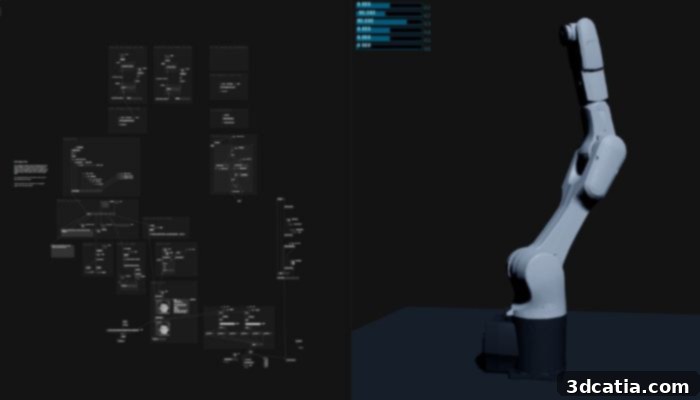
Photo Credits: Fashion Robotics
Pioneering Production and Repair: The Role of 3D Printing and Advanced Robotics in Sustainable Fashion
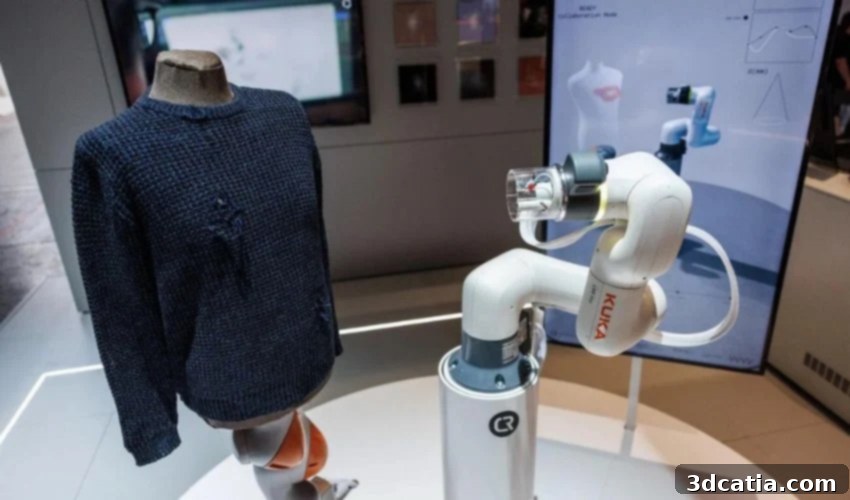
In the initial phase of this transformative research project, the Linz team successfully produced an item of clothing through a novel process involving robotic systems enhanced with 3D printing capabilities. This achievement demonstrated the potential for automated, additive manufacturing in textile creation. Further expanding their technological prowess, the interdisciplinary team engineered specialized robotic arms designed for advanced fabric manipulation, capable of executing both three-dimensional cutting and intricate sewing tasks with remarkable precision. This represents a significant departure from conventional, manual textile processes, promising greater efficiency and reduced material waste. The subsequent crucial step involved the development of electrospinning technology, intended to offer an innovative and far more sustainable alternative to traditional garment repair techniques, such as manual darning. As explained by Braumann, a key figure in the project, this process involves a robotic arm precisely spraying a polymer solution onto a torn area of a garment within a high-voltage electrostatic field. This action facilitates the formation of ultra-fine nanofibers that meticulously bond with the existing textile, effectively repairing the damage while maintaining material integrity and aesthetic quality. This advanced repair method not only restores the garment but also offers a pathway to extending its lifecycle significantly.
The implementation of robotics for clothing repair heralds a new era of possibilities, offering compelling advantages that could fundamentally alter consumer behavior and industry practices. Automation has the potential to drastically reduce repair costs, estimated by Braumann to be as low as approximately $2 per item. This affordability makes repairing garments significantly more attractive and economically viable than simply purchasing new ones, thereby encouraging consumers to opt for repair over replacement. Such advanced robotic systems are envisioned for widespread deployment in high-volume manufacturing facilities, where they could make substantial contributions to more sustainable production models by minimizing waste and extending product utility. Moreover, the integration of artificial intelligence (AI) further enhances this repair ecosystem. An AI system could be programmed to pre-scan damaged clothing, accurately identifying and categorizing areas requiring repair, thus optimizing the robotic intervention. Beyond mere repair, this innovative technology holds immense promise for “3D redesign” in alteration shops, allowing for creative modifications and structural enhancements that were previously complex or impossible. This capability not only breathes new life into existing garments but also significantly extends their functional lifespan, aligning perfectly with the principles of a circular economy and responsible consumption. The implications for reducing textile waste and fostering a more resource-conscious fashion industry are immense, positioning these technologies as crucial drivers of future sustainability.
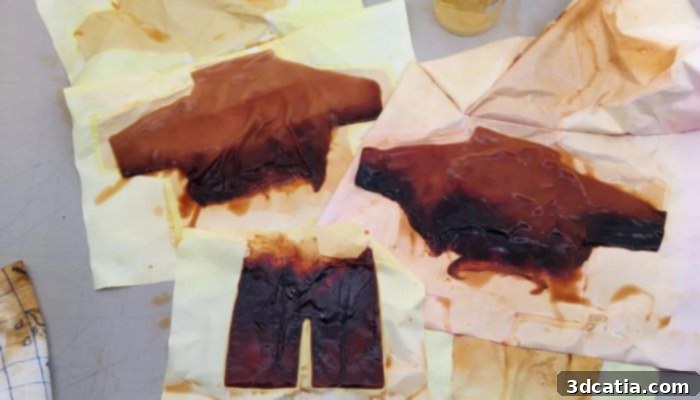
Shirts and pants made from bacterial cellulose (photo credits: Fashion and Robotics)
Cultivating Future Fabrics: Biomaterials and Robotic Nurturing for Sustainable Garments
To address the critical need for more sustainable fashion materials, the researchers at the University of Art and Design Linz, in collaboration with Werner Baumgartner, have ventured into uncharted territory by successfully growing three-dimensional trousers and shoes for the very first time. This groundbreaking achievement marks a significant departure from traditional textile manufacturing, which relies heavily on the energy-intensive and waste-generating processes of cutting and sewing. In this innovative method, newly developed, non-fiber-based biomaterials are utilized, effectively replacing conventional textiles. These remarkable materials are cultivated directly from bacteria, and critically, they can grow into complex three-dimensional forms. For instance, in the creation of shoes, the biomaterial is grown directly around a shoe last, allowing the finished, perfectly formed shoe to be detached once the growth process is complete. This process not only eliminates fabric waste from cutting but also reimagines the entire material creation pipeline, moving towards a truly bio-integrated manufacturing approach. The potential for such biomaterials to revolutionize sustainable fashion is immense, offering a renewable, biodegradable, and customizable alternative to conventional fabrics, thereby reducing the environmental footprint of clothing production from its very genesis.
Christiane Luible-Bär, a distinguished lecturer at the University of Art and Design Linz and an active participant in the project, sheds light on another pivotal role of robotics within this biomaterial cultivation process. “The robot is also important in this case,” she explains, “but in a new role, namely as a food provider. The bacteria need to be supplied with a nutrient solution regularly at specific times, and a machine can feed them more reliably than a human.” This perspective highlights the precision and consistency that robotic systems bring to biological growth processes. Maintaining optimal growth conditions, including precise nutrient delivery at specific intervals, is crucial for the successful cultivation of these bacterial cellulose garments. Robots, with their unerring accuracy and tireless operation, are far better equipped than human operators to manage these delicate biological systems, ensuring consistent growth and material quality. This application underscores the interdisciplinary nature of the “Fashion and Robotics” project, where advanced engineering meets biological science to create truly novel and sustainable solutions. The integration of robotic nurturing ensures the scalability and reliability of biomaterial production, moving it closer to practical, industrial application.
While the garments grown from bacterial cellulose currently represent the cutting edge of basic research experiments, their significance cannot be overstated. They stand as tangible proof of concept, embodying a profound step towards the eventual widespread application of this revolutionary process. This pioneering work lays the foundation for a future where fashion is not only stylish but also inherently sustainable, minimizing its environmental footprint from the very source of its materials. Further comprehensive details and insights into this transformative research are readily available HERE on the official website of the Austrian Science Fund, the primary financier of this innovative endeavor. The project serves as a beacon of hope for an industry desperately seeking sustainable alternatives, demonstrating that a future where clothing is grown, repaired, and recycled efficiently is not just a dream, but a tangible scientific pursuit. The collaborative efforts of scientists, artists, and engineers are converging to redefine the aesthetic, economic, and ecological parameters of fashion, setting a new standard for responsible manufacturing and consumption.
What are your thoughts on this groundbreaking research project, which aims to develop novel, innovative repair and manufacturing processes for clothing, prominently featuring the integration of 3D printing, robotics, and advanced biomaterials? We invite you to share your perspectives and insights in a comment below or engage with our community on our LinkedIn, Facebook, and Twitter pages! Don’t miss out on the latest advancements and breaking news in 3D printing and sustainable innovation—sign up for our free weekly newsletter here to receive the freshest updates directly to your inbox. You can also explore all our informative and engaging videos on our dedicated YouTube channel, where we delve deeper into the future of additive manufacturing and its wide-ranging applications.
*Cover Photo Credits: AWF