
Panerai’s Innovative Leap: Redefining Luxury Watchmaking with Advanced 3D Printing Technologies
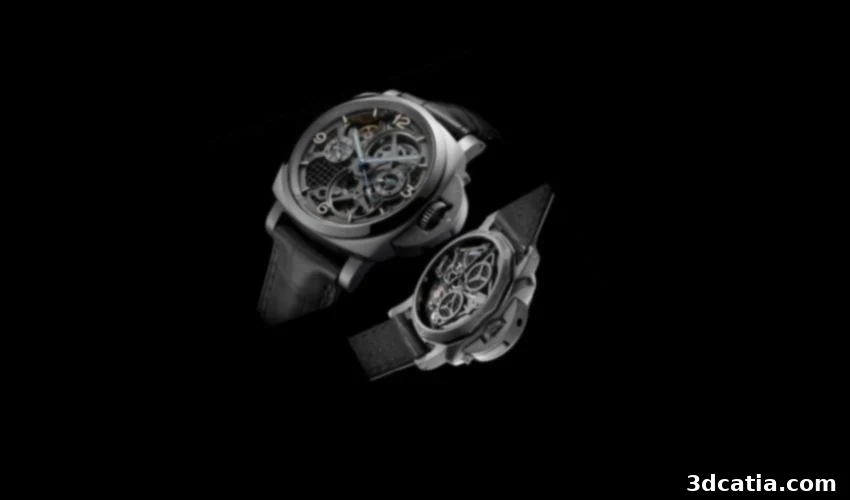
The world of haute horology is a fascinating realm where tradition meets cutting-edge innovation, constantly pushing the boundaries of what is possible in precision timekeeping. For watch enthusiasts and industry experts alike, the advancements within watchmaking continue to captivate, showcasing a relentless pursuit of excellence and novel approaches to design and manufacturing. Panerai, a brand steeped in a rich history that traces its origins back to 1860, has consistently demonstrated its commitment to embracing change and leading the charge in material science and production techniques. This dedication was vividly highlighted at the prestigious Salon International de la Haute Horlogerie (SIHH) in Geneva, where Panerai unveiled groundbreaking applications of Direct Metal Laser Sintering (DMLS), a sophisticated form of 3D printing technology, in the creation of its PAM578 Titanium Tourbillon Special Edition watch. This strategic move underscored Panerai’s position at the forefront of innovation, blending its iconic design language with the transformative power of additive manufacturing.
Direct Metal Laser Sintering, or DMLS, represents a paradigm shift in how metal components can be produced. Unlike traditional subtractive manufacturing methods that remove material from a larger block, DMLS is an additive process. It employs a high-power laser to precisely melt and fuse powdered metal particles together, layer by infinitesimal layer, gradually building up a solid, three-dimensional structure. This intricate process allows for unparalleled control over the geometry and internal structure of the fabricated part. With each successive layer typically measuring an astonishingly thin 0.02mm, DMLS enables the creation of highly complex and intricate designs that would be impossible or prohibitively expensive to achieve using conventional machining methods. This digital manufacturing approach eliminates the need for specialized tooling, reducing lead times and opening up new frontiers for design freedom. The specific metal sintering technology adopted by Panerai for this pioneering watch was developed by the renowned German firm EOS, a global leader in industrial 3D printing solutions.
The integration of DMLS technology into the manufacturing of the PAM578’s watch case brought about a truly revolutionary advantage: a substantial reduction in weight. By leveraging the capabilities of DMLS, Panerai was able to decrease the weight of the case by over 40% when compared to an equivalent case crafted from traditional steel. This remarkable feat is particularly noteworthy because achieving such significant weight savings using titanium alone through conventional manufacturing methods would have presented immense challenges. Traditional CNC machining, for instance, is limited by the accessibility of tools, making it difficult to create complex internal geometries or hollow out large sections without compromising structural integrity or aesthetic appeal. The DMLS process, however, allowed Panerai to construct a visually similar case to their beloved classic Luminor models, while simultaneously creating a sophisticated, hollowed-out interior structure that would be entirely inaccessible to traditional machining tools. The culmination of this innovative approach is a remarkably lightweight timepiece, weighing a mere 90 grams, despite its substantial 48mm diameter – a testament to the transformative power of additive manufacturing in luxury watchmaking.
In the realm where advanced technology converges with the meticulous precision of watchmaking, the seamless fusion of sophisticated 3D printing methods and time-honored craftsmanship in the PAM578 is genuinely awe-inspiring. Panerai has firmly established itself among the elite watch brands that are not only exploring but actively embracing this incredible technology. Their special edition presentation at SIHH 2016 undoubtedly marked a significant highlight of the event, signaling a bold new direction for the brand and the industry. Panerai’s journey into uncharted technological territories is not new; it began notably with the introduction of Carbotech, an innovative composite material, in their watches. Despite initial reservations that sometimes arise from purists within the watch community when new materials challenge traditional norms, this proactive step forward unequivocally demonstrated the brand’s unwavering willingness to experiment with novel materials and avant-garde designs. Building on this legacy of innovation, Panerai takes yet another monumental leap in contemporary watchmaking by forging a strategic partnership with Brabus, an esteemed German automotive company renowned globally for its bespoke customization and enhancement of luxury vehicles. Together, these two powerhouses have collaboratively produced the Submersible S Brabus eTitanio PAM01403, an innovation-driven timepiece that stands as a profound showcase of the boundless potential inherent in advanced 3D printing technology, particularly in creating high-performance, lightweight, and sustainable components.
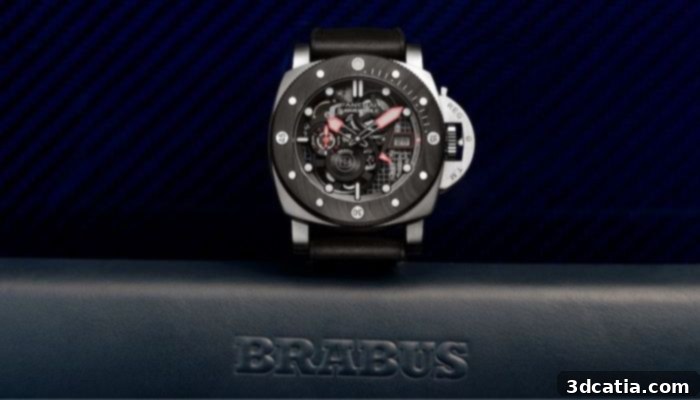
The Submersible S BRABUS Titanio PAM01403
The creation of the Submersible S Brabus eTitanio PAM01403 exemplifies a remarkable blend of high-performance engineering and environmental consciousness. For this extraordinary timepiece, Panerai and Brabus meticulously employed advanced metal 3D printing technology to craft the robust 47mm case. A crucial and pioneering aspect of this watch is the material used: eTitanio. This innovative material is a 100% recycled titanium powder, sustainably derived from pre-consumer titanium alloy scraps, underscoring both brands’ commitment to circular economy principles and reduced environmental impact. The manufacturing process involves a sophisticated form of laser powder bed fusion (LPBF), where fine layers of this recycled titanium powder are systematically distributed, and then a high-power fiber optic laser precisely fuses these layers together, building the case with exceptional density and strength. This additive process results in a watch case that is not only incredibly lightweight but also structurally sound, capable of withstanding the rigors of Panerai’s renowned diving watches. The resulting 3D printed case is approximately 30% lighter than a comparable case made from conventionally manufactured titanium, contributing to an overall case weight of merely 23.6 grams. This significant weight reduction enhances wearability without sacrificing durability or Panerai’s distinctive aesthetic.
Beyond its groundbreaking case material and production method, the Submersible S BRABUS Titanio PAM01403 further accentuates its tech-forward nature through its meticulously designed internal mechanisms and external aesthetics. At its heart lies a skeletonized P.4001/S automatic caliber movement. This choice of a skeletonized movement is not merely for visual appeal; it serves a functional purpose by reducing unnecessary material, thereby optimizing weight and allowing for a generous three-day power reserve. The dial of the watch features an intricate lattice-like design, drawing inspiration from the distinctive grilles found on high-performance automotive engines and luxury vehicles, a subtle nod to the Brabus collaboration. This dynamic dial is further enhanced by vibrant red accents, strategically placed to highlight key features, and proudly displays the iconic Brabus logo, signifying the partnership’s influence. The unidirectional rotating bezel, an essential feature for any professional diver’s watch, is crafted from Carbotech – another of Panerai’s innovative composite materials. The Carbotech bezel adds a touch of sophisticated elegance with its unique marbled appearance, reminiscent of the intricate patterns seen in Damascus steel, making each watch subtly distinct. Complementing its advanced construction, the watch is delivered with two versatile straps: one made of classic black calfskin, offering a timeless appeal, and the other crafted from recycled PET (polyethylene terephthalate), further aligning with the commitment to sustainability and innovative material use that defines this remarkable collaboration.
Panerai’s Strategic Evolution: Expanding Horizons in High Horology
Panerai’s journey of innovation extends far beyond its pioneering technological advancements in materials and manufacturing. The brand consistently demonstrates remarkable versatility and a keen understanding of its diverse clientele by continuously expanding its product portfolio. This strategic expansion caters to a broad spectrum of wearers, from those seeking robust, professional-grade instruments to individuals desiring elegant timepieces suitable for daily wear, encompassing both male and female enthusiasts. From relatively accessible and understated models, such as the iconic Luminor Base Logo, which embodies Panerai’s fundamental design principles, to highly complicated timepieces featuring intricate mechanisms and advanced functionalities, Panerai offers a compelling choice for everyone. This broad appeal is not accidental but a result of the brand’s deliberate willingness to embrace change, adapt to evolving market demands, and continuously evolve its identity while remaining true to its rich heritage. This dynamic approach has been instrumental in solidifying Panerai’s formidable position as a leading and influential player within the highly competitive luxury watchmaking industry, demonstrating that innovation can coexist harmoniously with tradition.
In a modern world increasingly driven by rapid technological advancements and a growing consciousness towards sustainability, Panerai stands out as a pioneering brand that has masterfully integrated traditional craftsmanship with cutting-edge 3D printing technology. By strategically incorporating both Direct Metal Laser Sintering (DMLS) and broader metal 3D printing into their watch production processes, Panerai has emphatically demonstrated its unwavering commitment to pushing the conventional boundaries of watchmaking and actively redefining the future landscape of horology. This proactive and innovative approach distinguishes them significantly within the industry. Panerai’s early adoption and successful implementation of these advanced manufacturing techniques not only set them apart as a leader but also pave a clear and inspiring path for a new era of timekeeping excellence, where precision, lightweight design, and environmental responsibility can coalesce. To explore the full breadth of their remarkable collections and witness the fusion of heritage and innovation firsthand, interested individuals are encouraged to check out the Panerai collection, available HERE.
What are your thoughts on Panerai’s innovative submersible 3D printed watches and their impact on luxury watchmaking? We invite you to share your perspectives and engage in the conversation by leaving a comment below or by connecting with us on our LinkedIn, Facebook, and Twitter pages! For the very latest updates, breaking news, and in-depth analyses in the world of 3D printing, don’t forget to sign up for our free weekly Newsletter here, delivered straight to your inbox! Additionally, you can find all our engaging videos and exclusive content on our YouTube channel.
*All photo credits: Panerai