
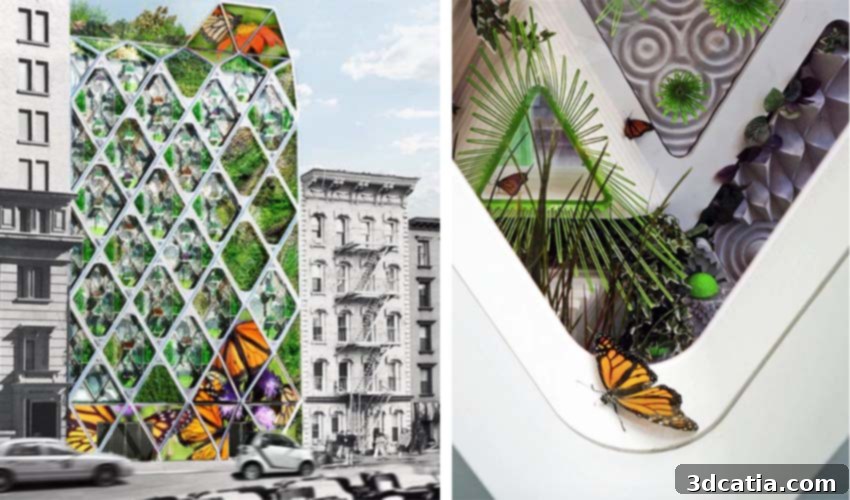
NYC’s Visionary Monarch Butterfly Sanctuary: A 3D Printed Vertical Meadow by Terreform One
In a groundbreaking initiative poised to redefine urban ecological design, the Brooklyn-based nonprofit architecture and urban design collective, Terreform One, has unveiled an extraordinary concept for an urban Monarch butterfly sanctuary. This ambitious project, envisioned for the heart of New York City, proposes a vertical meadow façade that will be meticulously 3D printed from carbon components. The primary objective is to create a nourishing and protective environment for Monarch butterflies, a species facing unprecedented population decline.
Terreform One is renowned for its commitment to projects that illuminate the vast environmental possibilities inherent in urban areas and inspire innovative, climate-based solutions globally. The group operates at the intersection of various disciplines, bringing together an eclectic mix of scientists, artists, architects, and passionate individuals who share a profound dedication to design and pressing environmental issues. This interdisciplinary synergy fosters a unique approach to ecological design, where nature and technology coalesce to address critical challenges. The Monarch butterfly, a symbol of natural beauty and migration, is currently dying at alarmingly high rates, making this sanctuary proposal incredibly timely and vital. The proposed initiative seeks to establish not only a crucial breeding ground but also a vital stopover habitat for wild Monarchs, strategically integrated onto the roof and rear façade of a city building. Beyond merely attracting existing wild populations, the concept also includes the cultivation of Monarchs on-site, with the aim of releasing these carefully reared butterflies to bolster the wild population over the coming years, thereby actively contributing to their recovery and increasing their overall numbers.
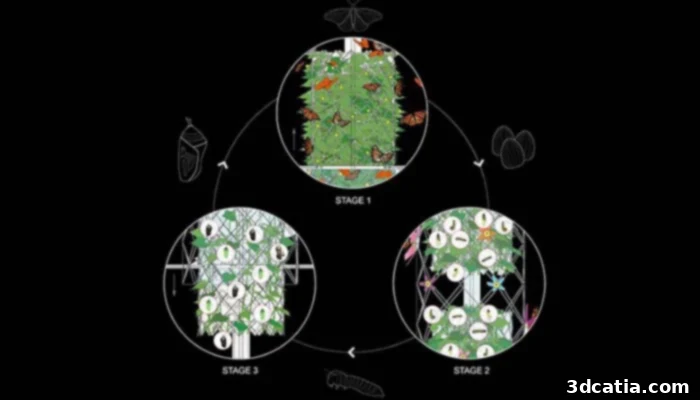
Diagram illustrating the integrated habitats within the building designed to facilitate butterfly breeding and growth | Credits: Terreform One
The decline of the Monarch butterfly (Danaus plexippus) is a stark indicator of broader ecological imbalances. These iconic insects undertake one of the most remarkable migrations in the animal kingdom, traveling thousands of miles between their breeding grounds in North America and overwintering sites in Mexico and California. However, their populations have plummeted by over 80% in recent decades, primarily due to habitat loss, widespread use of pesticides and herbicides, and the accelerating impact of climate change. A critical factor in this decline is the disappearance of milkweed, the sole host plant for Monarch caterpillars. Without milkweed, Monarchs cannot complete their life cycle. This alarming trend underscores the urgent need for innovative conservation strategies, particularly in urban environments where natural habitats are often fragmented or non-existent. Terreform One’s sanctuary directly addresses this crisis by proposing a dedicated haven where Monarchs can thrive, feed, breed, and find refuge during their strenuous migratory journeys.
The proposed sanctuary would adorn an eight-story, 30,000 square feet building in the bustling landscape of New York City. The cornerstone of this project is a special type of vegetation that would organically grow out of the building’s façade, meticulously curated to provide optimal support for Monarch butterflies throughout every stage of their delicate life cycle. This isn’t the first time the world has witnessed the innovative application of 3D printed components in architecture, but Terreform One’s concept once again demonstrates an ingenious integration of technology and nature. The design envisions 3D printed tiles, specifically fabricated from carbon-sequestering concrete. These advanced tiles are engineered to feature suspended milkweed vines and various nectar-rich flowers, creating a thriving ecosystem directly on the building’s exterior. This strategic use of materials not only provides the necessary substrate for plant growth but also contributes to carbon capture, adding another layer of environmental benefit to the project.
The implementation of 3D printing technology is central to the viability and success of this vertical meadow. Unlike conventional construction methods, 3D printing allows for the rapid and precise fabrication of complex, organic forms that are perfectly suited for integrating plant life and providing intricate micro-habitats for insects. The ability to customize each tile to optimize sun exposure, water retention, and plant growth enables the creation of a truly bespoke ecological system. Furthermore, the choice of carbon-sequestering concrete as a primary material is a testament to Terreform One’s commitment to sustainable practices. This innovative concrete formulation captures atmospheric carbon dioxide, effectively turning the building’s façade into an active agent in combating climate change while simultaneously supporting biodiversity. This dual function exemplifies the principles of regenerative design, where infrastructure not only minimizes harm but actively contributes to ecological well-being.
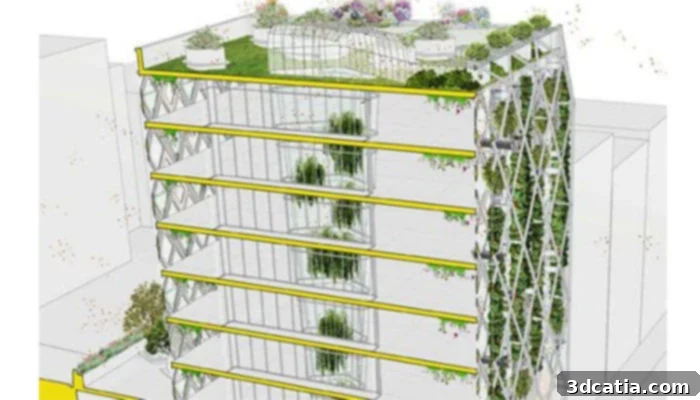
An additional diagram further illustrating the building concept and its integration with the environment | Credits: Terreform One
Mitchell Joachim, co-founder of Terreform One, eloquently articulated the profound motivation behind their work in an interview with Fast Company: “We realized that what’s happening is literally extinction–to us and everything around us. The thought was we need to change our mantra from a group that’s consulting about the environment to a group that deals with design against extinction.” This powerful statement encapsulates the urgent and proactive stance that Terreform One embodies. Their approach moves beyond mere environmental consciousness to active intervention, leveraging design as a potent tool to counteract biodiversity loss and mitigate the impacts of climate change. The Monarch sanctuary is a tangible manifestation of this philosophy, transforming urban infrastructure into a living, breathing ecosystem that directly supports a threatened species.
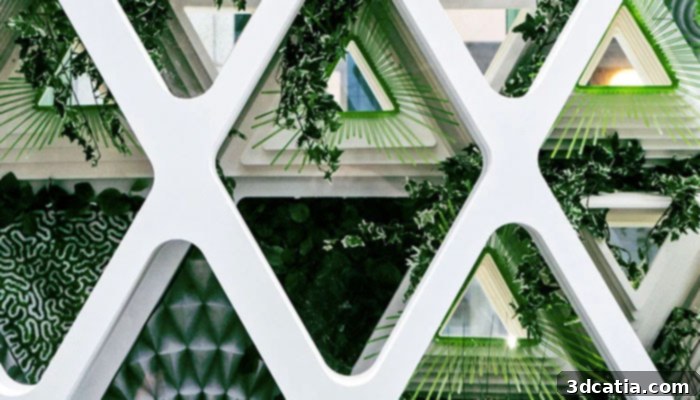
A detailed close-up of the intricate habitat structure designed specifically for the butterfly | Credits: Terreform One
The functionality of this urban sanctuary is multifaceted, designed to address every aspect of the Monarch’s ecological needs. As a breeding ground, the vertical meadow provides a safe space for adult Monarchs to lay their eggs exclusively on milkweed plants. Once hatched, the caterpillars have an immediate and abundant food source, critical for their rapid growth and development. The sanctuary also serves as a vital stopover habitat, offering migrating Monarchs a crucial resting and refueling point during their arduous journeys. This is particularly important in urban areas, which can often act as ecological barriers. Furthermore, the innovative strategy of growing Monarchs on-site within controlled environments before releasing them into the wild population offers a direct and impactful method for population augmentation. This holistic approach ensures that the sanctuary contributes significantly to both local biodiversity and the broader conservation efforts for this magnificent species.
Integrating such a biodiverse facade into a densely populated urban environment like New York City presents both challenges and immense opportunities. The project embodies the principles of urban ecology, demonstrating how cities can be transformed from ecological liabilities into assets. By creating green infrastructure that actively supports wildlife, Terreform One’s sanctuary serves as a powerful model for future sustainable urban development. It encourages us to rethink our relationship with the built environment, advocating for designs that are not only aesthetically pleasing and functional for humans but also ecologically beneficial for all living creatures. Such projects can also serve as educational tools, raising public awareness about biodiversity loss and inspiring citizens to take action in their own communities, even through small-scale initiatives like planting native pollinator-friendly gardens.
While the vision is compelling and the design revolutionary, the project’s timeline for completion has not yet been released. The building still needs to navigate the complex landscape of permitting and approval processes in New York City, a critical phase for any large-scale urban development. However, the conceptualization alone has sparked considerable interest and discussion within the fields of architecture, urban planning, and environmental conservation. More information about this pioneering project can be found directly on Terreform One’s official website HERE.
For those interested in the broader impact of advanced manufacturing, you can also learn more about how 3D printing is revolutionizing architecture and construction HERE.
What are your thoughts on Terreform One’s latest visionary project? Do you believe such urban ecological interventions are the future of sustainable city planning? Share your perspectives and insights by leaving a comment below or engaging with us on our Facebook and Twitter pages! And to stay informed about all the cutting-edge developments in the world of 3D printing, don’t forget to sign up for our free weekly Newsletter, delivering the latest news directly to your inbox!