
OPM Leverages Advanced 3D Printing to Provide Critical Medical Implants for War Victims in Ukraine
American additive manufacturing pioneer Oxford Performance Materials (OPM) has recently announced a crucial collaboration with the non-profit organization Orthopedic Help for Ukraine (OHFU). This strategic partnership aims to provide essential medical aid to victims of the devastating Russian invasion of Ukraine, specifically by supplying specialized 3D-printed custom implants to Ukrainian hospitals. These advanced medical devices are designed to address the overwhelming demands on orthopedic and surgery departments across Ukraine, which are currently struggling to cope with an unprecedented influx of patients suffering from severe war-related injuries and trauma. This initiative highlights the transformative potential of 3D printing technology in critical humanitarian efforts, offering hope and tangible solutions where traditional medical resources are stretched thin.
The unprovoked and sudden attacks by Russian forces on Ukraine, which commenced on February 24th of this year, sent shockwaves across the globe. What began as an invasion has tragically evolved into an ongoing conflict, inflicting an almost inconceivable amount of suffering, destruction, and humanitarian crisis upon the Ukrainian populace. Beyond the heart-wrenching loss of life and the widespread damage to the nation’s vital infrastructure, the sheer number of civilians and military personnel requiring specialized medical treatment has placed an unbearable burden on Ukraine’s healthcare system. Hospitals are overwhelmed, medical supplies are scarce, and the complexity of war-related injuries often exceeds the capabilities of standard medical procedures. Victims frequently present with severe bone defects, complex fractures, and a high incidence of traumatic amputations, necessitating advanced orthopedic interventions that are difficult to provide under conflict conditions. This dire situation underscores the urgent need for innovative solutions and international support to alleviate the immense pressure on Ukrainian medical facilities.
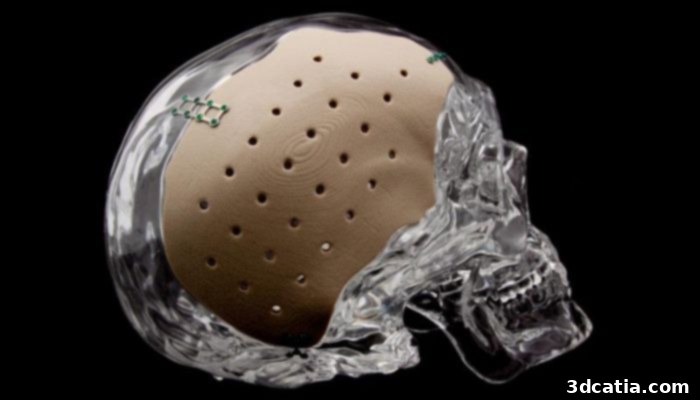
A cranial implant 3D-printed by OPM, showcasing the precision and customization offered by additive manufacturing in critical orthopedic care.
In response to this deepening humanitarian crisis and the critical need for medical assistance for those injured by the ongoing conflict, numerous Western companies and organizations have stepped forward to pledge their support. Among these vital contributors is OPM, Oxford Performance Materials. Headquartered in South Windsor, Connecticut, OPM is globally recognized as an industry leader in advanced polymer science, with a distinct specialization in the development and creation of high-performance 3D-printed orthopedic and biomedical devices. This profound expertise positions OPM uniquely to address some of the most challenging medical issues arising from the war. Through its strategic collaboration with OHFU, OPM will leverage its extensive experience and groundbreaking innovative technologies to supply front-line hospitals and medical centers with sophisticated patient-specific prosthetics and implants. These meticulously crafted devices are indispensable for treating patients presenting with critical bone defects resulting from severe war-related trauma, offering a pathway to recovery and improved quality of life.
Advanced Technologies Employed to Restore Health and Save Lives
OPM’s approach to creating life-saving 3D-printed biomedical implants relies on a highly specialized PEKK (Polyetherketoneketone) polymer. This cutting-edge material is specifically chosen for its exceptional biocompatibility and purity, properties that are absolutely crucial for successful integration within the human body and for treating the most severe and complex war-related injuries, including intricate bone reconstruction procedures. Beyond its structural advantages, a significant differentiator of PEKK is its inherent antibacterial and even antiviral properties. These characteristics are vital in a conflict zone environment where infections are a common and life-threatening complication of traumatic injuries, offering an added layer of protection for patients during their recovery. Given that war-related injuries frequently lead to a high level of amputations among patients, and the technological capabilities in many Ukrainian hospitals are profoundly limited, OPM’s advanced 3D-printed orthopedic implants are in extremely high demand, serving as a beacon of hope to save patients’ lives, mitigate long-term disability, and ultimately restore their health and functionality.
The ability of OPM to produce patient-specific implants is revolutionary, especially in scenarios involving critical bone defects. Unlike mass-produced implants, 3D printing allows for the creation of devices precisely tailored to each individual patient’s anatomy, based on their medical imaging data (such as CT scans). This ensures a perfect fit, which is paramount for optimal surgical outcomes, faster recovery times, and reduced risk of complications. For war victims enduring severe facial trauma, cranial defects, or extensive limb injuries, these custom implants can significantly improve both their physical functionality and psychological well-being. The process involves meticulous digital design, followed by additive manufacturing, where the PEKK material is built layer by layer to form the exact anatomical shape required. This level of customization is largely unattainable with traditional manufacturing methods, making 3D printing an indispensable tool in addressing the unique and complex needs presented by war-related orthopedic trauma.
Scott DeFelice, the insightful CEO of OPM, passionately articulates the company’s long-standing commitment and unique capabilities, stating, “OPM has been treating complex orthopedic trauma for over a decade, worldwide. Our technology utilizes a proprietary implantable PEKK polymer and 3D printing technology to manufacture patient-specific implants, individually designed to fit perfectly into critical bone defects and then seamlessly integrate with the natural bone. Our PEKK material also has demonstrated antibacterial and antiviral properties. When OHFU reached out and showed us their enormous, complex caseload, our team was inspired, and we understood that we were uniquely positioned to impact their mission, improve case results, and reduce amputations.” This statement underscores not only OPM’s extensive global experience in tackling challenging medical cases but also highlights the critical advantages of their proprietary PEKK material. The ability for these custom implants to seamlessly integrate with natural bone is a game-changer for long-term patient recovery, promoting stability and reducing the need for subsequent corrective surgeries. Furthermore, the inherent antibacterial and antiviral properties of PEKK are particularly invaluable in preventing infections—a constant threat in trauma care, especially within the challenging conditions of a conflict zone. DeFelice’s comments truly capture the profound sense of purpose and the strategic alignment that has driven OPM to contribute its advanced capabilities to the humanitarian effort in Ukraine, aiming to fundamentally improve outcomes and dramatically reduce the incidence of life-altering amputations among war victims.
As the conflict in Ukraine unfortunately shows no immediate signs of abatement, the critical need for continued humanitarian aid and innovative medical solutions remains paramount. The pioneering initiative by OPM, in partnership with Orthopedic Help for Ukraine, serves as a powerful testament to the impact that advanced manufacturing technologies like 3D printing can have in mitigating human suffering during times of crisis. This collaboration sets a vital precedent, demonstrating how specialized industry expertise can be effectively mobilized to address urgent medical demands on a global scale. It is our earnest hope that this example will inspire many more companies and organizations worldwide to step forward and offer their resources and support to those in desperate need within Ukraine. Every contribution, whether in the form of medical technology, financial aid, or volunteer efforts, makes a tangible difference in the lives of countless individuals affected by the war, offering them a chance at healing and rebuilding their futures.
For individuals and organizations moved by this cause, making a donation is a direct and impactful way to support the ongoing efforts. If you would like to contribute to the war victims in Ukraine and support the vital work of OHFU, please click HERE. To delve deeper into the innovative work and advanced materials developed by OPM, we encourage you to visit the company’s official website for more information. Your support can help bring critical medical care to those who need it most.
What are your thoughts on OPM’s commendable initiative to help victims of the Russian invasion of Ukraine with their state-of-the-art 3D-printed medical implants? We invite you to share your perspectives and engage in the discussion by leaving a comment below or connecting with us on our social media channels: LinkedIn, Facebook, and Twitter pages! Furthermore, to stay abreast of the very latest advancements and news in the dynamic world of 3D printing, don’t forget to sign up for our free weekly Newsletter here, delivering cutting-edge information directly to your inbox! You can also explore all our insightful videos and in-depth content on our dedicated YouTube channel for more visual demonstrations and expert interviews.
*All Photo Credits: OPM – Oxford Performance Materials