
Unveiling Deep-Sea History: How 3D Printing and Photogrammetry Recreated the HMAS Sydney Shipwrecks
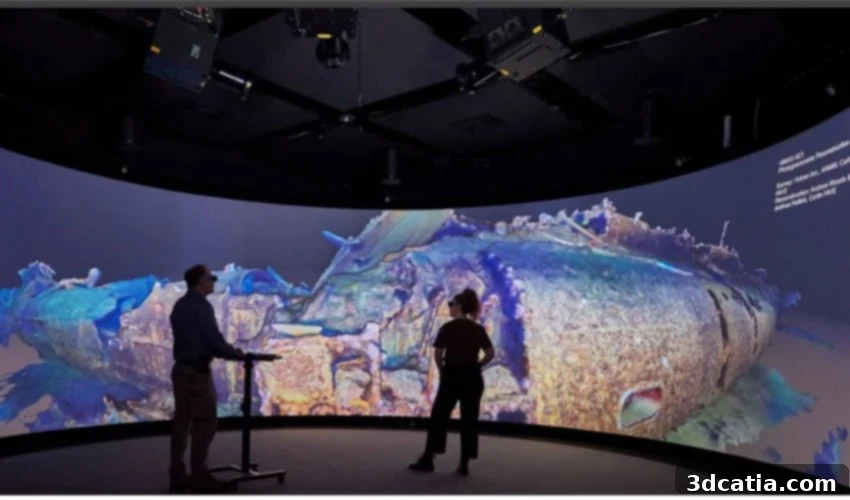
In a monumental leap for maritime archaeology and digital heritage preservation, a pioneering collaboration between software giant NVIDIA and leading researchers at Curtin University in Western Australia has successfully brought a pivotal piece of World War II history back to life. Utilizing state-of-the-art photogrammetry and advanced 3D printing technology, this joint venture has meticulously recreated the long-lost wrecks of two warships, offering an unprecedented view into a tragic wartime battle. This groundbreaking exhibition, proudly displayed at the WA Maritime Museum, serves as a poignant reminder of the fierce naval engagement that transpired on November 19, 1941. On that fateful day, Australia’s light cruiser HMAS Sydney (II) and Germany’s auxiliary cruiser HSK Kormoran clashed in a devastating encounter off the coast of Western Australia. For over an hour, these formidable vessels exchanged fire, resulting in a cataclysmic loss of life, with over 700 sailors perishing from both sides. Both ships subsequently sank to an astounding depth of over 8,000 feet (approximately 2,500 meters) in the Indian Ocean, remaining undiscovered for decades, their stories lost to the ocean depths and shrouded in mystery. Now, these historically significant shipwrecks, rightfully added to the Australia National Heritage List due to their immense cultural and historical value, are no longer confined to the inaccessible abyss. Thanks to detailed 3D models and meticulously crafted printed replicas, museum visitors can experience these underwater marvels firsthand, delving into their profound history from the comfort and safety of the museum halls. This initiative not only preserves a critical chapter of history but also exemplifies the transformative power of modern technology in making the past tangible and accessible for future generations, fostering a deeper understanding of naval warfare and its human cost.
This ambitious and technically intricate project was conceived and executed as a core component of the Curtin HIVE (Hub for Immersive Visualization and eResearch), a distinguished group at Curtin University dedicated to pioneering advancements in simulation and visualization within Australia. The genesis of these highly detailed 3D models can be traced back to 2015, when Andrew Woods, an esteemed associate professor at Curtin University and a recognized expert in stereoscopic 3D visualization, embarked on a challenging underwater expedition. Dr. Woods designed and deployed a specialized underwater rig, equipped with an impressive array of over a dozen high-resolution video and still cameras. This sophisticated setup enabled the capture of an extraordinary volume of data, meticulously documenting every intricate detail of the deep-sea wrecks in their final resting places. These raw scans, comprising countless images and extensive video footage from the ocean floor, were then subjected to a rigorous and complex digital conversion process. This painstaking effort ultimately yielded the highly accurate and detailed 3D models that form the basis of the current exhibition, offering unprecedented views of the ships’ structures and the battle damage. The sheer scale and precision required for this task underscore the cutting-edge capabilities developed within the Curtin HIVE, pushing the boundaries of what is possible in marine archaeology, digital reconstruction, and the visualization of submerged historical sites.
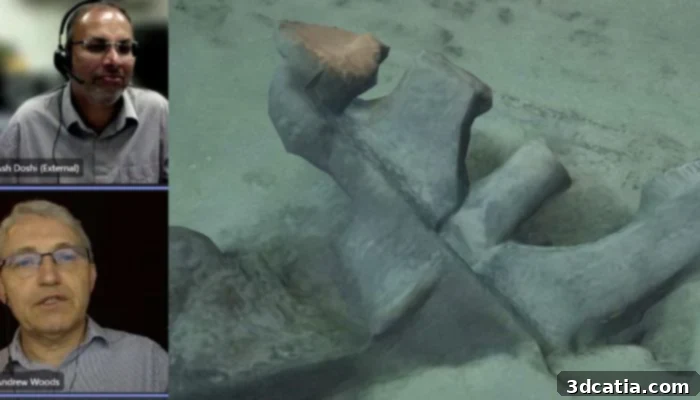
The methodology central to the shipwreck recreation project is photogrammetry, a sophisticated technology that involves the precise interpretation and analysis of photographic images to create accurate 3D representations. In this context, photogrammetry was instrumental in transforming two-dimensional underwater photographs into robust three-dimensional digital models, which could then be used for various applications, including the creation of both virtual and physical 3D prints. However, the application of photogrammetry, especially on such a grand scale and with such intricate data from the deep ocean, is far from straightforward. As Andrew Woods, who also manages the Curtin HIVE and spearheaded this initiative, explains, “It’s highly computationally intensive — when you double the number of images, you quadruple the compute requirements.” This exponential increase in computational demand posed a significant hurdle, given the staggering half-million pictures and 300 hours of video footage collected during the arduous underwater scanning missions. To overcome this immense computational challenge, Ash Doshi, a brilliant computer vision specialist and senior research officer at Curtin, played a crucial role. Doshi meticulously developed and optimized specialized software, designed to harness the immense parallel processing power of NVIDIA GPUs (Graphics Processing Units). Running this advanced software on NVIDIA’s cutting-edge hardware allowed the researchers to efficiently stitch together the vast and complex datasets, transforming fragmented images and video into cohesive, high-fidelity virtual and physical 3D models. This powerful fusion of academic expertise, innovative software development, and high-performance hardware demonstrates a synergistic approach to solving complex problems in digital reconstruction, highlighting the critical role of GPU acceleration in modern scientific research and heritage preservation.
The profound impact of this pioneering project extends far beyond the initial exhibition at the WA Maritime Museum. According to a press release from NVIDIA, these meticulously crafted exhibits are slated to embark on an extensive tour, first gracing museums in major Australian cities like Perth and Sydney. This initiative will allow a wider Australian audience to connect with this crucial, yet often overlooked, part of their naval history and national identity. Furthermore, there are ambitious plans for the exhibition to potentially travel to cities in Germany and the U.K., countries where the HSK Kormoran and HMAS Sydney (II) were originally built, respectively. This international tour would provide a global perspective on the battle, foster reconciliation, and cultivate a deeper understanding of its historical significance on a worldwide stage. In a significant move towards promoting open science and collaborative innovation, the researchers involved in this project have committed to making the underlying code available to the public upon its completion. This open-source approach is a game-changer, as it will empower other researchers, marine archaeologists, and conservationists worldwide to leverage this powerful software. It will enable them to efficiently transform other submerged artifacts, geological features, and marine environments into detailed museum pieces or research data, thereby democratizing access to advanced digital preservation techniques and significantly accelerating future discoveries. Beyond its direct application to historical wrecks, Andrew Woods points out the immense versatility and broader commercial applications of this software. He notes that the technology could also be repurposed for critical industrial applications, such as the precise monitoring and inspection of undersea pipelines, offshore oil and gas rigs, and other vital subsea infrastructure, enhancing safety and operational efficiency. This highlights the dual benefit of such cutting-edge research: preserving our shared past while simultaneously developing robust tools for future economic growth and environmental stewardship.
The successful recreation of the HMAS Sydney and HSK Kormoran shipwrecks stands as a powerful testament to the diverse and transformative applications of 3D printing and advanced visualization technologies in challenging marine environments. This project proudly joins a growing list of innovative initiatives that leverage these technologies for environmental conservation, artistic expression, and accessibility, demonstrating their wide-ranging utility. For instance, similar uses of 3D printing at sea have included vital conservation projects aimed at protecting fragile ocean ecosystems. A prime example is Innovareef in Thailand, a remarkable initiative designed to actively conserve and restore endangered coral reefs through the creation of intricate 3D printed reef structures that provide stable foundations and encourage new coral growth, thereby rebuilding vital marine habitats. In the realm of animal conservation, 3D printing is making a tangible difference in the fight against illegal wildlife trade. A notable project involves the 3D printing of realistic shark fins, used as decoys or educational tools to disrupt and reduce the devastating effects of the illicit shark fin trade by providing alternatives for ceremonial or cultural purposes that do not harm real animals. Beyond scientific and environmental applications, 3D printing continues to revolutionize the fields of art and design. We can observe this in innovative projects such as 3D art installations designed specifically for the visually impaired, offering a tactile and immersive experience that transcends traditional visual barriers, making art more inclusive. These diverse examples collectively illustrate the boundless potential of 3D printing and photogrammetry, not just for historical recreation but for shaping a more sustainable, accessible, and creatively enriched future across multiple sectors. For those interested in delving deeper into the specifics of this incredible project, more information can be found HERE on NVIDIA’s blog, and details about visiting the WA Maritime Museum exhibition are available on their website HERE.
This project not only highlights significant technological achievements but also serves as a powerful testament to humanity’s ongoing quest to understand and preserve its history, especially when that history lies hidden deep beneath the waves, often in perilous and inaccessible locations. The ability to transform fragile, inaccessible underwater relics into vivid, interactive museum pieces fundamentally changes how we interact with the past. It offers educational institutions unprecedented tools to engage students with complex historical narratives, allowing them to visualize and understand events that were once confined to textbooks. Moreover, it provides the general public with a unique and immersive window into events that shaped our world, bringing history to life in a way traditional methods cannot. The collaboration between NVIDIA’s technological prowess in high-performance computing and Curtin University’s academic excellence in visualization and marine archaeology sets a new benchmark for what can be achieved when interdisciplinary teams unite. It demonstrates how advanced GPU-accelerated computing, coupled with innovative scanning and fabrication techniques, can transcend previous limitations, making the impossible, possible. As these intricate 3D models embark on their journey to various museums, they carry with them not just the tragic story of two ships and their brave crews, but also the inspiring narrative of technological progress enabling profound cultural and historical insights. This initiative truly redefines the boundaries of historical preservation, offering an immersive and tangible connection to events that were once relegated to fading memories and historical texts, ensuring they are remembered and understood for generations to come.
What are your thoughts on this incredible project that fuses cutting-edge technology with deep historical preservation? Would you be keen to visit this pioneering exhibition to experience the HMAS Sydney and HSK Kormoran wrecks up close – or perhaps you’ve already had the chance to witness this marvel and have insights to share? We invite you to share your perspectives and feedback in a comment below, or engage with us on our vibrant social media platforms, including LinkedIn, Facebook, and Twitter! Don’t miss out on the latest advancements and news in the world of additive manufacturing. Make sure to sign up for our free weekly Newsletter here to have the freshest 3D printing news delivered straight to your inbox! For an even deeper dive into the topics we cover, you can also find all our compelling videos on our dedicated YouTube channel, where we explore the fascinating intersections of technology, innovation, and industry from around the globe.
*Cover photo credit: WA Maritime Museum