
COBOD Sells Advanced BOD2 3D Construction Printer to Saudi Arabia: Paving the Way for Large-Scale Housing Innovation
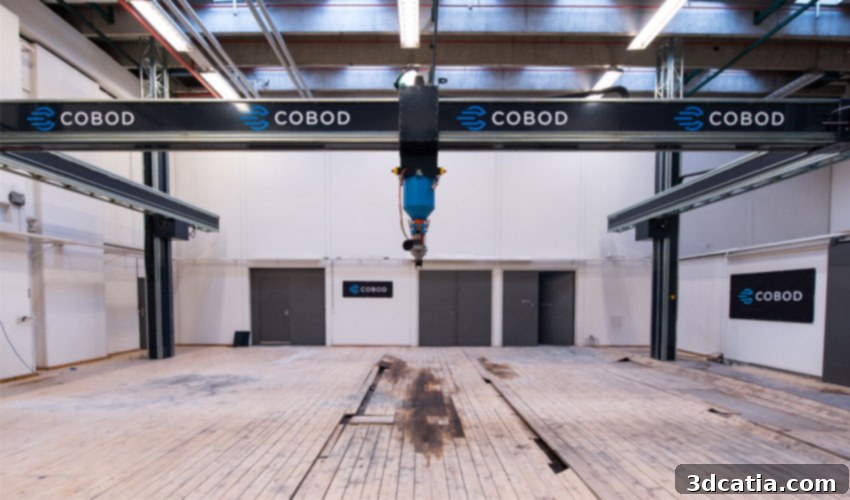
In a significant move poised to revolutionize the construction landscape of the Middle East, COBOD International, the renowned Danish manufacturer of 3D construction printers, has successfully sold one of its state-of-the-art BOD2 systems to Saudi Arabia. The recipient of this cutting-edge technology is Elite for Construction & Development Co., a prominent Saudi Arabian construction firm. This strategic acquisition marks a crucial step for the Kingdom as it strives to address its ambitious housing objectives, aiming to deliver an astounding 1.5 million new homes over the next decade. The BOD2 printer, an extensively upgraded and improved iteration of the printer used to construct Europe’s very first 3D printed building, the BOD, was slated for delivery to Elite for Construction & Development Co. by the close of May 2019, signifying a rapid deployment of advanced construction capabilities.
COBOD’s journey to becoming a global leader in 3D concrete printing is rooted in pioneering projects that showcased the immense potential of this innovative technology. We first covered an inspiring small 3D printed office project in Copenhagen back in September 2017. At the time, the manufacturer behind this groundbreaking endeavor was known as Printhuset, before its evolution into COBOD International. This remarkable fifty-square-metre building, known simply as “The BOD,” served as a pivotal moment, marking the Danish manufacturer’s compelling debut and proof-of-concept in the challenging field of 3D concrete printing. It was not merely a structure but a tangible demonstration of what additive manufacturing could achieve in real-world construction, laying the essential groundwork for the development of more advanced and robust systems like the BOD2. The experience gained from designing, printing, and commissioning The BOD was instrumental in refining COBOD’s technology, optimizing its processes, and understanding the practicalities of large-scale construction printing.
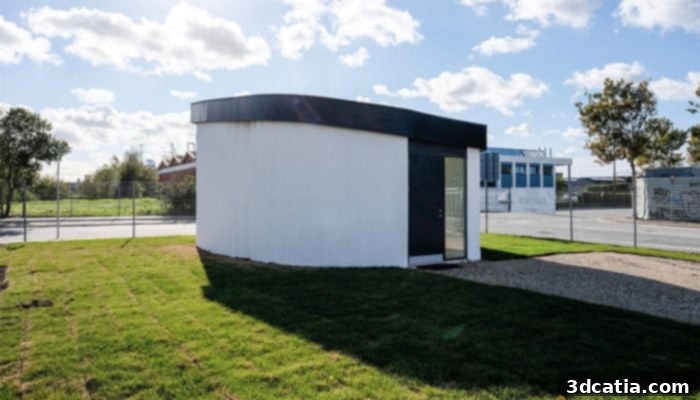
The small office 3D printed in Copenhagen, a testament to COBOD’s early innovation.
The acquisition of the BOD2 by Elite for Construction & Development Co. underscores the printer’s superior capabilities and COBOD’s established reputation. Henrik Lund-Nielsen, CEO of COBOD International, expressed immense pride in this achievement, stating, “We are very proud to receive this order from Saudi Arabia, which again confirms that our second-generation BOD2 3D construction printer is second to none. This sale is not just a commercial success but a validation of our continuous innovation and commitment to pushing the boundaries of construction technology. Our team has worked tirelessly to develop a system that not only offers unparalleled speed but also crucial flexibility.” He further elaborated, “Not only is the BOD2 the fastest 3D construction printer in the world, capable of executing projects with remarkable efficiency, but the modular approach of the BOD2 allowed us to deliver the exact size and configuration that Elite for Construction & Development wanted, ensuring it perfectly meets their specific operational and project requirements.” This modularity is a key differentiator, enabling clients to customize the printer’s dimensions to suit various project scales, from residential homes to larger commercial or public structures.
Unmatched Technical Prowess and Scalability for Modern Construction
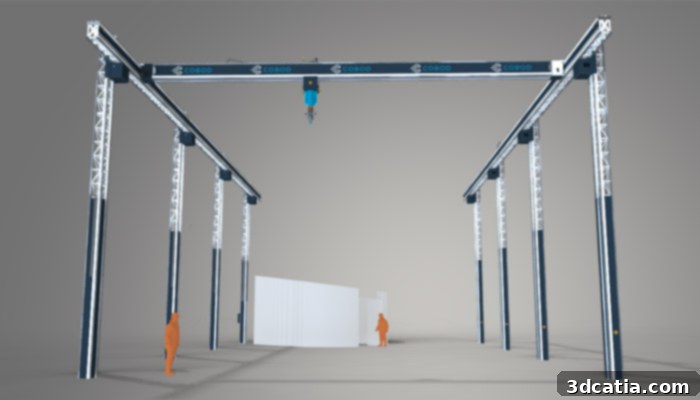
The BOD2 3D concrete printer is engineered for monumental tasks, boasting an impressive capacity to create buildings with a maximum width of 12 meters, a length of 27 meters, and a substantial height of 9 meters. These dimensions allow for the construction of significant structures, making it suitable for a wide array of architectural designs and functional requirements. One of its most groundbreaking features is the ability to autonomously build a three-storey house in a single, continuous operation, with each floor measuring more than 300 square meters. This capability drastically reduces construction time, labor costs, and the complexity associated with traditional multi-story building processes, offering an unprecedented level of efficiency.
Furthermore, the BOD2 stands out due to its highly adaptable modular design, which is now conveniently available in three basic formats, providing flexibility to meet diverse construction demands. This modularity means that the printer’s dimensions can be scaled up or down based on the project’s specific requirements, from smaller residential units to larger commercial or public infrastructures. COBOD proudly asserts that the BOD2 is recognized as one of the largest 3D concrete printers operating globally. This immense scale, combined with its advanced capabilities, exponentially multiplies the possibilities for construction projects, making it feasible to undertake initiatives that were previously considered unfeasible or economically prohibitive through conventional methods. Indeed, the application of 3D printing in the construction industry is experiencing significant and rapid development, driven by continuous technological advancements that result in more powerful, efficient, and versatile additive manufacturing solutions.
Saudi Arabia’s Vision for the Future: Addressing the Housing Demand with Innovation
The imminent arrival of COBOD’s BOD2 3D concrete printer by the end of May marked a historic milestone for Saudi Arabia. This acquisition represents a significant first for the Kingdom in adopting large-scale 3D construction printing, positioning it alongside regional leaders like Dubai, which has famously announced its intentions to 3D print 25% of its new buildings by 2030. Saudi Arabia’s decision to invest in such advanced technology is directly linked to its ambitious national development agenda, particularly the Saudi Vision 2030, which aims to diversify the economy, foster innovation, and improve the quality of life for its citizens. A cornerstone of this vision is addressing the burgeoning demand for housing, with a national target to build 1.5 million houses over the next ten years.
Traditional construction methods often struggle to meet such monumental targets efficiently, facing challenges related to labor shortages, material waste, extended timelines, and escalating costs. The BOD2 solution, with its unparalleled speed and efficiency, could prove instrumental in helping Saudi Arabia achieve this highly ambitious objective. By leveraging 3D printing technology, the Kingdom can significantly accelerate construction processes, reduce reliance on extensive manual labor, minimize material wastage, and potentially lower overall building costs. This not only promises to deliver homes faster but also with a consistent quality that might be harder to maintain with conventional methods across millions of units. The adoption of 3D printing aligns perfectly with Vision 2030’s emphasis on technological advancement and sustainable development, paving the way for a more digitized and efficient construction sector.
The Transformative Impact of 3D Printing on Global Construction
The integration of 3D construction printing, exemplified by the BOD2, offers a myriad of benefits that extend far beyond mere speed. It brings significant improvements in terms of efficiency, cost-effectiveness, and sustainability. For instance, the ability to rapidly construct intricate designs with minimal human intervention can drastically reduce overall project timelines. This efficiency translates into substantial labor cost savings, as fewer workers are required on-site, particularly for repetitive and hazardous tasks. Moreover, 3D printing minimizes material waste through precise deposition, contributing to a more sustainable construction process and reducing the environmental footprint of building activities. The technology also offers unprecedented design flexibility, allowing architects to experiment with complex geometries and customized structures that would be impractical or impossible to achieve with traditional building techniques.
For Saudi Arabia, these advantages are particularly compelling. The capacity for rapid construction is vital for meeting the aggressive housing targets, while cost efficiencies can make affordable housing more accessible to a wider population. The reduced reliance on imported labor, coupled with the potential to foster a skilled workforce trained in advanced manufacturing, also aligns with the Kingdom’s localization and job creation goals under Vision 2030. This shift towards additive manufacturing in construction is not just about building faster; it’s about building smarter, more sustainably, and with greater architectural freedom, fundamentally reshaping how future cities are developed globally.
The Middle East as a Hub for 3D Construction Innovation
The Middle East has rapidly emerged as a frontrunner in embracing advanced construction technologies, with Dubai famously setting a precedent for ambitious 3D printing targets. Saudi Arabia’s acquisition of the BOD2 solidifies this regional trend, signaling a broader commitment across the Gulf Cooperation Council (GCC) to integrate cutting-edge solutions into their urban development strategies. This move by Elite for Construction & Development Co. not only propels Saudi Arabia to the forefront of innovative construction but also fosters a healthy competitive environment within the region, encouraging further investment and development in digital construction methods. The BOD2 solution could indeed be a powerful catalyst, helping the Kingdom not just achieve its ambitious housing objectives but also to set new benchmarks for efficiency and innovation in large-scale building projects.
COBOD’s CEO, Henrik Lund-Nielsen, succinctly summarized the transformative potential of this partnership: “With this printer, Saudi Arabia will be able to position itself as a leader, not only in the printing of private homes, which is a significant market, but also in medium-sized offices and public buildings such as schools, museums, and other essential civic infrastructure.” This vision highlights the versatility of the BOD2 and its capacity to address a wide spectrum of construction needs, from individual residences to community-defining structures. This strategic adoption of 3D construction printing is a testament to the forward-thinking approach of Saudi Arabia, embracing technology as a cornerstone of its future growth and development.
COBOD’s Role in Shaping Tomorrow’s Skylines
COBOD International’s sale of the BOD2 to Saudi Arabia reaffirms its position as a global pioneer and market leader in the 3D construction printing sector. This strategic partnership demonstrates the growing confidence in additive manufacturing as a viable, scalable, and efficient solution for addressing the world’s pressing housing and infrastructure challenges. COBOD’s commitment to innovation, speed, and modularity has not only garnered it significant orders but also established its technology as a benchmark for the industry. As more countries and construction firms recognize the substantial benefits of 3D printing – from reduced construction times and costs to enhanced design flexibility and sustainability – COBOD is well-positioned to continue playing a pivotal role in shaping the skylines of tomorrow. The company’s continued research and development efforts are likely to lead to even more advanced systems, further expanding the capabilities and applications of 3D construction printing on a global scale.
For more detailed information on COBOD’s innovative solutions and their impact on the construction industry, you can visit their official website HERE.
What are your thoughts on the groundbreaking BOD2 printer and its potential to transform construction in Saudi Arabia? We invite you to share your insights in a comment below or join the discussion on our Facebook and Twitter pages! Don’t miss out on the latest advancements in additive manufacturing – remember to sign up for our free weekly Newsletter, delivering all the essential news in 3D printing directly to your inbox!