
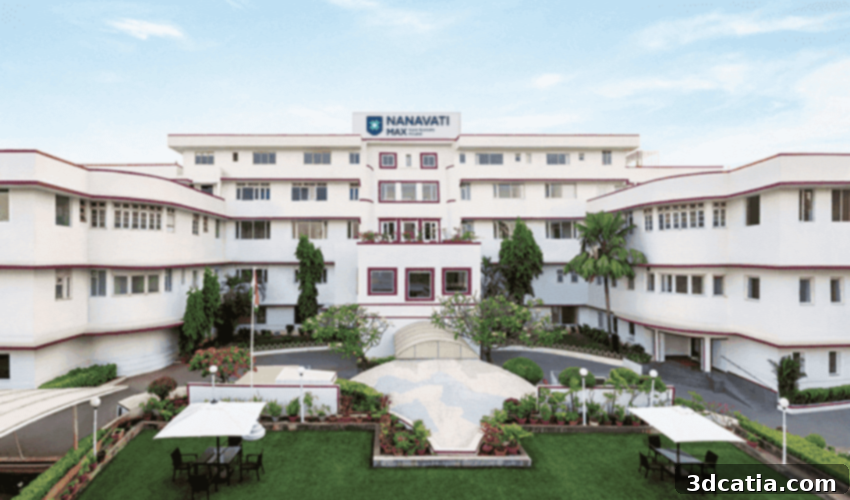
Revolutionizing Surgical Precision: Nanavati Max Hospital Unveils State-of-the-Art Medical 3D Printing Lab
The integration of 3D printing technology into the medical field has seen remarkable growth and adoption over recent years. Its versatile applications span from the development of personalized medications and intricate bioprinting platforms to enhancing diagnostic capabilities and surgical interventions. Across the globe, hospitals are increasingly leveraging this innovative technology to refine patient care, notably by optimizing the duration and precision of complex surgical procedures. In a significant stride forward for healthcare innovation, Nanavati Max Super Speciality Hospital in Mumbai, India, has recently inaugurated a dedicated medical 3D printing laboratory. This cutting-edge facility is designed to dramatically improve surgical outcomes, particularly within the challenging domain of oncology, but also extends its benefits across a wide range of medical specialties including cardiology, neurology, and orthopedics. By embracing 3D printing, Nanavati Max aims to usher in an era of unparalleled surgical accuracy and efficiency, directly translating to superior patient care and improved recovery times.
This pioneering 3D printing laboratory is equipped with two high-performance, state-of-the-art printers specifically engineered for the precise creation of anatomical bone models and bespoke surgical cutting guides. These advanced capabilities represent a profound improvement in how medical professionals approach anatomical study, enabling a deeper understanding of complex pathologies and individualized patient cases. The meticulously crafted bone models serve as invaluable tools for pre-operative planning, allowing surgeons to visualize intricate bone structures, anticipate potential challenges, and even rehearse complex procedures in a risk-free environment. This “practice run” can significantly reduce surprises during actual surgery, leading to more confident and controlled interventions. Beyond mere visualization and planning, the lab also excels in producing patient-specific cutting guides. These guides are instrumental in simplifying the planning and ensuring the extraordinarily precise execution of intricate procedures, especially crucial in delicate bone cancer surgeries. They act as a surgeon’s reliable roadmap, guiding every incision and resection with unparalleled accuracy throughout the entire operation, thereby minimizing errors and optimizing the preservation of healthy surrounding tissue.

Nanavati Max utilizes 3D printing technology to create highly detailed bone models and custom surgical cutting guides, enhancing surgical precision and patient outcomes.
Nanavati Max Super Speciality Hospital’s New Era of Surgical Precision with 3D Printing
The visionary initiative to establish this advanced 3D printing laboratory is spearheaded by Dr. Manish Agarwal, the esteemed Director of the Surgical Oncology Section at the Nanavati Max Institute of Cancer Care. Under his leadership, a dedicated team of highly skilled bioengineers operates within the laboratory, ensuring the rapid and efficient production of both complex bone models and essential cutting guides. This streamlined in-house process marks a monumental shift from previous methods, dramatically improving operational efficiency and patient care timelines. What once took up to two weeks to outsource and manufacture, causing significant delays in critical cancer treatment pathways and prolonging patient anxiety, is now ready for the surgical team within an astonishingly short timeframe of 24 to 48 hours. This dramatic acceleration in turnaround time is not merely a matter of convenience; it is a life-changing improvement that directly impacts patient outcomes by allowing for timely interventions, reducing the waiting period for specialized medical tools, and ultimately expediting the commencement of vital treatments.
Dr. Agarwal passionately articulates the multifaceted benefits of this technological advancement, stating, “In cancer treatment, where every single day holds immense significance, such a rapid turnaround offers a profound dual benefit: it’s not only significantly faster but also substantially more cost-effective for our patients and the broader healthcare system. This reduction in lead time translates to fewer hospital days and a quicker path to recovery, lowering overall treatment costs. Furthermore, the strategic adoption of open-source software platforms for design and the leveraging of our existing in-house resources collectively render this advanced technology remarkably affordable. This commitment to accessibility is pivotal, as it democratizes cutting-edge surgical care, ensuring a broader spectrum of patients can benefit from these innovations, thereby greatly enhancing overall patient accessibility and the quality of care we can deliver, regardless of their economic background.” This philosophy underscores Nanavati Max’s dedication to not just technological prowess but also to equitable and affordable healthcare solutions for all.
The methodology employed within the lab represents a seamless integration of advanced digital imaging and additive manufacturing workflows. The process begins with the acquisition of high-resolution patient-specific anatomical data, typically obtained through advanced medical imaging scanners such as CT or MRI. This raw data is then meticulously transformed into precise virtual 3D bone models using sophisticated medical design software. These digital models serve as the definitive blueprint for both comprehensive pre-surgical planning and the subsequent physical production. Once the virtual design is finalized and approved, these designs are fed into the high-performance 3D printers, which then create exceptionally accurate physical bone models for detailed study, surgeon training, and patient consultation. Simultaneously, custom-engineered cutting guides are produced. These cutting guides are precisely tailored to the unique anatomical structure of each patient, providing surgeons with unerring guidelines for even the most meticulous and complex excisions. The ability to create models and guides that perfectly mirror a patient’s anatomy allows for unparalleled pre-operative strategizing, enabling surgeons to anticipate challenges, optimize approaches, and even practice delicate maneuvers before the actual surgery. This level of personalized preparation drastically reduces operative time, minimizes complications, and significantly enhances surgical accuracy.
Ultimately, the profound impact of this 3D printing technology lies in its capacity to dramatically improve the precise delineation of tumor-affected areas. This enhanced clarity empowers surgeons to meticulously remove cancerous tissue with greater confidence and accuracy, while simultaneously preserving the maximum amount of healthy bone and surrounding tissues. This precision is not just about immediate surgical success; it’s about minimizing post-operative complications, accelerating recovery, reducing the need for extensive reconstructive surgery, and significantly improving the patient’s long-term quality of life. Dr. Manish Agarwal elaborates on this critical aspect, concluding, “By strategically utilizing custom-made jigs, highly detailed anatomical bone models, and advanced navigational tools, our entire surgical planning process is elevated to an unprecedented level of sophistication and accuracy. These innovations are not merely aids; they play a truly critical role in facilitating precise surgical interventions that yield significantly improved patient outcomes. Crucially, these advancements also contribute directly to enhancing the overall quality of life for our patients, allowing them to return to their normal lives with greater function, less discomfort, and improved confidence in their recovery.” This holistic approach to patient care, enabled by 3D printing, signifies a paradigm shift in how complex surgeries are conceived and executed, prioritizing both efficacy and patient well-being.
The inauguration of this state-of-the-art 3D printing lab at Nanavati Max Super Speciality Hospital marks a pivotal moment, aiming to make precision surgery not only easily accessible but also highly affordable for a wider population. This development unequivocally underscores the continued and rapid advancement of additive manufacturing technologies within the vibrant landscape of India. It positions India as a growing hub for medical innovation and highlights the country’s commitment to integrating cutting-edge solutions into its healthcare infrastructure. This initiative serves as an inspiring example for other medical institutions, demonstrating the tangible benefits of embracing advanced manufacturing techniques to solve complex healthcare challenges and ultimately improve lives across the nation. The expansion of such facilities is expected to drive further innovation and adoption, creating a ripple effect throughout the Indian medical sector.
What are your thoughts on this groundbreaking new medical 3D printing laboratory at Nanavati Max Super Speciality Hospital? How do you envision the future expansion and application of additive manufacturing across various sectors in India? We invite you to share your insights and comments below, or connect with us on our LinkedIn, Facebook, and Twitter pages! Don’t miss out on the latest advancements in 3D printing – sign up for our free weekly newsletter here to get all the news delivered straight to your inbox! You can also explore our extensive video library on our YouTube channel for more fascinating content.
*All Photo Credits: Nanavati Max Super Speciality Hospital