
Formnext 2019: Unveiling the Industrial Future of Additive Manufacturing and 3D Printing Technologies
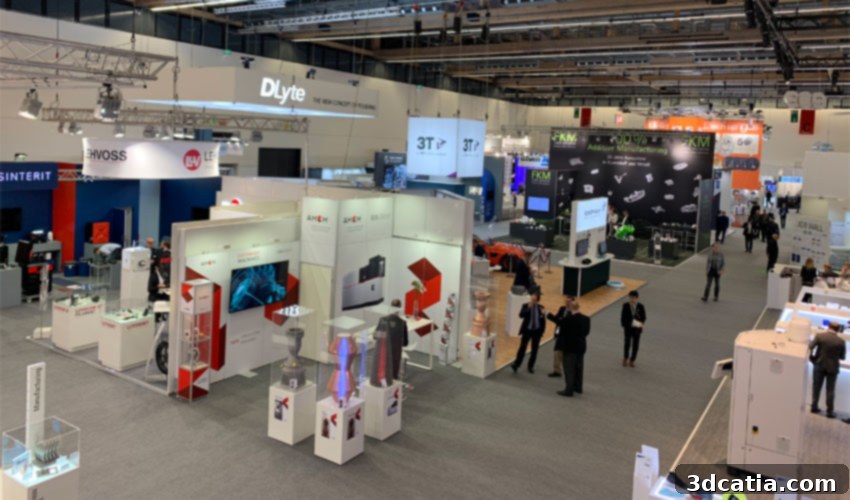
Formnext, the premier global exhibition for additive manufacturing and industrial 3D printing, once again demonstrated its unparalleled success this year. The 5th edition of the event, held in Frankfurt, Germany, drew an impressive crowd, featuring over 850 exhibitors and welcoming 34,500 participants – a significant increase from the 27,000 attendees in the previous year. This remarkable growth underscored the industry’s burgeoning momentum and a clear focus on the industrialization of additive manufacturing technologies. A defining characteristic of Formnext 2019 was the prominence of larger, more robust industrial machines designed to meet escalating production demands. The four expansive halls of the exhibition were bustling with cutting-edge equipment and innovative applications, providing a comprehensive showcase of the latest advancements in the sector. 3Dnatives was on site to report on these pivotal developments. Among the myriad exhibitors, several key trends emerged: a substantial presence of metal AM players, the proliferation of large-format machines, a noticeable surge in interest towards ceramic 3D printing, and perhaps most importantly, a highly professional visitor demographic arriving with clear specifications and well-defined project objectives.
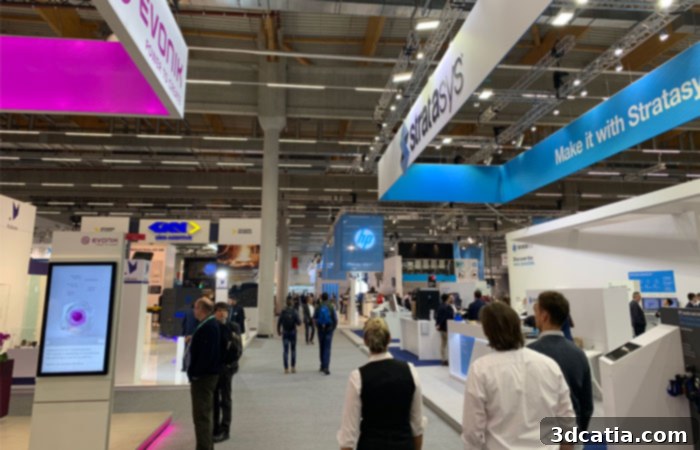
Over 800 exhibitors were presenting their solutions this year | Credits: 3Dnatives
The Ascendancy of Metal Additive Manufacturing: Paving the Way for Industrial Scale Production
Metal additive manufacturing continued its impressive trajectory at Formnext 2019, solidifying its position as a dominant force in the industry. A vast number of exhibitors, exceeding 185 companies, specialized in metal AM technologies, indicating a robust and expanding segment. This included well-established market leaders such as EOS, Trumpf, Renishaw, HP, and 3D Systems, who showcased their latest industrial solutions. Equally notable was the strong showing of innovative newcomers and rapidly growing companies like Meltio, One Click Metal, Aurora Labs, Velo3D, and Xerox, all demonstrating significant advancements. While metal AM had been gaining traction in previous years, the 2019 edition distinctively highlighted its readiness for industrialization and a gradual shift towards mass production. This maturity was evident in the sophisticated machinery and integrated workflows presented, designed to streamline manufacturing processes and enhance efficiency, offering solutions for critical sectors like aerospace, automotive, and medical device manufacturing.
Discussions with industry experts echoed this sentiment, confirming that the benefits of metal 3D printing are becoming increasingly recognized and sought after. Jordan Zacha, Marketing and Business Development Specialist at Aurora Labs, shared his observations regarding the evolving market: “It is quite surprising to see the number of players in this sector but even more so the proportion of visitors who are interested, especially American companies. They are looking for a fast and efficient production solution. I think that’s where the future of additive metal manufacturing lies.” This statement underscores the growing recognition of metal 3D printing’s potential to revolutionize supply chains by offering rapid prototyping, agile manufacturing, and the ability to produce complex, high-performance parts on demand. Manufacturers are increasingly realizing the advantages of reduced lead times, optimized material usage, and the creation of geometries previously impossible with traditional methods, all of which contribute to a more competitive and innovative production landscape for metal components.
Among the standout innovations in metal AM, the American company 6K (formerly Amastran) captured significant attention. They showcased a groundbreaking plasma system capable of creating high-quality metallic powders from used powders, waste materials, or even worn and defective metal parts. This pioneering approach embodies a true circular economy model, significantly reducing waste and promoting sustainable manufacturing practices within the metal 3D printing ecosystem. Furthermore, 6K’s technology offers the unique ability to produce novel metal alloys that were previously unattainable through conventional methods, opening up new avenues for material science and advanced applications across various industries requiring specialized material properties. This project exemplifies the industry’s commitment not only to efficiency and performance but also to environmental responsibility, and it is undoubtedly one to watch closely as it develops further and impacts the future of sustainable metal additive manufacturing.
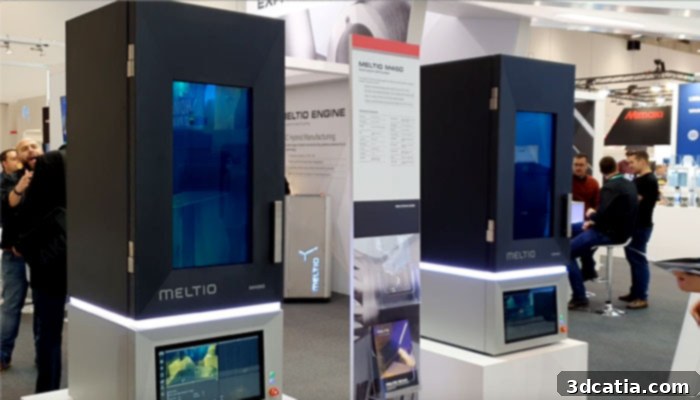
Meltio’s new metal 3D printer
Beyond Metals: Innovations in Polymers, Large Format Printing, and the Rise of Ceramics
While metal additive manufacturing commanded significant attention, Formnext 2019 also reinforced the enduring importance and continued innovation within the polymer family. Polymer 3D printing remains a robust and well-established segment of the market, evidenced by the pervasive presence of FFF (Fused Filament Fabrication) machines throughout the exhibition halls. This widespread adoption of FFF highlights its accessibility, versatility, and suitability for a broad range of applications, from rapid prototyping to functional end-use parts, especially for customized and on-demand production. A prominent trend within polymer printing was the emphasis on large format 3D printers, with impressive machines showcased by companies like Tractus3D and Modix. These larger systems are opening up new possibilities for industries requiring big parts, such as automotive, aerospace, and construction, allowing for the creation of components that were previously limited by build volume and enabling the production of full-scale prototypes or even end-use parts in a single print job.
The demand for high-performance thermoplastics and advanced composite materials also remained exceptionally strong among manufacturers. These materials offer superior mechanical properties, chemical resistance, and thermal stability, making them ideal for demanding industrial applications where conventional plastics fall short. Giovanni Cavolina, co-founder of 9T Labs, provided valuable insights into the burgeoning field of composites in 3D printing: “Composites are still young on the 3D printing market and are of great interest to professionals. At the moment, there are still few reliable processes for printing them, we hope of course to change the situation. I think that composite materials have a bright future ahead of them and will be able to shade metals for some applications.” His statement highlights the immense potential of composites, particularly given their advantageous strength-to-weight ratio and often lower cost compared to metals. In many applications, composite parts can achieve mechanical properties comparable to their metal counterparts while weighing significantly less – often by a factor of ten or more – offering critical benefits in sectors where weight reduction is paramount, such as transportation and lightweighting initiatives.
A notable development at Formnext 2019 was the increasing involvement of major chemical groups in additive manufacturing, underscoring the critical role of material innovation in the industry’s progression. This partnership between material science and AM technology is crucial for unlocking new applications and improving existing ones. Solvay, for instance, chose Formnext as the platform to launch its Solef PVDF filament. This advanced material boasts exceptional resistance to solvents, UV radiation, and oxidation, making it particularly suitable for the rigorous demands of the chemical, semiconductor, and Oil & Gas industries, where material degradation can lead to significant operational challenges. Similarly, Arkema announced a strategic partnership with Kimya to further develop solutions based on PEKK (Polyetherketoneketone), a high-performance polymer renowned for its excellent mechanical and thermal resistance, critical for applications requiring extreme durability. Arkema also highlighted PEBA-S, a material ideal for applications requiring lightweight, superior energy return, and robust low-temperature resistance, such as those found in the sports and leisure sectors, enabling innovative product designs for athletic equipment and footwear. These collaborations and product launches demonstrate a clear trend: as AM matures, the focus shifts to specialized, high-performance materials tailored for specific industrial needs, expanding the capabilities and reach of 3D printing.
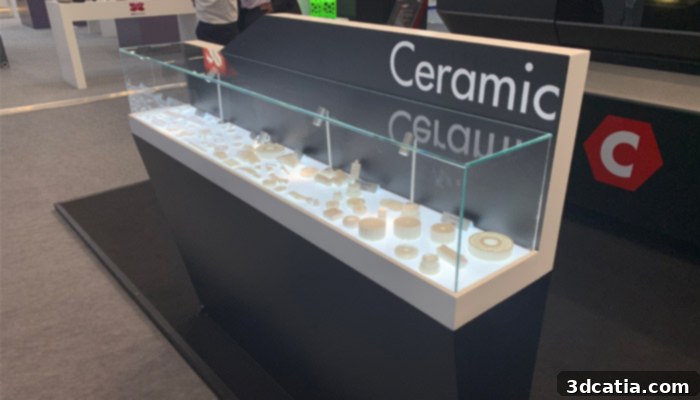
Beyond polymers, ceramics emerged as a material class with considerable future potential. Formnext 2019 saw a notable increase in exhibitors specializing in ceramic additive manufacturing. Although still a relatively niche technology, ceramic 3D printing offers distinct advantages, including high-temperature resistance, biocompatibility, and chemical inertness, making it invaluable for applications in aerospace (e.g., thermal protection systems), biomedical (e.g., implants), and energy sectors (e.g., heat exchangers). The French manufacturer 3DCeram exemplified this potential with the unveiling of its new machine, specifically designed for the production of large finished ceramic parts. This development signals a significant step forward, moving ceramic AM beyond prototyping into industrial-scale production, and addressing a growing demand for advanced ceramic components in diverse high-tech industries where traditional manufacturing methods are often complex and costly.
A Maturing Market: From Curiosity to Concrete Industrial Applications
Perhaps one of the most significant observations from Formnext 2019 was the palpable shift in the maturity of its audience. Additive manufacturing is no longer a nascent technology; it has evolved into a sophisticated tool that attracts a far more informed and discerning public than ever before. This sentiment was universally shared among exhibitors, who noted a marked difference in the nature of conversations. Thomas Janics, CEO of HAGE3D, eloquently summarized this trend: “I am really impressed by the growing interest in the market. Most of the time, visitors know what they are talking about, already have an idea of what can be done, why and how. I am also amazed by the number of different applications that can be found. It’s very promising for the future.” This heightened level of understanding among attendees signifies a pivotal moment for the industry. Visitors are no longer merely curious about the technology; they are actively seeking solutions for specific production challenges, arriving with detailed specifications and a clear vision for integrating AM into their existing manufacturing workflows, moving from theoretical interest to practical, actionable implementation plans.
This maturity translates into more productive discussions and accelerates the adoption of additive manufacturing across various industrial sectors. Participants arrived with very precise requirements, often having already researched specific technologies, materials, and application possibilities, reflecting a deeper engagement with the potential of AM. This proactive engagement reflects the industry’s move from theoretical exploration to practical implementation, signaling that companies are seriously considering and investing in additive solutions for their production needs. While many attendees demonstrated a deep understanding, the sheer pace of innovation at Formnext still managed to surprise even seasoned professionals. As one visitor from the aeronautics sector remarked, he “was far from having seen everything. It’s exciting!” This indicates that despite growing knowledge, the continuous evolution of AM technologies continues to captivate and inspire, pushing the boundaries of what is thought possible and fostering a dynamic environment of continuous discovery and development.
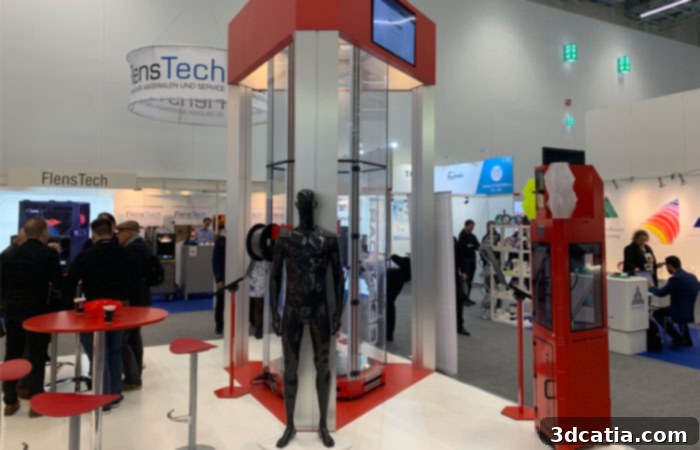
Tractus3D’s machine can creates parts 2 meters high | Credits: 3Dnatives
However, this immense growth also presented a minor challenge for the 5th edition of Formnext. With an expansive exhibition area spanning 50,000 square meters, navigating the vast halls could be daunting for newcomers and even experienced visitors, making it challenging to efficiently cover all areas of interest. While this is a testament to the show’s success and the industry’s impressive expansion, it also highlights the need for effective planning and possibly improved navigation tools to maximize one’s visit. Nevertheless, the overwhelming sentiment among attendees and exhibitors alike was one of excitement and anticipation for the future of additive manufacturing. Formnext 2019 unequivocally established additive manufacturing as a critical industrial technology poised for widespread adoption across diverse industries. The event served as a powerful platform for networking, knowledge exchange, and showcasing the innovative spirit driving the entire AM ecosystem forward. We eagerly look forward to the next edition to witness the continued evolution and groundbreaking developments in this dynamic and rapidly advancing field. More information about Formnext can always be found on the organizers’ official website HERE.
Did you have the opportunity to attend Formnext 2019? What were your key takeaways and impressions of the show, especially regarding the industrialization trends or specific material advancements? We invite you to share your thoughts and experiences in the comments section below or connect with us on our Facebook and Twitter pages. Stay informed about the latest trends and breakthroughs in 3D printing by signing up for our free weekly Newsletter, delivering all the essential industry news directly to your inbox!