
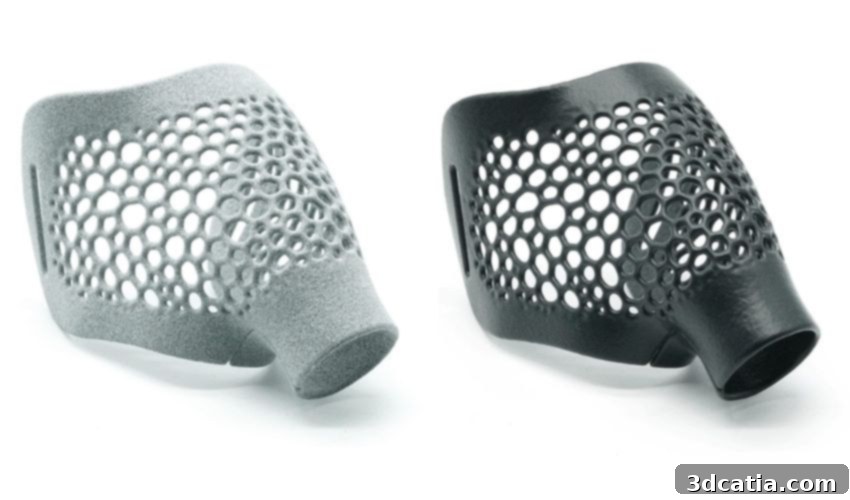
VX1 Vapor Smoothing: Elevating 3D Printed Polymer Parts to Industrial Perfection
German startup ASM GmbH has officially launched its groundbreaking VX1 vapor smoothing solution, designed specifically for 3D printed polymer parts. Unveiled initially at Formnext 2023, the VX1 has undergone rigorous testing by initial customers and is now readily available on the market. This innovative system promises to revolutionize the post-processing landscape for additive manufacturing, providing unparalleled surface quality and enhancing the functional attributes of printed polymer components.
Vapor smoothing is a sophisticated industrial technique that stands out among various post-processing methods. It involves a precise process where 3D printed components are exposed to a solvent in a carefully controlled vaporized form. This vapor delicately melts the microscopic irregularities on the part’s surface, effectively removing the inherent roughness and porosity typical of 3D printing. The result is a uniformly smooth, aesthetically pleasing, and often glossy finish that significantly elevates the perceived and actual quality of the part. Beyond mere aesthetics, this process critically prevents moisture absorption, which can compromise the structural integrity and performance of polymer parts over time. By transforming raw 3D prints into finished products with superior aesthetic and mechanical characteristics, vapor smoothing becomes an indispensable step for a wide array of applications across numerous industries. It’s not just about making parts look better; it’s about making them perform better and last longer.
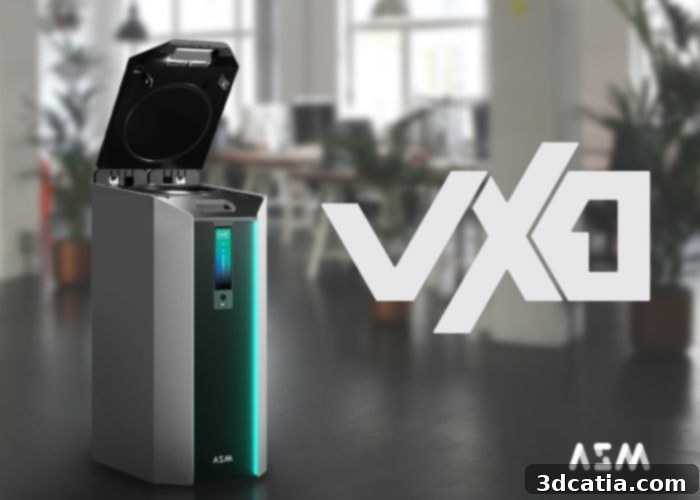
The Vapor Smoothing VX1 machine features a compact design, making it suitable for various workshop environments.
The VX1 solution from ASM GmbH is specifically engineered for the post-processing of parts produced using polymer powder bed fusion (PBF) technologies, such as Selective Laser Sintering (SLS). These manufacturing methods are renowned for their ability to create complex geometries and functional prototypes, but they often leave parts with a distinct grainy or porous surface texture. The VX1 aims to address this inherent limitation by providing an industrial-grade, yet accessible, entry-level solution for achieving high-quality surface finishes. What exactly can businesses expect from ASM’s new VX1 vapor smoothing machine? It promises a transformative impact on how 3D printed polymer parts are prepared for their final applications, ensuring they meet rigorous industry standards for both appearance and performance.
Key Features and Benefits of the VX1 Vapor Smoothing System for Polymer Parts
ASM’s VX1 system is primarily designed to meet the critical demand for accurate and consistent surface finishing of polymer parts fabricated using powder bed fusion processes. After the initial depowdering stage, these parts typically retain a raw, unfinished state, which often falls short of the desired aesthetic and functional requirements for end-use applications. The ability of the VX1 to provide a superior surface finish not only enhances the visual appeal but also significantly increases the overall value of these parts, effectively transforming them from mere prototypes or raw components into fully finished, high-performance products ready for market. This transformation is crucial for industries where component appearance, feel, and performance are paramount.
Technical Specifications and Design Advantages
Delving into the technical features, the VX1 machine boasts a remarkably compact design, measuring only 450x650x1100 mm. This compact footprint is a significant advantage, allowing the system to be integrated seamlessly into a variety of workshop environments, from small-scale design studios to larger industrial facilities, without demanding excessive floor space. Despite its modest dimensions, the VX1 houses a generous processing chamber with a recommended build volume of 180 x 220 x 350 mm, equating to 13.5 liters. For larger batches or bigger individual parts, the chamber can accommodate a maximum volume of 24.6 liters. This flexibility is a considerable asset, providing the capability to process a wide range of part sizes, from intricate small components to substantial workpieces. For instance, the VX1 is perfectly suited for post-processing parts from small-format SLS printers, while also possessing the capacity and capabilities to support large-scale industrial additive manufacturing applications. According to ASM, the machine is engineered for user-friendliness, offering simple operation and easy setup, which minimizes training requirements and accelerates workflow integration. Users can precisely select the desired level of surface smoothing, ensuring optimal results tailored to specific application needs, whether a subtle sheen or a high-gloss finish is required.
Material Compatibility and Future Prospects
In terms of material compatibility, the VX1 is currently optimized for processing PA12 (Nylon 12), a highly popular and versatile polymer in the additive manufacturing industry, known for its excellent mechanical properties and widespread use in SLS printing. Recognizing the diverse needs of the market, ASM has ambitious plans to expand the VX1’s material compatibility. Later this year, users can expect support for other key engineering polymers such as PA11, TPU (Thermoplastic Polyurethane), and PP (Polypropylene). This expanded compatibility will unlock new possibilities for various applications, including flexible parts requiring the elasticity of TPU or components needing the chemical resistance and lower density of PP, further solidifying the VX1’s position as a versatile and future-proof post-processing solution.
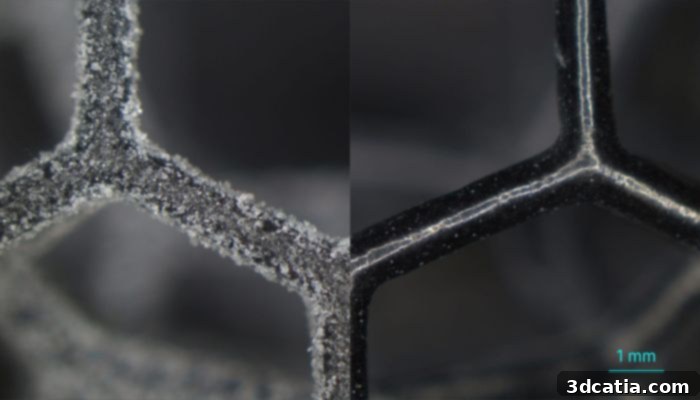
Demonstration of surface transformation: TPU before (left) and after (right) being treated with the VX1 vapor smoothing system, showcasing a remarkable improvement in finish.
Efficiency and Environmental Responsibility
The VX1 solution is also engineered for remarkable efficiency, boasting a rapid cycle time of typically 1.5 to 2 hours at most. This quick turnaround is crucial for production environments where time-to-market and batch processing speed are critical factors. Furthermore, a significant focus for ASM has been on minimizing the machine’s environmental footprint. The VX1 utilizes an FDA-approved, food-grade, and eco-friendly treatment agent, ensuring safety for both operators and the environment, and making it suitable for applications in sensitive sectors like medical and food industries. Additionally, the system operates with highly efficient reusable cartridges for the treatment agent, significantly reducing waste generation and offering substantial cost savings over the machine’s operational lifespan. This commitment to sustainability aligns with global efforts to promote greener manufacturing processes, making the VX1 an attractive option for environmentally conscious companies.
ASM’s Benchmarking Program and Industry Showcase at Rapid.Tech 3D
To enable potential customers to experience the capabilities of the VX1 firsthand, ASM has launched an innovative benchmarking program. Through this program, interested parties can submit their 3D printed parts directly to ASM. The company will then process these parts using the VX1 vapor smoothing technology and return them to the sender, free of charge. This unique opportunity allows businesses to evaluate the superior surface quality and functional enhancements achieved by the VX1 on their specific components, facilitating informed decision-making without any initial investment risk.
The benefits of the VX1 solution extend across a broad spectrum of industries that leverage polymer additive manufacturing. Sectors such as automotive, where aesthetics and performance for interior and under-the-hood components are vital; aerospace, requiring lightweight, smooth, and robust parts; consumer electronics, demanding ergonomic and visually appealing casings; and medical devices, where sterility, ease of cleaning, and biocompatibility are paramount, all stand to gain immensely from vapor smoothing. ASM proudly highlights that the VX1 vapor smoothing solution for polymers offers a compelling and cost-effective alternative to existing 3D printing surface treatment methods. Its combination of ease-of-use, rapid processing, and economical operation makes it a highly attractive investment for companies looking to enhance their production capabilities and product quality.
Early customers who have integrated the VX1 into their workflows have consistently praised its exceptional surface quality, which delivers impeccably smoothed and sealed surfaces. Maurice Scheer, CEO of 3D-LABS GmbH, enthusiastically commented, “With the VX1, we achieve significant added value for our customers in the finishing of prototypes and small series, as reproducibility is achieved with parameters that are individually tailored to the product.” This testimonial underscores the VX1’s ability to not only improve aesthetics but also ensure consistent, high-quality results critical for both prototyping and small-batch production, providing a competitive edge through customizable and repeatable post-processing.
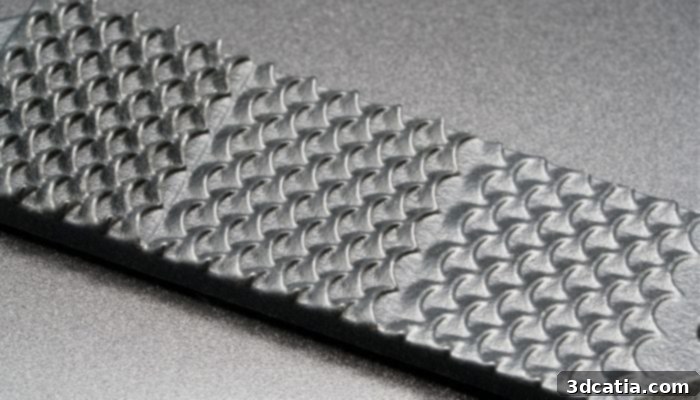
The VX1 system ensures the preservation of fine detail sharpness during the surface smoothing process, maintaining the integrity of complex geometries.
For those eager to witness ASM’s VX1 vapor smoothing solution in action, the company will be conducting live demonstrations of the machine at the prestigious Rapid.Tech 3D event. This prominent additive manufacturing exhibition will take place in Erfurt, Germany, from May 14-16, where ASM can be found in Hall 2 at booth 2-201. This presents an excellent opportunity for industry professionals, manufacturers, and potential clients to engage directly with the technology, ask questions, and observe its capabilities firsthand. In the interim, the VX1 solution is already accessible through a network of carefully selected resellers worldwide. For comprehensive information and detailed specifications, interested parties are encouraged to visit ASM’s official website HERE.
What are your thoughts on the transformative capabilities of the VX1 for 3D printed polymer parts? We invite you to share your insights and comments below or connect with us on our social media channels: LinkedIn, Facebook, and Twitter. Don’t miss out on the latest advancements in 3D printing; sign up for our free weekly newsletter here to receive all the news directly in your inbox! You can also explore our extensive video library on our YouTube channel for more engaging content.
*All Photo Credits: ASM GmbH