
How 3D Printing is Revolutionizing Modern Advertising and Marketing Strategies
In an increasingly competitive market, brands are constantly seeking innovative ways to capture consumer attention and build lasting engagement. Did you know that major global brands like Coca-Cola, Dior, McDonald’s, Louis Vuitton, and Volkswagen are leveraging 3D printing in their advertising and marketing strategies? These are just a few prominent examples illustrating how leading companies recognize additive manufacturing as a powerful ally in the marketing sector. The remarkable ascent of this technology in recent years has illuminated its vast potential across diverse applications. Specifically, the unparalleled freedom of design, accelerated production timelines, and the capability to create large-scale parts locally make 3D printing an exceptionally attractive manufacturing solution for the communication and marketing departments within large corporations. This transformative technology is reshaping how brands conceptualize, produce, and deploy their promotional content and products.
Today, marketing stands out as one of the disciplines most profoundly impacted by 3D technologies. This field, broadly defined as the study of market behavior to identify and satisfy consumer needs, offers a wide spectrum of applications for additive manufacturing. Incorporating 3D printers as a strategic resource can elevate a company’s promotional activities to unprecedented levels. Thanks to their inherent production capabilities, an increasing number of companies and brands are actively experimenting with this versatile manufacturing method for their most creative and impactful campaigns. By doing so, they not only demonstrate their commitment to innovation but also highlight the significant added value that 3D technology brings to developing their most ambitious projects. In this comprehensive article, we will delve into the diverse applications of 3D printing in advertising, exploring everything from the intricate creation of advertising spots to its pivotal role in visual merchandising and its widespread use in commercial promotion.
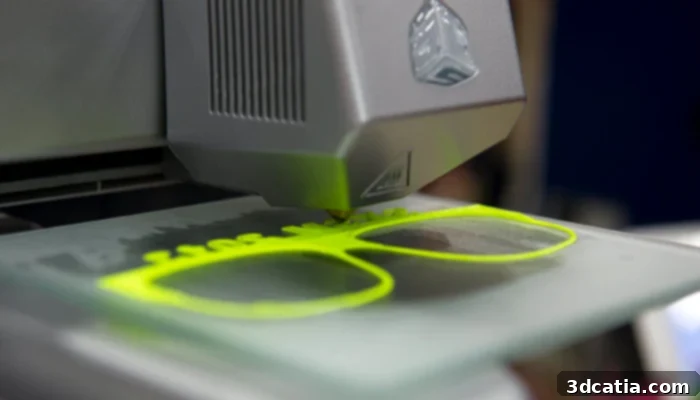
Photo Credits: David Paul Morris
Visual Merchandising, Point-of-Sale (POS) Displays, and 3D Printing: Crafting Immersive Experiences
Visual merchandising is a critical practice within retail, focused on strategically presenting products at a point of sale (POS) to maximize customer attention and appeal. This concept is particularly vital for enhancing product visibility in the competitive retail landscape and is meticulously executed to align with a brand’s specific strategy and philosophy. To achieve these goals, various tools and methodologies are employed in this marketing discipline, including the strategic use of spaces, color palettes, sophisticated lighting, dynamic screens, compelling signage, and more. 3D printing introduces a new dimension to these elements, allowing for unprecedented customization and visual impact.
A compelling illustration of how retailers can significantly benefit from additive manufacturing can be found in Australia. In 2016, the prestigious luxury brand Louis Vuitton pioneered the first 3D printed pop-up store, situated within Sydney’s bustling Westfield shopping center. Pop-up stores represent a growing trend in the retail sector, offering temporary sales spaces designed to create exclusivity and immediate impact. Omus, the company entrusted with this ambitious project, achieved a remarkable feat, completing the printing of all decorative components for the entire 90-square-meter store in just 18 days. Louis Vuitton communicated to its discerning shoppers that this embrace of 3D printing perfectly encapsulated the brand’s innovative spirit and forward-thinking attitude. Robert Grosso, Chief Innovation Officer at Omus, enthusiastically commented, “Large-scale 3D printing possesses the unique ability to interpret and actualize a designer’s most intricate visions in a way that no other manufacturing method can. Louis Vuitton’s boldness and confidence were instrumental in bringing this extraordinary concept to life.” This project demonstrated the speed, design freedom, and structural complexity that 3D printing offers for creating unique retail environments.
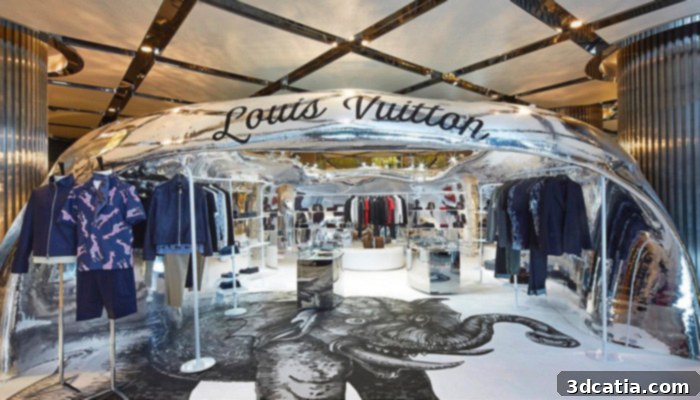
The Louis Vuitton store features a 3D printed structure, an example of how additive manufacturing can be used in Visual Merchandising
The Louis Vuitton case is not an isolated incident of a company harnessing additive manufacturing to animate its retail spaces and promotional activities. In Spain, Adaequo, a company specializing in the creation of bespoke displays and point-of-sale (POS) advertising for some of the most exclusive brands, has integrated a dedicated 3D printing service. This service empowers their clients to explore new creative avenues far beyond conventional advertising. The strategic incorporation of additive manufacturing allowed Adaequo to diversify its business, complementing the existing 2D display and POS applications it had been providing. Their impressive client roster includes globally renowned names such as Dior, Adidas, Carolina Herrera, and FC Barcelona, among others.
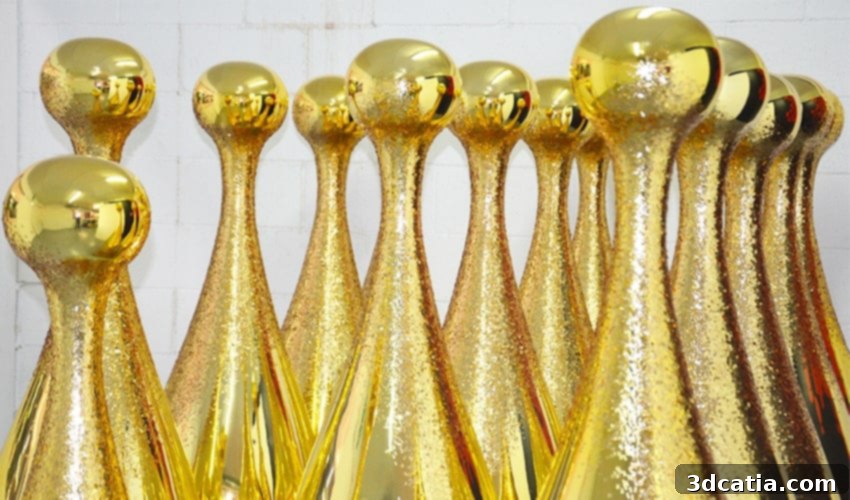
Adaequo clearly understands that the ability to create customized pieces perfectly adapted to specific spatial requirements, featuring highly attractive and complex structures, unlocks a vast array of possibilities in the marketing domain. As early as 2018, they received an industry award for their innovative application of 3D printing to flawlessly reproduce the iconic Good Girl perfume bottle for the Carolina Herrera brand. Building on this success, in 2019, they executed a captivating campaign for the luxury brand Dior, where they fabricated large-scale replicas of their famous J’adore perfume bottles. These impressive figures, measuring 1.2 meters (approximately 3’11”) in height, were produced as single pieces, showcasing the capabilities of large-format 3D printing. For their exquisite final finish, they were meticulously chromed in a “champagne” gold, perfectly accentuating the distinctive color of the original Dior perfume. Furthermore, each figure was lavishly adorned with thousands of individual sequins, meticulously applied to replicate the intricate metallic collar of the authentic bottle, creating a truly luxurious and eye-catching display.
Both of these striking applications, along with many others, are made possible through a specialized large-format 3D printing technology developed by Massivit 3D, known as Gel Dispensing Printing (GDP). This advanced additive manufacturing method enables the layer-by-layer creation of thermoset parts from materials that begin in a liquid state. Massivit 3D has gained significant recognition within the advertising world because its cutting-edge solutions offer a level of precision, speed, and ease of use that is often unattainable with other conventional manufacturing technologies. GDP’s ability to rapidly produce large, intricate objects makes it an ideal choice for high-impact visual merchandising.
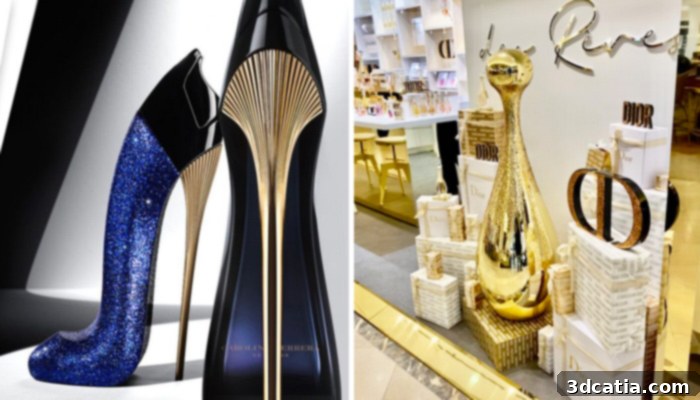
The replicas of the perfumes “Good Girl” by Carolina Herrera and “J’adore” by Dior (photo credits: Adaequo)
Adaequo’s official website clearly articulates the profound advantages of this technology: “The main advantage of this machine is that it allows absolute customization of POS campaigns, with a piece-by-piece control. It allows to recreate the same figure in different sizes to adapt each of them to the space to be dressed or to make different objects within the framework of the same promotion. With traditional methods, this meant an increase in the price of the campaigns due to the need to produce molds.” This statement underscores the critical benefit of 3D printing in eliminating the need for expensive and time-consuming molds, thereby democratizing bespoke, large-scale promotional items and making them more accessible for dynamic, multi-location campaigns.
Street Marketing: Bringing Campaigns to Life with Large-Format 3D Printing
Among the diverse spectrum of advertising campaigns, street marketing stands out as a dynamic and often unconventional approach. This form of guerrilla marketing leverages non-traditional methods to promote a specific product, service, or brand directly to consumers in public spaces. The goal is to create memorable, engaging, and often surprising experiences that cut through the noise of conventional advertising. One of the most notable instances where 3D printing played a pivotal role in a street marketing initiative was the campaign for “Angry Birds: The Movie,” which was released in 2016. To generate buzz and excitement for the film, the production company launched an extensive multimedia campaign in collaboration with several well-known brands. A primary objective was to deviate from typical advertising tactics and ensure the movie left a lasting impression on consumers. The solution? Large-format 3D printing.
For this innovative campaign, vibrant and intricate 3D lettering and character elements were produced to be affixed to tour buses circulating in major U.S. cities, including San Francisco, New York, Los Angeles, and Chicago. The task of transforming these creative concepts into physical realities was undertaken by Charisma, a U.S.-based company renowned for its expertise in large-format 3D printing. The project presented unique challenges, demanding the seamless integration of sophisticated visual communication design with the technical capabilities of large-scale additive manufacturing. Charisma successfully created impressive 4.5-meter (approximately 14.7 feet) 3D bus wraps by utilizing the Massivit 1800 3D printer to manufacture molds. This machine, employing Massivit 3D’s patented Gel Dispensing Printing (GDP) technology, boasts an impressive maximum print volume of 1450 × 1110 × 1800 mm and can operate at speeds up to 30 times faster than many other industrial 3D printers. For the “Angry Birds” film campaign, molded plastic sheets were then produced from these 3D printed molds and expertly attached to double-decker buses. To further amplify their visual impact, especially after dusk, some of these custom pieces were ingeniously integrated with internal lighting. This campaign perfectly showcased how 3D printing can create immersive and attention-grabbing street-level advertising that truly stands out. The detailed creation process can be observed in the video below:
Additive Manufacturing in the Creation of Engaging Advertising Spots
Beyond physical displays and street installations, another compelling application of 3D printing within the advertising realm lies in the production of commercials and advertising spots. An advertising spot is a widely utilized audiovisual resource broadcast across various media platforms, including television, radio, and digital channels such as the Internet. The question then arises: how does this manufacturing technology integrate into the intricate process of audiovisual production? Increasingly, large companies are thoroughly exploring the inherent benefits of this production method, not only to innovate their storytelling but also to ensure their audiovisual messages resonate more deeply and memorably with consumers.
A prime example of this innovative approach is McDonald’s UK’s 2016 “Always Working” campaign. The global fast-food giant implemented a sophisticated marketing strategy that specifically employed additive manufacturing as the primary production method for its advertising spot. The campaign ingeniously utilized an audiovisual technique known as stop-motion animation. This technique is characterized by capturing a series of still images which, when played sequentially, create the illusion of continuous motion. To bring this intricate vision to life, it was necessary to 3D print an extensive array of elements: six distinct miniature sets and hundreds of individual characters, each designed in a multitude of different poses and expressions. In this particular instance, material jetting technology was selected for its precision and ability to produce fine details. This technology operates by directly injecting liquid resin into the printing tray, which is then cured layer by layer using an ultraviolet (UV) light source. Consequently, each character figure was meticulously designed and 3D printed, often separating bodies from heads for easier posing and painting. Subsequently, these miniature figures underwent a painstaking hand-painting process to achieve their final aesthetic. Once all the required elements for each scene were obtained, they were carefully arranged and photographed frame by frame to meticulously create the desired motion effect.
The dedicated team of fifty individuals invested three intensive months to bring this captivating 60-second advertisement to fruition. Yves Geleyn, the director of the ad, articulated the core philosophy behind the project: “It’s about making something better. McDonald’s wanted to communicate that they are always working to make a better Happy Meal, which can be told in a fairly functional way, but we wanted to tell the story with some charm. Today, many miniatures are made with computer-generated imagery (CGI). Stop-motion and 3D printing have an authenticity, a human and technological touch, which adds a lot to a story. It allows you to create something whimsical based on something authentic.” In this manner, the central message of the spot was unequivocally clear; McDonald’s sought to emphasize the diligent work and effort behind each meal through the tangible and observable effort invested in the creation of the advertisement itself. This approach not only made the ad visually unique but also added a layer of sincerity and craftsmanship that resonated with viewers. You can witness the fascinating process of creating this remarkable spot in the video provided below:
Commercial Promotion Enhanced by New 3D Technologies
Within the expansive field of marketing, commercial promotion represents another significant branch of advertising that stands to gain immensely from additive manufacturing technology. In this context, commercial promotion encompasses all advertising actions that foster a direct and tangible relationship with the consumer. This can manifest through brand-specific merchandising, interactive campaigns that actively involve the user, or even innovative product packaging. Let’s explore some key examples to better grasp this application and understand the pivotal role of 3D printing as a strategic promotional tool.
Coca-Cola’s subsidiary in Israel devised a brilliant and highly engaging idea to introduce its new “mini” size bottles. The globally renowned soft drink producer launched an innovative public contest, inviting participants to create their personalized “mini-me” figures. The concept revolved around utilizing advanced 3D technologies, where, with the aid of a mobile application, devoted Coca-Cola enthusiasts could design a custom 3D model of themselves. The fortunate winners were rewarded with an exclusive visit to the Coca-Cola factory, where they had the thrilling opportunity to have their meticulously designed “mini-me” figures brought to life through precise 3D printing. This campaign was a masterful blend of digital engagement and physical reward, fostering a deep, personalized connection with the brand.
Another prominent brand that has effectively harnessed the power of 3D technology in its promotional efforts is Germany’s Volkswagen. In Denmark, the automotive giant launched an interactive campaign titled “The Polo Principle” to promote the fifth generation of its popular Polo car model. Volkswagen eloquently described its philosophy: “We take the most advanced technology, the highest quality and make it available to everyone. Every single component of the Polo works to deliver the power of innovation and quality.” Through this campaign, prospective customers and enthusiasts were invited to participate in a unique contest where they could design a prototype of the car using a digital template. Leveraging a suite of pre-established tools and iconic elements, hundreds of individuals were able to visualize in three dimensions how their customized Polo design would appear in real life. From the multitude of creative submissions, Volkswagen Denmark carefully selected the 40 most innovative and imaginative car designs to be physically realized through 3D printing. This was, without a doubt, an exceptionally original and effective way to employ additive manufacturing, successfully embedding the brand image and values of customization and innovation deeply into the minds of consumers by giving them a tangible piece of their own creation.
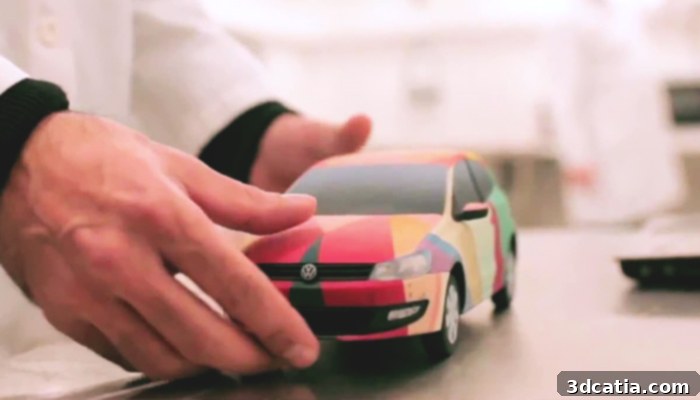
3D printed prototype of the customized Volkswagen Polo (photo credits: Volkswagen)
In these types of commercial promotion applications, simpler and more cost-effective 3D printing methods, such as resin-based (SLA/DLP) or extrusion-based (FDM) technologies, are frequently employed. This is primarily because the objective of these printed parts is not to achieve an immaculate surface finish or to exhibit demanding mechanical properties comparable to end-use industrial components. Instead, the fundamental purpose of these printed models is to significantly enhance the notoriety and visibility of the company. In turn, they provide consumers with a useful, novel, or decorative gadget that serves as a continuous physical reminder of the brand in question. For this pragmatic reason, companies typically do not resort to more advanced and considerably more expensive 3D printing technologies, such as those based on polymer powder bed fusion (SLS), metal additive manufacturing, or traditional injection molding, as the associated costs would substantially outweigh the promotional benefits.
Expanding further within commercial promotion, we can also integrate the innovative application of additive manufacturing in product packaging. In marketing, packaging refers to everything that encases and accompanies the product itself, ranging from the intricate label design to comprehensive product information and the protective outer shell. Furthermore, packaging serves a dual purpose: it can be primarily functional (protecting the product) or predominantly communicative (conveying brand messages and aesthetic appeal). In the specific context of advertising, 3D printing of packaging predominantly serves a strictly aesthetic and communicative purpose. This objective is realized with unparalleled efficacy thanks to the extraordinary design freedom inherently offered by additive manufacturing. This capability is amplified even further when combined with generative design methodologies during the conceptualization phase of the final packaging models. By enabling the creation of complex, organic, or highly personalized geometries that would be impossible or prohibitively expensive with conventional manufacturing, 3D printing makes it significantly easier for designers and advertisers to convey their brand’s message in the most optimal, impactful, and visually captivating way possible, directly influencing consumer perception and purchase decisions.
A compelling example of this innovative packaging approach can be found in the F1 Fragrances Engineered Collection, launched by Formula 1. The distinctive outer structure of these perfume bottles was meticulously crafted using 3D printing technology with technopolymer resin, optimized to utilize only the precise amount of material necessary. Ross Lovegrove, a visionary designer and the creative force behind the perfumes, elaborated on his design philosophy: “My thinking behind the exoskeleton was, on the one hand, sustainability. I wanted to create something that houses the fragrance bottle, which can be replaced once used and reinserted into the exoskeleton, and the use of 3D printing which is extremely efficient, with no waste. Only the necessary shapes are produced, just like an F1 car.” This approach highlights not only the aesthetic potential but also the environmental advantages and precision engineering that 3D printing brings to luxury product packaging.
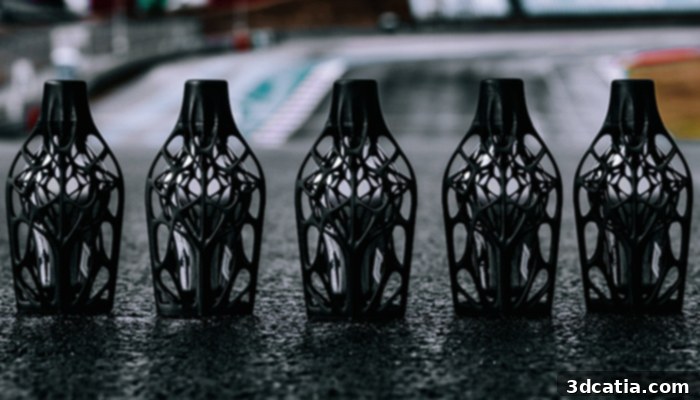
The 3D printed exoskeleton for the perfume range (photo credits: Formula 1)
L’Oréal, a global leader in the beauty industry, is another prominent brand that has been at the forefront of adopting additive manufacturing for product development and marketing innovation. In fact, the French multinational acquired its very first FDM (Fused Deposition Modeling) 3D printer as far back as 1993, specifically for packaging design and creation. Today, this technology has evolved into a fundamental and indispensable tool for L’Oréal across its comprehensive marketing strategy. Matthew Forrester, Head of Materials Transformation and Recycling at L’Oréal, affirms this, adding, “We produce prototypes of packaging and furniture, as well as prototypes of point-of-sale models, quality control tools and spare parts for packaging lines in our factories.” Anne Debauge, Director of Communication at L’Oréal, further emphasizes the widespread impact: “The benefits of additive manufacturing are manifold, both for our internal organization and for the engagement of our employees and our ability to create new experiences for our consumers.” This deep integration underscores how 3D printing facilitates rapid prototyping, custom fixture creation, and ultimately, the ability to deliver truly novel and engaging consumer experiences, cementing its role as a strategic asset in competitive markets.
The Future of 3D Printing in Advertising: Innovation and Engagement
As we have thoroughly explored, 3D printing undeniably holds a profoundly significant and continuously expanding role within the spheres of marketing and advertising. In today’s dynamic consumer landscape, more than ever, companies are intensely focused on surprising and captivating their customers through relentless innovation in their communication methods. Additive manufacturing offers unprecedented avenues to produce and manufacture goods locally, with remarkable speed, and precisely on-demand. This capability significantly reduces the final costs associated with complex advertising campaigns, making bespoke and large-scale promotional items more accessible. Furthermore, its ability to create intricate, customized designs helps brands stand out in a crowded marketplace, fostering stronger brand recognition and recall.
The pertinent question now arises: does the strategic deployment of 3D printing truly influence the impact that advertising campaigns have on target users? While the answer is not always as straightforward as it might seem, given the inherent challenges in quantitatively measuring the actual results of most marketing strategies, one fundamental truth remains unequivocally clear: additive manufacturing plays an absolutely pivotal role for forward-thinking companies. It functions as an extraordinarily versatile production tool, enhancing every aspect we have meticulously examined throughout this comprehensive analysis. This is not merely due to its impressive manufacturing speed or its potential for cost reduction. As we have seen through numerous real-world examples, 3D printing also bestows an immense degree of design freedom. This creative liberty empowers advertisers to unlock an entirely new field of possibilities in terms of conceiving and executing innovative communication strategies, allowing them to craft truly unique and memorable brand experiences that resonate deeply with consumers.
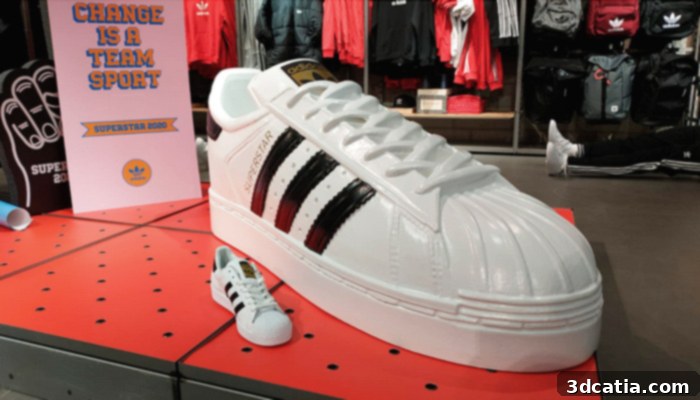
Photo Credits: Adaequo
Looking ahead to the not-too-distant future, we fully anticipate that 3D printing will continue its upward trajectory in this domain, steadily climbing towards a position of paramount importance among the myriad technological advancements that are continually emerging. Its capabilities align perfectly with evolving consumer demands for personalization, immersive experiences, and sustainable practices. Therefore, it is absolutely essential that companies remain agile and proactive, consistently choosing to integrate and leverage this transformative type of tool. By embracing 3D printing equipment and methodologies, they will be optimally positioned to undertake original, impactful projects that not only capture consumer imagination but also drive significant business growth and innovation.
What are your thoughts on the expanding use of 3D printing in advertising? We invite you to share your insights in a comment below or engage with us on our LinkedIn, Facebook, and Twitter pages! Don’t forget to sign up for our free weekly Newsletter here to receive the latest 3D printing news directly in your inbox! You can also find all our engaging videos on our YouTube channel.
*Cover Photo Credits: Adaequo / Dior