
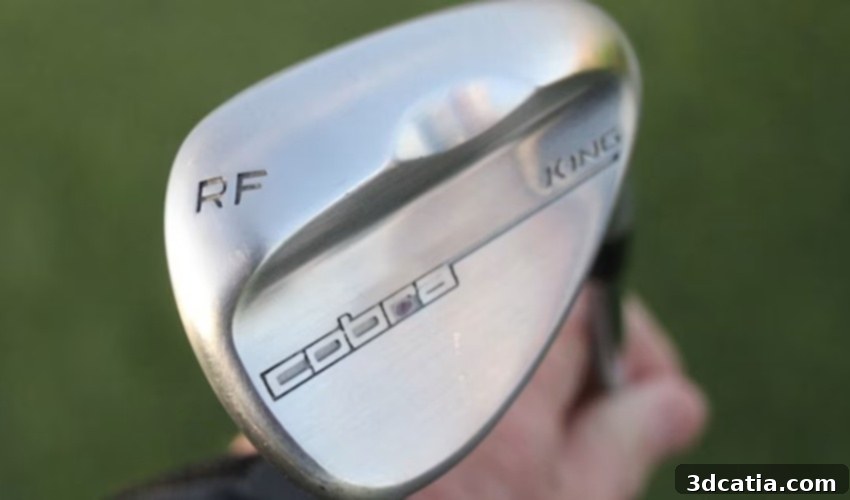
Rickie Fowler Revolutionizes Golf: The Dawn of 3D-Printed Custom Wedges by Cobra Golf
In a groundbreaking fusion of cutting-edge additive manufacturing and the demanding precision of professional golf, PGA TOUR sensation Rickie Fowler is setting a new standard for golf equipment innovation. Fowler recently debuted his bespoke, 3D-printed RF Cobra lob wedge at The American Express 2024 golf tournament, marking a significant milestone in how golf clubs are designed and manufactured. While 3D printing technology has steadily carved out its niche across various sports, its application in golf, particularly with a high-profile player like Fowler and his custom wedge, introduces an unparalleled level of accuracy, personalization, and performance optimization never before seen on the professional circuit.
This pioneering move by Fowler and Cobra Golf signals a transformative era for golf equipment, moving beyond conventional manufacturing limitations. The ability to precisely tailor a club’s specifications to a golfer’s unique swing and preferences offers a distinct competitive advantage. For years, golfers have sought minor adjustments to their clubs, but 3D printing elevates this customization to an entirely new dimension, allowing for intricate designs and weight distributions that were previously impossible to achieve. This innovation not only fine-tunes a player’s arsenal but also promises to push the boundaries of performance across the sport.
Cobra Golf: Leading the Charge in 3D-Printed Golf Clubs
The manufacturer behind this revolutionary club, Cobra Golf, has firmly established itself as a vanguard in the realm of 3D-printed golf clubs. Their journey into additive manufacturing began with a strategic partnership with technology giants Hewlett Packard (HP) and Parmatech in 2018. This collaboration laid the foundation for Cobra Golf to explore and implement 3D printing techniques, positioning them at the forefront of this technological shift within the golf industry. Since then, Cobra Golf has relentlessly pursued innovation, becoming the primary manufacturer of a growing lineup of 3D-printed clubs, with Rickie Fowler’s latest lob wedge serving as a testament to their continuous advancements.
Cobra’s commitment to additive manufacturing stems from the inherent advantages it offers: unparalleled design freedom, rapid prototyping capabilities, and the ability to create complex internal structures that optimize weight distribution and performance. Their initial foray into 3D printing focused on putters, where precise weight distribution is crucial for stability and roll. The success of these early models provided valuable insights and validated their investment in the technology, paving the way for more sophisticated applications, such as the metal wedge now in Fowler’s bag. This journey highlights Cobra Golf’s vision in embracing new technologies to redefine golf equipment standards.

Pro golfer Rickie Fowler assesses the golf course (Photo Credit: PGA Tour)
Crafting Fowler’s Custom 3D-Printed Golf Wedge: A Technical Marvel
Fowler’s new lob wedge represents a significant departure from the conventional manufacturing processes typically employed for golf clubs, such as casting, forging, or milling. Unlike these traditional methods that involve shaping existing materials, Fowler’s club head is produced exclusively through state-of-the-art 3D printing technology. This allows for a level of design intricacy and material optimization that conventional methods simply cannot match. While Cobra Golf’s initial collection of 3D-printed putters leveraged HP’s Multi Jet Fusion (MJF) printing – a polymer-based process – Fowler’s latest club utilizes HP’s advanced Metal Jet 3D printing technology, specifically designed for metal components.
This innovative approach involves converting powdered metal directly into the intricate geometry of the club head. This marks a crucial evolution from Cobra Golf’s original lineup, which primarily utilized polymer powder for structural optimization. While their initial 3D-printed clubs capitalized on Material Jetting techniques to fine-tune weight distribution for improved stability and roll performance in putters, Fowler’s metal wedge harnesses the power of metal binder jetting. This sophisticated method significantly enhances the club’s strength and durability, critical attributes for a wedge that undergoes considerable impact. More importantly, metal binder jetting provides unprecedented opportunities for customizable weight distribution within the club head, allowing for precise manipulation of the center of gravity to suit Fowler’s specific playing style and shot-making requirements.
The Journey to Fowler’s Perfect Wedge
Rickie Fowler’s exploration into 3D-printed wedges was driven by a desire to continually refine and enhance the performance of his existing clubs. His focus was on two critical elements: the sole and the bounce. The sole refers to the critical bottom portion of the club, which profoundly influences its interaction with the ground during a swing. The bounce, equally important, is the angle created between the leading edge and the lowest point of the sole, crucial in preventing the club’s leading edge from digging too deeply into the turf, especially in softer conditions or when playing from sand. Achieving the perfect balance in these areas can drastically impact shot consistency and control.
According to Ben Schomin, Cobra Golf’s Tour Operations Manager, 3D printing technology offered Fowler an unmatched ability to meticulously fine-tune the wedge’s design to his exact, evolving specifications. Schomin detailed the iterative process, explaining, “The hard grind lines he used to use have been softened so much, and they kept getting softer and softer. If you have hard lines, you can see them and measure them more easily. Now, (with 3D printing), it’s easier to replicate and duplicate. His wedge grind kept getting rounder because he wanted more camber, so finally it’s like, let’s just 3D scan it, and print it, so it’s perfect.” This anecdote perfectly illustrates how additive manufacturing provides the flexibility needed to cater to the nuanced demands of a professional golfer, allowing for continuous refinement until optimal performance is achieved.
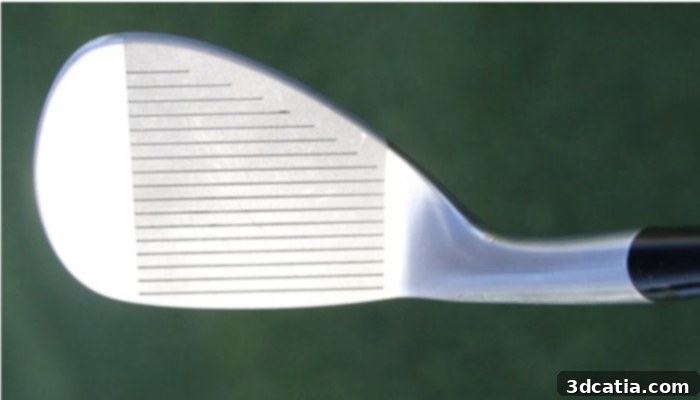
Rickie Fowler’s new Cobra “RF” wedge at address. (Photo Credit: GolfWRX)
Advantages of 3D Printing: Consistency and Future Impact
As Fowler meticulously refined his ideal wedge design, the inherent advantages of 3D printing became undeniably apparent. Once the perfect prototype was achieved, Cobra Golf could then 3D scan this physical model to create exact digital duplicates. This process ensures unparalleled consistency and replicability. For a professional athlete, having access to equipment tailored precisely to their preferences, with the guarantee of identical replacements whenever needed, is a game-changer. This eliminates the minor variations that can occur with traditional manufacturing, providing Fowler with absolute confidence in his equipment batch after batch.
Through the strategic utilization of this custom 3D-printed wedge, Rickie Fowler is not merely enhancing his personal game; he is actively contributing to the broader advancement of design and innovation within the entire golf equipment industry. This breakthrough, powered by the continuous progress in 3D printing technologies, promises to trickle down. What begins as an elite-level customization for PGA TOUR players could eventually lead to more personalized and performance-optimized clubs for amateur golfers, fundamentally changing how players interact with their equipment and ultimately, how they play the game.
The Broader Impact: 3D Printing Beyond Fowler
The success of Rickie Fowler’s 3D-printed wedge is more than just a personal triumph; it’s a powerful demonstration of additive manufacturing’s potential to revolutionize sports. While 3D printing has already seen applications in various athletic fields – from customized running shoe components by Adidas and Nike to personalized protective gear and prosthetic limbs for athletes – its integration into professional golf club manufacturing signals a significant maturation of the technology. The precision required for golf, where minuscule deviations can impact performance, makes it an ideal proving ground for the accuracy and repeatability offered by advanced 3D printing methods.
This advancement also opens doors for rapid prototyping and iterative design. Golf club manufacturers can now experiment with more radical designs, quickly produce prototypes, and test them with elite athletes, accelerating the innovation cycle. This agility allows for faster responses to player feedback and market demands, leading to more advanced and specialized equipment in a shorter timeframe. The bespoke nature of 3D printing means that limitations imposed by traditional tooling and manufacturing molds are removed, freeing designers to explore geometries and weight distributions that were once confined to theoretical models.
Technical Deep Dive: The Power of HP Metal Jet
The choice of HP Metal Jet technology for Fowler’s wedge is crucial. Unlike Multi Jet Fusion, which typically uses polymer powders to create durable plastic parts, HP Metal Jet is specifically engineered for high-volume metal 3D printing. It operates on a binder jetting principle: a liquid binding agent is selectively jetted onto a bed of powdered metal particles, layer by layer, to build the “green” part. This green part is then sintered in a furnace, where the binder is removed, and the metal particles fuse together to form a dense, strong metal component. This process allows for incredible geometric complexity and fine detail, along with excellent material properties, making it ideal for critical components like golf club heads.
The transition from polymer-based 3D printing for putters to metal binder jetting for wedges signifies a critical leap. Metal wedges require not only precision in shape but also specific weight, feel, and structural integrity that only metal can provide. HP Metal Jet delivers on these fronts by allowing for the use of various metal alloys, offering designers the freedom to select materials optimized for specific performance characteristics. Furthermore, the ability to create internal latticework or hollow structures within the club head, even while maintaining a solid exterior, allows for precise control over the center of gravity (CG) and moment of inertia (MOI) – factors that are paramount for wedge feel and performance around the greens.
Player Customization: A New Era of Performance Edge
The ability to customize a club with the exact specifications desired by a top-tier player like Rickie Fowler offers a substantial performance advantage. Golfers often spend countless hours practicing and analyzing their swing dynamics, and their equipment must perfectly complement these intricate movements. Traditional manufacturing often involves compromises, where a player chooses the closest available off-the-rack option and then seeks minor modifications. With 3D printing, the club *is* the modification, built from the ground up to match the player’s unique biomechanics and preferences. This eliminates inconsistencies and allows for unparalleled confidence in every shot.
This level of personalization extends beyond just the sole and bounce. It can include specific weight distribution, face milling patterns, and even subtle changes in head shape that enhance a player’s feel for the club. For an elite athlete like Fowler, who competes at the highest level where fractions of an inch or degrees of loft can mean the difference between a birdie and a bogey, this precision is invaluable. The ability to iterate quickly and produce an exact replica ensures that his equipment remains consistent, even after wear and tear, reinforcing the idea that 3D printing is not just a novelty but a fundamental tool for achieving peak athletic performance in golf.
What are your thoughts on the latest advancements in 3D-printed golf clubs, especially with Rickie Fowler’s custom Cobra Golf wedge? Do you see this technology becoming mainstream for amateur golfers? Let us know in a comment below or on our LinkedIn, Facebook, and Twitter pages! Don’t forget to sign up for our free weekly newsletter here, the latest 3D printing news straight to your inbox! You can also find all our videos on our YouTube channel.
*Cover Photo Credit: PGA Tour