
Revolutionizing Copper 3D Printing: Graphene Coating Unlocks Denser Parts and Enhanced Performance with Uppsala University & Graphmatech
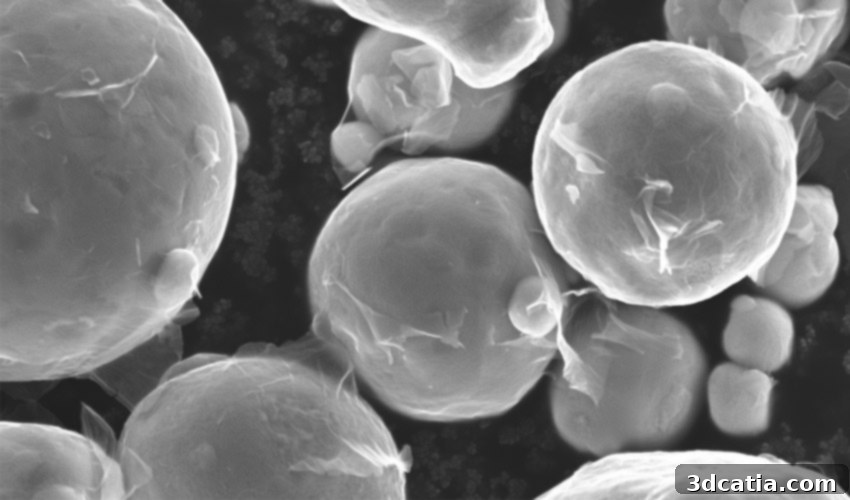
In a groundbreaking collaboration set to transform the landscape of additive manufacturing, Uppsala University, in partnership with the innovative company Graphmatech, has successfully developed a novel copper powder engineered to produce significantly denser 3D printed components. This pioneering research leverages a sophisticated laser fusion process, during which the researchers strategically modified the metal’s surface with graphene. Graphene, a material universally lauded for its extraordinary strength, exceptional electrical and thermal conductivity, and remarkable lightness, has been integrated to achieve a critical breakthrough: a substantial reduction in copper’s inherent reflectivity. This innovation dramatically improves the viability and efficiency of copper in advanced additive manufacturing applications, promising a new era for high-performance metallic parts.
The Enduring Challenge of 3D Printing Pure Copper
The demand for pure copper in various high-tech sectors, including electronics, defense, and energy, is consistently high, primarily due to its unparalleled electrical and thermal conductivity. However, despite its desirable properties, pure copper has historically presented one of the most formidable challenges in the realm of additive manufacturing. Its inherent characteristics make it notoriously difficult to process effectively using laser-based 3D printing techniques. The primary obstacle lies in copper’s high reflectivity, especially towards the infrared wavelengths typically emitted by lasers used in powder bed fusion processes.
When a high-power laser beam strikes a highly reflective copper surface, a significant portion of the laser’s energy is reflected rather than absorbed. This reflection means that insufficient thermal energy is transferred to the copper powder, hindering proper melting and fusion. Consequently, the material retains only a fraction of the necessary energy, leading to several critical issues in the final printed part. These issues include poor layer adhesion, increased porosity, reduced mechanical strength, and inconsistent material properties, all of which compromise the integrity and performance of the 3D printed component. Such limitations have historically restricted the widespread adoption of pure copper in advanced additive manufacturing, forcing industries to seek alternative, often less conductive, alloys or rely on more traditional, subtractive manufacturing methods.
Recognizing the importance of pure copper, the additive manufacturing industry has seen several innovative solutions emerge in recent years. Many of these have focused on extrusion-based techniques, where prominent players like Markforged and Desktop Metal have introduced pure copper filaments. These filaments, used in bound metal deposition (BMD) or similar processes, allow for the creation of copper parts that exhibit vastly improved electrical and thermal conductivity compared to many traditional 3D printable metals. While these extrusion-based methods offer valuable pathways for copper 3D printing, they often differ in part density, surface finish, and application scope compared to laser powder bed fusion. The ability to effectively use laser fusion for pure copper parts opens up new possibilities for complex geometries, higher resolution, and superior material properties, which is precisely where the graphene solution from Uppsala University and Graphmatech shines.
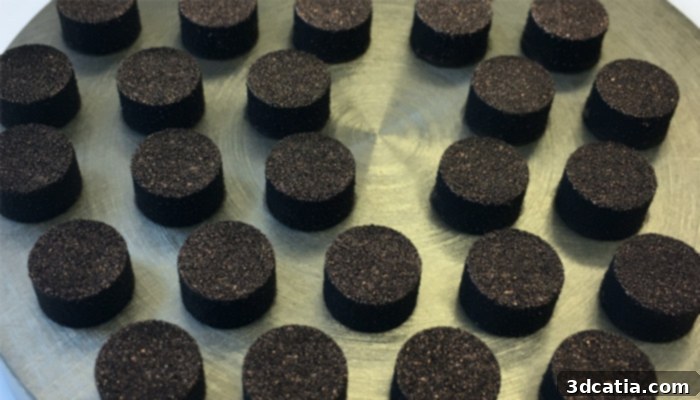
By coating copper powder with graphene, researchers have significantly lowered its reflectivity, enabling denser 3D printed parts (Photo Credit: Uppsala University).
Graphene: The Catalyst for Copper’s Additive Manufacturing Potential
The solution to copper’s reflectivity problem, as demonstrated by the Uppsala University and Graphmatech collaboration, lies in the exceptional properties of graphene. This two-dimensional material, derived from carbon, is not only the strongest material known to man but also possesses extraordinary electrical and thermal conductivity, along with being incredibly lightweight. Crucially, its unique atomic structure and optical properties make it an ideal candidate for modifying the surface of other materials, especially in the context of laser-material interaction.
The innovation involves applying a thin, uniform coating of graphene onto the surface of microscopic copper powder particles. This graphene layer acts as an interface that fundamentally alters how the copper powder interacts with the incident laser beam during the additive manufacturing process. Instead of reflecting the majority of the laser’s energy, the graphene-enhanced surface effectively absorbs a much greater proportion of the laser’s power. This increased absorption translates directly into more efficient energy transfer, allowing the copper particles to melt and fuse together more effectively and consistently. By overcoming the reflectivity barrier, the graphene coating ensures that the copper can be processed with significantly improved control and precision, leading to the creation of solid, high-density parts that were previously difficult, if not impossible, to achieve with pure copper in laser-based systems.
Groundbreaking Research at Uppsala University’s Angström Laboratory
The pivotal research behind this breakthrough was meticulously conducted by Professor Ulf Jansson and his dedicated team at Uppsala University’s renowned Angström Laboratory. Their scientific investigations definitively proved that by strategically incorporating graphene onto the surface of the copper powder particles, a profound reduction in the metal’s reflectivity could be achieved. This reduction, in turn, directly correlates with a substantial increase in the density of the resultant 3D printed parts. Mamoum Taher, CEO of Graphmatech, articulated the magnitude of this achievement, stating, “By modifying the surface of the copper powder using Graphmatech’s patented graphene technology, we successfully reduced the reflectance by up to 67%.” This impressive figure highlights the transformative impact of the graphene coating, enabling laser systems to process copper far more efficiently than ever before.
Beyond merely reducing reflectivity, the research also confirmed another vital aspect: the graphene coating on the copper powder demonstrates exceptional resilience and stability throughout the intense laser melting process. This durability is critical, as any degradation of the coating during manufacturing would negate its benefits. The ability of the graphene layer to withstand the high temperatures and rapid melting cycles ensures that its reflective properties remain consistently low, facilitating optimal laser energy absorption. This consistent energy absorption directly leads to a significant reduction in the porosity of the final 3D printed part. Lower porosity is a key indicator of material quality, signifying enhanced mechanical strength, improved electrical and thermal conductivity, and greater overall structural integrity. For industries requiring components with high performance and reliability, the ability to produce dense, low-porosity copper parts via additive manufacturing represents a monumental leap forward.
Paving the Way for Advanced Applications and Industrial Impact
The development of this innovative hybrid material—graphene-coated copper powder—is poised to unlock an extensive array of advanced applications across numerous critical sectors. Its potential ramifications are particularly significant in areas demanding high electrical and thermal performance, coupled with the geometric freedoms offered by additive manufacturing. In the defense sector, this material could enable the fabrication of lighter, more efficient components for advanced weaponry, thermal management systems for electronics, and superior electrical connectors. For the electronics industry, the implications are equally profound, allowing for the creation of intricate heat sinks with optimized geometries, high-performance circuit boards, and advanced interconnects that surpass the capabilities of conventionally manufactured parts.
Beyond defense and electronics, the aerospace industry stands to benefit immensely from the ability to 3D print pure copper components with enhanced density and reduced weight. This could lead to more efficient thermal exchange systems, lightweight electrical wiring harnesses, and custom components designed for extreme environments. The energy sector, too, could leverage this technology for highly efficient heat exchangers, improved electrical infrastructure, and components for renewable energy systems that require superior conductivity and durability. Professor Jansson eloquently summarized the broad appeal of this innovation, stating, “The new process developed to coat metal powder with graphene opens up very interesting perspectives for the design of new materials in various applications.” This sentiment underscores the transformative potential of the technology, not just for copper but as a blueprint for enhancing other challenging metals in additive manufacturing.
Graphmatech, as a key partner in this pioneering endeavor, is demonstrably committed to expanding the adoption and utility of graphene across the entire spectrum of additive manufacturing. The company remains steadfastly convinced of the immense potential that this remarkable material holds to revolutionize industrial processes and product capabilities. Their vision extends to fostering continuous innovation, exploring new material combinations, and developing solutions that address the most pressing challenges in advanced manufacturing. This collaboration between academia and industry exemplifies how cutting-edge research can translate into tangible technological advancements with far-reaching implications for global industries.
The Future of Additive Manufacturing with Graphene
This pioneering work by Uppsala University and Graphmatech represents more than just an improvement in copper 3D printing; it signifies a monumental leap in material science applied to additive manufacturing. By effectively mitigating copper’s high reflectivity, a long-standing barrier has been overcome, opening doors to a future where high-performance materials can be precisely engineered and fabricated with unprecedented ease and efficiency. The success of graphene in enhancing copper’s printability also sets a compelling precedent for exploring similar surface modification techniques for other challenging metals and alloys. Imagine titanium or aluminum parts with enhanced properties achieved through similar graphene-based coatings, tailored for specific applications. The possibilities are truly vast.
The commitment of Graphmatech to continuously innovate within the graphene and additive manufacturing space, coupled with the rigorous academic research from Uppsala University, ensures that this is just the beginning. We eagerly anticipate future Swedish innovations that will undoubtedly continue to push the boundaries of what is possible in 3D printing. The ability to create dense, robust, and highly conductive copper parts with greater ease and consistency will undoubtedly accelerate the development of next-generation technologies across multiple industries, firmly cementing graphene’s role as a cornerstone material for advanced manufacturing.
*Photo Credits : Simon Tidén / Uppsala University
What are your thoughts on this revolutionary graphene and copper hybrid material? How do you envision it impacting future industries? We encourage you to share your insights and predictions in a comment below or join the conversation on our Facebook, Twitter and LinkedIn pages! For all the latest news, trends, and innovations in 3D printing delivered straight to your inbox, don’t forget to sign up for our free weekly Newsletter here!