
Revolutionizing Industries: Top 5 Weekly 3D Printing Innovations You Can’t Miss
Welcome to our weekly dive into the fascinating world of 3D printing and additive manufacturing! This week, we’re thrilled to showcase five groundbreaking videos that highlight how this transformative technology is not just evolving, but actively reshaping our society. From critical advancements in the medical sector, enabling personalized patient care, to innovative strides in the automotive industry, enhancing vehicle performance, 3D printing is proving its versatility and impact across countless sectors. Our curated selection brings you the latest innovations, practical applications, and visionary projects that are pushing the boundaries of what’s possible. These videos offer a unique glimpse into the future, demonstrating how additive manufacturing is driving efficiency, sustainability, and customization worldwide. We encourage you to explore these compelling stories and witness firsthand the power of this incredible technology. For even more insights and inspiring content, be sure to visit and subscribe to our dedicated Youtube channel. We hope you find these features enjoyable and insightful as you keep up with the cutting-edge developments in 3D printing!
Top 1: Nieka Systems’ Metal 3D Printing Success – Reducing Costs & Lead Times
Nieka Systems, a company specialized in providing equipment for clients in the demanding mining and cement production industries, faced significant challenges in its manufacturing process. For crucial components like Inconel crucible clips, they were heavily reliant on outsourcing, which resulted in inflated costs and unacceptably long lead times. These delays often stretched to four weeks, impacting project schedules and overall operational efficiency. In a strategic move to overcome these hurdles and enhance their competitive edge, Nieka Systems made the pivotal decision to integrate metal 3D printing into their production workflow. This transition proved to be a game-changer. By adopting additive manufacturing, specifically utilizing the advanced Metal X system from Markforged, Nieka Systems dramatically reduced their lead time for these critical parts from four weeks down to an astonishing four days. This remarkable efficiency gain was coupled with significant cost reductions. Beyond just speed and cost, the in-house capabilities afforded by metal 3D printing also allowed the team to implement crucial design changes, leading to improved quality and performance of their Inconel 625 crucible clips. These 3D printed components are now robust enough to withstand rapid and repeated temperature cycles, a vital requirement in their industry. Discover the full story of how Nieka Systems successfully transitioned to 3D printing and transformed their business operations in the detailed video below!
Top 2: Introducing the GENESIS Eco Screen – Large-Format 3D Printed Urban Habitats
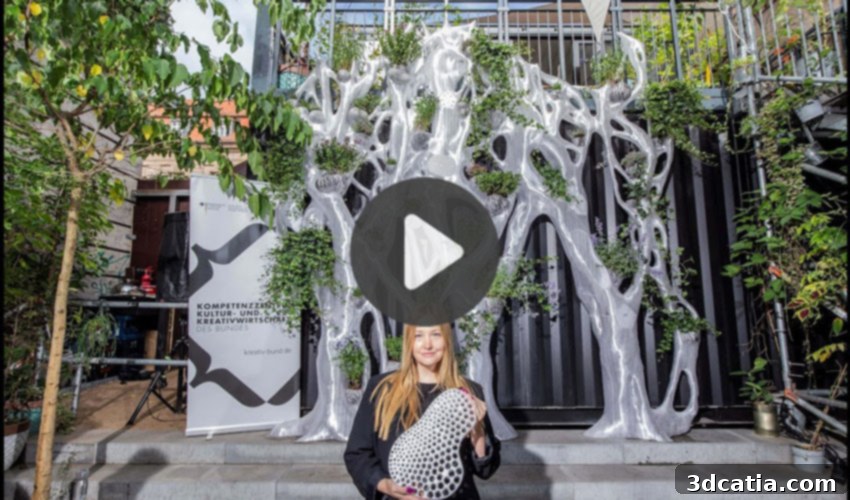
A few weeks ago, we captivated you with the innovative BANYAN Eco Wall, a fully 3D printed, irrigated green wall system that integrated an embedded drainage system and showcased impressive bionic design principles. This remarkable project, a brainchild of NOWLAB, utilized BigRep’s large-format 3D printers to create a scalable solution for urban greening. Building on that success and pushing the boundaries of sustainable urban design even further, NOWLAB has now unveiled its latest creation: the GENESIS Eco Screen. This groundbreaking product represents a significant leap forward in creating urban biodiversity habitats through additive manufacturing. The GENESIS Eco Screen is a fully 3D printed structure, boasting an impressive size of 4 by 4 meters, designed to integrate seamlessly into urban environments. Its purpose is to foster and support local biodiversity, transforming otherwise sterile urban spaces into thriving ecological zones. By leveraging the precision and design freedom of large-format 3D printing, NOWLAB can create complex geometries that serve multiple functions – from providing shelter for small wildlife to supporting plant growth and enhancing air quality. This project exemplifies how 3D printing can contribute to smart, sustainable city development, offering innovative solutions for ecological restoration and aesthetic improvement. Witness the ambitious scale and visionary design of the GENESIS Eco Screen in the video below!
Top 3: Personalized Medicine: How 3D Printing Transforms Lives with Custom Medical Devices
The medical sector stands as one of the most profoundly impacted beneficiaries of additive manufacturing, primarily due to its unparalleled ability to deliver highly personalized patient care solutions. The following video introduces us to the compelling story of Frank Keel, who endured debilitating severe back pain for many years. His struggle eventually led him to undergo spinal fusion surgery, a common procedure intended to alleviate such chronic conditions. However, despite the surgery, Frank’s pain persisted, highlighting the limitations of conventional, one-size-fits-all medical approaches. In pursuit of lasting relief, Frank turned to the innovative capabilities of 3D Systems, one of the foremost providers of advanced 3D printing services and solutions in the healthcare industry. Utilizing cutting-edge 3D scanning technology, a precise digital model of Frank’s body was created. This digital blueprint then served as the foundation for designing and 3D printing a custom-made back brace, meticulously tailored to his unique anatomy and specific needs. Unlike off-the-shelf solutions, this personalized brace provided the exact support and alignment required, finally bringing Frank the much-needed relief from his chronic pain. This case beautifully illustrates how 3D printing is revolutionizing prosthetics, orthotics, and surgical guides, offering bespoke devices that significantly improve patients’ quality of life and treatment outcomes. Witness the life-changing impact of personalized additive manufacturing in healthcare below!
Top 4: The Nova Electric Car: Driving Innovation with 3D Printed Automotive Components
The automotive industry is in a constant state of evolution, with a growing emphasis on performance, efficiency, and sustainable manufacturing. In the upcoming video, you will be taken on an insightful journey through the entire 3D printing workflow behind the creation of critical car parts. This comprehensive look spans from the initial intricate design phase, through the advanced production process using additive manufacturing, and finally to the essential post-processing steps. The spotlight is on the Nova car, an innovative electric vehicle developed by Revolve NTU. This cutting-edge vehicle recently demonstrated its prowess on a global stage, competing at the prestigious Red Bull Ring in Austria, where it secured an impressive second place. This achievement underscores the significant role 3D printing plays in modern vehicle development. For the automotive sector, additive manufacturing offers unparalleled advantages, enabling the creation of high-precision parts that are not only exceptionally durable but also significantly lighter than components manufactured through conventional methods. This reduction in weight directly translates to improved fuel efficiency and enhanced vehicle performance, crucial factors for electric cars. Furthermore, the design freedom offered by 3D printing allows for complex geometries and optimized structures that are impossible to achieve otherwise, leading to innovative functionalities and aerodynamic improvements. Explore how 3D printing is driving the future of automotive engineering and pushing the boundaries of vehicle design and performance in the video below!
Top 5: Feel the Peel: A Juice Bar Transforming Orange Peels into 3D Printed Cups for a Circular Economy
Imagine a future where waste is not merely discarded but transformed into valuable products, contributing to a truly circular economy. This visionary concept is brought to life by the ingenious architect Carlo Ratti, who conceived and developed a remarkably special juice bar. Dubbed “Feel the Peel,” this innovative machine doesn’t just dispense fresh orange juice; it also takes the discarded orange peels and processes them into bio-plastic pellets, which are then used to 3D print cups right on the spot. The primary aim of Feel the Peel is to actively promote and integrate circular economy principles into our daily lives, showcasing how readily available food waste can be reimagined and given new value. This 3.10-meter high device, an experimental juice bar setup, was designed to test the concept and engage the public. Many curious visitors had the unique opportunity to experience enjoying a freshly squeezed orange juice served directly in a small, bio-plastic 3D printed glass, manufactured from the very fruit they just consumed. This project is a powerful demonstration of how additive manufacturing can be a cornerstone of sustainable design and waste reduction strategies. It highlights the potential of bio-based materials in 3D printing, offering an eco-friendly alternative to traditional plastics and minimizing environmental impact. Discover the full details of this fascinating project and its implications for sustainable consumption in the video below!
What are your thoughts on this week’s extraordinary collection of 3D printing innovations? We’re eager to hear your opinions on how these advancements are shaping various industries and impacting our world. Please feel free to share your comments and insights directly below, or engage with us on our vibrant social media platforms, including our Facebook and Twitter pages! Don’t miss out on the latest and most crucial developments in the rapidly evolving 3D printing industry. To ensure you stay fully updated with all breaking news, in-depth analyses, and exciting breakthroughs, make sure to sign up for our free weekly Newsletter. It’s the best way to get all the essential additive manufacturing insights delivered straight to your inbox, keeping you at the forefront of this incredible technology!