
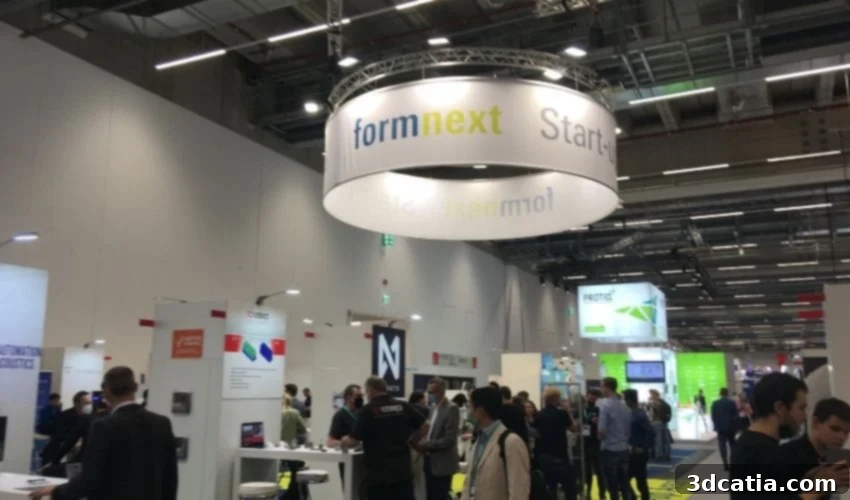
Formnext Start-Up Challenge 2021: Pioneering Innovations in Additive Manufacturing Spotlighted
Formnext 2021, the premier global exhibition and conference for additive manufacturing and modern industrial production, marked a highly anticipated return to in-person events this week. After two years of virtual interactions, the gathering provided an invaluable platform for leading figures in the additive manufacturing (AM) sector to reconnect, exchange groundbreaking ideas, and showcase the latest advancements. Among the many exciting aspects of the trade show, one event particularly captured the industry’s attention: the Formnext Start-Up Challenge 2021 award ceremony. Held on November 16th, this prestigious challenge recognized five exceptional, innovative start-ups poised to redefine the future of AM. The distinguished winners—Atlant 3D Nanosystems, Azul 3D, Fited, Print Parts, and Nobula—along with Vispala Technologies, the recipient of the coveted AM Ventures Impact Award, profoundly impressed the judging panel with their cutting-edge technologies and transformative applications.
The Formnext Start-Up Challenge, now in its seventh iteration, serves as a crucial incubator for burgeoning talent within the additive manufacturing landscape. It specifically targets companies no older than five years, offering not only vital recognition but also tangible support through free participation in the Formnext trade show and a comprehensive marketing package. This initiative is meticulously designed to accelerate the growth of promising young enterprises by exposing them to key industry players, potential investors, and media outlets. Winners are meticulously selected by an esteemed panel of judges comprising experts from industry, academia, media, and investment communities. This rigorous selection process ensures that only the most innovative and market-ready solutions are brought to the forefront. A highlight for the winners is the exclusive pitch event held on November 16th, an unparalleled opportunity for them to present their visions and forge critical connections within the vast AM ecosystem. Beyond technological prowess, Formnext also champions sustainability through the AM Ventures Impact Award, an annual accolade bestowed upon an applicant demonstrating a profound commitment to environmental considerations and social responsibility within their additive manufacturing initiatives.
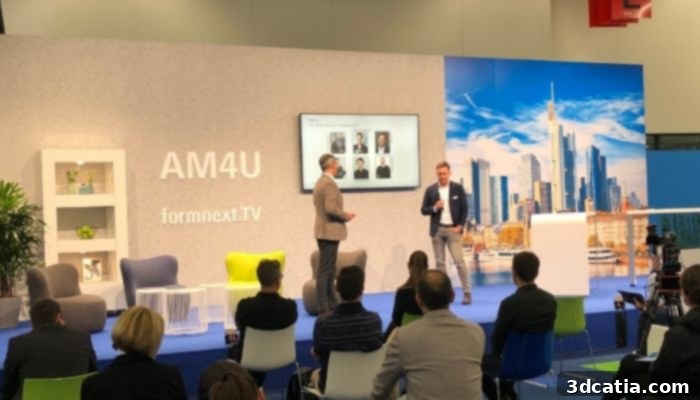
The award ceremony for the Formnext Start-Up Challenge took place on Tuesday, November 16th, highlighting the future of additive manufacturing (photo credits: 3Dnatives)
Introducing the Trailblazing Winners of the 2021 Formnext Start-Up Challenge
The winners of this year’s Formnext Start-Up Challenge represent a diverse spectrum of sectors and global origins, underscoring the widespread impact and potential of additive manufacturing. The selected companies include Atlant 3D Nanosystems (Denmark), Azul 3D (USA), Fited (USA), Print Parts (USA), and Nobula (Sweden). Formnext noted a significant uplift in the quality and maturity of the participating start-ups compared to previous years. Many of these emerging companies have already secured numerous patents and attracted substantial investments, signaling both immense promise and a readiness for market integration. Formnext’s assessment also emphasized the profound contributions these innovators are making to the broader 3D printing landscape, particularly in areas such as enhanced precision, accelerated production cycles, and the opening of novel applications in critical sectors like aerospace and medicine. Let’s delve deeper into the groundbreaking work of each of these five distinguished winners from the Formnext Start-Up Challenge 2021.
Atlant 3D Nanosystems: Precision at the Atomic Scale
Hailing from Denmark, Atlant 3D Nanosystems stands at the forefront of advanced manufacturing, specializing in the creation of intricate micro- and nano-components with unparalleled atomic precision. Their pioneering systems are capable of working with multiple materials simultaneously, offering versatility for a wide array of applications in research and development (R&D), rapid prototyping, and full-scale manufacturing. A key innovation is their ability to process up to six different materials on various substrates in a single operation, even those with vastly differing physical properties. The development of their flagship product, the Nanofabricator LiteTM, was notably catalyzed by a direct challenge from NASA. Ivan Kundrata, one of Atlant 3D’s co-founders, shared a fascinating insight: “NASA had a custom problem; they needed a solution for an experiment. They already had a flight scheduled to take their experiment for 3 minutes in micro-gravity. But in their machine, they had created, they could not prove that atomic layer deposition works in micro-gravity because 3 minutes was not enough time. We actually managed to create a solution with our spatial approach which is faster and we saw that in 3 minutes they would have even more data than they needed.” This breakthrough demonstrates Atlant 3D’s capacity to overcome complex scientific hurdles, enabling NASA to conduct crucial microfabrication tests in micro- or zero-gravity environments with unprecedented efficiency.
Azul 3D: Revolutionizing Polymer 3D Printing for Mass Production
Azul 3D, a spin-off from Northwestern University in the United States, garnered attention for its groundbreaking High-Area Rapid Printing (HARP) technology. This innovative approach harnesses flowing oil between a light-driven resin and a UV light source, significantly enhancing the speed and scale of resin-based 3D printing. Azul 3D’s ambition is to leverage HARP technology to allow users to fully capitalize on the inherent advantages of resin printing, such as producing parts with exceptional fine details and superior surface finishes, while simultaneously overcoming traditional limitations like slow print times and restricted build volumes. Tuan Tranpham, Chief Revenue Officer at Azul 3D, articulated the company’s vision: “Azul 3D’s ambition is to drive polymer DLP into mass-production and we are targeting sectors with high volume. This could be for example sporting goods and consumer goods, but also industrial applications and automotive.” The technology’s scalability and efficiency hold immense potential for diverse sectors, promising to transform how polymer components are manufactured on a large scale, from customized consumer products to complex industrial parts.
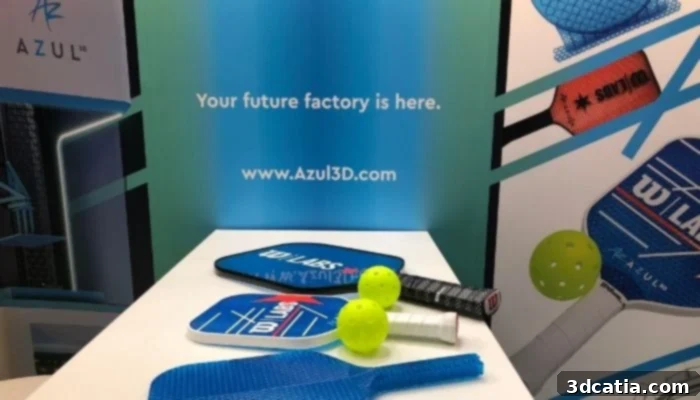
Azul 3D’s new HARP technology offers high-volume resin 3D printing for diverse industries, including sports equipment (photo credits: 3Dnatives)
Fited: Innovating Spinal Deformity Treatment with 3D Printing
In the crucial medical sector, American start-up Fited is making significant strides by applying 3D printing to create a revolutionary solution for treating spinal deformities like scoliosis. Drawing inspiration from the principles behind invisible dental braces, Fited has developed what is being dubbed an “Invisalign for the spine.” Their mission is to replace traditional, hand-made, often expensive, and time-consuming scoliosis braces with a 3D-printed alternative that is both faster to produce and more accurately customized to the patient’s unique anatomy. The company’s Fited braces are designed to be breathable, lightweight, and custom-fit, predicting a potential to prevent the need for surgery in an impressive 72% of cases. Wout Verswijveren, an industrial design engineer at Fited, highlighted the critical patient benefits: “Wearing a scoliosis brace, for young children is very difficult as well from a social perspective. The most important thing we can address is that it’s more comfortable, it’s less ugly, it’s less cumbersome and that means that compliance rates among patients is much higher. And this is critical for ensuring that the treatment is a success.” By enhancing comfort and reducing the social stigma associated with traditional braces, Fited aims to significantly improve patient compliance, which is paramount for successful treatment outcomes and enhancing the quality of life for young patients.
Print Parts: Digital Signatures and Traceability for Additive Manufacturing
Also based in the U.S., Print Parts is leveraging nanotechnology, albeit with a distinct application compared to Atlant 3D. This innovative start-up has developed a sophisticated digital signature system that can be seamlessly embedded into parts produced via additive manufacturing. This technology transforms standard components into scannable, serialized, and cloud-connected entities, offering unprecedented levels of traceability and authenticity. These programmable nanoparticles can be integrated directly into additive materials during the printing process or applied to parts retrospectively. Print Parts emphasizes that their comprehensive platform combines robust management, authentication, and tracing capabilities for 3D printed parts. This innovation is particularly impactful for industries where supply chain integrity, anti-counterfeiting measures, and detailed part lifecycle management are critical, such as aerospace, defense, and medical device manufacturing. By providing a secure and verifiable digital identity for each part, Print Parts is setting new standards for quality control and accountability in additive manufacturing.
Nobula: Pioneering Desktop Glass 3D Printing
Nobula, a Swedish start-up, is challenging the boundaries of material science with its groundbreaking desktop glass 3D printer. Utilizing lasers capable of reaching extreme temperatures of 2000°C, Nobula aims to make glass 3D printing more affordable and versatile than existing solutions. Their technology offers the possibility of employing advanced materials like silica glass, which boasts superior optical and thermal properties. While glass 3D printing is not entirely new—some methods like SLS or FFF exist—Nobula’s approach, known as Direct Glass Laser Deposition (DGLD), introduces a significant advantage: it eliminates the need for post-printing annealing. This crucial step, often required to relieve internal stresses in glass, is time-consuming and energy-intensive. By bypassing it, Nobula’s DGLD technology promises to make 3D printing with glass as straightforward and accessible as printing with plastics. Taras Oriekhov, CTO and co-founder of Nobula, highlighted the broad applicability: “We talk to many industries. For example, the biomedical industry and applications like microfluidics, micro lenses, optics and more.” This innovation is poised to open new avenues for research, specialized optics, and bespoke medical devices, democratizing access to complex glass structures for a variety of high-tech applications.
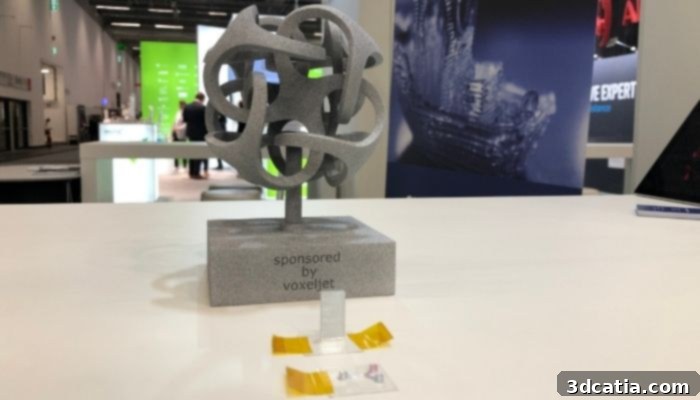
The Formnext Start-Up Challenge 2021 award itself was 3D printed, seen here alongside some innovative glass applications from Nobula (photo credits: 3Dnatives)
AM Ventures Impact Award 2021: Celebrating Sustainable Innovation
The AM Ventures Impact Award, now in its second year, continues to gain significant traction among participating start-ups, reflecting a growing industry-wide emphasis on sustainability. This is evidenced by the fact that a remarkable two-thirds of applicants to the main Start-Up Challenge also vied for the Impact Award. This trend is hardly surprising, given that the award recognizes sustainable approaches that deliver tangible positive impacts on environmental protection or social welfare—principles that are increasingly at the forefront of many additive manufacturing initiatives. The inherent flexibility and waste-reduction capabilities of AM technologies naturally align with these goals, making it an ideal platform for developing environmentally conscious and socially responsible solutions.
This year, the distinguished winner of the AM Ventures Impact Award was Vispala Technologies from India. Vispala Technologies is making a profound difference by utilizing 3D printing to create affordable, highly functional, and aesthetically pleasing prosthetics. Their selection underscores their deep commitment to serving underserved populations, particularly individuals living in developing countries and rural areas who frequently lack access to such vital medical products due to prohibitive costs or geographical barriers. On their website, Vispala Technologies powerfully articulates the importance of improving community quality of life through enhanced access to healthcare innovations. They exemplify the burgeoning number of companies discovering the immense usefulness and humanitarian potential of 3D printing within the medical sector. Their work highlights how additive manufacturing can bridge gaps in healthcare accessibility, offering hope and practical solutions to those who need it most. For a comprehensive overview of all the featured start-ups, readers can refer to Formnext’s official press release HERE.
The Formnext Start-Up Challenge 2021 and the AM Ventures Impact Award have once again shone a spotlight on the incredible innovation driving the additive manufacturing industry forward. These trailblazing start-ups are not just developing new technologies; they are shaping the future of manufacturing, addressing critical global challenges, and pushing the boundaries of what is possible. From atomic-level precision to mass production, from personalized healthcare to sustainable solutions, their contributions promise to revolutionize diverse sectors and improve countless lives. We are excited to witness their continued growth and impact on the global stage.
What are your thoughts on this year’s winners of the Formnext Start-Up Challenge 2021 and the AM Ventures Impact Award? Share your insights and perspectives in a comment below, or connect with us on our LinkedIn, Facebook, and Twitter pages! Don’t miss out on the latest 3D printing news – sign up for our free weekly Newsletter here, delivered straight to your inbox! You can also find all our engaging videos on our YouTube channel.
*Cover Photo Credits: 3Dnatives