
Pioneering the Future: 3D Bioprinting in Zero Gravity for Space Exploration and Human Health
The relentless pursuit of space exploration and the advancement of humanity’s presence beyond Earth have found a powerful ally in additive manufacturing. This innovative technology, commonly known as 3D printing, has opened up a myriad of applications crucial for both extraterrestrial conquest and the development of cutting-edge technologies in space. While there are numerous ways 3D printing contributes to space endeavors, one particular breakthrough has recently garnered significant attention: the Zero Gravity Bioprinter. This remarkable device possesses the unprecedented capability of developing living tissue in the unique environment of microgravity, promising to redefine long-duration space missions and even offer new insights into human health.
The pioneering concept of printing in space, free from the constraints of Earth’s gravity, first materialized in 2014 through the collaborative efforts of the U.S. company Made In Space and NASA. Their initial success demonstrated the feasibility of additive manufacturing in an orbital environment. Building on this foundation, a significant leap forward occurred a couple of years later when two visionary companies, Techshot and nScrypt, joined forces. Their ambitious goal was to 3D print a human heart in zero gravity, a monumental undertaking that highlighted a crucial insight: bioprinting is not only possible but appears to be much more effective and controlled under microgravity conditions or outside Earth’s gravitational pull. This revelation suggests that the first truly functional organ produced via 3D printing may very well originate beyond our planet, a testament to the transformative potential of space-based biomanufacturing.
The Zero Gravity Bioprinter: Revolutionizing Organ Fabrication in Space
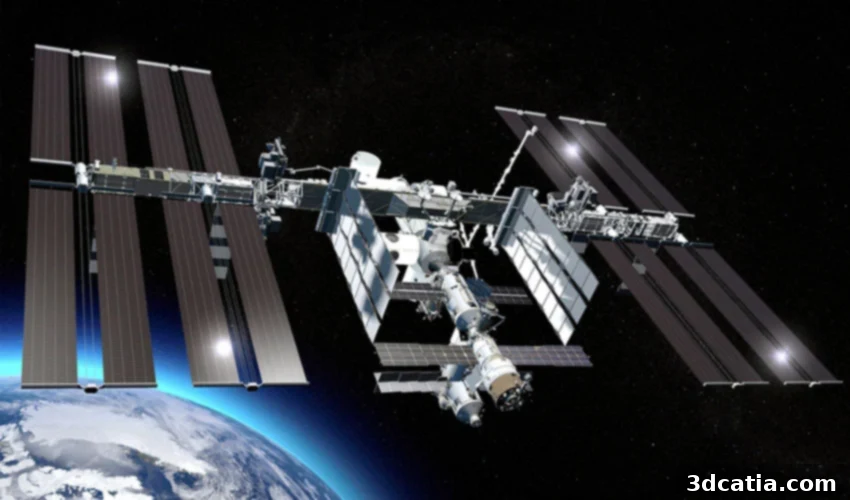
Following their initial successes and recognizing the immense potential of extraterrestrial bioprinting, American companies nScrypt and Techshot embarked on an ambitious project: the development of the 3D BioFabrication Facility, or BFF. This cutting-edge bioprinting system is specifically designed for deployment on the International Space Station (ISS). The BFF employs a sophisticated technique that enables the 3D printing of thick tissue and even complex organs using adult stem cells, a significant advancement over earlier bioprinting methods. At the heart of this facility is the Zero Gravity Bioprinter, also known as the Bio Assembly Tool (BAT). This precision instrument works in conjunction with specialized bio-inks, which are cultivated within a cell culture bioreactor conditioned by TechShot’s Advanced Space Experiment Processor (ADSEP). The synergy between BFF and the ADSEP technique was projected to commence operations on the Space Station in 2019, marking a new era in space medicine and biological research.
The BAT bioprinter is engineered for unparalleled accuracy and control, featuring extremely precise movements and dispensation capabilities. It leverages nScrypt’s patented SmartPump technology, which offers volumetric control down to an astonishing 100 picoliters. This level of precision is critical for delicate biological structures. Furthermore, the BAT utilizes superfine nozzles, as small as 10 microns in diameter, for the meticulous extrusion of biomaterials. This advanced engineering ensures that each cellular layer is placed with optimal alignment and density, crucial for the viability and functionality of the resulting bioprinted tissues and organs. Such minute control minimizes the risk of cellular damage and promotes the formation of robust, functional biological constructs in an environment where gravitational forces are virtually absent.

Rendering of BFF technology by nScrypt
Why Microgravity is Ideal for Bioprinting Complex Tissues
The unique environment of microgravity offers significant advantages for bioprinting, particularly when it comes to creating complex, three-dimensional biological structures. On Earth, gravity poses a substantial challenge: freshly printed tissue scaffolds and cellular constructs often collapse under their own weight before they can fully mature and gain structural integrity. Cells also tend to sediment, leading to uneven distribution within the bioprinted structure. In contrast, the absence of gravity in space allows for the creation of intricate geometries without the distortion or collapse typically seen on Earth. This enables the fabrication of more delicate and realistic tissue architectures, which is paramount for replicating the complexity of human organs.
Additionally, microgravity can facilitate better cell-to-cell adhesion and nutrient exchange. Without the constant pull of gravity, cells remain suspended and are less prone to clumping, promoting more uniform distribution and efficient integration into the desired tissue structure. This environment can also mimic certain aspects of embryonic development or the natural fluid dynamics within the human body, potentially leading to more biologically accurate and functional constructs. For instance, the formation of vascular networks, which are essential for supplying nutrients and removing waste from larger tissues, can be incredibly challenging on Earth due to gravitational effects on fluid flow and scaffold stability. In microgravity, these processes could be optimized, paving the way for truly vascularized and viable organs.
Ken Church, CEO of nScrypt, eloquently emphasized the critical importance of precision in this field: “Especially when it comes to something as important as weaving, it’s vital to put the right amount of material in the right position every time. This is what our machines offer and what has contributed to our success in bioprinting, as well as in other applications.” He continued, “This is an exciting time for discovery and, most importantly, a moment of impact for those seeking serious solutions to develop thick vascularized tissue, which is the basis of a fully printed organ.” His remarks underscore the technological prowess required and the immense potential of this endeavor, particularly in achieving the holy grail of bioprinting: fully functional, vascularized organs.
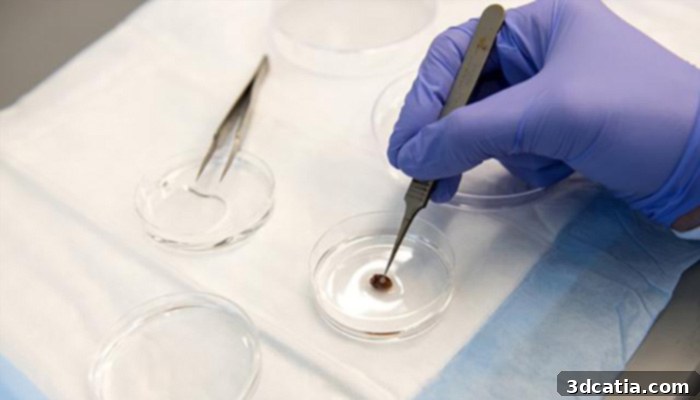
It is expected to begin with bioprinting of cardiac tissue patches (photograph University of Wisconsin)
From Cardiac Patches to Comprehensive Space Medicine
The immediate and most pressing goal for the Zero Gravity Bioprinter is the creation of a cardiac patch. These patches are desperately needed for the recovery and regeneration of damaged heart tissue, a common and life-threatening condition. The process involves printing the necessary cells directly into the bioreactor. Within this bioreactor, a sophisticated system provides continuous perfusion of nutrient-rich media, ensuring the cells receive vital nourishment and that metabolic toxins are efficiently removed. This keeps the delicate tissue alive and thriving. Simultaneously, the bioreactor delivers precise electrical and mechanical stimuli, crucial for encouraging the cells to differentiate, organize, and begin to beat rhythmically, mimicking the natural function of heart muscle.
The implications of this technology extend far beyond cardiac repair. The ability to bioprint functional tissues and organs in space offers revolutionary solutions for long-duration human space missions. Imagine a future where astronauts on a multi-year journey to Mars could receive on-demand medical care, including tissue repair for injuries, organ replacement in emergencies, or even personalized pharmaceuticals tailored to their unique physiological needs. This capability would drastically reduce the reliance on Earth-based resupply missions, making deep-space exploration safer, more sustainable, and truly autonomous. Astronauts could potentially grow skin grafts for burns, cartilage for joint damage, or even test drugs on bioprinted human tissues to understand their effects in the space environment, all without the need for animal testing or returning to Earth.
John C. Vellinger, President and CEO of Techshot, articulated the expansive vision for this groundbreaking technology: “We are very excited to see this project, and everything it can provide and come to life. With the goal of producing everything from organs to pharmaceuticals, to maybe even food, BFF has the ability to improve the lives of people on Earth and help enable exploration of deep space.” This statement encapsulates the dual promise of the Zero Gravity Bioprinter: not only to empower humanity’s journey into the cosmos but also to bring back invaluable knowledge and technological advancements that can directly benefit human health and well-being here on our home planet.
The Future of Bioprinting in Space: Challenges and Opportunities
While the prospects of 3D bioprinting in zero gravity are incredibly exciting, the path forward is not without its challenges. Operating complex biological systems in the harsh environment of space requires overcoming significant hurdles, including protecting delicate cells and biomaterials from cosmic radiation, managing power and resource consumption, and ensuring the long-term reliability and sterilization of bioprinting equipment. Ethical considerations surrounding the creation of human tissues and organs in space also need careful navigation. However, the potential rewards far outweigh these obstacles. The research conducted on the ISS using the BFF and BAT will provide unprecedented insights into cell behavior, tissue development, and disease progression in microgravity, advancing our understanding of fundamental biology in ways not possible on Earth.
Ultimately, the Zero Gravity Bioprinter represents more than just a piece of advanced machinery; it symbolizes a paradigm shift in how we approach medicine, manufacturing, and exploration. It offers a tangible pathway towards creating self-sufficient outposts beyond Earth, providing essential medical capabilities for astronauts venturing deeper into the solar system, and perhaps even laying the groundwork for extraterrestrial colonization. Moreover, the scientific breakthroughs achieved through space-based bioprinting could lead to innovative solutions for organ shortages, personalized medicine, and advanced regenerative therapies that will revolutionize healthcare for everyone on Earth. This ongoing journey of discovery is pushing the boundaries of what is scientifically and medically possible, promising a future where life-sustaining technologies are as boundless as space itself.
What are your thoughts on the groundbreaking developments of the Zero Gravity Bioprinter and its potential to shape the future? We invite you to share your insights in the comments below or connect with us on our Facebook and Twitter pages. Don’t miss out on the latest advancements in additive manufacturing—sign up for our free weekly Newsletter to receive all the crucial 3D industry news directly in your inbox!