
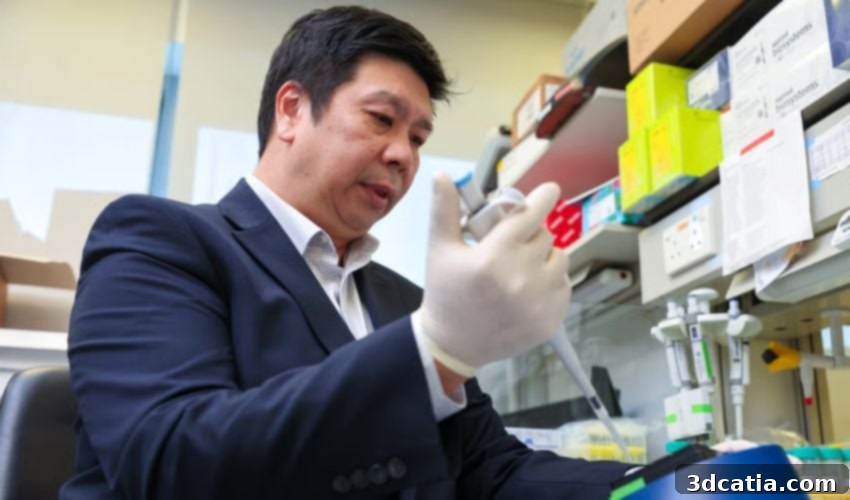
Revolutionizing Respiratory Medicine: 3D-Printed Airways and Personalized Organoids
High-degree burns, particularly those affecting the face and neck, frequently lead to severe injuries of the respiratory tract. Such inhalation injuries are notoriously complex to treat, often requiring intricate surgical repairs to damaged tissue and the careful reconnection of healthy structures. Traditional surgical methods, while life-saving, can be challenging due to the delicate nature of the airways and the extent of the damage. This medical challenge has spurred groundbreaking research into innovative solutions. In a significant leap forward for regenerative medicine, researchers at the University of Hong Kong (HKU), in collaboration with C2iTech and the Japanese industrial giant Hitachi, have unveiled a novel and promising approach to treating respiratory tract trauma: the development of functional 3D-printed airways.
This pioneering research harnesses the power of advanced bioprinting and organoid technology, moving beyond conventional treatments to offer a highly personalized and potentially more effective repair mechanism. The team’s work focuses on creating patient-specific airway replacements that not only provide structural support but also replicate the complex biological functions of a healthy respiratory system. This represents a paradigm shift in how severe inhalation injuries could be managed, offering new hope for patients facing life-altering respiratory damage.
The Innovative Process: From Stem Cells to Functional Airways
The foundation of this revolutionary treatment lies in the personalized nature of the engineered airways. The initial and critical step for the HKU researchers involves collecting the patient’s own cells. This process, a testament to the sophistication of the methods developed at HKU, is remarkably non-invasive and efficient, requiring only a single mouth swab. This simple procedure yields precious stem cells, which are then used as the building blocks for creating patient-specific biological components.
Cultivating “Mini-Organs”: The Role of Organoids
Utilizing these carefully collected stem cells, scientists in the laboratory embark on the intricate process of growing organoids. Often described as “mini-organs,” these three-dimensional cellular structures are meticulously cultivated to mimic the complex function and intricate structure of a person’s biological organs. In the context of respiratory tract repair, these organoids are designed to replicate the cellular architecture and physiological capabilities of healthy airway tissue. This includes the ability to perform crucial functions such as mucus secretion and ciliary movement, which are vital for filtering air and protecting the lungs from pathogens and irritants. The ability to grow these functional organoids from a patient’s own cells is a cornerstone of this personalized medical approach, ensuring biological compatibility and minimizing the risk of rejection.
The ambition is to integrate these lab-grown, functionally active organoids with a 3D-printed scaffold, thereby creating fully personalized 3D-printed airways. This fusion of bioprinting technology with advanced cell cultivation techniques aims to produce a synthetic yet biologically active airway segment that can seamlessly integrate with the patient’s existing respiratory system. This intricate combination promises a future where damaged respiratory tracts can be restored with living, functional tissue, far surpassing the capabilities of inert prosthetic devices.

Fire victims often suffer injuries to the respiratory tract. (Image: Pixabay)
Overcoming Bioprinting Challenges: Integrating Living Cells
While the concept of 3D printing anatomical structures is not entirely new, creating functional, living tissues poses significant challenges. Professor Michael Chan from the Center for Immunology and Infection at HKU eloquently highlights this hurdle: “Existing technologies allow the 3D printing of an airway using biomaterials. But without the cells, it cannot perform the functions of an airway.” This statement underscores a critical distinction. A structure, no matter how perfectly shaped, remains inert without the embedded cellular components that give it life and function. The mere physical presence of a printed airway is insufficient; it must actively participate in biological processes.
Therefore, the successful embedding of human cells within the 3D-printed scaffold is not merely an optional addition but a fundamental requirement for the functional viability of these engineered airways. This involves intricate bioprinting techniques that can precisely place and sustain living cells within a biocompatible matrix, ensuring they survive, proliferate, and establish connections necessary for physiological function. The research team faced the monumental task of developing methods to not only print the structural components but also to integrate and nourish these delicate organoids effectively.
The “Fish Balls on a Skewer” Analogy: A Breakthrough in Integration
A pivotal breakthrough for the researchers involved devising a method to seamlessly connect the lab-grown organoids to the 3D-printed tissue. Professor Chan used a vivid analogy to describe this complex integration: “Our organoids are able to perform these functions, so we hope to put them in the 3D printed airway, [as if] we were threading fish balls onto a skewer.” This analogy, while seemingly simple, encapsulates the sophisticated engineering required to align and secure the individual organoids within the larger 3D-printed structure. It implies a meticulous process of arranging and fixing the functional cellular units in a way that allows them to interact with each other and with the scaffold, ultimately forming a cohesive and functional airway lining. This innovative approach to integrating the living components with the structural framework is central to the project’s success, promising to overcome the inertness of purely biomaterial-based prints.
Automating Organoid Production: A Partnership for Scalability
Another monumental stride in this research came through a strategic collaboration with Hitachi and HKU spin-off C2iTech, a company specializing in personalized organoid cultivation. This powerful partnership was instrumental in developing a unique, automated machine specifically designed for producing respiratory organoids. This advancement directly addresses one of the most significant bottlenecks in organoid research and application: the previously manual, labor-intensive, and often error-prone process of growing and nurturing organoids.
The High-Throughput Organoid Machine
The automated machine represents a game-changer. Instead of scientists painstakingly culturing and tending to individual organoid samples by hand, this sophisticated system now takes over the entire process. Its capabilities are impressive, allowing it to process 128 samples simultaneously. This high-throughput capacity dramatically streamlines the manufacturing process, making organoid production significantly faster, more consistent, and less susceptible to human error. Professor Chan envisions the ultimate potential of this automation: “The ultimate version will be creating the organoids from start to finish after the collection of stem cells.” This vision points to a future where fully automated, personalized organoid factories could churn out patient-specific tissues with unprecedented efficiency, greatly accelerating both research and clinical applications of regenerative medicine.
The collaboration between academia and industry (HKU with C2iTech and Hitachi) has been crucial in translating laboratory breakthroughs into scalable, practical solutions. Hitachi’s expertise in advanced engineering and automation, combined with C2iTech’s specialization in organoid cultivation, has forged a synergy that addresses the pressing need for reproducibility and scalability in personalized medicine. This automated production system is not just about making more organoids; it’s about making them reliably and consistently, paving the way for their widespread adoption in both research and clinical settings.
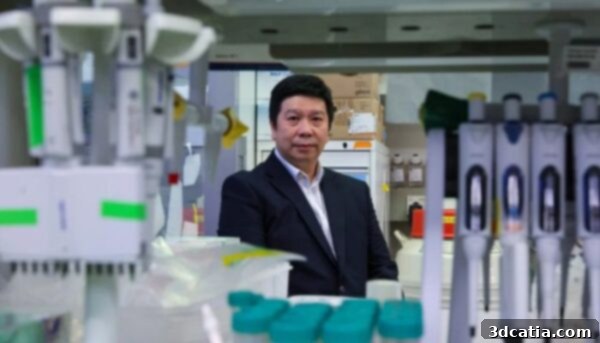
Professor Michael Chan and his team and partners are developing organoids and 3D-printed airways. (Image: Edmond So)
The Promise of Personalized Medicine with Organoids
Beyond their direct application in creating 3D-printed airways, organoids hold immense potential as powerful tools in the broader field of personalized medicine. These “mini-organs,” derived from a specific individual’s cells, offer an unparalleled platform for understanding how that particular person will react to a wide range of medical interventions and challenges. They effectively function as individualized biological models, providing critical insights that conventional testing methods cannot.
Tailoring Treatments for Individual Patients
One of the most significant applications of organoids is their ability to test how a specific person reacts to medications, diseases, and even vaccinations. Imagine a scenario where, instead of a trial-and-error approach, doctors could use a patient’s own organoids to predict the efficacy and potential side effects of different drugs for their unique genetic makeup. This capability would revolutionize drug prescription, minimizing adverse reactions and maximizing therapeutic outcomes. For instance, for patients with complex respiratory conditions, organoids could be used to screen various treatment options, identifying the most effective drug cocktail without exposing the patient to potentially harmful or ineffective therapies. This targeted approach is at the very heart of personalized medicine, moving away from a “one-size-fits-all” model towards highly individualized care.
Professor Chan eloquently articulates the transformative impact: “Organoids can be used to see if a certain medicine is effective for you. This is what we call personalized medicine.” This highlights the immense value these cellular models bring to clinical decision-making. By replicating an individual’s biology in a controlled laboratory setting, organoids offer an ethical and efficient way to explore complex biological interactions, paving the way for truly bespoke medical treatments.
Organoids: A Future Necessity in Healthcare
Professor Chan firmly believes in the inevitable integration of organoids into future healthcare practices: “I expect organoids will become a necessity in the future. When they become widely adopted, people will no longer rely on manual work. Instead, they may hope for machines that can perform these tasks with higher efficiency.” This vision points to a future where advanced automation and biological modeling become standard practice in medicine. The shift from manual, time-consuming laboratory work to highly efficient, automated organoid production systems will be crucial for widespread adoption.
The potential societal benefits are vast. Faster drug discovery, more accurate diagnoses, and highly personalized treatment plans could lead to improved patient outcomes, reduced healthcare costs by avoiding ineffective treatments, and a general elevation of medical standards. Organoids, therefore, are not just a research tool; they represent a fundamental shift in how medicine is practiced, offering a pathway to truly proactive and predictive healthcare.
Future Directions and Commercial Potential
The HKU team, along with C2iTech and Hitachi, is not resting on its laurels. The next critical steps involve pushing ahead with the further automation of organoid development and significantly improving long-term preservation techniques. The ultimate goal is to create these complex organoids automatically from start to finish, enhancing their scalability and reproducibility to meet future demand in both research and clinical applications. This continuous refinement will ensure that organoid technology can transition from novel research into a mainstream medical solution.
Accelerating Drug Discovery and Pharmaceutical Applications
Beyond direct clinical applications for respiratory trauma, these advanced organoids hold substantial interest for pharmaceutical companies. They represent an invaluable tool for testing new drugs, providing a more human-relevant model than traditional animal testing or simpler cell cultures. Organoids can be used to screen compounds for efficacy, assess toxicity, and understand drug metabolism in a more physiologically accurate manner. This could drastically reduce the time and cost associated with drug development, bringing new, safer, and more effective treatments to market faster. The ability to model specific diseases or genetic conditions using patient-derived organoids further enhances their utility for personalized drug discovery, allowing pharmaceutical researchers to identify therapies that target specific patient populations.
Commercialization and Broader Impact
The commercialization potential of both the organoid technology and the automated production machine itself is substantial. The patented processes for cultivating personalized organoids and the unique high-throughput system developed with Hitachi could be licensed to pharmaceutical companies, research institutions, and biotech firms globally. This could establish C2iTech and its partners as leaders in the burgeoning field of automated organoid manufacturing and personalized regenerative medicine. Furthermore, the development of functional 3D-printed airways opens up new avenues for medical device companies and healthcare providers, potentially leading to the creation of specialized centers for regenerative airway repair. This entire ecosystem promises not only significant scientific advancement but also substantial economic growth and widespread improvements in public health.
What are your thoughts on this revolutionary approach to 3D-printed airways and personalized organoids? This research marks a pivotal moment in regenerative medicine, offering hope for patients suffering from severe respiratory tract injuries and paving the way for truly personalized healthcare solutions. For more in-depth information on these groundbreaking organoids and the research behind them, we encourage you to click HERE to read the source article. Share your insights and opinions in the comments section below, or engage with us on our LinkedIn or Facebook pages. Don’t miss out on the latest advancements in 3D printing and medical technology – sign up for our free weekly Newsletter to receive direct updates to your inbox. You can also explore our comprehensive video content on our YouTube channel. For further information on medical and dental 3D printing innovations, please visit our dedicated page HERE.
*Photo Credits: Edmond So