
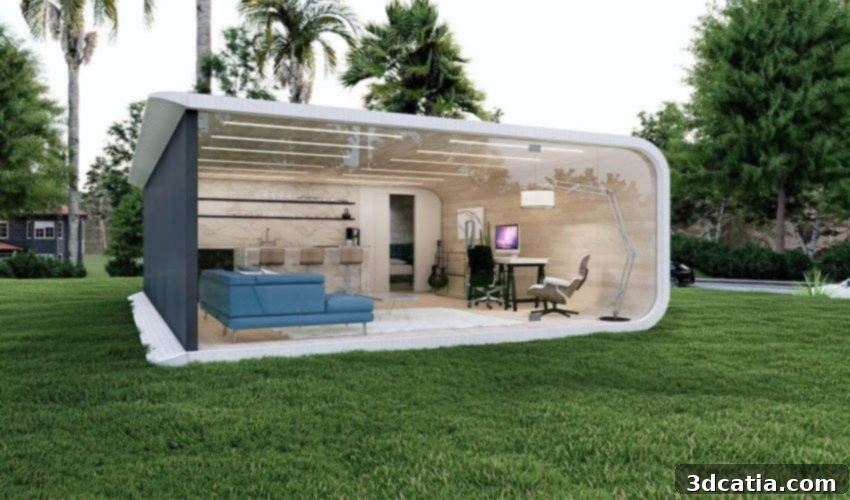
Azure Printed Homes: Revolutionizing Sustainable Construction with Recycled Plastic 3D Printing
In an era where global construction demands and pressing environmental concerns intersect, innovative solutions are more critical than ever. The construction sector stands as a colossal consumer of raw materials and a significant contributor to carbon emissions. Addressing this dual challenge head-on, U.S.-based Azure Printed Homes has emerged as a trailblazer, developing a groundbreaking approach that leverages advanced 3D printing technology and recycled materials to redefine how we build. From their state-of-the-art facility in Culver City, California, Azure Printed Homes is pioneering a method capable of producing robust, sustainable structures, ranging from entire houses to versatile garden studios, entirely from recycled plastic waste.
The recent unveiling of their new 15,000-square-foot factory marks a pivotal moment for the company and the broader sustainable construction movement. This expansive facility houses Azure Printed Homes’ custom-engineered 3D printer, a marvel of modern additive manufacturing. Unlike conventional construction processes that rely heavily on resource-intensive practices and generate substantial waste, Azure’s proprietary technology offers a truly environmentally friendly manufacturing process. By transforming discarded plastics into durable building components, the company is not merely constructing buildings; it is actively transforming construction methodologies, fostering a circular economy, and significantly mitigating the ecological footprint of urban development.
The Environmental Imperative: Rethinking Construction
The urgency behind Azure Printed Homes’ mission is underscored by the dire statistics surrounding traditional construction. As Gene Eidelman, co-founder of Azure Printed Homes, articulates, “The construction sector is the largest global consumer of raw materials, responsible for approximately 20% of the world’s total carbon emissions.” This staggering environmental impact encompasses everything from the extraction and processing of virgin materials like timber, steel, and concrete, to the massive amounts of demolition and construction waste that end up in landfills. Alarmingly, a significant portion of this waste ultimately pollutes our oceans, threatening marine ecosystems and the health of the planet.
Azure Printed Homes recognized this unsustainable trajectory and committed to finding a viable alternative. Their core motivation is rooted in a deep sense of responsibility: “Our responsibility to our customers and to future generations is to use the most sustainable practices imaginable,” Eidelman emphasizes. This commitment extends beyond mere rhetoric, manifesting in their innovative use of recycled plastic. By repurposing plastic waste, Azure not only diverts tons of material from landfills and oceans but also reduces the demand for virgin resources, thus lowering the carbon footprint associated with material production. This approach aligns perfectly with the principles of a circular economy, where waste is not merely discarded but transformed into valuable resources, creating a truly sustainable loop for the built environment.
Azure Printed Homes: A Sustainable Solution Takes Shape
The technology at the heart of Azure Printed Homes’ operation is a testament to the power of innovation in addressing global challenges. Their custom-made 3D printer is designed to handle large-scale additive manufacturing, specifically tailored for architectural applications. The process involves extruding a specialized blend of recycled plastic polymers layer by layer, meticulously building up structural elements and entire wall systems. This precision-driven method minimizes material waste, as the printer only deposits material where it is needed, drastically reducing the off-cuts and scraps typically associated with conventional building.
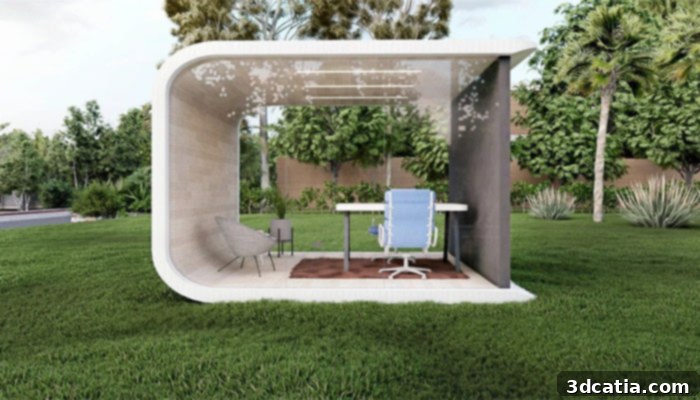
The choice of recycled plastic as a primary building material is a game-changer. Not only does it address the pervasive issue of plastic waste, but it also offers several inherent advantages for construction. Recycled plastics can be engineered to possess excellent durability, weather resistance, and insulation properties, making them ideal for creating resilient and energy-efficient homes. By transforming what was once considered pollution into the very fabric of our future cities, Azure Printed Homes is not just building structures; they are constructing a greener, more sustainable future for residential and commercial development alike.
The Technological Edge: Speed, Savings, and Sustainability
Beyond their environmental benefits, Azure Printed Homes’ technology introduces significant practical advantages that promise to disrupt the traditional construction paradigm. The company claims remarkable improvements in both construction speed and cost-efficiency, making sustainable housing more accessible and appealing than ever before. This combination of ecological responsibility and economic viability positions Azure Printed Homes at the forefront of modern building innovations.
Unmatched Efficiency in Construction
According to Azure Printed Homes, their advanced 3D printing process enables them to build structures up to 70% faster than traditional construction methods. This dramatic reduction in construction time is coupled with an impressive 30% decrease in overall building costs. Ross Maguire, also a co-founder of Azure Printed Homes, elaborates on the source of these efficiencies: “We have created production efficiencies not only by capitalizing on the advances in 3D printing but by creating a design and process that is completed in only 12 hours.” This means that the core structural elements of a building can be fabricated incredibly quickly, streamlining the entire construction timeline and significantly reducing labor requirements.
The ability to rapidly produce building components on-demand drastically cuts down on project delays often encountered in traditional construction, such as weather dependency, material procurement lead times, and labor shortages. Furthermore, the automated nature of 3D printing ensures a high degree of precision and consistency, minimizing errors and rework, which are common sources of cost overruns and material waste in conventional building projects. This emphasis on efficiency and automation is poised to revolutionize construction processes, ushering in an era of sustainable, highly accurate, and incredibly swift building.
Beyond Traditional Building: Integrated Structures
One of the most compelling aspects of Azure’s technology is its capacity to print complex, integrated structural components. Unlike conventional construction where various elements – framing, sheathing, insulation, and finishes – are installed in separate, time-consuming stages, Azure’s 3D printer can produce multiple functionalities in a single, continuous process. This includes the entire structural skeleton, the exterior sheathing for protection, an integrated water control barrier to prevent moisture ingress, and even the exterior finish itself. Additionally, the system intelligently incorporates passageways for utilities like electrical wiring and plumbing, as well as grounding for interior finishes, all within a fraction of the time and cost associated with manual installation.
This level of integration is a significant departure from traditional building practices, where multiple trades and sequential steps are required. By consolidating these processes, Azure Printed Homes not only accelerates construction but also enhances the overall quality and integrity of the structure. The seamless, monolithic nature of 3D printed walls can offer superior insulation, greater structural stability, and a reduced risk of common construction defects. This holistic approach ensures that every Azure home is not only built quickly and affordably but also to an exceptionally high standard of performance and durability, embodying a truly modern and forward-thinking approach to residential construction.
From Vision to Reality: Azure’s Current Projects and Future Outlook
While the long-term vision for Azure Printed Homes includes printing full-size residential homes, the company is taking a strategic, phased approach to market entry. At this time, Azure has not yet commenced printing full-scale houses, but they have ambitious plans to initiate their first major residential project by 2023. This methodical scaling allows them to refine their technology, optimize their processes, and thoroughly test their designs before widespread deployment of larger structures.
Currently, Azure Printed Homes is actively accepting pre-orders for a range of smaller, highly functional structures, including accessory dwelling units (ADUs) and garden studios. These smaller footprint buildings represent a perfect application for their technology, offering quick, affordable, and sustainable solutions for homeowners looking to expand their living space, create backyard offices, or generate rental income. The demand for ADUs, in particular, has surged in recent years as urban density increases and housing affordability remains a significant challenge, making Azure’s offerings particularly timely and relevant. Their rapid production capabilities mean these structures can be deployed much faster than traditional builds, addressing immediate housing needs with an environmentally conscious solution.
The Growing Movement for Eco-Friendly Construction
Azure Printed Homes is part of a larger global movement towards sustainable and innovative construction. Similar to their solution, numerous initiatives are emerging that seek to combine environmental responsibility with cutting-edge building techniques. For instance, the recently announced Cacao Eco Village in Ecuador, spearheaded by Valentino Gareri Atelier, explores the incredible potential of transforming agricultural waste into building materials. In this pioneering project, designers aim to create sustainable dwellings using waste products from cacao cultivation, showcasing how diverse organic materials can be repurposed through advanced manufacturing. These parallel efforts highlight a growing consensus within the architectural and construction industries: the future of building must be intrinsically linked to ecological stewardship and innovative material science.
For those eager to learn more about Azure Printed Homes’ groundbreaking work, their official website offers comprehensive details about their technology, products, and vision. You can explore their innovative solutions directly HERE. Additionally, a compelling visual overview of their process and completed projects is available in the video below, providing an immersive look into the future of sustainable 3D printed housing.
Join the Conversation on Sustainable 3D Printing
What are your thoughts on using recycled plastic for constructing houses and other buildings? Do you believe this innovative approach holds the key to more sustainable and affordable housing solutions globally? We invite you to share your perspectives and insights in a comment below. You can also engage with us and join the ongoing dialogue on our Linkedin, Facebook, and Twitter pages, where we regularly discuss the latest advancements in 3D printing and sustainable technologies. For those who want to stay at the forefront of additive manufacturing news, don’t forget to sign up for our free weekly Newsletter here, delivering the most important 3D printing updates straight to your inbox! Additionally, you can find a wealth of informative videos and content on our dedicated YouTube channel.
*All Photo Credits: Azure Printed Homes