
Transforming Aerospace: The Future of Metal 3D Printing, Expert Insights & Certification
The aerospace industry stands as one of the earliest and most enthusiastic adopters of additive manufacturing (AM). This sector was initially drawn to AM technologies primarily for their ability to facilitate lightweighting – optimizing component weight while maintaining or improving strength and performance. Over time, the application of these technologies has expanded significantly. A report from Strategic Market Research underscores this growth, projecting the global aerospace 3D printing market to reach an impressive $9.23 billion by 2023, boasting a Compound Annual Growth Rate (CAGR) of 20.23%. While polymer 3D printing, especially with high-performance materials like PEEK and PEKK, plays a crucial role, metal additive manufacturing has witnessed particularly rapid expansion within the sector. But how precisely is metal 3D printing being utilized in aerospace? What are its core benefits? And how can critical metal 3D printed parts achieve necessary certification? To delve into these complex questions and more, we consulted three leading experts in the field.
Our first expert, Dr. Martin White, serves as the Director for Technical Operations for the Global Advanced Manufacturing Programs Division at ASTM International, a renowned international standards organization. Dr. White’s extensive work encompasses overseeing all of ASTM’s 3D printing technical programs. His focus areas include addressing Qualification and Certification challenges, generating material allowables, accelerating standardization processes, and delivering specialized training programs. Our second expert is Brian Hawkes, a technical sales engineer at Velo3D, one of the prominent metal 3D printer manufacturers actively engaged in the aerospace industry. With approximately 10 years of experience specifically in aerospace, out of a total 20 years as an engineer, Brian specializes in designing advanced heat exchangers and complex fabrications. Completing our panel of experts is Michael York, the Director of Additive Manufacturing at Eaton Aerospace. Michael leads an impactful program that has successfully seen 23 metal AM components awarded across various applications, including commercial aerospace, military, space exploration, and aftermarket services.
- Martin White
- Brian Hawkes
- Michael York
Leveraging Metal 3D Printing in Aerospace Applications
As highlighted, metal 3D printing is not just a burgeoning technology but an already well-established cornerstone within the aerospace sector. This industry’s early embrace of additive manufacturing stems from its inherent benefits, which are proving increasingly critical for modern aviation. The adoption trend is set to accelerate in the coming years, driven by a global shift towards enhancing sustainability across all industrial sectors, including aerospace. Dr. Martin White specifically points to the increasing demand for metal 3D printing to design innovative new components. This need is amplified by the aerospace industry’s pivot towards electrification and the exploration of alternative propulsion sources, such as hydrogen fuel. Such paradigm shifts necessitate significant aerostructure design changes throughout aircraft, where AM offers a crucial advantage. The technology is renowned for its unparalleled ability to create intricate geometries and complex internal structures that are simply unachievable with conventional manufacturing methods. This capability allows engineers to maximize structural design efficiency, optimize performance, and enhance overall safety standards for next-generation aircraft.
The versatility of metal 3D printing extends to the variety of technologies that can be employed. Dr. White elaborates on the diverse metal AM processes utilized in the sector, stating, “In short – all metallic technologies are being considered. The target is always to achieve a sustainable business case, through calculated cost reduction or through performance gains. The sector needs to consider progression beyond certification for a component towards industrialization, where we want to manufacture higher volumes of parts. We see engines using the high-definition capabilities (i.e., complex parts) of powder bed fusion, whilst generally aerostructures are attracted to the high deposition rate and large size capability of Directed Energy Deposition (DED) methods.” Beyond these, Binder Jetting is also a widely adopted metal 3D printing technology, particularly valued for its potential in high-volume production. Michael York from Eaton Aerospace corroborates this multi-technology approach, affirming that at Eaton Aerospace, “we utilize Laser Powder Bed Fusion (aluminum, titanium, Inconel, and stainless steel), Electron Beam Powder Bed Fusion (titanium), and metal binder jetting (stainless steel).” This demonstrates a strategic selection of processes based on specific application requirements and material compatibility.
Material selection is, as expected, a pivotal aspect of the metal additive manufacturing process in aerospace. Brian Hawkes sheds light on this, explaining, “The materials that are used are again varied depending on the application and requirements. Titanium, for instance, boasts an exceptional strength-to-weight ratio, a critical property for aerospace components where lighter-weight vehicles directly translate to reduced fuel consumption and increased efficiency. Nickel-based alloys, such as Inconel, are indispensable in high-temperature environments, thanks to their remarkable ability to maintain structural integrity and performance even near their melting point. Aluminum, on the other hand, offers excellent thermal conductivity, making it ideal for applications like high-performance heat exchangers. Generally speaking, the materials that are widely used in aerospace through traditional manufacturing methods are also great candidates for additive manufacturing, often unlocking new design possibilities with these familiar alloys.”
Once the appropriate AM process is chosen and the ideal materials are selected, metal 3D printing opens the door to a multitude of innovative applications across the aerospace industry. Brian Hawkes confirms this potential, commenting, “Additive is great for any application that operates in a high-temperature environment, involves efficient heat transfer, or requires intricate fluid passages. This makes it exceptionally valuable for a wide range of mission-critical aerospace engine parts, including sophisticated heat exchangers, impellers, volutes, and other complex components where design freedom is paramount.” Dr. White further highlighted several impressive, real-world applications showcased at ICAM 2022. These include certified end-use parts that are already flying. For example, Airbus is actively utilizing additive manufacturing to produce a structural bracket on the A350 WXB wing pylon. Similarly, aerospace titan Boeing has successfully employed DED Wire Feed technology from Norsk to create an Aft Galley bracket for its 787 aircraft. The latter case is particularly noteworthy as it achieved an impressive 85% reduction in the ‘buy-to-fly’ ratio, thanks to significantly reduced material waste and machining time – a testament to AM’s economic and environmental benefits.
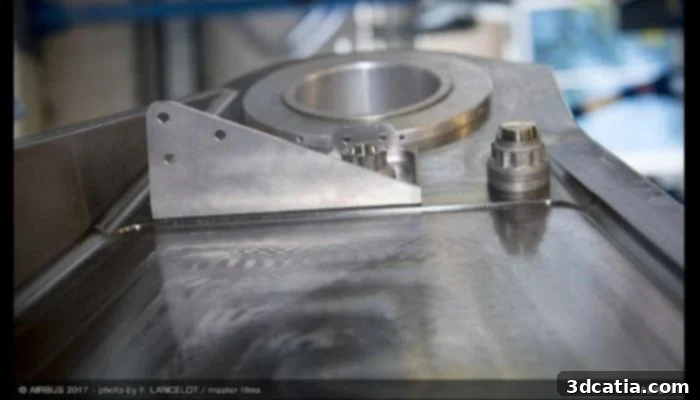
A bracket on the A350 WXB made by Airbus using metal 3D printing (photo credits: Airbus)
Benefits and Challenges of Metal AM in Aerospace
Additive manufacturing offers a substantial array of benefits for the aerospace industry, driving its widespread adoption. These advantages are broad, encompassing, but not limited to, the ability to optimize designs for peak performance, significant lightweighting and overall weight reduction, accelerated and more cost-effective development cycles, the elimination of expensive tooling, a notable reduction in production costs, and critically, enhanced sustainability practices. While many of these benefits are universally applicable across industries, they hold paramount importance in aerospace. This inherent value proposition is precisely why aerospace continues to be one of the foremost sectors embracing 3D printing across its various forms.
Among these benefits, the advantages derived from lightweighting—the meticulous optimization of parts to achieve equivalent strength with significantly reduced mass—are exceptionally crucial for aerospace applications. Brian Hawkes from Velo3D emphasizes this point, noting, “Additive manufacturing empowers engineers with the unique capability to produce lightweight structures that precisely meet the stringent design requirements of the part. This not only contributes to a substantial reduction in the aircraft’s total weight, leading to fuel savings and increased payload capacity, but also offers the secondary yet significant benefit of reducing material waste during the manufacturing process.” In fact, Michael York highlights that for additively manufactured parts, a weight reduction of 20-40% compared to traditionally manufactured counterparts is routine. This impressive figure further escalates when considering AM’s transformative capacity for part consolidation, which can dramatically reduce the number of individual components required in complex assemblies like aircraft engines, simplifying supply chains and maintenance.
Furthermore, additive manufacturing offers strategic advantages for the industry by helping to mitigate persistent supply chain vulnerabilities, a critical lesson learned from recent global disruptions. Hawkes further elaborates, “As the additive supply chain matures and the scalability of AM technologies is fully proven, spare parts can be readily produced on-demand. This significantly reduces the need for extensive physical inventory, freeing up capital and storage space. More importantly, it enables the manufacturing of parts closer to their ultimate end-users, minimizing transit times and logistical complexities. Supply chains for maintenance parts, in particular, can adopt a distributed architecture, allowing identical, certified parts to be procured from a diverse network of providers without the extensive time and cost typically associated with developing new tooling for each supplier.”
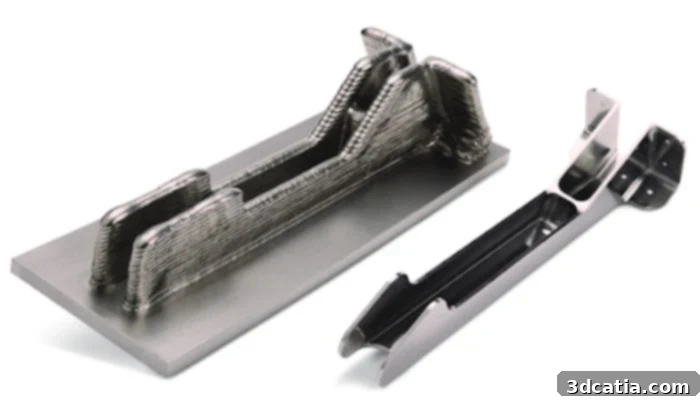
A Boeing 787 Aft Galley bracket made using DED. AM can be useful for making complex parts like this one (photo credits: Boeing)
However, the accelerating adoption of metal 3D printing in aerospace is not without its inherent challenges. Paramount among these is safety, with industry stakeholders understandably exercising extreme caution when integrating novel technologies into critical applications. This inherent conservatism is compounded by a relative scarcity of comprehensive testing data for AM materials and processes, especially when contrasted with the vast repositories of knowledge accumulated over decades for traditional manufacturing methods like casting or forging. As Dr. White notes, this places users in a delicate position, navigating the intricate balance between acceptable risk and the imperative to innovate and leverage advanced manufacturing capabilities.
Fortunately, concerted efforts are underway to address and overcome these limitations. A prime example is the groundbreaking work undertaken by ASTM International, specifically through its Consortium for Materials Data and Standardization (AM CoE). This initiative aims to bridge the data gap by generating high-caliber datasets, benefiting from the collective input of 27 member organizations spanning the entire AM value chain. These collaborative efforts are critical for establishing robust material property databases. Additionally, advancements in modeling and simulation technologies hold significant promise, as they can substantially reduce the extensive physical testing currently required, thereby instilling greater confidence and certainty in the widespread industrial application of additive manufacturing within the aerospace sector.
Certification of Metal 3D Printed Parts for Aerospace Applications
For any manufacturer considering the integration of metal 3D printing for aerospace components, the question of certification is undoubtedly one of the most critical. While certification is indeed achievable, it currently presents a significant hurdle. Brian Hawkes underscores this challenge, explaining, “It is a challenge to certify a part for aerospace applications at present because AM is seen as a relatively new technology in the aerospace industry, and some standards and guidelines for certifying AM parts are not yet fully developed. In the aerospace industry, a comprehensive approach to certification is required. The qualification process must meticulously detail all aspects of a printed part, encompassing rigorous material selection, robust production validation protocols, and extensive testing procedures.” Despite these complexities, there is a clear path forward. He optimistically adds, “Despite the challenges, the potential is there for AM to revolutionize the aerospace industry, with authorities actively working towards establishing comprehensive standards and guidelines that will streamline future certification processes.”
Dr. Martin White further emphasizes the dual requirement for aerospace parts: not only must they be certified by stringent regulatory agencies like the FAA (Federal Aviation Administration) or EASA (European Union Aviation Safety Agency), but companies must also establish and rigorously maintain their own internal quality assurance systems. He clarifies, “Given the inherent need to control variability with AM products, there must be a foundational framework upon which qualification and certification can be reliably delivered – that is, a robust Quality Management System (QMS). Quality Assurance for AM is a complex and extensive topic in itself, but at a high level, the fundamental recommendation is always to ‘make a plan and stick to the plan.’ ASTM/ISO consensus-based Standards are instrumental in this regard, forming the bedrock of an aerospace QMS, as well as providing the basis for certifications aligned with these internationally recognized standards.”
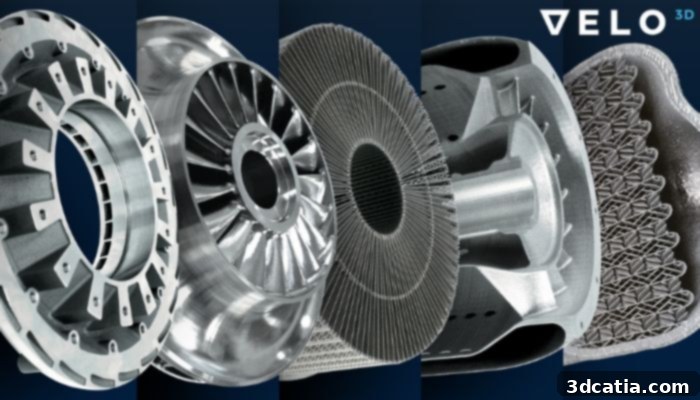
Despite limitations, companies are able to create a number of certified parts using metal AM, like these examples from Velo3D (photo credits: Velo3D)
Michael York from Eaton Aerospace highlights another practical limitation: the significant cost associated with qualification. He observes, “Qualification cost is higher than conventional methods for now, but the expectation is that it will come down over time, making it more accessible and economically viable for broader adoption.” Nonetheless, as previously noted, obtaining certification for AM parts is unequivocally possible, even if the process is currently intricate. York shares Eaton’s firsthand experience, stating, “Eaton Aerospace has successfully certified commercial aircraft metal AM components for production. Typically, the certification process demands an immense amount of material and process statistical data. This data must thoroughly demonstrate that you have fully characterized a specific material on a specific process, and critically, even on a specific serial number of the manufacturing machine, ensuring complete traceability and consistent performance.”
It is evident that substantial work remains to be done in standardizing and streamlining the certification and qualification processes for metal 3D printed aerospace components. However, the collaborative efforts currently underway demonstrate that these goals are entirely achievable. Standards organizations like ASTM International play an indispensable role in this advancement. For example, ASTM offers an Advanced Training Course specifically focused on Quality Assurance for AM, equipping professionals with the necessary knowledge and skills. Furthermore, these organizations frequently provide certifications that help to develop individual competencies, such as the ASTM Machine Operator Certification. This certification, based on ASTM/ISO 52942, serves to formally support the demonstration of operator capabilities within a robust Quality Management System. Crucially, working with experienced companies in metal 3D printing for aerospace – whether they are leading 3D technology manufacturers like Velo3D or established aerospace giants like Eaton Aerospace – also provides invaluable expertise and accelerates the path to certified parts.
In conclusion, it is abundantly clear that metal 3D printing is exceptionally well-suited for a vast array of demanding applications within the aerospace industry. Its numerous inherent benefits, ranging from unparalleled design freedom and lightweighting to supply chain resilience, demonstrably outweigh its current disadvantages. Users now have the flexibility to select from a diverse range of metal additive manufacturing processes to achieve their specific design and performance objectives. That being said, ongoing collaborative efforts are essential to further facilitate adoption, particularly concerning the critical areas of certification and qualification, which remain primary focuses for industry advancement.
Expert Advice for Future Implementation
“You don’t have to do it alone. Collaboration is key – the AM community is fantastic at sharing knowledge and best practices. Being part of the Standards community will provide a great overview of the state of the art, which gaps are being addressed next, and to engage directly with peers.” – Martin White
“Additive manufacturing will excel when it’s used for the right application, and the selection of AM technology needs to be in line with the needs of the part. This should be considered in the early stages of the design phase of the project, sometime before the pen has been put to paper. The earlier that you consider the benefits of additive manufacturing, the better your final part will be. If you take all the restraints from the engineer at the beginning of the design phase, you may see an interesting part but it will be designed with freedom and without compromise for the manufacturing technique.” – Brian Hawkes
“The criticality of weight and enhanced performance makes AM an ideal solution. Combine this with the relatively high cost of aerospace components and the improvement in quality from AM over castings and you have a solid business case to implement AM.” – Mike Eaton
What are your thoughts on the transformative use of metal 3D printing in aerospace? Are you currently implementing it in your projects? We invite you to share your insights in a comment below or engage with us on our LinkedIn, Facebook, and Twitter pages! Don’t forget to sign up for our free weekly Newsletter here to receive the latest 3D printing news directly in your inbox! You can also find all our compelling videos on our YouTube channel.
*Cover Photo Credits: Velo3D