

The Definitive Guide: How to Choose the Best 3D Printer for Beginners in 2024
The landscape of the 3D printing industry is more dynamic and competitive than ever, with hundreds of manufacturers vying for a share of a market poised for exponential growth. This vibrant competition, while exciting, often presents a significant challenge for newcomers: how to choose the right 3D printer from an overwhelming array of options? The decisions are multifaceted, extending beyond mere brand preference. Prospective buyers must consider fundamental technological differences, such as FDM versus SLA, contemplate the practicality of a single versus dual extruder setup, and even decide between printing with plastics or more advanced materials like metals. To navigate this complexity, we sought the wisdom of leading experts in the field. Our goal is to provide a comprehensive guide, illuminated by their insights, to help you make an informed decision and embark on your 3D printing journey with confidence.
Our exploration led us to conversations with three influential figures and organizations within the additive manufacturing community. We spoke with Jemuel Stephenson from FABLabs, a renowned expert in identifying appropriate equipment and methodologies for product design and prototyping, who also shares his knowledge through 3D printing courses. We also gained valuable perspectives from Eric Savant, the CEO of iMakr, a prominent seller and manufacturer of 3D printers with operations spanning both the USA and the UK. Finally, we engaged with the dedicated team at Tinkerine, a well-established Canadian 3D printing company celebrated for their FDM 3D printer, the DittoPro, and their commitment to education through the Tinkerine U program. Their collective expertise offers a robust foundation for understanding the nuances of selecting a 3D printer tailored to individual needs.
Defining Your 3D Printing Goals as a Beginner
Our initial inquiry to these industry leaders revolved around the aspirations and objectives that beginners in 3D printing should prioritize. Jemuel Stephenson of FABLabs emphasized the importance of fostering creativity. He advised, “Focus on designing creative things…I’d recommend starting with a simple and reliable printer like a Makerbot or an Ultimaker.” This perspective suggests that the initial focus should be on the iterative process of design and creation, rather than getting bogged down by overly complex hardware. A reliable machine frees the user to experiment and learn the foundational principles of 3D modeling and printing.
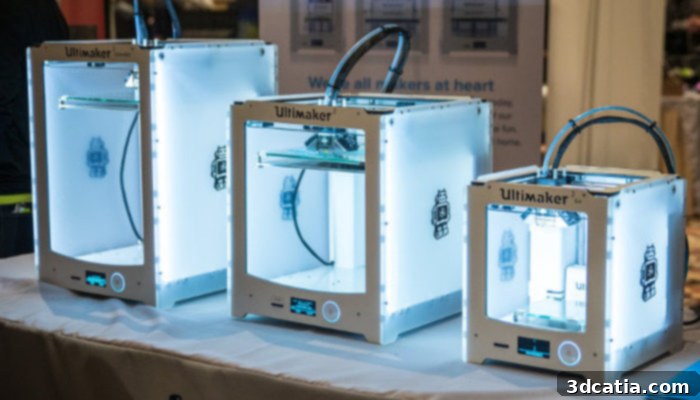
Jemuel at FABLabs recommends 3D printers such as Ultimaker’s FDM 3D printers for their reliability.
Eric Savant, CEO of iMakr, offered a more nuanced framework, stating, “One of the more important questions to answer when someone is first starting out is whether they’re 3D printing for personal fulfillment or for professional purposes.” This distinction is crucial, as it fundamentally shapes the expectations and investment level. For personal users, Eric outlined two pathways: investing in the best printer affordable upfront or beginning with a low-cost machine to gain experience before committing to a more sophisticated model. He observed, “We don’t see huge differences in capability for machines under $1000, so unless a customer can afford more to start with, we would recommend the low price option.” This advice underscores that for casual users, initial immersion and learning are paramount, and a budget-friendly option can serve this purpose effectively.
It is interesting to note Eric’s comment about machines under $1,000, especially since popular recommendations like Ultimaker and Makerbot models often exceed this price point. This highlights a strategic choice for beginners: decide if your budget aligns with entry-level machines where feature differences are minimal, or if a higher investment is justified for enhanced quality and capabilities. Eric further elaborated on professional applications, emphasizing that the desired outcome dictates the printer choice. For instance, “if they’re in the jewelry industry, they’ll be most concerned with resolution; if they’re in engineering, they’ll likely care most about the ability to print in advanced materials; or if they’re in architecture, they’ll require good build volume size and a clean finish.” This advice highlights the importance of aligning the 3D printer’s specifications with the specific requirements of the professional field, stressing factors like precision, material compatibility, and print volume. Therefore, a thorough assessment of your operational area and quality demands is an essential first step.

Eric Savant is CEO of iMakr, a major 3D printer retailer and manufacturer with stores in the USA and UK.
The team at Tinkerine presented a distinct yet complementary perspective, advocating for a focus beyond the hardware itself. They stated, “A beginner should look for a 3D printer that allows them to not worry about the hardware. We believe that is the most important factor. We would say a beginner should focus more on educating themselves with the skill sets, getting familiar with the technology, and the application of the technology. The design and creation stage is more important than the hardware itself. The 3D printer is simply a tool to help you bring your designs into life.” This philosophy underpins Tinkerine’s strong belief in the importance of education for aspiring 3D printing enthusiasts, which led them to establish their Tinkerine U service. This initiative aims to equip individuals globally with the knowledge and skills required for successful additive manufacturing, reinforcing that mastering the craft often precedes mastering the machine.
Selecting the Best FDM 3D Printer for Beginners
Given that Fused Deposition Modeling (FDM) technology is widely recognized for its affordability, ease of use, and broad material compatibility, it naturally emerges as the ideal starting point for most beginners. We therefore posed a direct question to our experts: which FDM 3D printer do they consider best suited for new hobbyists and those just starting out? The insights gathered offer a valuable spectrum of recommendations, catering to different budget levels and aspirations.
Jemuel at FABLabs provided a tiered approach, acknowledging diverse user needs. For the hobbyist eager to “get wet feet” without a substantial financial commitment, he suggested, “You can opt for a low budget printer from around $200. This will allow you to make neat stuff and will help you understand the general workflow of printing, as well as material capabilities.” This recommendation highlights the educational value of an inexpensive machine, enabling users to grasp fundamental concepts such as slicing software, material properties, and basic troubleshooting. For those looking to integrate 3D printing into an existing design workflow, particularly for creating prototypes or mockups with greater dimensional accuracy, Jemuel advised scaling up: “If you are looking to add a 3D printer to an existing design workflow to allow for mockups with more dimensional accuracy, a MakerGear M2, MakerBot Replicator 2X or similar printer should work well. These printers deliver better surface finish and overall quality.” His emphasis clearly positions Makerbot 3D printers and similar professional-grade desktop machines among the top choices for consumers seeking superior output quality and reliability for more serious applications.
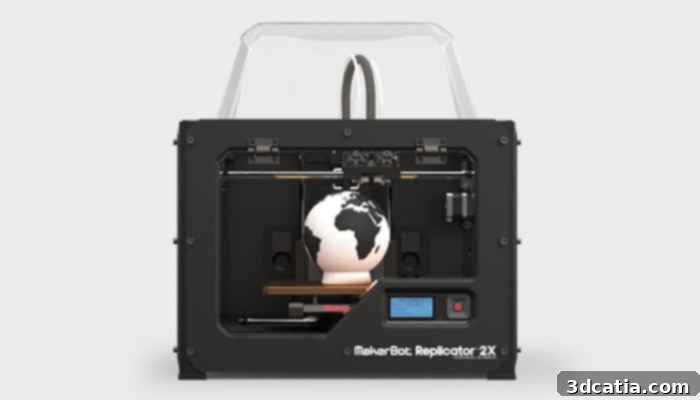
The Makerbot Replicator 2X is another recommended 3D printer by our experts for its quality output.
Eric Savant of iMakr unveiled their direct solution for first-time users: “We recently introduced a 3D printer into the marketplace that is intended exactly for this purpose: the STARTT. With a retail price of $99/£99, the STARTT is a low-risk option for people who want to experience 3D printing for the first time.” The STARTT, offered as a kit with comprehensive instructions and video guides for assembly, exemplifies the ultimate low-barrier entry. Eric explained their vision, stating, “Our expectation is that buyers of the STARTT will be able to move on from this machine when they’re ready to some of the more serious printers we have on offer.” This approach not only makes 3D printing accessible but also provides an invaluable educational experience in machine assembly and operation, preparing users for more advanced systems.
The team at Tinkerine echoed the sentiment of prioritizing user experience and reliability. They confidently asserted, “We believe that for ideal beginners, 3D printers should consist of these characteristics; simple to use, reliable, accurate, and high performance.” Their confidence stems from their own product development, as they elaborated, “Since we are the designers and makers of the DittoPro 3D printer, we know that this printer fits the characteristics listed above, and we will definitely recommend it.” The DittoPro, therefore, is presented as an FDM solution that distills the essential qualities a beginner needs to focus on the creative process without being hindered by machine complexities or inconsistencies.
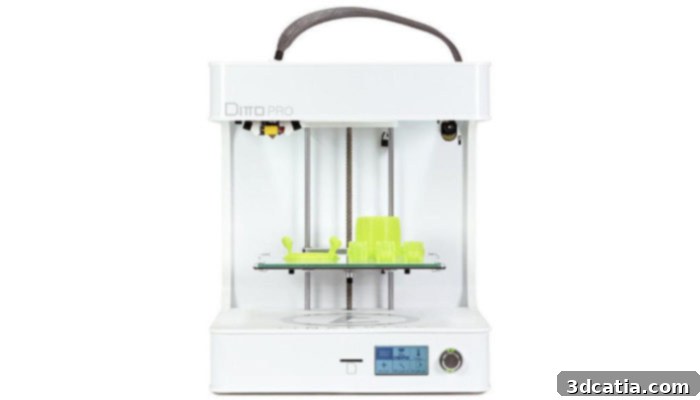
Tinkerine manufactures the DittoPro FDM 3D printer, known for its user-friendliness and reliability.
Guiding Customers to Their Ideal 3D Printer
Our final question to our esteemed panel of experts delved into the practical aspects of customer engagement: how do they transition from general recommendations to helping individual customers pinpoint their ideal 3D printer, considering their unique circumstances and aspirations?
Tinkerine outlined a clear, customer-centric consultation process. They explained, “We will first determine what their needs and applications are, then we will recommend to the best of our knowledge on which 3D printing technology is most suitable to their needs.” This initial discovery phase is critical, as it establishes the foundation for a tailored recommendation. If the customer’s requirements align with FDM technology, Tinkerine naturally champions their own product, stating, “If it does fit with FDM printers, we will recommend our DittoPro 3D printers to them and show them where in the workflow is it best suited.” However, their commitment to customer success extends beyond their product line. They emphasized, “If another technology is better suited, we will suggest a potential choice to them as we want our customers to adopt this technology in a meaningful way.” This demonstrates a dedication to providing honest, comprehensive advice, ensuring customers invest in the most appropriate solution, even if it’s not a Tinkerine product. Their approach highlights the importance of understanding the end goal to match it with the right tool, fostering true technological adoption.
Eric Savant detailed iMakr’s robust process for needs identification, designed to ensure customers make optimal choices. He articulated, “When a customer is looking to buy a printer, we go through a process of needs identification to ensure they choose the most appropriate technology and printer for their needs.” This meticulous approach begins with a fundamental classification: “We assess whether the printer is intended for personal, educational or professional use, and what types of objects are meant to be printed.” These initial parameters significantly narrow the vast selection. Following this, other critical factors come into play: “We then narrow the choice set down to the right printer to fit the customer’s budget.” This holistic assessment, moving from intended use and object characteristics to budget constraints, allows iMakr to provide highly personalized recommendations, ensuring customer satisfaction and successful integration of 3D printing into their lives or workflows. This method underscores that the ‘best’ printer is highly subjective and depends entirely on the user’s specific context.
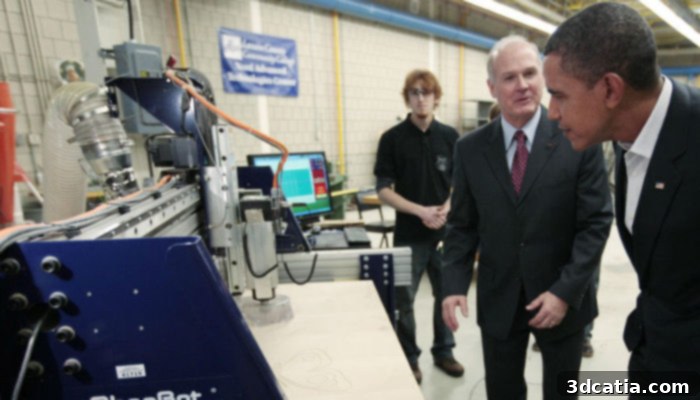
FABLabs For America have hosted notable visitors, showcasing their commitment to innovation and education.
Conclusion and Next Steps for Your 3D Printing Journey
In summary, the insights from our three distinguished experts — Jemuel Stephenson of FABLabs, Eric Savant of iMakr, and the team at Tinkerine — reveal a consistent philosophy for newcomers to 3D printing. The overarching advice emphasizes a thoughtful approach that begins with self-assessment. Prospective users must first clearly define their personal goals and specific needs for the technology. Is it for casual hobbyist projects, serious prototyping, educational purposes, or specialized professional applications? This foundational understanding will critically inform the subsequent decisions.
Once your objectives are clear, the experts universally recommend seeking a 3D printer that prioritizes reliability and user-friendliness. The emphasis on a “non-technical” machine for beginners is crucial, as it allows individuals to bypass the complexities of troubleshooting hardware and instead channel their energy into the more rewarding aspects of design, creation, and learning. By choosing a robust and straightforward FDM printer, beginners can minimize frustration, accelerate their learning curve, and ultimately maximize their enjoyment of the transformative world of additive manufacturing. We sincerely hope this comprehensive guide has either clarified your path or reaffirmed your initial inclinations regarding the selection of your first 3D printer.
To delve deeper into the offerings and expertise of our contributors, you can explore their respective platforms:
Visit the FABLabs For America website here.
Explore iMakr’s range of 3D printers and services here.
Discover Tinkerine’s educational resources and 3D printers here.
Did our expert-driven guide assist you in making your 3D printer choice? We value your feedback! Please share your thoughts in a comment below or connect with us on our Facebook and Twitter pages. For all the latest developments and news in the dynamic world of 3D printing, remember to sign up for our free weekly Newsletter, delivered directly to your inbox!