
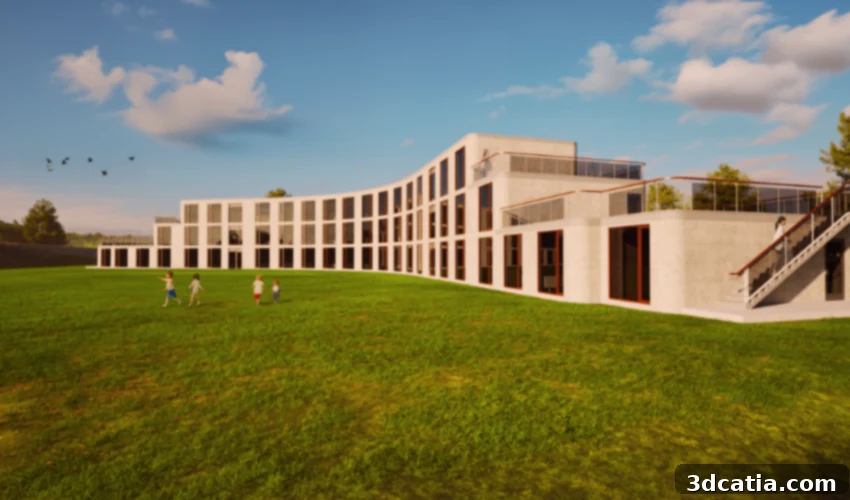
Revolutionizing Indigenous Housing: Canada’s ‘Eh ni da se’ Project Pioneers Culturally Aligned 3D Printed Homes
Canada’s Indigenous communities are grappling with one of the nation’s most pressing and deeply entrenched housing crises. A government report from 2020-2022 starkly revealed that while Indigenous people constitute only 5% of Canada’s total population, they tragically account for 35% of individuals experiencing homelessness. This disproportionate impact underscores a systemic issue stemming from historical injustices, inadequate infrastructure, and a persistent lack of culturally appropriate and affordable housing options. The repercussions of this crisis extend far beyond mere shelter, affecting health, education, economic stability, and overall well-being within these communities. In a significant stride towards addressing this urgent need, a groundbreaking collaboration has emerged, offering a technologically advanced and culturally sensitive solution. Toronto-based developer Horizon Legacy has proudly partnered with Two Row Architect, a distinguished Native-owned architectural firm, to unveil an ambitious new 3D printed housing initiative, poised to reshape the landscape of Indigenous housing development.
This innovative development is set to harness the power of robotic 3D concrete printing to construct a pioneering three-story residential complex. Designed to provide up to 30 much-needed units for Indigenous communities, the project carries immense symbolic weight, aptly named ‘Eh ni da se’ – the Indigenous Cayuga word for “new moon.” This name beautifully encapsulates the project’s core philosophy: a commitment to renewal, new beginnings, and a fresh approach to housing solutions. Far more than just a construction endeavor, ‘Eh ni da se’ is a visionary undertaking that seeks to seamlessly integrate profound Indigenous values and cultural heritage with the cutting-edge capabilities of modern construction innovations. The architectural design of the building itself, distinguished by its elegant crescent shape, is not merely an aesthetic choice but a deliberate reflection of its namesake and the cyclical nature of renewal central to Cayuga culture. This unique design aims to establish a compelling model for future culturally aligned development across Canada, demonstrating that innovative construction can go hand-in-hand with respect for tradition and identity.
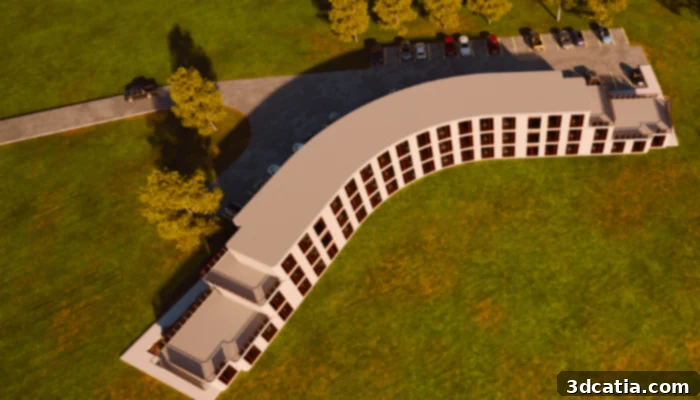
The moon symbolizes renewal and new beginnings in Cayuga culture, providing profound inspiration for the ‘Eh ni da se’ housing initiative.
Brian Porter, a Principal at Two Row Architect, articulated the profound significance of this collaboration, stating, “This partnership is about more than building homes; it’s about claiming our power and sovereignty through innovation and designs that reflect our identity.” His words powerfully underscore the project’s deeper mission: to empower Indigenous communities by creating spaces that are not only functional but also deeply resonant with their cultural heritage and aspirations. For nearly three decades, Porter’s esteemed firm has been a steadfast advocate and partner for over 50 diverse Indigenous communities across North America. Their extensive work has focused on designing spaces that foster cultural expression, strengthen community bonds, and promote self-determination. This rich history of working directly with Indigenous groups provides Two Row Architect with unparalleled insight and sensitivity, ensuring that the ‘Eh ni da se’ project is truly developed for and with the community, reflecting genuine needs and values rather than imposed solutions. Their expertise in culturally responsive design is critical to ensuring that the 3D printed structures transcend mere functionality, becoming vibrant symbols of identity and progress.
The technological backbone of this pioneering housing project is Horizon Legacy’s cutting-edge proprietary 3D printing system, aptly named the VAL2.0. This advanced platform represents a significant leap forward in automated construction, encompassing both the state-of-the-art robotic printer and a specially formulated concrete mix designed for optimal performance. The integrated system allows for the efficient and rapid on-site printing of multi-story walls, a capability that dramatically accelerates the construction timeline and reduces labor requirements. This innovative method falls under the umbrella of additive manufacturing, specifically known as 3D concrete printing or construction 3D printing. The benefits of this technology are multifaceted: it promises increased construction speed, reduced material waste, greater design flexibility, and enhanced cost-effectiveness compared to traditional building methods. Crucially, Horizon Legacy’s system is not theoretical; it is already proving its efficacy at another significant development in Gananoque, Ontario, where a 26-home project is projected to reach completion this fall. This successful precedent highlights the VAL2.0’s reliability and scalability, instilling confidence that automation can effectively address both the pressing housing crisis and the ongoing skilled labor shortages prevalent across Canada’s construction sector. By leveraging such advanced robotic construction, the project aims to deliver high-quality, durable, and sustainable homes with unprecedented efficiency.
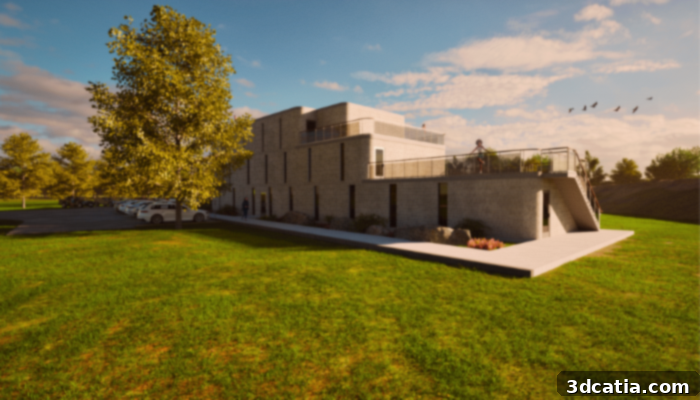
The Val 2.0 robotic system is engineered to precisely pour a specialized concrete mix, forming the durable and intricately designed walls of the residential complex.
The ambitious ‘Eh ni da se’ project received a significant financial boost, made possible by a generous $3.7 million grant from Next Generation Manufacturing Canada (NGen). NGen operates as a federal agency, an integral component of the Canadian Industry, Science, and Economic Development department, dedicated to fostering innovation and advanced manufacturing capabilities within the country. This substantial funding underscores the Canadian government’s recognition of the project’s transformative potential, not only in addressing critical housing needs but also in advancing Canada’s leadership in sustainable and technologically driven construction. Upon its completion, the ‘Eh ni da se’ complex is set to make history as the largest multi-story Indigenous housing development ever realized using construction 3D printing. This landmark achievement will serve as a powerful testament to the viability and advantages of additive manufacturing in large-scale residential projects. Nhung Nguyễn, CEO of Horizon Legacy, eloquently articulated the broader implications of this endeavor, remarking, “This project demonstrates the power of flexible automation. It proves that robots can create architecturally distinct, culturally meaningful spaces, not just the boxy forms that have come to define prefab housing.” Her statement highlights a pivotal shift: 3D printing offers the design freedom to move beyond monotonous, cookie-cutter structures, enabling the creation of unique buildings that embody cultural narratives and community identity, thus challenging traditional perceptions of prefabricated housing and opening new avenues for bespoke architectural solutions.
Beyond these exciting new developments unfolding in Canada, similar pioneering efforts are gaining traction on a global scale, illustrating the widespread applicability and growing adoption of 3D concrete printing in addressing housing deficits. For instance, in Australia, Contour3D, an Australian-based company, is actively collaborating with the Australian Aboriginal Housing Office to 3D print duplexes within New South Wales. This parallel initiative vividly showcases the escalating prominence of 3D printing technologies, not merely as a novelty but as a practical and scalable solution for housing projects, specifically tailored to confront the persistent housing challenges impacting millions worldwide. The ‘Eh ni da se’ project, therefore, is not merely about providing essential shelter for individuals and families; it embodies a far more expansive vision. It aims to fundamentally reshape how Indigenous housing is conceived, designed, and constructed, moving away from conventional, often culturally insensitive, models. Deeply rooted in generations of rich Indigenous cultural heritage and traditions, the designs of these new homes are imbued with ancient symbolism and spiritual significance, ensuring they resonate profoundly with their future occupants. Simultaneously, by boldly embracing cutting-edge modern construction methods like 3D printing, the project exemplifies a seamless and powerful merge between cherished tradition and innovative construction techniques. This harmonious blend offers a blueprint for how communities can honor their past while confidently building a sustainable, culturally rich future through the transformative power of additive manufacturing in construction.
The ‘Eh ni da se’ project represents a beacon of hope and innovation, demonstrating how advanced technology, when guided by cultural understanding and community needs, can forge a path toward more equitable and sustainable housing solutions. What are your thoughts on this inspiring Canadian initiative and its potential to set new standards for culturally sensitive development? We invite you to share your perspectives in a comment below or join the conversation on our LinkedIn and Facebook pages! To stay informed about the latest breakthroughs in 3D printing and additive manufacturing, don’t forget to sign up for our free weekly Newsletter here, delivering the most pertinent news straight to your inbox. You can also explore all our insightful videos and project showcases on our YouTube channel, where innovation comes to life.
*All Photo Credits: Horizon Legacy Canada