
ECCO QUANT-U: Pioneering Personalized Footwear with 3D Printed Soles and Dassault Systèmes Collaboration
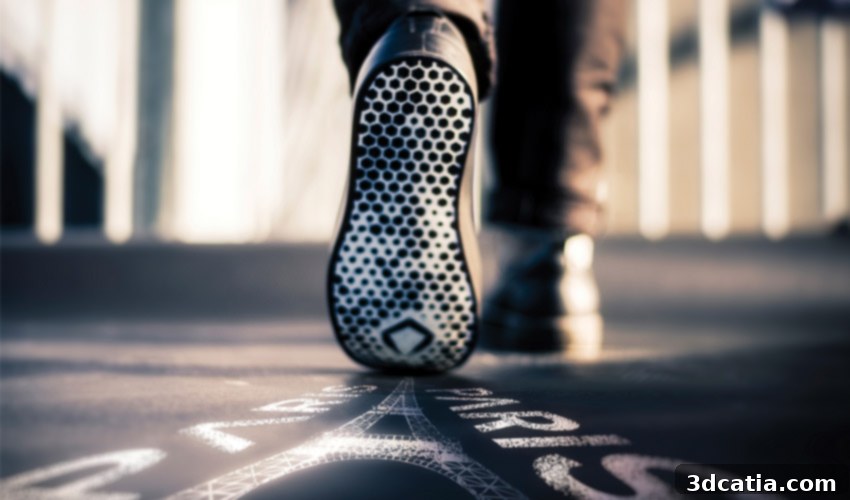
Danish footwear innovator, ECCO, recently unveiled a groundbreaking demonstration of customized shoes at the prestigious Bon Marché Rive Gauche in Paris. For the first time on the European continent, visitors were afforded a unique opportunity to experience QUANT-U, an ambitious project developed in close collaboration with Dassault Systèmes. This revolutionary initiative aims to craft shoe soles that are entirely bespoke, meticulously adapted to the individual morphology of each foot and the wearer’s unique walking parameters. 3Dnatives, a leading voice in additive manufacturing, had the chance to test this cutting-edge device firsthand at one of ECCO’s stores, reporting exceptionally promising results that signal a significant disruption for the entire shoe industry.
This pivotal development builds upon ECCO’s prior ventures into integrating advanced technologies within footwear. As reported in March 2018, ECCO had already launched its innovative concept store in the Netherlands, laying the groundwork for more personalized product offerings. The QUANT-U experience represents a substantial leap forward, set to unlock unprecedented levels of product personalization within the footwear sector. The entire process of crafting a custom sole is streamlined into three distinct, yet interconnected, steps: real-time data capture, intelligent sole modeling, and localized 3D printing. Remarkably, this comprehensive procedure is designed to be completed in approximately one hour, offering immediate gratification to customers seeking unparalleled comfort and fit.
The QUANT-U Experience: A Three-Step Journey to Perfect Fit
The innovative QUANT-U customization journey is thoughtfully structured into three core phases, each leveraging advanced technology to ensure a precise and personalized outcome. This streamlined process demonstrates ECCO’s commitment to pushing the boundaries of footwear design and manufacturing, moving beyond conventional sizing to truly individual solutions.
Step 1: Real-Time Biometric Data Capture and Digital Foot Scanning
The personalization process commences with a sophisticated real-time analysis and digital mapping of the wearer’s foot. This initial phase is crucial for gathering comprehensive data that forms the foundation of the custom sole. The user begins by stepping barefoot onto a specialized scanning device, often described as a ‘scale.’ Within a matter of seconds, this advanced scanner meticulously captures the foot’s precise dimensions and contours, generating a detailed digital profile. This profile encompasses critical measurements such as foot length, width, arch height, and overall shape. The device is equipped with over 24 distinct measuring points, ensuring an incredibly accurate and granular capture of the foot’s static morphology. This initial scan provides a comprehensive anatomical blueprint, far exceeding the capabilities of traditional shoe sizing methods.
To obtain an even more accurate and functional result, the user then proceeds to walk on a pressure-sensitive mat, often resembling a ‘treadmill.’ This dynamic phase is designed to measure crucial walking parameters. As the user walks, the mat analyzes how the foot interacts with the ground, identifying key support points, pressure distribution patterns, and pronation or supination tendencies. This gait analysis provides vital information about the foot’s dynamic behavior, capturing how forces are distributed across the foot during movement. Understanding these biomechanical aspects is essential because a sole must not only fit the static foot but also support and adapt to its dynamic actions during walking. The combination of static 3D scanning and dynamic gait analysis ensures that the resulting sole is perfectly tailored for both comfort and functional support.
Step 2: AI-Powered Sole Modeling and Digital Prototyping with 3DEXPERIENCE
Once all the comprehensive foot data—both static anatomical measurements and dynamic gait parameters—has been collected, it is fed into a sophisticated learning algorithm. This advanced algorithm plays a critical role in interpreting the complex dataset and translating it into a functional design. Leveraging artificial intelligence and machine learning capabilities, the algorithm analyzes patterns, identifies specific areas requiring enhanced cushioning or support, and predicts optimal sole geometries based on the individual’s unique needs. This intelligent processing ensures that the sole design is not just a direct replication of the foot’s shape but an optimized structure for comfort, stability, and performance.
The development of the numerical model is then executed using Dassault Systèmes’ industry-leading 3DEXPERIENCE platform. As a software expert from Dassault Systèmes explains, “The automatic learning and structural simulations will generate the digital configuration and test the physical constraints and strength of the material used for the midsole before validating and optimising it for 3D printing.” This powerful platform allows for the creation of a virtual prototype of the sole, where advanced simulations can be run. These simulations rigorously test the proposed design under various conditions, assessing how the material will perform in terms of durability, cushioning, energy return, and overall structural integrity. This digital validation process is paramount; it ensures that the final 3D printed sole will meet the demanding requirements for footwear performance and wearer comfort, minimizing the need for physical prototypes and accelerating the design cycle. The ability to virtually optimize the design based on real-world physics and biomechanical principles is a cornerstone of the QUANT-U project’s success.
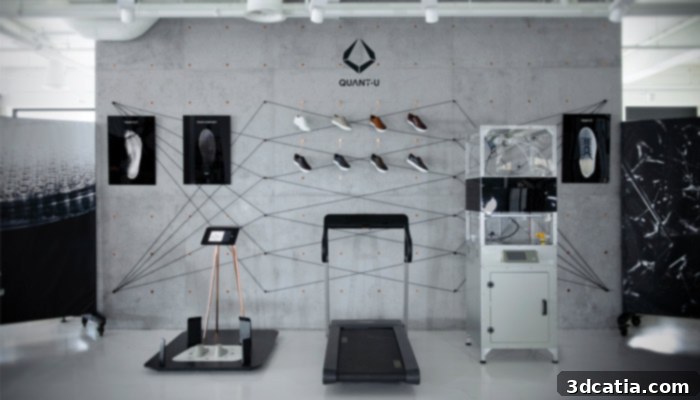
The person first needs to step onto the scale (left) and then walk on the ‘treadmill’
Step 3: Precision 3D Printing with Advanced Silicone Material
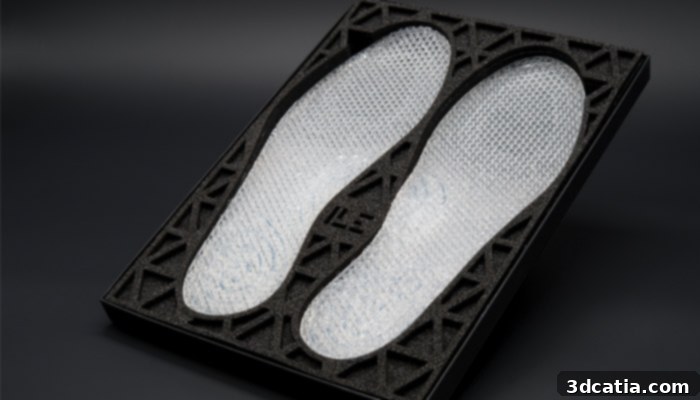
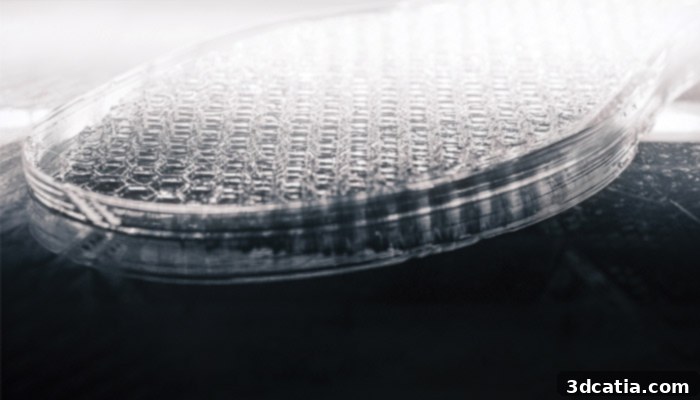
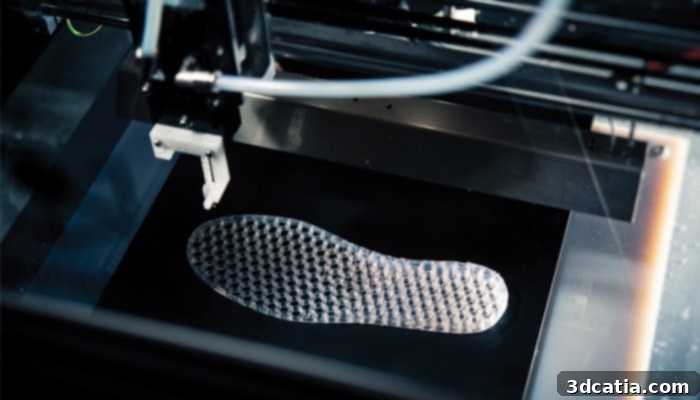
The final, pivotal step in the QUANT-U experience is the actual fabrication of the customized sole through 3D printing. This precise manufacturing process is typically carried out on an advanced German RepRap machine, utilizing a specially formulated, high-quality silicone material. The choice of silicone is deliberate and strategic, offering a unique combination of properties perfectly suited for personalized footwear components. Teo Pazanin, Research and Communications at ECCO, elaborates on this selection: “We chose silicone because it is a material that is adapted to viscoelasticity parameters while offering durability, antibacterial properties and temperature stability. The 3D printed midsole is customised to meet individual needs for cushioning, stability, adjustment and energy feedback. The result is a customised comfort and fit.”
Silicone’s viscoelastic nature means it can both absorb and dissipate energy, providing superior cushioning and responsive energy return that adapts to the wearer’s movements. This property is crucial for reducing impact forces and enhancing walking comfort over extended periods. Furthermore, silicone offers exceptional durability, ensuring the custom soles maintain their structural integrity and performance characteristics even with prolonged use. Its inherent antibacterial properties contribute to better foot hygiene, while its temperature stability means the soles perform consistently across various environmental conditions. The additive manufacturing process allows for the creation of intricate lattice structures and variable densities within the sole, precisely engineered to provide targeted cushioning, stability where needed, and an optimal fit that traditional manufacturing simply cannot achieve. This level of customization ensures that each 3D printed midsole is a true extension of the wearer’s foot, optimizing biomechanical efficiency and delivering an unparalleled level of customized comfort and fit.
One of the most exciting aspects of this localized 3D printing capability is its potential for a revolutionized supply chain. The customized soles can be printed on-demand, virtually anywhere in the world where the necessary equipment is located. This means customers could potentially pick up their bespoke soles directly from a retail store or have them conveniently delivered globally, drastically reducing lead times and minimizing inventory waste associated with mass production. This shift toward distributed, demand-driven manufacturing represents a significant step forward for the footwear industry, paving the way for a more sustainable and customer-centric future.
Beyond Comfort: Future Vision and Industry Impact
The QUANT-U project by ECCO is not merely about providing superior comfort today; it’s a strategic foray into the future of footwear. A key feature of this innovative system is that each user gains access to their personal measurement data, establishing a comprehensive digital profile that can be utilized for all future purchases and customizations. This means that once your foot data is captured, subsequent sole orders can be initiated quickly, potentially even without needing another physical scan. This digital continuity ensures consistent and evolving personalized care for the customer’s feet.
Looking ahead, ECCO envisions expanding the QUANT-U offering significantly. The long-term goal is to provide a diverse range of insoles designed for specific purposes, moving beyond general comfort to specialized applications. This could include performance-enhancing insoles for athletes, orthotic solutions for specific medical conditions, or health-monitoring insoles that integrate with wearable technology. Imagine insoles that track your gait over time, detect subtle changes in foot pressure, or even offer feedback on walking posture. This integration of personalized biomechanics with health and performance metrics positions ECCO at the forefront of a holistic approach to foot care and athletic optimization.
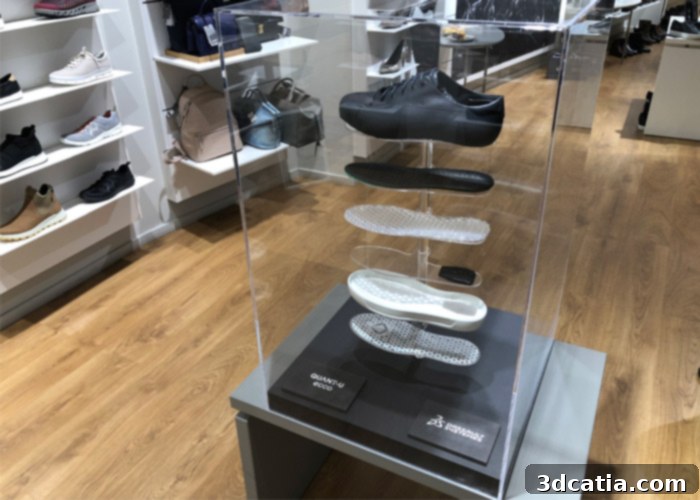
Photo Credits: 3Dnatives
The implications of ECCO’s QUANT-U project extend far beyond individual customer benefits. It represents a significant paradigm shift in the footwear industry, challenging traditional mass-production models. By enabling mass customization on an unprecedented scale, ECCO is helping to usher in an era where footwear is not just bought off-the-shelf but engineered specifically for each wearer. This innovative approach promises to reduce waste by minimizing overproduction and stock, as soles are only printed when a customer orders them. Furthermore, the ability to rapidly iterate and customize designs using 3D printing allows for greater responsiveness to market trends and individual needs, fostering a more dynamic and personalized consumer experience. ECCO, in collaboration with Dassault Systèmes, is demonstrating how advanced technologies like 3D printing, AI, and sophisticated simulation platforms can converge to redefine an entire industry, placing personalization and sustainability at its core.
Experience the Future: QUANT-U’s Presence and Conclusion
The pioneering QUANT-U experience captivated audiences at the Bon Marché Rive Gauche, as a key highlight of the “Geek mais Chic: Le shopping du troisième millénaire” exhibition, which ran until April 22nd. This showcase provided a tangible glimpse into the future of retail and personalized consumer products. For those eager to delve deeper into this revolutionary technology and its potential, more information can typically be found on the official ECCO experience website, where the journey of innovation continues to unfold HERE.
ECCO’s QUANT-U project stands as a testament to the power of integrating cutting-edge technology with consumer needs. By offering fully customized, 3D printed soles based on individual biometric data and gait analysis, ECCO is not just selling shoes; it’s delivering an unparalleled experience of personalized comfort, performance, and foot health. This collaboration with Dassault Systèmes exemplifies how technological synergy can redefine product development and reshape the entire footwear landscape, moving towards a future where every step is perfectly supported. This marks a significant milestone in the journey towards true mass customization, promising a future where footwear is as unique as the individual who wears it.
What are your thoughts on this transformative shopping experience and the future of personalized footwear? We invite you to share your insights and comments below, or engage with us on our Facebook and Twitter pages! Don’t miss out on the latest advancements in 3D printing; remember to sign up for our free weekly Newsletter, delivering all the essential news directly to your inbox!