
Monthly 3D Printing Industry Update: Key Innovations, Strategic Investments, and Market Dynamics
The world of 3D printing, or additive manufacturing, is in a constant state of evolution, driven by technological breakthroughs, strategic investments, and expanding market applications. Each month brings a fresh wave of economic and business news that underscores the dynamism of this transformative industry. From the cutting-edge research at aerospace giants to record-breaking financial performances and significant corporate acquisitions, the landscape of 3D printing is rapidly shifting. This comprehensive overview delves into the most impactful developments, offering insights into how companies are leveraging additive manufacturing to drive innovation, improve efficiencies, and capture new market opportunities.
The past month, in particular, has seen a flurry of crucial events. We witnessed major players like Rolls Royce pushing the boundaries of material science, while financial reports from industry stalwarts such as Renishaw and Proto Labs highlighted robust growth. Meanwhile, desktop 3D printing leader Ultimaker secured a substantial investment, signaling ambitious expansion plans. On the corporate acquisition front, Amazon’s purchase of 3D software firm Body Labs points towards broader applications of 3D technology in e-commerce and virtual experiences. These events collectively paint a picture of an industry maturing and diversifying, moving beyond prototyping into mainstream manufacturing and specialized applications.
Rolls Royce Harnesses the Light of 10 Billion Suns for Advanced Manufacturing Insights
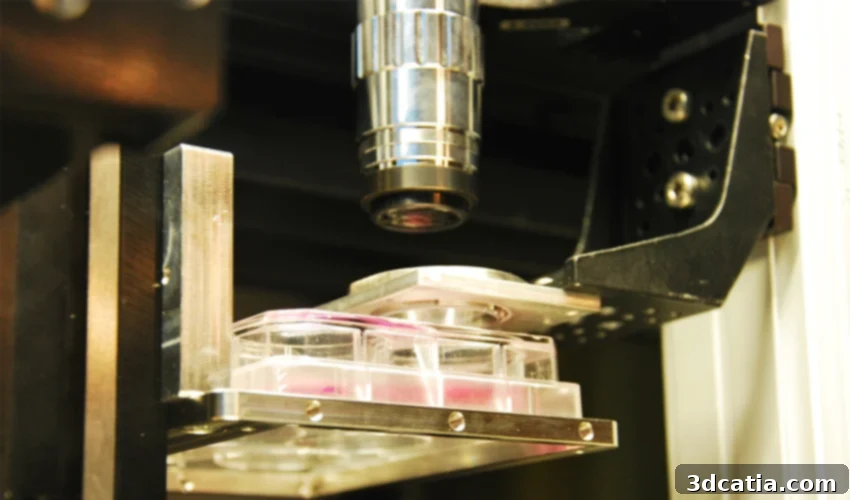
Rolls Royce, a name synonymous with engineering excellence, has been at the forefront of additive manufacturing for over a decade. Their commitment to 3D printing is evident in its current application for creating bladed disks for high-performance engines using Direct Energy Deposition (DED). This advanced process not only enables the fabrication of complex, high-integrity components but also facilitates the repair of damaged disks, extending their operational lifespan and reducing material waste. Despite their expertise, the intricate physics occurring within the build chamber during DED have long presented a scientific enigma, with engineers unsure whether “the laser is melting it on the surface or melting the powder in the air.”
To unlock these mysteries, Rolls Royce scientists are employing groundbreaking analytical techniques. Utilizing specialized equipment that circulates electrons at near light speed around a storage ring, they generate light ten billion times brighter than the sun. This synchrotron light allows for unparalleled observation of particle-level reactions as metal layers are deposited. By meticulously analyzing the regularity of these layers, researchers can pinpoint precisely why irregularities occur, leading to a deeper understanding of the process. The ultimate goal of this ambitious research is to develop a next-generation 3D printer capable of real-time self-correction, proactively preventing faults in components and ensuring unparalleled reliability and performance for aerospace applications. This pioneering work underscores the critical role of fundamental research in advancing industrial additive manufacturing.
Renishaw Continues Solid Growth with Strategic Expansion
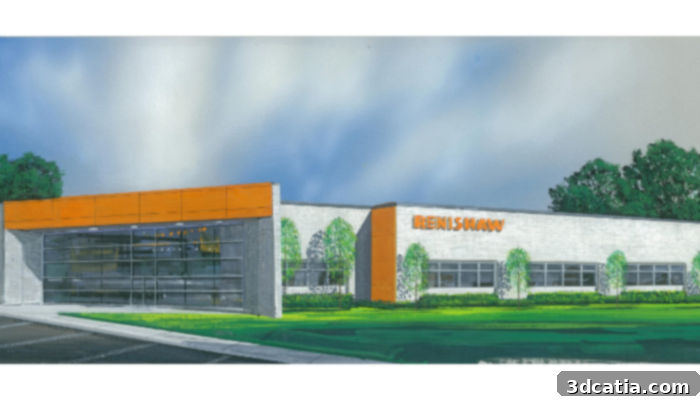
Renishaw PLC, a global leader in engineering and scientific technology, has once again demonstrated its robust market position with impressive financial results. The company announced revenues of £142.3 million in Q1 2018, marking a significant 26% increase compared to the same period in the previous year. This substantial growth is widely attributed to Renishaw’s proactive strategy of establishing a global network of additive manufacturing solutions centers. These centers serve as crucial hubs for customer engagement, education, and technical support, facilitating the adoption of additive manufacturing technologies across various industries.
William Lee, Renishaw’s Sales and Marketing Director, echoed this sentiment, stating, “We’re very pleased this year we opened our US, German and Canadian additive manufacturing solution centers.” The success of these initiatives highlights the company’s commitment to supporting its customers through the entire additive manufacturing journey, from initial concept to full-scale production. By providing localized expertise and resources, Renishaw is not only driving its own growth but also contributing to the broader industrialization of 3D printing, making advanced manufacturing more accessible to businesses worldwide. This strategic investment in infrastructure is clearly paying dividends, cementing Renishaw’s status as a key enabler in the additive manufacturing ecosystem.
Proto Labs Reports Record Revenues Driven by Diverse Manufacturing Services
Proto Labs, a pioneer in digital manufacturing, has announced record-breaking financial results, showcasing the strength of its diversified service offerings. The company reported a quarterly revenue increase of 12.7%, reaching an impressive $88.1 million. While Proto Labs is well-known for its on-demand 3D printing services, its success also stems from a comprehensive suite of other advanced manufacturing capabilities, including CNC machining and injection molding. This multi-faceted approach allows customers to rapidly iterate designs and produce parts using the most suitable technology for their specific needs, from prototyping to low-volume production.
Within this strong overall performance, 3D printing contributed $11.1 million to the total revenue, demonstrating a healthy 12.6% growth compared to the same period in 2016. This sustained growth in its additive manufacturing segment underscores the increasing demand for quick-turn 3D printed parts across various industries. Proto Labs’ model of leveraging digital workflows and advanced technologies to provide rapid manufacturing services continues to resonate with businesses seeking speed, flexibility, and efficiency in product development and production. Their ability to integrate multiple manufacturing processes under one roof positions them as a vital partner for innovation and accelerated market entry.
Ultimaker Secures Significant Investment for Accelerated Growth
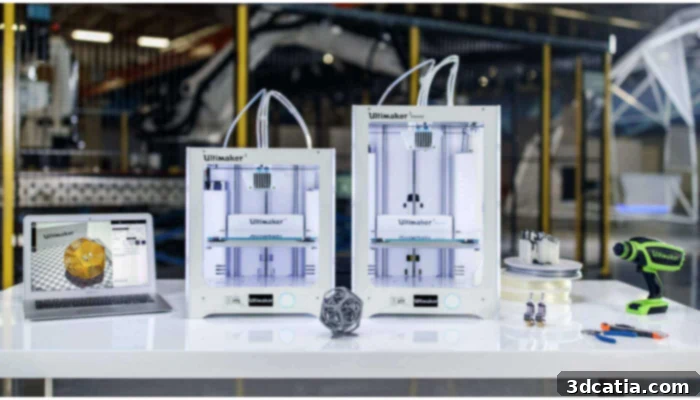
Ultimaker, a leading manufacturer of FFF (Fused Filament Fabrication) 3D printers, has announced a pivotal development that is set to propel the company into its next phase of expansion. Leading private equity firm NPM Capital has made a significant, though currently undisclosed, investment in the Dutch company. This capital injection is earmarked for several critical areas, including accelerating overall growth, intensifying product development and research & development (R&D) initiatives, and scaling marketing and sales efforts globally. The investment highlights the continued confidence in the desktop 3D printing market and Ultimaker’s strong position within it.
Jos Burger, CEO of Ultimaker, expressed his enthusiasm for the partnership, stating, “I look forward to working with NPM Capital. They have a great and solid reputation as a committed longer-term investor. NPM Capital has a flexible investment horizon focused on long term value creation.” This strategic alignment with an experienced investor like NPM Capital provides Ultimaker with not only financial resources but also valuable strategic guidance to further penetrate industrial and professional markets. The investment is expected to bolster Ultimaker’s efforts to innovate its hardware and software ecosystem, expand its global distribution network, and solidify its leadership in providing accessible, high-performance 3D printing solutions for businesses and educational institutions worldwide.
BeAM Receives €1.6 Million Cash Injection for Metal 3D Printing Innovation
BeAM, a prominent player in the additive manufacturing sector, is widely recognized for its innovative approach to directly 3D printing metal parts. The company has pioneered advanced methods utilizing Laser Metal Deposition (LMD) and Direct Energy Deposition (DED) technologies, which are particularly well-suited for creating large, complex metal components and repairing high-value parts. Its cutting-edge solutions have garnered significant attention, leading to a recent capital injection of €1.6 million from its dedicated shareholders. This latest round of investment boosts BeAM’s total capital to over €8 million, providing a strong financial foundation for future growth and technological advancement.
The infusion of capital will enable BeAM to further invest in research and development, enhance its product portfolio, and expand its market reach. As industries like aerospace, defense, and oil & gas increasingly adopt metal additive manufacturing for its ability to produce stronger, lighter, and more customized parts, companies like BeAM are poised for significant expansion. This investment underscores the growing confidence in DED/LMD technologies for industrial applications and solidifies BeAM’s position as a key innovator in the burgeoning metal 3D printing market. The sustained support from its shareholders reflects a long-term vision for the company’s impact on advanced manufacturing.
UK Poised to Generate $600 Billion and 175,000 Jobs Through 3D Printing and Industrial Digitalisation
In a period of economic uncertainty exacerbated by Brexit, the United Kingdom is actively seeking new avenues for growth and prosperity. A recently government-commissioned review on industrial digitalization offers a powerful lifeline, concluding that embracing disruptive technologies like 3D printing could unlock an astounding £455 billion ($600 billion) in economic value and create an estimated 175,000 manufacturing jobs. This comprehensive report highlights the transformative potential of Industry 4.0 technologies, including 3D Printing, Artificial Intelligence, robotics, and the Internet of Things.
The report posits that by strategically investing in and adopting these advanced technologies, Britain can significantly counteract its current negative economic pressures. 3D printing, in particular, is identified as a cornerstone of this industrial revolution, enabling on-demand production, localized manufacturing, greater customization, and more resilient supply chains. This shift towards digital manufacturing could revitalize the UK’s industrial base, fostering innovation, increasing productivity, and creating high-skilled employment opportunities. The findings serve as a compelling call to action for both government and industry to prioritize and invest in these technologies to secure a competitive and prosperous future for the UK economy.
3D Printing Predicted to Dominate Manufacturing by 2060, According to ING Report
A groundbreaking report published by the Dutch bank ING has made a bold prediction regarding the future of manufacturing, asserting that 3D printing could be responsible for creating half of all manufactured goods by the year 2060. Furthermore, the report estimates that additive manufacturing could account for approximately 25% of global trade. These projections, coming from a reputable financial institution, underscore the profound and widespread impact that 3D printing is expected to have across various sectors in the coming decades.
According to ING’s analysis, 3D printing is poised to revolutionize industries such as automotive, industrial machinery, and consumer products. The technology’s ability to facilitate on-demand production, create highly customized items, and enable more complex geometries will drive its adoption. This shift could lead to more decentralized manufacturing, reduced inventory costs, and shorter supply chains, fundamentally altering traditional production paradigms. The report highlights that as 3D printing technologies continue to advance in speed, material compatibility, and cost-effectiveness, their transformative potential will only grow, making them indispensable for global trade and industrial production by the middle of the century.
$9.29 Million Investment Fuels 3D Printed Custom Implants for Cancer Patients in Australia
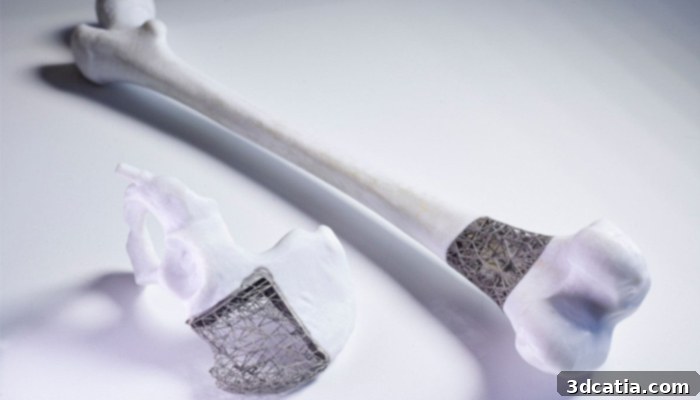
In a significant step forward for medical technology and patient care, the Australian government has launched an ambitious project valued at $9.29 million. This collaborative initiative brings together leading universities and hospitals with the explicit aim of integrating 3D printing and robotics into the production of custom bone implants for cancer patients. The project is designed to address the complex and highly individualized needs of patients requiring reconstructive surgery after tumor removal, where standard off-the-shelf implants are often inadequate.
Crucially, the project is supported by the American medical technology giant Stryker, a company specializing in advanced surgical instruments and implants. Stryker’s involvement will provide invaluable expertise and resources for the creation of these custom-made implants, leveraging their extensive experience in medical device innovation. This investment will enable the development of highly precise, patient-specific implants that can significantly improve surgical outcomes, reduce recovery times, and enhance the quality of life for cancer patients. By combining the precision of 3D printing with the automation of robotics, Australia is positioning itself at the forefront of personalized medicine and advanced surgical solutions.
Impossible Objects Raises $6.4 Million to Market Revolutionary CBAM 3D Printer
US-based company Impossible Objects has successfully secured $6.4 million in funding, a crucial step that will enable them to commence the marketing and broader commercialization of their innovative 3D printer, the Model One. This system is distinguished by its patented Composite-Based Additive Manufacturing (CBAM) technology. CBAM uniquely integrates a classic InkJet process with high-performance carbon fibers to produce parts that are not only remarkably strong but also exceptionally lightweight. This technological leap addresses a significant demand in various industries for advanced materials with superior mechanical properties.
The funding will allow Impossible Objects to expand its market presence and demonstrate the distinct advantages of the Model One. By combining the precision of inkjet deposition with the structural integrity of continuous fiber composites, CBAM technology offers a compelling alternative to traditional manufacturing methods for producing high-performance components. Target industries include aerospace, automotive, and defense, where the strength-to-weight ratio of parts is critical. This investment signifies growing confidence in CBAM’s potential to disrupt high-performance composite manufacturing and underscores the market’s appetite for novel additive manufacturing solutions.
Natural Robotics Launches Crowdfunding Success for Low-Cost SLS Printer, VIT
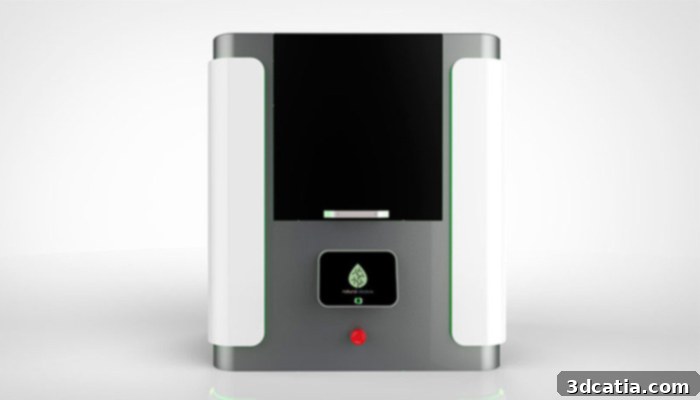
The Spanish startup Natural Robotics has made significant waves in the 3D printing community with the launch of its crowdfunding campaign for a groundbreaking new Selective Laser Sintering (SLS) 3D printer, named VIT. The campaign proved to be an instant success, raising an impressive €180,000 within just one week – a staggering eight times their initial campaign goal. This overwhelming response highlights the strong market demand for more affordable and accessible industrial-grade 3D printing technology, particularly SLS, which is renowned for producing functional, durable parts without the need for support structures.
The VIT machine operates on selective laser sintering technology and boasts a generous build volume of 250x250x250 mm, making it suitable for a wide range of applications. What truly sets the VIT apart is its aggressive pricing strategy. While its eventual launch price is projected to be €11,000, early backers could secure the machine for an introductory price of just €6,000. This price point is remarkably low for an SLS 3D printer, traditionally a technology reserved for high-end industrial applications due to its cost. Natural Robotics is effectively democratizing access to professional-grade additive manufacturing, opening up new possibilities for small businesses, educational institutions, and individual innovators who previously found SLS technology out of reach.
SLM Solutions Secures Landmark Order for Over 50 Metal 3D Printers
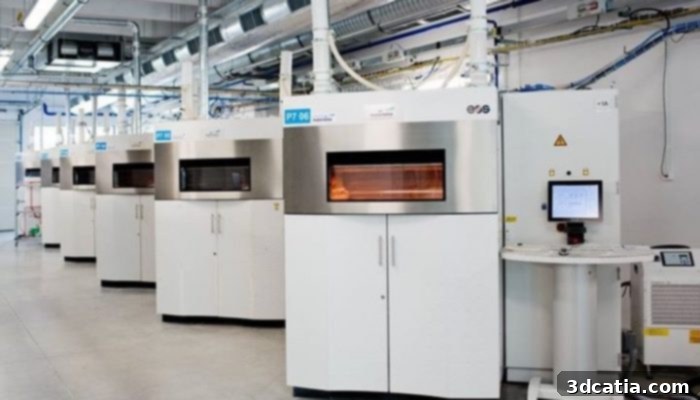
German 3D printer manufacturer SLM Solutions, globally recognized for its expertise in selective laser melting technology, has announced a landmark achievement with a major order for more than 50 printers from an undisclosed Asian customer. This significant deal underscores the accelerating adoption of metal additive manufacturing in industrial sectors, particularly in the thriving Asian market. The total value of the order is estimated to range between €31 million and €48 million, a figure that will vary depending on the specific models chosen by the customer from SLM Solutions’ diverse portfolio of high-performance machines.
The large-scale delivery of these industrial-grade metal 3D printers is scheduled to be completed by 2020. While the identity of the Chinese customer has not been publicly revealed, the magnitude of this order speaks volumes about the growing confidence in metal additive manufacturing for serial production and advanced applications. For SLM Solutions, this deal represents a substantial boost to its market share and reinforces its position as a leading provider of robust and reliable metal 3D printing solutions. It also highlights the global trend towards integrating advanced manufacturing technologies into diverse industrial processes, driving efficiency, innovation, and localized production capabilities.
Amazon Acquires Body Labs, Signaling Deeper Dive into 3D Scanning and Virtual Try-On
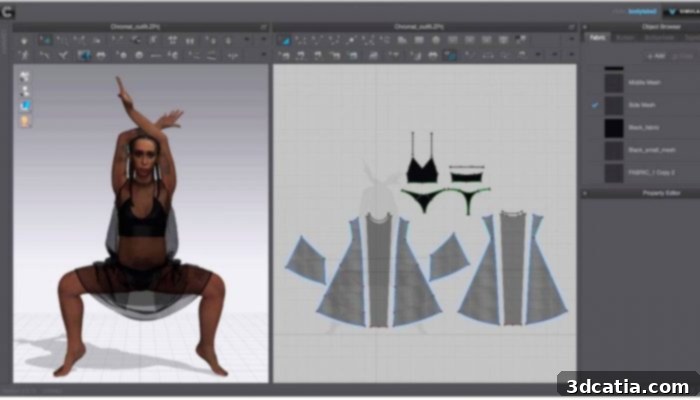
Body Labs’ software in action
In a move that signals a strategic expansion into the realm of 3D scanning and its commercial applications, Amazon announced its acquisition of Body Labs, a pioneering startup specializing in technology that can scan a person’s entire body to create detailed 3D models. This acquisition, reportedly valued between $50 million and $100 million, reflects Amazon CEO Jeff Bezos’s vision for integrating advanced 3D technology into the e-commerce giant’s vast ecosystem. Body Labs’ sophisticated software can generate accurate 3D body models from simple measurements or 2D images, capturing intricate details of human form and movement.
The potential applications of Body Labs’ technology for Amazon are extensive and transformative. One immediate and highly anticipated use case is virtual clothing try-on, which could revolutionize online apparel shopping by allowing customers to visualize how clothes fit on their unique body shape before purchase, significantly reducing returns and enhancing customer satisfaction. Beyond fashion, the technology could also be applied to personalized fitness recommendations, virtual reality experiences, or even the development of custom-fit products. This acquisition positions Amazon to leverage 3D body modeling for enhanced personalization and immersive digital experiences, further blurring the lines between the physical and virtual retail worlds.
CollPlant Secures $5 Million Investment to Advance 3D Printed Biologics
Israeli bioprocessing firm CollPlant, a leader in the development and manufacturing of recombinant human collagen (rhCollagen) for medical applications, has announced a significant financial boost. The company has successfully secured $5 million from AlphaPharma, the investment company of Austrian billionaire Martin Schlaff. This crucial investment is earmarked to further accelerate CollPlant’s efforts in the development and market maturity of its innovative 3D printed biological structures and organs. CollPlant’s proprietary rhCollagen is a key enabling material for advanced bioprinting, offering exceptional biocompatibility and versatility for tissue engineering applications.
CollPlant has been making substantial progress in bioprinting, with its technology already demonstrating advanced capabilities in creating complex biological structures. The new funds will be strategically deployed to scale up production, refine bioprinting processes, and navigate regulatory pathways for bringing these potentially life-changing products to market. This investment not only validates CollPlant’s pioneering work in regenerative medicine but also highlights the growing confidence in the commercial viability of 3D printed tissues and organs. With this backing, CollPlant is well-positioned to continue its trajectory as a frontrunner in a field that promises to revolutionize healthcare through engineered biological solutions.
Franco-German Cooperation Forges Ahead with 3D Printed Skin for Cosmetics Testing
In a compelling example of international collaboration driving innovation, German chemical giant BASF and French bioprinting specialist Poietis have intensified their partnership, signing a joint framework agreement focused on a critical ethical and scientific endeavor. The two companies are pooling their expertise to promote the accelerated development of 3D printed human skin models. This initiative is not merely a scientific pursuit but aims to address a significant ethical imperative within the cosmetics industry: the replacement of animal experiments in the testing of cosmetic products.
Poietis brings its cutting-edge laser-assisted bioprinting technology, which allows for the precise deposition of living cells in 3D structures, while BASF contributes its extensive knowledge in material science, toxicology, and skin biology. Together, they aim to create functional, biologically representative 3D printed skin models that can accurately mimic human skin’s responses to cosmetic ingredients. This innovative approach offers a humane and scientifically robust alternative to traditional animal testing, aligning with growing consumer and regulatory demands for cruelty-free product development. The partnership underscores the transformative potential of bioprinting to create sophisticated in vitro models, revolutionizing research and development practices in both cosmetics and pharmaceuticals.
Materialise Expands Production Capacity in Belgium and Poland Amidst Continued Success
Belgian additive manufacturing powerhouse Materialise, a long-standing leader in 3D printing software and services, is undergoing significant expansion to meet the surging global demand for its solutions. Driven by sustained success and a growing customer base, the company is not only bolstering its operations at its headquarters in Leuven, Belgium but is also making a substantial investment in its Polish facilities. This expansion strategy is a testament to Materialise’s robust growth trajectory and its commitment to scaling its production capabilities to serve a diverse international clientele.
The new factory in Poland is particularly noteworthy, designed to accommodate approximately 80 Selective Laser Sintering (SLS) 3D printers. Upon completion, this will establish it as the largest SLS 3D printing facility of its kind in Poland, significantly increasing Materialise’s capacity for producing highly functional, intricate plastic parts. The Belgians are strategically expanding their business in Eastern Europe, recognizing the region’s burgeoning industrial landscape and its demand for advanced manufacturing services. This expansion underscores Materialise’s ambition to maintain its leadership position in the additive manufacturing service bureau market, offering unparalleled scale and expertise in 3D printing solutions.
HP to Expand into the Metal 3D Printing Industry for High-Volume Production
In a highly anticipated announcement that sent ripples through the additive manufacturing sector, HP CEO Dion Weisler confirmed the company’s intention to enter the metal 3D printing market in 2018. While specific details remain under wraps, Weisler revealed that the US manufacturer is actively working on a new metal additive manufacturing process explicitly developed for high-volume production applications. This strategic move comes just months after the successful launch of HP’s Jet Fusion technology for plastic parts, signaling the company’s aggressive expansion strategy across the entire additive manufacturing spectrum.
HP’s entry into metal 3D printing is poised to be a game-changer. Given its established expertise in industrial-grade printing systems and its formidable R&D capabilities, HP is expected to introduce a technology that addresses current limitations in metal additive manufacturing, particularly concerning speed, cost, and part quality for mass production. This development could accelerate the adoption of metal 3D printing beyond niche applications, driving its integration into mainstream industrial supply chains. The promise of high-volume metal production from a major player like HP signifies a significant maturation of the technology and its readiness for broader industrialization, challenging existing players and potentially redefining market dynamics.
3D Systems Reports Struggles Amidst Strategic Shift
US manufacturer 3D Systems, once a pioneering force in the additive manufacturing industry, delivered disappointing news to investors with the publication of its latest quarterly report. The report indicated a 2.2% fall in revenue, settling at $15.9 million, coupled with a substantial net loss of $37.7 million, a stark increase from the previous period’s $21.4 million loss. The financial downturn sent shockwaves through the market, leading to a significant drop in the company’s stock, which plummeted by 29.7% following the announcement. These results highlight the intense competitive pressures and operational challenges faced by established players in the rapidly evolving 3D printing landscape.
The report also alluded to a “large shift of its global strategy,” suggesting that 3D Systems is undergoing a fundamental re-evaluation of its business model and market approach. This strategic pivot is likely a response to changing market demands, increased competition from both startups and larger industrial players, and the need to streamline operations for greater efficiency and profitability. While 3D Systems possesses a vast patent portfolio and a long history of innovation, these financial struggles underscore the difficulties even industry pioneers face in adapting to a dynamic market. The coming months will be crucial in observing how this strategic shift unfolds and its impact on the company’s future trajectory within the additive manufacturing sector.
The past month’s events vividly illustrate the ongoing transformation within the 3D printing industry. From advanced material science to significant investments and strategic market entries, additive manufacturing continues to push the boundaries of what’s possible, influencing everything from aerospace engineering to personalized medicine and e-commerce. The challenges and triumphs reported by these diverse companies collectively paint a picture of an industry that is both dynamic and resilient, constantly innovating to meet the evolving demands of a global market.
What do you think of the latest developments and strategic moves in the 3D printing world? Share your thoughts and engage with our community in a comment below or on our Facebook and Twitter pages! Don’t forget to sign up for our free Newsletter to receive all the latest news in 3D printing straight to your inbox and stay ahead of the curve!