
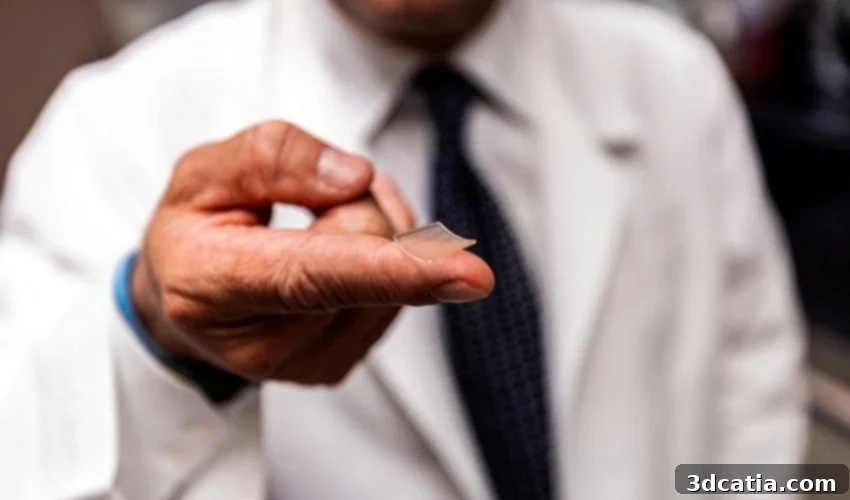
Revolutionizing Global Immunization: The Power of 3D-Printed Microneedle Vaccine Patches
The recent global health crisis underscored an urgent need for innovative and accessible medical interventions. In response, researchers worldwide have intensified their efforts to develop advanced solutions to combat infectious diseases. A significant breakthrough has emerged from a remarkable collaboration between leading scientists at Stanford University and the University of North Carolina at Chapel Hill. This pioneering team has engineered a novel 3D-printed vaccine patch, a transformative technology poised to offer superior viral protection compared to traditional vaccine injections administered via syringe. This cutting-edge approach leverages the skin’s inherent abundance of immune cells, enabling the vaccine patch to deliver a significantly enhanced immune response directly where it’s most effective.
At the forefront of this innovation are microbiologists and chemical engineers who are ingeniously refining existing RNA vaccine technologies, such as the highly effective Pfizer and Moderna COVID-19 vaccines, by integrating them into microneedle patches. This strategic development aims to address several critical challenges associated with conventional vaccination methods. According to lead study author Joseph M. DeSimone, a distinguished professor of translational medicine and chemical engineering at Stanford University and professor emeritus at UNC-Chapel Hill, “In developing this technology, we hope to set the foundation for even more rapid global development of vaccines, at lower doses, in a pain- and anxiety-free manner.” This statement highlights the ambitious goals of the project: to make vaccination more efficient, less intimidating, and globally scalable.
The traditional method of vaccine delivery, often involving hypodermic needles, presents numerous logistical and psychological barriers. These include the necessity for trained personnel, concerns about needle phobia (known as trypanophobia), and the intricate cold-chain storage requirements for many modern vaccines. The advent of the 3D-printed vaccine patch promises to circumvent these obstacles, paving the way for a more streamlined, patient-friendly, and universally accessible vaccination process. By tapping into the vast network of antigen-presenting cells found just beneath the skin’s surface, these microneedle patches can elicit a robust immune response with a significantly smaller dose of vaccine antigen, maximizing efficacy while minimizing potential side effects.
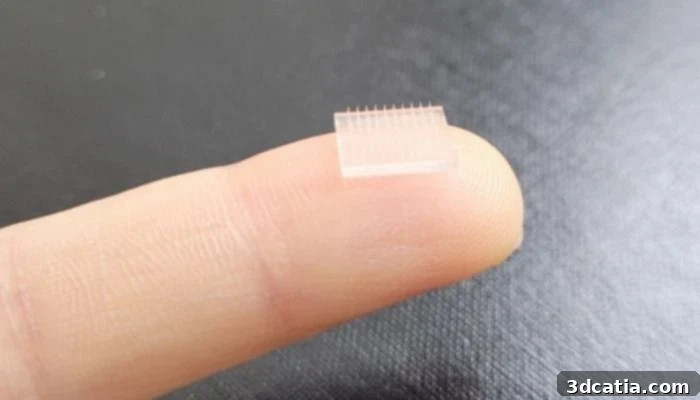
Microneedle vaccine patch that delivers a stronger immune response than a vaccine shot. (Photo Credit: University of North Carolina at Chapel Hill)
Central to the success of this innovative vaccine delivery system is the application of advanced 3D printing technology. The researchers meticulously designed and fabricated microneedles, arranged on a polymer patch, with precision that allows them to penetrate the uppermost layer of the skin just enough to effectively deliver the vaccine. This minimally invasive penetration ensures the vaccine reaches the dermal layer where immune cells are most concentrated, without reaching nerve endings that cause pain. The strategic use of 3D printing provides unparalleled flexibility in customizing the microneedle structures. This adaptability enables the development of a diverse array of vaccine patches tailored for various illnesses, extending beyond COVID-19 to include common afflictions such as influenza, measles, and hepatitis, as well as potential future pathogens.
Shaomin Tian, a lead study author and researcher in the Department of Microbiology and Immunology at the UNC School of Medicine, underscored the transformative potential of their fabrication method: “Our approach allows us to directly 3D print the microneedles which gives us lots of design latitude for making the best microneedles from a performance and cost point-of-view.” This highlights the dual benefit of 3D printing: optimizing the effectiveness of the microneedles while simultaneously streamlining the manufacturing process to reduce production costs. The microneedles themselves were ingeniously created at the University of North Carolina at Chapel Hill, utilizing a specialized CLIP prototype 3D printer. This groundbreaking Continuous Liquid Interface Production (CLIP) technology was originally invented by DeSimone himself and is commercially produced by CARBON, a prominent Silicon Valley company where he also holds a co-founder position. This connection between academic research and industrial innovation accelerates the path from laboratory discovery to practical application.
The experimental results from the study have been exceptionally promising, showcasing the vaccine patch’s remarkable efficacy. The data revealed that the vaccine patch elicited a significantly potent response from both T-cells and antigen-specific antibodies. This immune activation was observed to be an astonishing 50 times greater than the immune response generated by a traditional vaccine injection delivered subcutaneously. This profound increase in immune system engagement points to the potential for lower vaccine doses, leading to more efficient vaccine distribution and potentially reducing manufacturing bottlenecks in times of crisis. Such a dramatic improvement in immune response could redefine the standards for vaccine efficacy and protection, offering a more robust shield against various viral threats.
Beyond their superior immunological performance, these 3D-printed vaccine patches offer profound logistical advantages that could revolutionize global immunization efforts. A critical hurdle in vaccine distribution, particularly in developing regions, is the requirement for stringent cold chain storage. Many conventional vaccines, including some RNA vaccines, must be maintained at extremely low temperatures from manufacturing to administration, which poses immense challenges in areas with unreliable electricity or inadequate infrastructure. The microneedle vaccine patches, however, circumvent this issue entirely, as they do not require cold storage. This stability at ambient temperatures drastically simplifies transportation and storage, making them far more accessible to remote and underserved populations. This singular feature could significantly expand vaccination coverage and reduce wastage due to temperature excursions.
Furthermore, the design of these vaccine patches addresses another significant barrier: the need for highly trained medical professionals to administer injections. The self-administerable nature of the patch means individuals can apply it themselves, much like a common adhesive bandage, after receiving minimal instructions. This innovation can dramatically reduce the burden on healthcare systems, free up medical staff for other critical tasks, and accelerate vaccination campaigns. The researchers firmly believe that this ease of use and self-administration will lead to a substantial increase in vaccine uptake, as it removes the intimidation associated with needles and the logistical hassle of scheduling appointments at clinics. This user-centric design empowers individuals to take charge of their health in a safe and effective manner, transforming vaccination from a clinic-centric procedure into a more widely available health intervention.
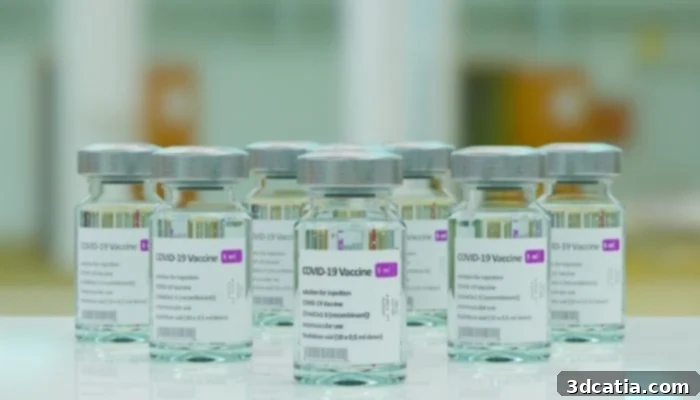
The vaccine patch does not require cold storage and can be self-administered. (Photo Credit: UnSplash/Braňo)
The implications of this 3D-printed vaccine patch extend far beyond the current pandemic. Its customizable nature means that this platform technology can be rapidly adapted for emerging viral threats or even for therapeutic applications. The ability to quickly design and manufacture specific microneedle configurations for different antigens makes it an invaluable tool for future pandemic preparedness. Imagine a future where vaccines for new strains of influenza or previously unknown viruses could be developed, produced, and deployed globally with unprecedented speed and efficiency. This innovation represents a paradigm shift in vaccine delivery, moving towards a future where vaccination is not only more effective but also more equitable and widely accessible, potentially saving countless lives by overcoming some of the most persistent barriers to global immunization.
The collaborative spirit and scientific ingenuity demonstrated by the teams at Stanford and UNC-Chapel Hill, supported by technological advancements from CARBON, underscore the power of interdisciplinary research in addressing global challenges. Their work lays a robust foundation for a new era of vaccine development and deployment, promising a future with enhanced global health security and improved public health outcomes for everyone. The 3D-printed microneedle vaccine patch is not just an incremental improvement; it is a revolutionary step forward, poised to fundamentally change how we approach vaccination and disease prevention worldwide.
What do you think of the 3D-printed vaccine patch and its potential impact on global health? We invite you to share your thoughts in a comment below or join the conversation on our Facebook and Twitter pages. Don’t forget to sign up for our free weekly newsletter, to receive all the latest news and innovations in 3D printing delivered straight to your inbox!
Cover Photo Credit: University of North Carolina at Chapel Hill