
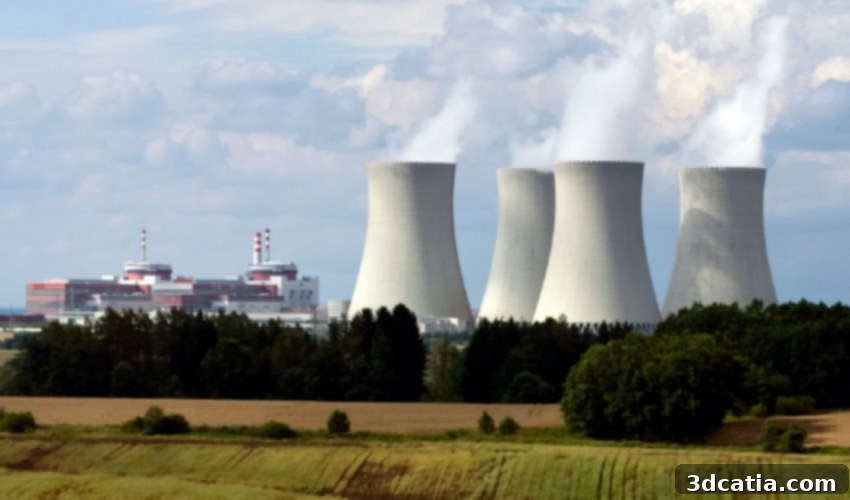
Revolutionizing Nuclear Energy: How AI and Additive Manufacturing are Powering the Future of Microreactors
The landscape of nuclear energy is on the cusp of a profound transformation, driven by innovative technologies like additive manufacturing and artificial intelligence. Earlier this year, significant strides were highlighted concerning Oak Ridge National Laboratory (ORNL) and its pioneering work on the design of the first additively manufactured nuclear reactor. This ambitious project aims to redefine how nuclear power is developed and deployed, ushering in an era of more efficient, safer, and cost-effective energy solutions. Recently, the U.S. Department of Energy (DoE) underscored its commitment to this vision by awarding a substantial grant of $800,000 to Purdue University’s College of Engineering. This crucial funding is designated to accelerate the development of this groundbreaking microreactor. What makes this initiative particularly significant is that this 3D printed reactor is poised to become the first advanced reactor to operate in the United States in over 40 years, marking a historic return to innovation in domestic nuclear energy. Purdue University’s mission, following this pivotal funding, is to develop an artificial intelligence technology specifically engineered to ensure the unparalleled quality and reliability of the components for this pioneering 3D printed nuclear reactor.
The team of distinguished scientists and engineers at Purdue University is at the forefront of driving the seamless integration of cutting-edge technologies. Their approach combines the precision of additive manufacturing, the analytical power of computational materials modeling, and the intelligence of AI to create the intricate components required for the microreactor. The rationale behind this multifaceted strategy is compelling: their overarching goal is to dramatically reduce both production costs and manufacturing time, areas where traditional methods often fall short. Additive manufacturing, with its inherent ability to create complex geometries directly from digital designs, offers the perfect solution for achieving these efficiencies. Furthermore, the strategic combination of additive manufacturing and artificial intelligence extends beyond mere cost and time savings. It is critical for realistically estimating safety risks with unprecedented accuracy, thereby bolstering public confidence and offering a pathway to significantly enhance the reliability and convenient access to clean, abundant nuclear power. This synergy between advanced manufacturing and intelligent systems promises to unlock new potentials for nuclear energy generation, making it a more viable and attractive option for future energy needs.
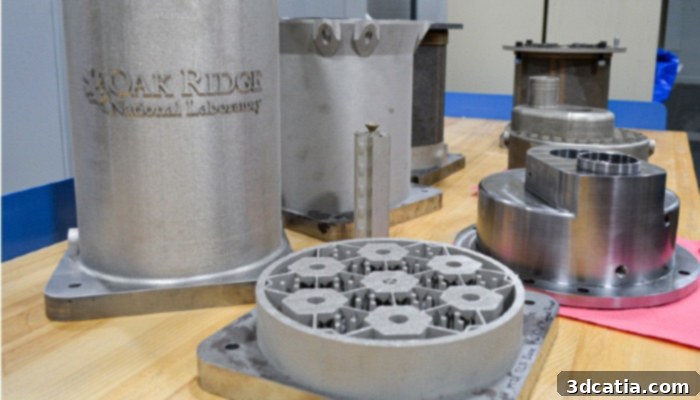
Intricately 3D printed components designed for the advanced nuclear microreactor. (Image credits: ORNL)
The integration of additive manufacturing and artificial intelligence is not merely advantageous; it is absolutely crucial for establishing the most data-rich and cost-effective qualification process for nuclear components. This innovative approach allows for real-time monitoring and adaptive control during the manufacturing process, which is essential for components destined for high-stress, high-consequence environments like a nuclear reactor. Hany Abdel-Khalik, the technical lead for this groundbreaking project and an associate professor of nuclear engineering at Purdue, eloquently articulated the significance of their work. He explained, “Purdue will fill a technological gap in the nuclear industry, reflecting a broader trend of applying AI strategies to support additive manufacturing (AM).” This statement highlights the growing recognition of AI’s potential to revolutionize industrial processes, particularly in highly regulated sectors. Abdel-Khalik further emphasized that “AM enables designs to be adjusted during manufacturing, greatly decreasing production cost and time.” This adaptive capability is a game-changer, allowing for rapid iteration and optimization that is unfeasible with conventional manufacturing methods. He concluded by outlining the core objective: “Our work is aimed at driving widespread adoption of additively manufactured reactor components by using an AI-powered software system to ensure safety and reliability.” This commitment to safety and reliability, backed by advanced AI, is paramount to gaining regulatory approval and widespread acceptance for these transformative nuclear technologies.
Purdue’s innovative solution leverages reinforcement learning, a sophisticated type of artificial intelligence that employs advanced machine learning strategies to meticulously select and optimize additive manufacturing process parameters. This approach moves beyond static, pre-programmed settings by allowing the AI to learn and adapt. Key parameters such as printing speed, laser power, melting temperature, layer thickness, and material feed rates are continuously evaluated and adjusted by the AI models to achieve optimal results. By training these AI models on vast datasets derived from experiments and simulations, the system learns to guide decision-making, ensuring that each component is manufactured to the highest possible standard of quality and integrity. This intelligent optimization minimizes defects, enhances material properties, and ultimately contributes to the overall safety and longevity of the reactor components. Kurt Terrani, the director of the Transformational Challenge Reactor (TCR) program at ORNL, underscored the collaborative nature and strategic importance of this endeavor. He commented, “The program is engaging the industry, the regulator and, in this case, universities in order to ensure an optimal approach is developed and adopted in widespread fashion.” This multi-stakeholder collaboration is vital for addressing the complex technical, economic, and regulatory challenges inherent in introducing disruptive nuclear technologies. Terrani concluded, “The technical strength of the Purdue team will shore up our ability to deliver on these goals,” highlighting the critical role Purdue’s expertise plays in realizing the ambitious vision for advanced nuclear microreactors.
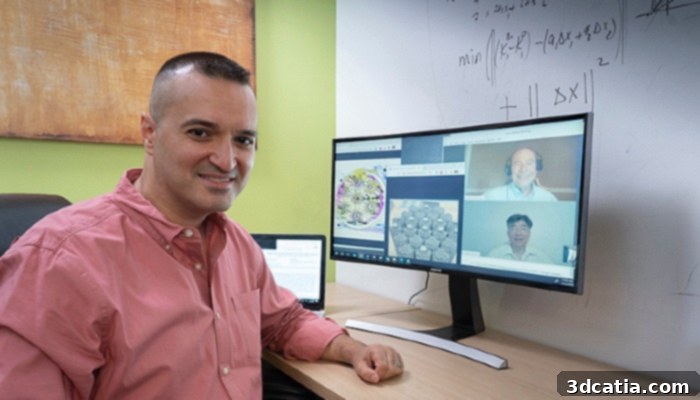
Hany Abdel-Khalik virtually collaborating with John W. Sutherland and Xinghang Zhang on the microreactor project. (Image credits: Purdue University)
The broader implications of these developments extend far beyond the laboratory, offering a transformative vision for the global energy sector. The advent of 3D printed microreactors, verified by AI-driven quality assurance, promises to unlock new paradigms for energy generation and distribution. These smaller, modular reactors are inherently safer, easier to deploy, and possess the potential to bring reliable, carbon-free energy to remote communities, industrial sites, and even support critical defense applications. Their compact size and autonomous operational capabilities make them ideal for regions lacking extensive grid infrastructure or for situations requiring energy independence. Furthermore, the ability to rapidly design, print, and qualify complex components could significantly accelerate the development cycles for future nuclear technologies, including advanced fission and fusion concepts. While challenges remain, particularly in navigating complex regulatory pathways for novel manufacturing techniques and materials, the collaborative efforts between academia, industry, and government agencies are actively addressing these hurdles. This integrated approach ensures that safety standards are not just met, but exceeded, paving the way for these advanced nuclear systems to become a cornerstone of a sustainable and resilient energy future. The project represents a national strategic investment in clean energy independence, pushing the boundaries of what is possible in nuclear engineering and advanced manufacturing.
In essence, the partnership between Purdue University, ORNL, and the Department of Energy, powered by the synergy of additive manufacturing and artificial intelligence, is not just building a nuclear reactor; it is constructing the future of clean energy. This initiative promises to deliver microreactors that are not only more cost-effective and faster to produce but also safer and more reliable than ever before. By meticulously optimizing every stage of the manufacturing process through AI, and by leveraging the unprecedented design freedom of 3D printing, the project is setting new benchmarks for nuclear component qualification and performance. The commitment to engaging all key stakeholders—from innovators and engineers to regulators and industry leaders—ensures that the optimal approach is developed and widely adopted. This holistic strategy is critical for transforming advanced nuclear energy from a promising concept into a widespread reality, contributing significantly to global efforts to combat climate change and meet growing energy demands. The progress made in this field could redefine energy security and accessibility for generations to come, truly marking a new chapter in the history of nuclear power.
What do you think of these pivotal developments in the energy sector and the potential of 3D printed nuclear reactors? We invite you to share your thoughts and insights in a comment down below or join the conversation on our Facebook and Twitter pages! Don’t forget to sign up for our free weekly Newsletter, with all the latest news and innovations in 3D printing delivered straight to your inbox!