
The “New Diamond”: Revolutionizing Personal Hygiene with 3D Printed Portable Soap Rings
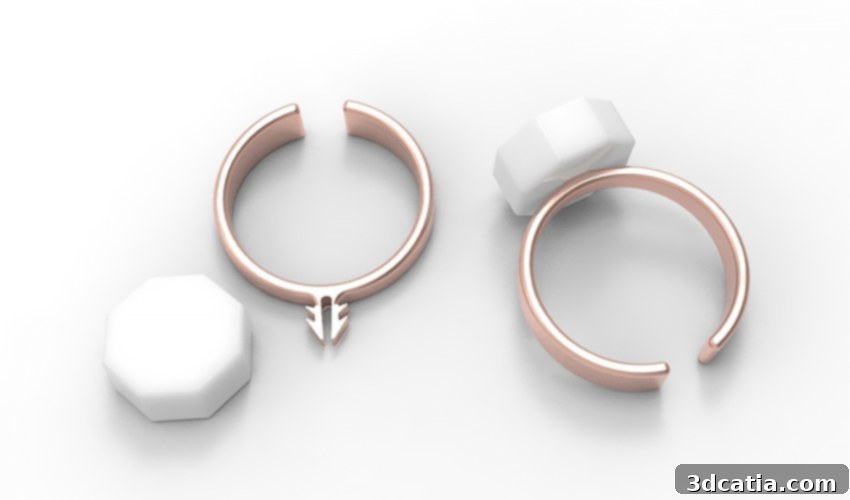
The global health pandemic fundamentally reshaped our understanding of public health and personal sanitation, sparking countless innovations aimed at curbing viral transmission. Among the most versatile technologies to emerge as a critical tool during this period was additive manufacturing, widely known as 3D printing. Its ability to produce custom, complex parts quickly and locally proved invaluable. For instance, the application of copper 3D printing on high-touch surfaces offered an ingenious method to leverage copper’s inherent antimicrobial properties, effectively halting contamination in frequently used areas. While the immediate crisis may have subsided, the lessons learned about hygiene and the potential of innovative solutions persist. New ideas continue to be explored to enhance public health measures, and one such brilliant concept stands out: a discreet, portable soap ring. This inventive device allows individuals to carry a personal supply of soap with them, ensuring immediate handwashing capability even when conventional washrooms or soap dispensers are unavailable. This original, simple, yet highly effective concept offers a versatile and temporary solution for emergencies, travel, or any situation demanding spontaneous hygiene.
In our daily lives, we frequently engage in various activities in public settings – from parks and markets to public transport – where access to proper handwashing facilities is often limited or entirely absent. This common predicament leaves many feeling vulnerable and unable to maintain optimal hand hygiene on the go. Recognizing this pervasive challenge, industrial designer Sebastián Granotich envisioned and subsequently developed “The New Diamond.” This innovative product was conceived as a safe, practical, and easily accessible tool for daily personal sanitation, perfectly suited to the demands of the post-pandemic world. Granotich introduced his groundbreaking design in a Wikifactory contest, a platform dedicated to fostering the development of products that promote social distancing and robust health measures. His proposal quickly garnered significant attention for its elegant simplicity and profound utility. Following his successful presentation and victory in the competition, Granotich reflected on the judges’ feedback, stating: “The answer I got was that, although there were other projects that were more complete, they liked its simplicity for using an object that everyone knows.” This endorsement underscored the power of his design: an intuitive concept that leverages a familiar object to address a critical, widespread need, making advanced hygiene accessible to all.

The new diamond
Can anyone make their own soap ring?
One of the most appealing aspects of “The New Diamond” is its incredible accessibility for DIY enthusiasts and anyone with an interest in personal fabrication. Creating your own portable soap ring is surprisingly straightforward, primarily requiring access to an FDM 3D printer – the most common and user-friendly type of consumer 3D printer. These machines are ideal for working with standard thermoplastics, which are plastic materials that become pliable when heated and solidify when cooled, making them perfect for layering in 3D printing. While basic PLA (Polylactic Acid) or ABS (Acrylonitrile Butadiene Styrene) plastics are perfectly suitable and widely available, for enhanced hygiene and peace of mind, it is highly recommended to opt for anti-virus copper plastic filament if possible. These specialized filaments are infused with copper particles, leveraging copper’s well-documented antimicrobial properties to further reduce bacterial and viral contamination on the surface of the ring itself. This adds an extra layer of protection, making your portable hygiene solution even more effective.
The overall cost associated with producing your own soap ring will vary depending on several factors, including the specific 3D printer model you use and, most significantly, the chosen printing material. Entry-level FDM printers can be quite affordable, making the technology accessible to a broad audience. Materials like PLA are generally inexpensive, while more specialized filaments like copper-infused plastics might command a higher price point. However, given the small size of the ring, the material cost per unit remains very low, making it a highly economical solution for personal hygiene. Before embarking on the manufacturing process, you’ll need to precisely measure your finger to select the correct ring size. This ensures comfort and a secure fit for daily wear. Once you have your size, you can download the appropriate STL file – a standard file format for 3D models – from the project’s website. This file is then processed through a slicing software (often referred to colloquially as a “laminator” in some regions, but technically a slicer), which translates the 3D model into detailed instructions for your 3D printer. After the slicing process, you simply load the filament into your printer and initiate the print. The resulting ring structure will be ready in a relatively short amount of time, a testament to the efficiency of additive manufacturing. Once the 3D-printed ring base is complete, the next step involves sourcing or creating a small piece of soap that fits snugly into the model. The market offers a wide array of mini soap formats, and many artisan producers craft small, decorative soap pieces that are perfectly suited for this innovative ring design. If readily available options are scarce, a practical and rewarding alternative is to create your own custom soap piece using a simple silicone mold and your preferred soap base.
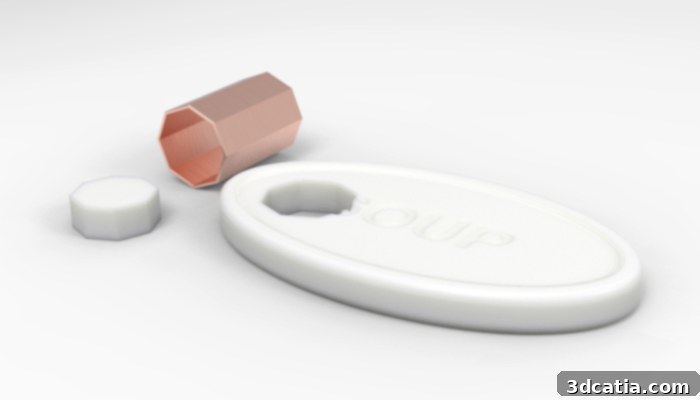
Once you have successfully prepared the small piece of soap, you must follow a series of straightforward steps to securely integrate it into the 3D printed ring structure. These detailed instructions, complete with visual guides, are conveniently available on the project’s official website, ensuring a smooth and hassle-free assembly process. With the soap firmly nestled inside the ring, your personalized “New Diamond” is complete and ready for immediate use! A significant advantage of this DIY approach is the freedom it offers for personalization. Users can choose the color of the plastic filament for the ring, allowing them to match it with their personal style or even the color of the soap they intend to use, creating a unique and aesthetically pleasing hygiene accessory. This soap ring boasts an exceptionally economical design, making it affordable to produce at home. Its ingenious structure is not only easy to create, specifically designed to fit individual finger sizes, but also eliminates the need for any support structures during the 3D printing process. This translates to less material waste and a simpler post-processing experience. The primary benefit of this innovation is its unparalleled portability: you can now effectively clean your hands anytime, anywhere, even if conventional washrooms are nowhere in sight, provided you have a small amount of water available. To delve deeper into this ingenious project, explore additional features, and download the necessary 3D models to create your own “New Diamond,” we encourage you to visit the official Wikifactory page for Sebastián Granotich’s project HERE.
The “New Diamond” represents more than just a simple gadget; it’s a testament to how creative thinking and accessible technology like 3D printing can empower individuals to take control of their personal hygiene, even in the most unconventional settings. It offers a practical, sustainable, and highly customizable solution for on-the-go cleanliness, promoting better health practices in an increasingly mobile world. We’re eager to hear your thoughts on this innovative approach to personal sanitation. Would you consider 3D printing your own portable soap ring to enhance your daily hygiene routine or for your next adventure? Perhaps you have other ingenious ideas for leveraging additive manufacturing to solve everyday challenges. Share your insights, experiences, and creative solutions with us in a comment below, or connect with our vibrant community on our Facebook and Twitter pages! Don’t miss out on the latest advancements and inspiring projects in the world of 3D printing; sign up for our free weekly Newsletter and get all the cutting-edge news delivered straight to your inbox!