

Lockheed Martin and Sintavia Forge Strategic Alliance to Advance Metal Additive Manufacturing in Aerospace and Defense
The landscape of aerospace and defense manufacturing is undergoing a profound transformation, driven by innovative technologies like metal additive manufacturing (AM). This advanced form of 3D printing offers unparalleled capabilities for rapidly producing complex spare parts, functional prototypes, and critical components, fundamentally reshaping supply chain management and operational agility. Recognizing the immense value this technology brings, leading companies worldwide are strategically investing to harness its full potential. In a significant development, aerospace and defense giant Lockheed Martin has announced a groundbreaking collaboration with Sintavia, a specialist in advanced additive manufacturing, aimed at further integrating and advancing metal 3D printing technology across Lockheed Martin’s extensive product portfolio. This partnership underscores a shared commitment to innovation, efficiency, and enhancing national defense capabilities through cutting-edge manufacturing processes.
Lockheed Martin, a venerable American aerospace, arms, defense, information security, and technology corporation, stands as a pillar of global security and technological advancement. With a vast workforce of approximately 155,000 employees worldwide, the company is at the forefront of developing sophisticated aircraft, space systems, missiles, and other defense solutions. Its relentless pursuit of innovation has led it to partner with Sintavia, one of its critical additive manufacturing suppliers. Sintavia distinguishes itself as a digital industrial company renowned for its comprehensive design and manufacturing technology services, with a strong emphasis on sustainability. Their expertise spans various critical areas, including high-performance heat transfer systems, advanced propulsion systems, and efficient power generation components, all vital for modern aerospace and defense applications.
As the largest pure-play additive manufacturer exclusively focused on advanced propulsion systems for flight and launch Original Equipment Manufacturers (OEMs), Sintavia brings an exceptional depth of industry expertise and invaluable experience to this collaboration. Their specialized focus on highly demanding applications means they possess unique insights into material science, process control, and part qualification — areas that are paramount for the stringent requirements of the aerospace sector. This strategic alliance is poised to leverage Sintavia’s specialized knowledge and manufacturing prowess with Lockheed Martin’s extensive engineering capabilities and vast program scope, paving the way for revolutionary advancements in metal additive manufacturing.
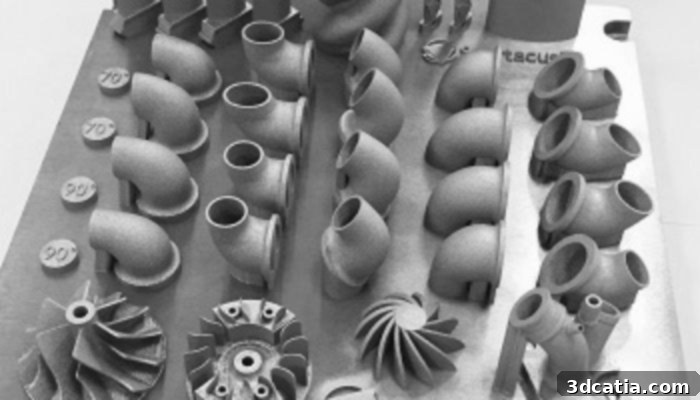
Metal additive manufacturing is used for aerospace to create prototypes and spare parts. (Photo credit: Farinia Group)
The collaboration between Lockheed Martin and Sintavia is set to explore and refine a diverse array of advanced additive manufacturing technologies. These include well-established methods such as laser powder bed fusion (LPBF), which is highly valued for its ability to produce complex geometries with high precision, and electron beam-directed energy deposition (Electron Beam DED), known for its capacity to build large parts and repair existing components using a wire or powder feedstock. Additionally, the partnership will delve into friction stir AM, a solid-state additive manufacturing process that offers unique advantages in producing parts with excellent material properties, often used for dissimilar material joining or repair applications. Each of these technologies brings specific strengths to the table, allowing for tailored solutions depending on the geometric complexity, material requirements, and desired performance characteristics of the aerospace components.
Lockheed Martin’s ambitious goal is to strategically harness these sophisticated technologies to significantly improve the application and efficiency of metal additive manufacturing within the demanding aerospace sector. This initiative is not isolated but is firmly aligned with broader national strategic objectives, building on the critical ‘AM Forward’ initiative launched by the White House. ‘AM Forward’ is a visionary project designed to bolster America’s manufacturing base by empowering small and medium-sized manufacturers to adopt additive manufacturing technologies. The program aims to create new job opportunities, foster innovation, and, critically, enhance the resilience and security of domestic supply chains for key industries, including defense. This proactive approach by the U.S. government, in collaboration with industry leaders, highlights the strategic importance of advanced manufacturing in maintaining economic competitiveness and national security.
The significance of ‘AM Forward’ cannot be overstated in the current global economic and geopolitical climate. By encouraging greater adoption of additive manufacturing, the initiative seeks to onshore production, reduce reliance on foreign supply chains, and accelerate the development of next-generation defense capabilities. Lockheed Martin’s involvement, alongside other initial participants like GE Aviation, Honeywell, Raytheon, and Siemens Energy, signals a unified effort by industry leaders to support and expand this vital national endeavor. These collaborations are essential for driving down costs, improving lead times, and ensuring that the United States maintains its competitive edge in advanced manufacturing, ultimately securing a robust industrial base for the future.
Brian Neff, Sintavia’s visionary founder and CEO, articulated the core objectives of this powerful alliance. “Sintavia and Lockheed Martin are committed to improving the capability, agility and competitiveness of the defense industrial supply base,” Neff stated. He emphasized the direct impact of their combined efforts: “Our partnership with Lockheed Martin seeks to identify and streamline manufacturing inefficiencies, specifically in the production of flight critical structures.” This statement highlights the partnership’s focus on high-stakes components, where even minor improvements in manufacturing processes can yield substantial benefits in terms of performance, reliability, and cost-effectiveness for Lockheed Martin’s advanced systems. This targeted approach is crucial for accelerating the qualification and certification of additively manufactured parts for flight, ensuring they meet the rigorous standards demanded by aerospace applications.
The integration of additive manufacturing in the production of flight-critical structures is a game-changer for the defense industry. It allows for the creation of optimized designs that are lighter, stronger, and more thermally efficient than traditionally manufactured parts. This leads to improved fuel efficiency for aircraft, enhanced performance for propulsion systems, and increased payload capacity for space vehicles. Furthermore, the ability to rapidly produce spare parts on demand significantly reduces the logistical tail and lifecycle costs associated with maintaining complex fleets and systems, a critical advantage for defense operations globally. The collaboration will undoubtedly push the boundaries of what is currently achievable in advanced aerospace component manufacturing, fostering innovation across the entire value chain.
Further echoing the strategic importance of this collaboration, David Tatro, vice president for Operations Process Transformation at Lockheed Martin, underscored the company’s commitment to national initiatives and its overarching vision. “Lockheed Martin’s collaboration with Sintavia demonstrates our dedication to the White House’s AM Forward campaign in reducing overall operating costs and strengthening our domestic supply chain, efforts that are in line with our 21st Century Security vision,” Tatro affirmed. This “21st Century Security” vision represents Lockheed Martin’s proactive approach to addressing evolving global threats and technological challenges. It encapsulates a commitment to innovation, digital transformation, and securing critical supply chains to ensure the United States and its allies maintain a decisive advantage in an increasingly complex world. The partnership with Sintavia is a tangible manifestation of this forward-looking strategy, aiming to ensure long-term resilience and technological superiority.
The move by Lockheed Martin and Sintavia is part of a broader industry trend towards deeper integration of metal additive manufacturing within the aerospace and defense sectors. Numerous similar projects are already underway, demonstrating the widespread recognition of AM’s transformative potential. For instance, Velo3D’s integrated metal solution has been instrumental in enabling manufacturers to produce highly complex, mission-critical parts with unprecedented design freedom and repeatability. This kind of end-to-end solution is vital for meeting the rigorous certification requirements of aerospace, ensuring consistency and quality from design to final part.
Across the Atlantic, governments are also heavily investing in these technologies. A notable example is the contract of £3-5 million offered by the UK Ministry of Defence to produce certified metal parts using additive manufacturing. Such investments highlight the strategic imperative for nations to develop indigenous capabilities in advanced manufacturing, ensuring readiness and reducing reliance on external sources for critical components. These projects, including the Lockheed Martin-Sintavia partnership, are not just about making parts faster or cheaper; they are about fundamentally enhancing capabilities, securing supply chains, and driving innovation that will define the future of defense and space exploration. For more comprehensive information on this pivotal collaboration with Sintavia, interested parties can refer to Lockheed Martin’s official press release, which is available HERE.
This landmark partnership between Lockheed Martin and Sintavia marks a significant leap forward for metal additive manufacturing in the aerospace and defense industries. It promises to unlock new efficiencies, drive technological breakthroughs, and solidify the resilience of critical supply chains, ultimately contributing to a more secure and technologically advanced future. The ongoing commitment to innovation from both companies, coupled with strategic alignment with national initiatives like ‘AM Forward,’ ensures that the benefits of this collaboration will extend far beyond their immediate operational goals, impacting the broader industrial base and enhancing global security capabilities.
What are your thoughts on Lockheed Martin’s strategic partnership with Sintavia to advance metal additive manufacturing? Do you believe these collaborations are essential for the future of aerospace and defense? Share your insights and opinions in a comment below or join the discussion on our Facebook and Twitter pages. To stay updated with all the latest advancements and news in 3D printing, don’t forget to sign up for our free weekly newsletter, delivered straight to your inbox!
Cover photo credits: Lockheed Martin