
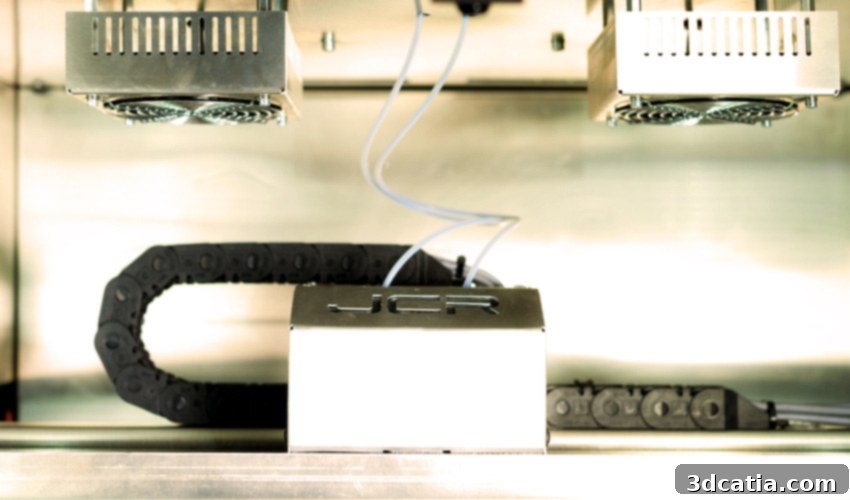
Sicnova JCR 3D Printers: Bridging the Gap Between Desktop and Industrial Additive Manufacturing
The landscape of industrial 3D printing is dominated by well-established players, including pioneers like 3D Systems and innovative giants such as HP with its groundbreaking Multi Jet Fusion technology. These companies offer robust, high-performance solutions tailored for large-scale production and complex applications. However, between the accessible world of desktop 3D printers and the high-end industrial behemoths, a significant gap often exists. Many businesses and professionals seek a solution that offers industrial-grade capabilities—reliability, larger build volumes, and advanced material compatibility—without the prohibitive cost and complexity of the absolute top-tier machines. We believe we’ve discovered a compelling answer to this market need in the JCR 3D printers developed by the Spanish company, Sicnova.
Based in Jaén, Spain, Sicnova 3D has steadily risen to become one of the leading manufacturers of industrial 3D printers. Their strategic partnerships with global entities like XYZPrinting, XponentialWorks, Techniplast, and others underscore their growing influence and technical prowess. This Andalusian company’s journey in the additive manufacturing sector began remarkably early in 2006, sparked by a collaborator’s discovery of the immense potential of additive manufacturing through a television program. This early entry provided them with invaluable experience and insights that would later shape their innovative approach to 3D printer development.
Sicnova’s Evolution: From Distribution to Pioneering R&D
Sicnova’s path to becoming a respected printer manufacturer was paved through years of extensive industry experience. For almost a decade, they served as a successful distributor for ZCorp, gaining deep insights into the market’s demands and the intricacies of 3D printing technology. This foundational period was followed by a strategic shift, as Sicnova transitioned to distributing printers from 3D Systems, further broadening their understanding of industrial-grade additive solutions.
By 2014, Sicnova recognized an opportunity to push beyond distribution and embark on ambitious new projects. The first of these initiatives was the establishment of a state-of-the-art ‘Testing Laboratory.’ This facility became a crucial hub where a wide array of 3D printing brands and technologies were rigorously evaluated. Through this exhaustive testing process, Sicnova meticulously analyzed the strengths and weaknesses of various machines, from desktop units to more professional systems. This hands-on experience not only deepened their technical expertise but also informed their subsequent decision to expand their product catalog, incorporating reputable brands such as Ultimaker, Markforged, B9Creations, Shining 3D, and HP. This comprehensive market insight was instrumental in identifying unmet needs and defining the vision for their own line of printers.
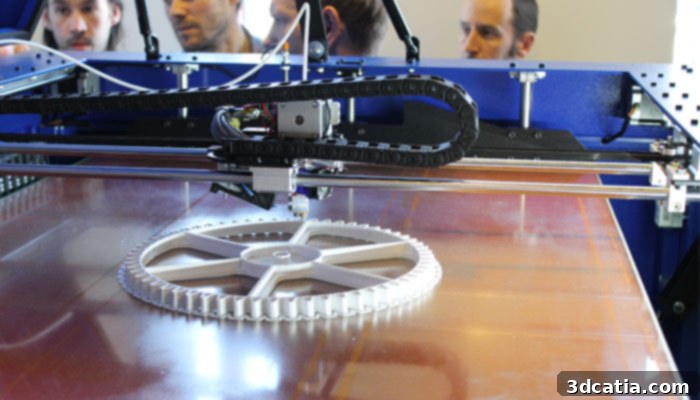
The second pivotal project for Sicnova was the creation of their dedicated Research and Development (R&D) department. Leveraging their extensive years of experience and the profound knowledge accumulated through their distribution and testing activities, Sicnova’s engineers possessed the requisite expertise to embark on designing and manufacturing their own line of 3D printers. This bold move was a direct response to the recurring needs and expressed desires of users within the additive manufacturing community. It was from this foundation that the innovative JCR 3D printers were born. These industrial FDM 3D printers were specifically engineered to strike an optimal balance, offering industrial capabilities and significant printing volumes at a more accessible price point. The flagship JCR 1000 boasts an impressive build volume of 1000x600x600 mm, while the JCR 600 offers a generous 580x400x500 mm. The quality and market appeal of these machines were quickly recognized, with XYZPrinting selecting both models for distribution under its own respected brand.

The JCR 1000 3D printer, offering large-format industrial FDM capabilities.
The JCR Series: Reliable, Large-Volume FDM for Industry
The JCR series embodies Sicnova’s vision for practical, industrial additive manufacturing. Ángel Llavero, Sicnova’s CEO, articulated the philosophy behind these machines, stating, “This line of JCR 3D printers has been evolving to meet precisely what customers seek in additive manufacturing: reliable machines with large volume capacity, capable of working with technical materials, and robust enough for industrial applications such as tooling, the manufacture of final pieces, and rapid prototyping.” This statement perfectly encapsulates the printers’ core strengths and their strategic market positioning. The JCR 3D printers are not just about size; they are about delivering consistent, repeatable results that industries can depend on for critical applications. Their design focuses on durability and ease of use, making them ideal for integration into demanding production environments where uptime and precision are paramount.
Sicnova’s strategic focus on FDM technology is a deliberate choice, based on the belief that Fused Deposition Modeling will continue to be a dominant force in 3D printing due to its versatility, cost-effectiveness, and material compatibility. This commitment to FDM is further reinforced by Sicnova’s dedicated efforts in developing a wider range of technical materials specifically optimized for these 3D printers. The development of advanced, engineering-grade materials is crucial for expanding the applicability of FDM technology beyond prototyping into functional parts and end-use components. These materials, including high-performance thermoplastics, composites, and filled polymers, are designed to offer enhanced mechanical properties, thermal resistance, and chemical stability, thereby unlocking new possibilities in additive manufacturing across various industrial sectors.
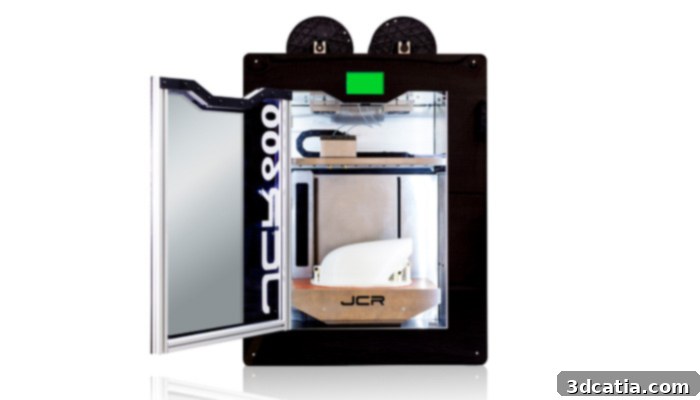
The JCR 600 3D printer, offering versatile industrial printing solutions.
Transforming Industries: Applications of JCR 3D Printers
The applications of Sicnova’s JCR 3D printers are concentrated in sectors where robust, large-format components and functional prototypes are essential. Industries such as automotive, aeronautical, and metalworking stand out as the primary beneficiaries of the JCR series’ capabilities. In these demanding environments, the ability to produce high-quality tooling, manufacturing aids, jigs, and fixtures swiftly and cost-effectively is a game-changer. For example, in the automotive industry, JCR printers can produce large prototypes for dashboards, door panels, or engine components, facilitating faster design iterations and reducing time-to-market. They are also ideal for creating custom jigs and fixtures for assembly lines, improving efficiency and precision.
The aeronautical sector benefits immensely from the JCR’s capacity for creating large functional prototypes and specialized tooling. This allows engineers to test aerodynamics, fit, and form of complex parts before committing to expensive traditional manufacturing processes. The ability to print large custom parts for maintenance, repair, and overhaul (MRO) operations also offers significant advantages. In the metal industries, JCR printers support the creation of patterns for sand casting, molds for composites, and specialized fixtures for welding or machining, driving innovation in traditional manufacturing workflows. Sicnova 3D’s commitment to meeting these high industry standards is evident in their collaborations with globally renowned brands such as Airbus, John Deere, and Volkswagen during the development of their printers. These partnerships ensured that the JCR machines were designed with real-world industrial challenges and performance requirements in mind, guaranteeing their relevance and effectiveness.
Future-Proofing Additive Manufacturing: Sicnova’s Vision
Looking ahead, Sicnova’s strategic roadmap for future JCR 3D printers is clear and focused. The company plans to continue its emphasis on FDM technology, pushing the boundaries of what these machines can achieve. A key objective is the development of even larger format FDM machines, catering to an increasing demand for truly massive printed parts across various industries. This expansion in build volume will be complemented by a relentless pursuit of enhanced reliability and stability, crucial attributes for any industrial-grade equipment operating in continuous production environments.
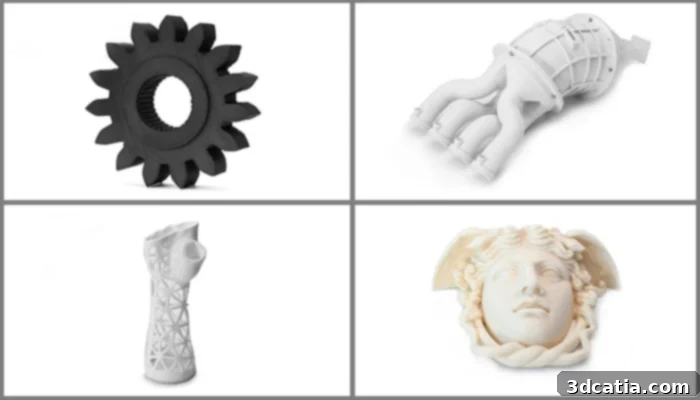
Sicnova’s large volume 3D printers are critical in sectors such as aerospace and automotive for prototyping and tooling.
Furthermore, Sicnova plans to deepen its specialization in the development of technical materials and sophisticated hardware upgrades. This dual focus ensures that their printers can handle an ever-wider array of advanced polymers and composites, opening up new possibilities for functional applications and challenging design requirements. By continuously innovating in both materials science and machine engineering, Sicnova aims to ensure that their JCR printers remain at the forefront of the mid-range industrial FDM market, offering unparalleled performance and value.
Ángel Llavero further elaborated on this vision, stating, “We understand that machines like the Ultimaker cover a market niche for more cost-effective solutions without sacrificing quality, and we know that for very large volumes of pieces, options like HP’s Multi Jet Fusion exist. We are strategically positioned in between these two extremes, creating pieces of a certain size and quality that inspires confidence. Our ambition at Sicnova 3D is to become that trusted global brand worldwide.” This statement perfectly encapsulates Sicnova’s unique market position: offering an accessible yet industrial-grade solution that bridges the gap between consumer-level and high-end enterprise systems. They are targeting a segment where industrial quality, large build volumes, and advanced material capabilities are needed, but at a more approachable price point than the highest-tier machines, making advanced additive manufacturing accessible to a broader range of businesses.
Why Choose Sicnova JCR 3D Printers?
For businesses seeking to harness the power of additive manufacturing without the significant investment typically associated with top-tier industrial systems, Sicnova JCR 3D printers present a compelling proposition. They offer a unique blend of affordability, substantial build volumes, and the reliability necessary for demanding industrial applications. Their focus on FDM technology, combined with ongoing material and hardware development, ensures versatility and future-proofing. Whether you are in the automotive, aerospace, or general manufacturing sector, the JCR series provides a robust solution for everything from rapid prototyping and custom tooling to the production of functional end-use parts. By choosing Sicnova, companies can confidently scale their additive manufacturing capabilities, driving innovation and efficiency across their operations.
You can discover more about their innovative solutions and product range by visiting their official website here.
What are your thoughts on Sicnova’s approach to industrial 3D printing? Share your opinions in a comment below or engage with us on our Facebook and Twitter pages! Don’t miss out on the latest advancements in additive manufacturing—sign up for our free weekly Newsletter to receive all the breaking news directly in your inbox!