
Revolutionizing Furniture Design: Nagami’s Avant-Garde 3D Printed Chairs Debut at Milan Furniture Fair
The world of design is constantly evolving, driven by technological advancements that push the boundaries of creativity and functionality. Among these innovations, large-scale 3D printing stands out as a transformative force, enabling designers to realize previously unimaginable forms. This paradigm shift was vividly showcased at the prestigious Milan Furniture Fair, held from 17 to 22 April, where the Spanish design firm Nagami unveiled a collection of truly original 3D printed chairs. Specializing in large-scale additive manufacturing, Nagami collaborated with several globally renowned designers and studios, including the iconic Zaha Hadid Architects, to present a project titled “Brave New World: Redesigned Design and Large-Scale Robotic 3D Printing.” This ambitious undertaking not only highlighted the aesthetic potential of additive manufacturing but also underscored its capacity for creating functional, sustainable, and highly artistic pieces that challenge conventional notions of furniture production.
Nagami, a pioneering company at the forefront of computational design and fabrication, has consistently demonstrated how robotics and 3D printing can be leveraged to produce objects of significant scale and complexity. Their approach transcends traditional manufacturing limitations, offering unparalleled freedom in design, material usage, and production efficiency. By partnering with leading figures in architecture and design, Nagami aims to bridge the gap between digital creation and physical realization, bringing to life pieces that are both visually striking and structurally innovative. The Milan Furniture Fair served as the perfect platform for this unveiling, drawing an international audience keen to witness the future of interior design and product development. The firm’s commitment to exploring novel methods of production positions them as a key player in shaping the next generation of furniture and architectural components.
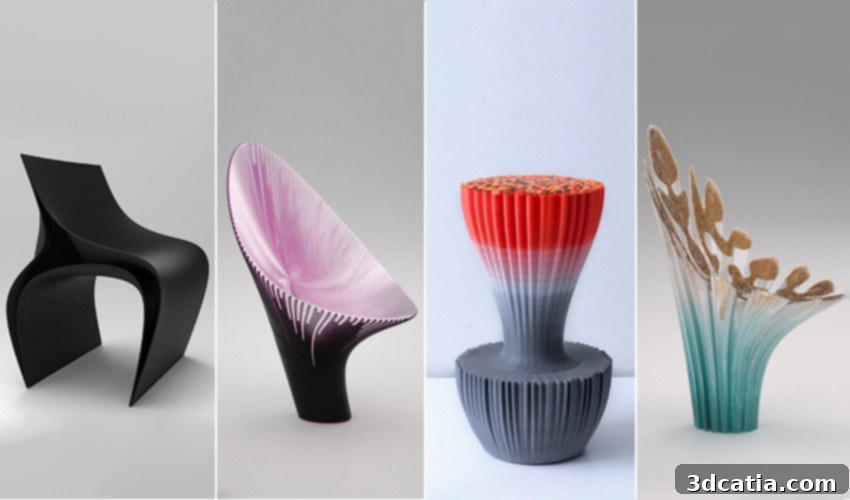
The collection presented in Milan comprises four distinct models of avant-garde chairs, each reflecting the unique vision of its respective designer while adhering to Nagami’s core philosophy of pushing technological boundaries. These groundbreaking pieces include Rise and Bow, both conceptualized by the visionary team at Zaha Hadid Architects; Robotica TM, a masterpiece by the celebrated industrial designer Ross Lovegrove; and Peeler, an innovative creation by digital artist and designer Daniel Widrig. All four models were meticulously fabricated using large-scale robotic 3D printing techniques, showcasing the versatility and precision that this advanced manufacturing process offers. The integration of cutting-edge technology with high-calibre design talent resulted in a collection that is not merely furniture but rather a series of sculptural expressions, each telling a story of digital craftsmanship and material innovation.
The Avant-Garde Collection: A Closer Look at Nagami’s 3D Printed Masterpieces
The project “Brave New World: Redesigned Design and Large-Scale Robotic 3D Printing” represents a significant milestone in the journey towards fully integrated digital fabrication in furniture design. It highlights how parameters such as material efficiency, geometric complexity, and structural integrity can be optimized through algorithmic design and robotic execution. Each chair in this collection is a testament to the potential of additive manufacturing to create objects that are not only aesthetically pleasing but also inherently intelligent in their form and function. By embracing these advanced technologies, Nagami and its collaborators are setting new standards for what is possible in the realm of designed objects, transforming the very essence of how furniture is conceived, produced, and experienced.
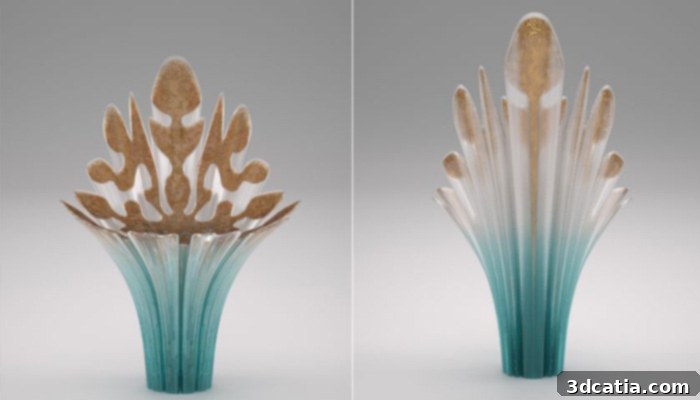
The Rise chair, showcasing innovative 3D printing technology and organic design
Rise and Bow: Sculptural Forms by Zaha Hadid Architects
The *Rise* and *Bow* chairs, conceptualized by Zaha Hadid Architects, embody a seamless fusion of architectural grandeur and innovative manufacturing. These two chairs were brought to life through a sophisticated robotic arm system capable of extruding biodegradable plastic pellets, demonstrating a commitment to environmental responsibility alongside design excellence. Their designs are meticulously optimized not only to fulfill their primary function of seating but also to evoke the organic elegance of natural floral structures. The chairs intricately incorporate vibrant colours and fluid shapes in an extraordinarily innovative manner, making them far more than mere utilitarian objects. They represent a dialogue between nature and technology, where the rigid constraints of traditional manufacturing are dissolved, allowing for the creation of forms that possess an almost liquid grace.
Zaha Hadid Architects, renowned for their distinctive curvilinear forms and futuristic vision, found a perfect collaborator in Nagami’s large-scale 3D printing capabilities. The *Rise* and *Bow* chairs showcase their signature style, translating complex digital models into tangible, ergonomic, and breathtaking pieces. The use of biodegradable plastic pellets speaks to a growing imperative for sustainable design practices, where the entire lifecycle of a product, from conception to decomposition, is considered. The robotic extrusion process allows for precise material deposition, building up intricate layers that form the chair’s robust yet lightweight structure. Each curve and contour is carefully crafted to provide both visual appeal and comfortable support, demonstrating how aesthetic ambition and practical application can coexist harmoniously in the realm of additive manufacturing. These chairs are not just for sitting; they are pieces of art that redefine the very essence of modern furniture design.
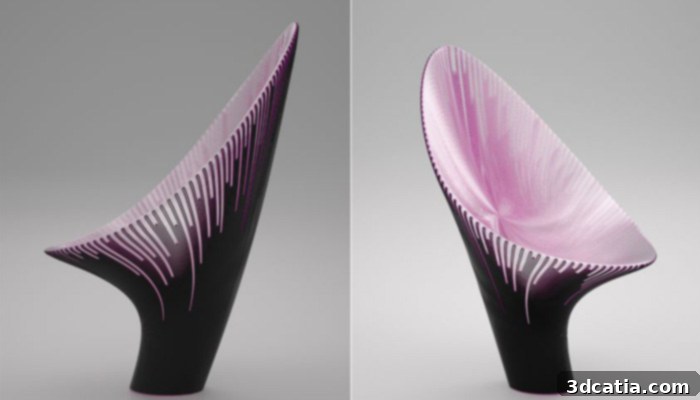
The Bow Chair, an exemplar of sustainable and complex 3D printed furniture design
Robotica TM: Ross Lovegrove’s Fusion of Robotics and Botany
The *Robotica TM* stool, designed by the iconic Ross Lovegrove, exemplifies versatility and a profound connection between mathematics, nature, and advanced robotics. Lovegrove, known for his organic-inspired designs and biomorphic forms, brings his signature aesthetic to this 3D printed piece. The stool features a captivating 360° structure, its geometry inspired by complex mathematical principles, yet it manages to retain a natural, almost botanical feel. The design ingeniously combines elements of robotics with the graceful fluidity found in nature, creating an elegant and highly functional object. This piece transcends the typical definition of a stool, offering a dynamic seating solution that stimulates thought and interaction.
What truly sets *Robotica TM* apart is its innovative functionality. Beyond its striking visual appeal, the stool incorporates heat-resistant silicone inserts, making it an ideal and practical piece of furniture for serving hot dishes. This clever addition transforms the stool into a multi-purpose item suitable for various contemporary living spaces, from informal dining areas to creative workspaces. The fusion of elegant design with such practical features demonstrates the boundless possibilities of large-scale 3D printing, allowing for the integration of diverse materials and functions within a single, complex form. Lovegrove’s ability to draw inspiration from the unseen forces of nature and combine them with cutting-edge manufacturing processes results in a piece that is not just a stool, but a conversation starter, a functional sculpture, and a testament to intelligent design.
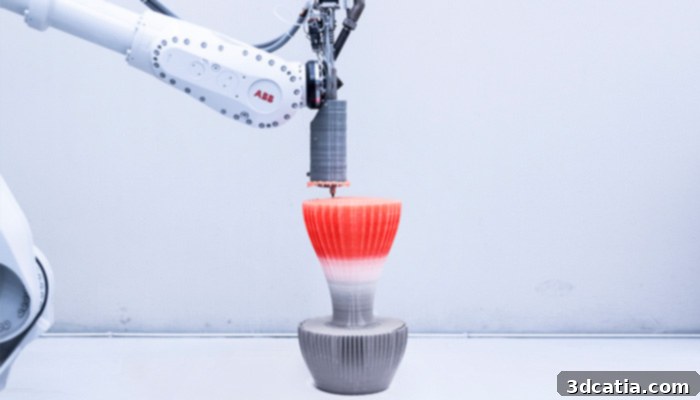
3D printing of Robotica TM, demonstrating additive manufacturing capabilities in action
Peeler: Daniel Widrig’s Minimalist Masterpiece
The latest creation in Nagami’s collection, *Peeler*, designed by Daniel Widrig, presents a striking contrast to the more colourful and flamboyant designs of its counterparts, yet it is equally impressive in its distinct, minimalist style. Widrig, known for his work in digital art and algorithmic design, brings a unique perspective to 3D printed furniture. The chair is crafted from a single block printed in black PLA, a widely used biodegradable plastic. What makes *Peeler* truly remarkable are its incredibly thin walls, measuring a mere 7 mm. This achieves a delicate, almost ethereal appearance, challenging perceptions of strength and stability in 3D printed objects. The use of black PLA enhances its sleek, monolithic presence, allowing its form and texture to take centre stage.
One of the most astonishing aspects of the *Peeler* chair is the efficiency of its production. Thanks to Nagami’s advanced large-scale robotic 3D printing technology, this complex, thin-walled chair was printed in just a few hours. This rapid fabrication time highlights a significant advantage of additive manufacturing: the ability to quickly translate digital designs into physical objects, drastically reducing production cycles and enabling rapid prototyping and iteration. Widrig’s design, characterized by its sharp lines and precise geometry, showcases how digital fabrication can achieve intricate details and structural integrity with minimal material. *Peeler* stands as a powerful example of how simplicity in colour and material can still convey profound sophistication and innovation, proving that impactful design isn’t always about exuberance, but often about precision and intelligent material use.
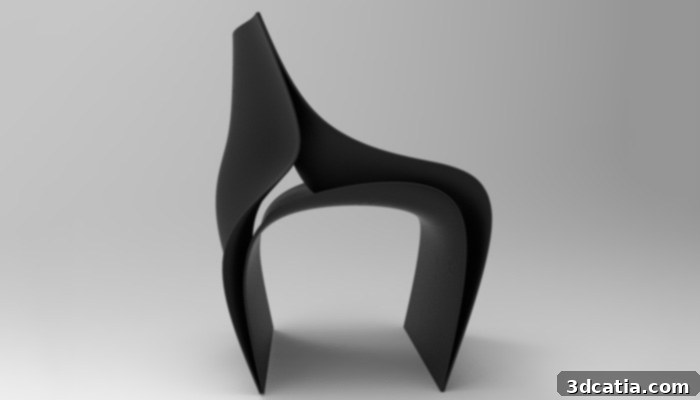
The Peeler stool, a testament to rapid large-scale 3D printing and minimalist aesthetic
The Broader Impact: 3D Printing in Architecture and Design
The “Brave New World” project, featuring these revolutionary 3D printed chairs, extends beyond mere furniture design. It serves as a powerful demonstration of the expansive potential of additive manufacturing, potentially joining the growing list of applications of 3D printing in architecture and large-scale structural elements. The ability to print complex geometries quickly and efficiently, using sustainable materials, opens up new avenues for building components, interior fixtures, and even entire structures. Nagami’s work underscores a paradigm shift where design is no longer constrained by the limitations of traditional manufacturing techniques, but rather empowered by the fluidity and precision of robotic fabrication. This paves the way for a future where customisation, material optimization, and ecological responsibility are central to the design and construction process, impacting everything from small consumer products to grand architectural visions.
The founders of Nagami—Manuel Jimenez Garcia, Miki Jimenez García, and Ignacio Viguera Ochoa—eloquently summarize their vision: “We design products that, until now, have been waiting for the right technology to support them. Not only objects that you can hold, but also that you can feel and experience fully in your environment.” This statement perfectly encapsulates the essence of their work: creating objects that are not just visually appealing but also deeply experiential, transforming how we interact with our immediate surroundings. Their approach champions a future where design is intrinsically linked with technological innovation, enabling the creation of bespoke pieces that are perfectly tailored to individual needs and aesthetic preferences, while simultaneously pushing the boundaries of what is structurally and environmentally viable.
Sustainability and the Future of Additive Manufacturing
The choice of biodegradable plastics, such as PLA, for these 3D printed chairs is not merely a design decision but a conscious step towards more sustainable manufacturing practices. Large-scale robotic 3D printing itself offers inherent environmental advantages, including reduced material waste due to its additive nature (only using material where it’s needed) and the potential for on-demand production, which can minimize overproduction and transportation costs. This approach signifies a move away from the traditional linear economy towards a more circular model, where materials can be reused, recycled, or biodegraded at the end of a product’s life cycle. By demonstrating the aesthetic and functional capabilities of sustainable materials and processes, Nagami is contributing significantly to the broader conversation about ecological responsibility in contemporary design and manufacturing.
Connecting with the Future of Design
Nagami’s groundbreaking presentation at the Milan Furniture Fair reinforces the idea that the future of furniture design is inextricably linked with advanced manufacturing technologies. These 3D printed chairs are more than just innovative products; they are conceptual statements about what is possible when human creativity merges with robotic precision and a commitment to sustainable practices. They represent a “brave new world” where design is agile, responsive, and constantly evolving, driven by the desire to create more beautiful, functional, and environmentally conscious objects for our living and working spaces. As technology continues to advance, we can anticipate even more astonishing creations that challenge our perceptions and enhance our environments in ways we are only just beginning to imagine.
What do you think of these revolutionary 3D printed chairs and Nagami’s vision for the future of design? We invite you to share your thoughts in a comment below or join the conversation on our Facebook and Twitter pages! Don’t miss out on the latest advancements in additive manufacturing—sign up for our free weekly Newsletter to get all the news in 3D printing straight to your inbox!