
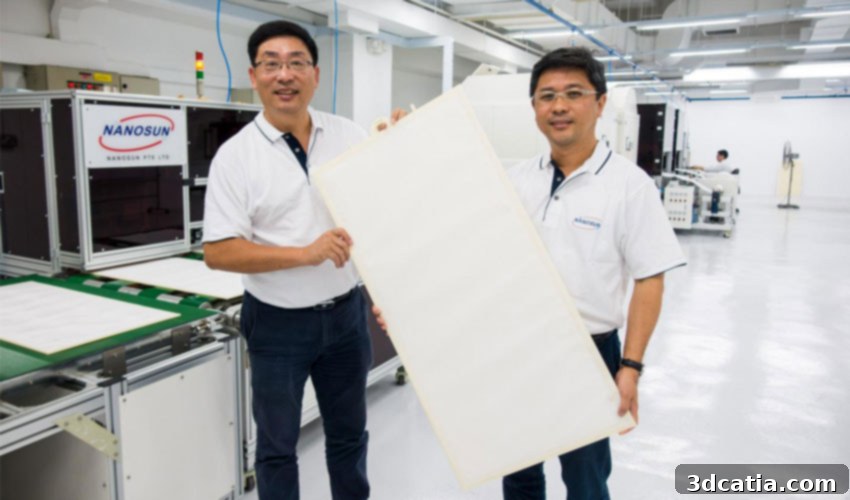
Nano Sun’s Revolutionary 3D Printed Membranes: A New Era for Sustainable Water Purification
In a world grappling with increasing water scarcity and pollution, innovative solutions are more critical than ever. Leading the charge in this vital domain is Nano Sun, an ambitious startup born from the scientific prowess of Nanyang Technological University (NTU) in Singapore. This pioneering company has recently inaugurated a state-of-the-art 3D printing plant dedicated to manufacturing advanced membranes for water filtration. These groundbreaking membranes represent a significant leap forward, boasting a filtration speed five times faster than their traditional polymer and ceramic counterparts. Nano Sun’s vision is clear: to make a profound and lasting impact on reducing global water pollution through cutting-edge additive manufacturing.
The convergence of 3D printing and ecological sustainability is rapidly gaining momentum, inspiring a multitude of initiatives aimed at fostering more environmentally responsible practices. From the creation of novel 3D materials derived from recycled waste and the intricate printing of coral reefs to aid ocean preservation, to the ingenious reuse of plastic waste for fabricating urban street furniture, additive manufacturing is proving to be a versatile tool for environmental stewardship. In this burgeoning landscape of eco-conscious innovation, Nano Sun stands at the forefront, leveraging the power of 3D printing to tackle one of humanity’s most pressing challenges: water pollution.
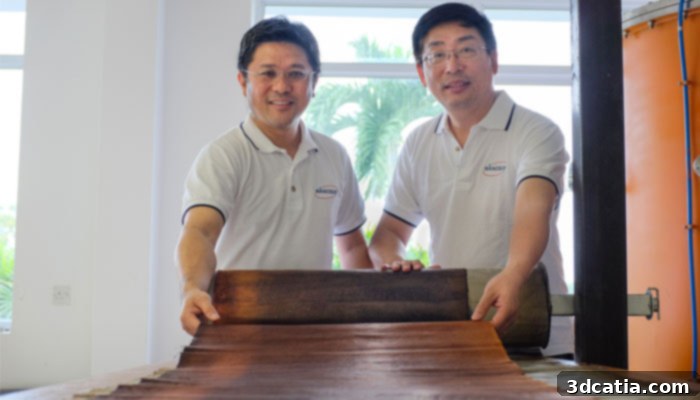
The Breakthrough Technology: 3D Printed Nanofiber Membranes
The conventional methods for producing water filter membranes are often complex and resource-intensive. Historically, these membranes, typically made from ceramic or various polymers, require a multi-step manufacturing process that frequently involves harsh acids to achieve the necessary porous structure. This traditional approach can span as many as thirteen distinct steps, consuming significant time, energy, and chemical inputs. Recognizing these inefficiencies, Nano Sun ingeniously pivoted to additive manufacturing, fundamentally transforming the production paradigm.
Nano Sun’s innovative process utilizes a proprietary 3D printing technique to create layers of nanofibers in a single, continuous operation. These incredibly fine layers, when precisely superimposed, compress to form an ultra-thin yet highly effective membrane. This method not only drastically streamlines the manufacturing pipeline but also minimizes the environmental footprint associated with traditional membrane production. By embracing 3D printing, Nano Sun has not only achieved unparalleled efficiency but also opened new avenues for designing membranes with superior performance characteristics.
Precision Engineering with PVDF Polymer
The core material for Nano Sun’s groundbreaking membranes is polyvinylidene fluoride (PVDF), a high-performance thermoplastic known for its excellent chemical resistance, thermal stability, and mechanical strength. Utilizing a specially developed, proprietary 3D printing machine, the startup is capable of generating millions of these nanofibers every second. To put their incredible fineness into perspective, these nanofibers are five times thinner than a single strand of human hair. This microscopic precision is crucial for the membranes’ exceptional filtration capabilities.
Once printed, these delicate nanofibers are meticulously compressed into an ultra-thin sheet. This advanced fabrication method dramatically increases the effective surface area of the membrane, providing an optimized structure to efficiently trap or repel pollutants while simultaneously allowing water molecules to pass through at an accelerated rate. The ability to precisely control the thickness and arrangement of these non-woven, superimposed fibers offers remarkable versatility. By fine-tuning these parameters, Nano Sun can engineer membranes for various applications, transforming them into highly effective microfiltration or ultrafiltration membranes, each tailored to specific purification needs. This level of customization ensures optimal performance across diverse water treatment scenarios, from industrial wastewater to potable water production.
Unlocking Efficiency and Sustainability in Water Treatment
The introduction of Nano Sun’s novel 3D printed membranes brings a cascade of transformative benefits to the water treatment industry. One of the most significant advantages is the potential to design and construct substantially smaller water treatment systems. This reduction in physical footprint directly translates to significantly lower infrastructure costs, making advanced water purification more accessible and economically viable for a wider range of communities and industries. The startup estimates that it would take merely four days to produce a sufficient quantity of these membranes to power a medium-sized water treatment plant, a testament to the unparalleled efficiency of their additive manufacturing process compared to traditional production lead times.
Beyond their compact size and rapid production, these 3D printed membranes also exhibit superior resilience and durability. They are notably more resistant to biofouling, a common and costly issue in traditional membrane systems where microorganisms accumulate and clog the filter pores, necessitating frequent cleaning and maintenance. The enhanced strength and biofouling resistance of Nano Sun’s membranes translate into reduced operational costs, less downtime for maintenance, and ultimately, greater profitability for water treatment facilities. This combination of efficiency, cost-effectiveness, and robust performance positions Nano Sun’s technology as a game-changer in the quest for sustainable water solutions.
The Vision of Automated Water Purification
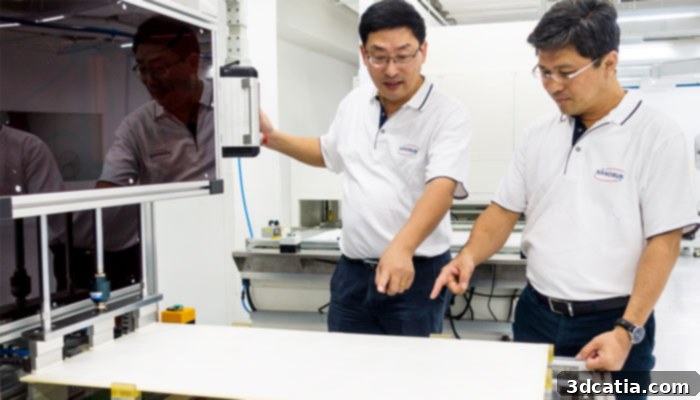
Professor Darren Sun, the visionary leader at the helm of the Nano Sun team, encapsulates the simplicity and power of their innovation with a compelling analogy. “Imagine a 3D printer that can print these membranes as easily as a Word document,” he explains. This comparison highlights the user-friendly and highly automated nature of their manufacturing process. The implications of such automation are profound: “The process requires 10 times less space and 30 times less labor compared to the production of traditional membranes. It’s also a fully automated process.”
This level of automation not only dramatically cuts down on operational overheads and labor requirements but also ensures consistency and quality in every membrane produced. The ability to manufacture high-performance membranes with such efficiency and minimal human intervention is a critical factor for scalability and widespread adoption. It signifies a paradigm shift from complex, manual processes to an intelligent, automated system that can meet the growing global demand for clean water with unprecedented speed and cost-effectiveness. The reduction in physical space needed for production facilities also offers significant advantages, particularly in urban areas or regions where land is at a premium.
Global Impact and Future Expansion
Nano Sun’s ambitious plans extend far beyond their Singaporean origins, with a clear roadmap for global expansion and significant environmental impact. The startup boasts an impressive production capacity, capable of printing up to 600 square meters of membrane every single day. To put this into perspective, this daily output is sufficient to purify vast quantities of water, serving the needs of numerous industrial processes or sizable communities.
The efficacy and reliability of Nano Sun’s technology have already attracted high-profile clients. Their initial clientele includes two major multinational semiconductor companies based in Singapore, industries known for their stringent requirements for ultra-pure water. Furthermore, a substantial wastewater treatment plant in China, designed to handle an astounding 20 million liters (approximately 5.28 million gallons) of water daily, is slated to integrate these advanced 3D printed membranes into its operations. These early adoptions underscore the versatility and robust performance of Nano Sun’s membranes across diverse applications, from high-tech manufacturing to large-scale municipal wastewater treatment.
Looking ahead, Nano Sun has outlined an aggressive three-year growth strategy. The company plans to significantly scale its workforce, expanding from its current 18 employees to a robust team of 80. Concurrently, it aims to broaden its operational footprint across key markets in Asia, specifically targeting China, Indonesia, and the Philippines. These regions face considerable challenges related to water scarcity and pollution, making them ideal landscapes for Nano Sun’s sustainable water purification technologies. By establishing a strong presence in these pivotal markets, Nano Sun is poised to make a substantial contribution to global water security and environmental health for years to come.
For more detailed information on Nano Sun’s foundational research and contributions, please visit Nanyang Technological University’s official website. You can also gain further insights into their innovative processes by watching the video below:
Join the Conversation on Water Innovation
What are your thoughts on Nano Sun’s groundbreaking 3D printed membranes for water filtration? Do you believe this technology holds the key to solving some of our most pressing water challenges? We invite you to share your insights and comments below, or engage with us on our social media platforms. Join the discussion on our Facebook and Twitter pages! And for all the latest developments in the exciting world of 3D printing, remember to sign up for our free weekly Newsletter, delivered directly to your inbox!