
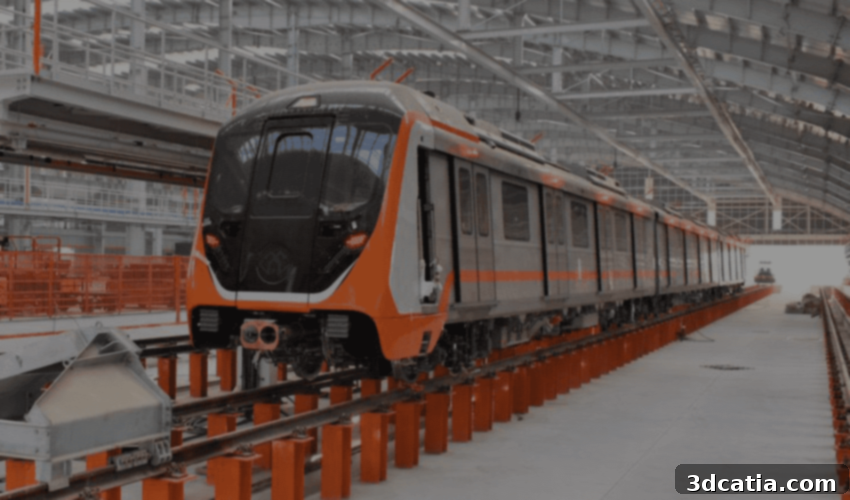
Large-Format Material Extrusion: Revolutionizing Manufacturing in Aerospace and Transportation
In the dynamic and demanding world of modern manufacturing, large-format material extrusion solutions have firmly established their dominance, confidently standing shoulder-to-shoulder with, and often surpassing, traditional production methods. These advanced additive manufacturing systems, once considered a niche technology, are now integral to addressing complex application challenges that conventional techniques have long struggled to resolve. As industries push the boundaries of design, efficiency, and performance, large-format 3D printing emerges as a critical enabler for innovation.
A new generation of manufacturing experts readily acknowledges the transformative power of material extrusion. With growing confidence and proven results, they are increasingly leveraging these systems to tackle intricate engineering problems. Consider the aerospace and transportation sectors, for instance. The relentless pursuit of cutting-edge designs has driven an exponential demand for components that are simultaneously intricate, exceptionally lightweight, and structurally robust. Traditional methods often falter under such stringent requirements, but large-format material extrusion steps forward, offering a paradigm shift in perspective and delivering truly innovative solutions.
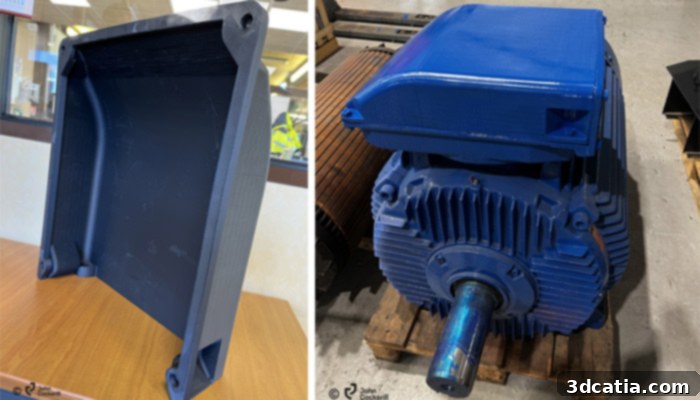
Large 3D printed pieces produced for machining applications (credits: John Crockerill)
For highly regulated sectors such as transportation and aerospace, unwavering efficiency and stringent safety are non-negotiable at every single stage of production. Simultaneously, weight reduction remains a critically important objective. Every single gram saved in an aircraft or train translates directly into tangible benefits: improved fuel efficiency, increased payload capacity, and significantly reduced operational costs over the lifespan of the vehicle. However, the challenge lies in harmonizing this imperative for lightweighting with the absolute necessity for safety. The answer has increasingly been industrial, large-format 3D printing, particularly when utilizing open-source engineering-grade materials. This approach has proven instrumental in meeting rigorous safety requirements and achieving essential certifications, especially for critical components like flame-retardant parts.
While conventional manufacturing methods undeniably possess their own merits and continue to serve various purposes, they frequently encounter limitations when confronted with the demands of highly intricate geometries and critical weight optimization. Material extrusion, conversely, thrives precisely in this challenging environment. By precisely layering thermoplastic materials, it enables the creation of parts that fundamentally redefine traditional manufacturing possibilities. These advanced components not only consistently meet the most stringent safety standards but also push the very boundaries of what is considered achievable in terms of design, functionality, and performance.
Consider the process of machining, for instance. Although it offers specific benefits, employing it to fabricate complex aluminum aircraft interior panels is not only exceedingly time-consuming but also inherently wasteful and expensive, as it necessitates the removal of significant amounts of material. Similarly, casting, another widely utilized traditional method, is more adept at producing complex shapes such as engine cowlings. However, casting presents its own set of disadvantages; achieving substantial weight reduction through this process is often difficult, and integrating specific flame-retardant properties is nearly impossible. Both of these limitations are highly restrictive for end-use parts in high-performance industries. This is precisely where additive manufacturing, and more specifically large-format material extrusion, steps in to offer a superior and often indispensable solution, bridging crucial gaps in production capabilities.
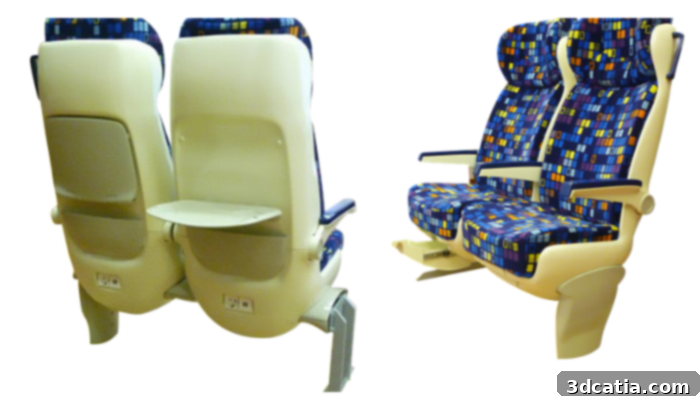
Credits: OMNI3D
Filling Production Gaps in Aerospace and Transportation With Large-Format 3D Printing
In the aerospace industry, where the minimization of weight is absolutely paramount, material extrusion truly shines as a game-changer. It facilitates the production of exceptionally lightweight components without any compromise on structural integrity or strength. From intricate ductwork systems that optimize airflow to customized cabin interiors that enhance passenger experience, these 3D-printed parts are fundamentally redefining the art of engineering. Similarly, within railway applications, material extrusion contributes significantly to fuel efficiency by reducing the overall weight of rolling stock while maintaining and even improving durability. Beyond this, it has consistently proven to be the preferred manufacturing method for low-volume production runs and for the rapid replacement of obsolete parts, thereby extending the operational life of critical infrastructure.
Large-format FDM (Fused Deposition Modeling) 3D printing, especially when employing advanced engineering materials, presents a remarkably cost-effective approach to creating lightweight, large-scale, and flame-retardant parts vital for these highly regulated industries. This efficacy stems from a multitude of inherent benefits offered by the technology. Chief among these are unparalleled in-house design flexibility and extensive customization capabilities, allowing for innovative geometries and functional integration. The ability to achieve significant lightweighting is another key advantage, realized through the strategic use of lighter materials combined with advanced topological optimization of part designs. Furthermore, the immense material versatility of FDM enables manufacturers to select from a broad spectrum of polymers tailored to specific performance requirements. Numerous real-world cases have already provided compelling evidence of these benefits in action, illustrating the transformative impact of the technology.
The aerospace sector offers a prime example of this transformative impact. Aviation titan Airbus embraced 3D printing to capitalize on its unique design flexibility, enabling the production of complex geometries and intricate designs that would be prohibitively difficult or even impossible to achieve with traditional manufacturing methods. This commitment was vividly demonstrated by their choice of material extrusion to create lightweight air ducts for their state-of-the-art A350 XWB aircraft. By optimizing internal flow channels, Airbus achieved both a substantial weight reduction and a notable improvement in aerodynamic performance, setting new benchmarks for efficiency and innovation.
Looking ahead, large-format 3D printing is poised to further simplify the creation of complex, large-scale end-use parts for a diverse range of applications, including high-speed trains, advanced aircraft, and even automotive components. However, its utility extends far beyond just end-use parts. FDM 3D printing is a versatile solution suitable for everything from rapid prototyping and rigorous testing in small batches to the crucial replacement of obsolete components. The latter application has proven particularly vital in the railway sector, where additive manufacturing is an ideal method for fabricating replacement parts for components that are no longer in production, or which no longer meet current stringent safety and operational requirements, thereby ensuring continued serviceability and compliance.
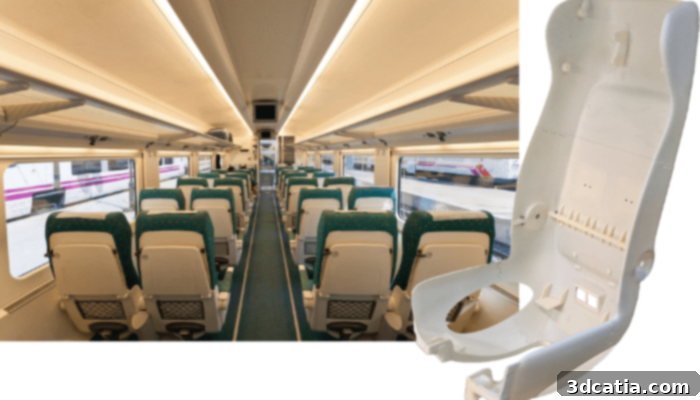
Credits: OMNI3D
Open Systems Pave the Way to Standardization and Certification
Despite the myriad advantages, for these critical industries, safety remains, as it rightly should, absolutely paramount. In this context, just any large-format 3D printing solution is insufficient. Instead, open systems are overwhelmingly positioned to pave the way for the widespread adoption of more end-use 3D printed parts across the transportation, aerospace, and automotive sectors. The ability to integrate and certify diverse materials is non-negotiable for safety-critical applications, making open platforms essential.
An open system, in the realm of additive manufacturing, refers to a platform where materials from a variety of manufacturers, beyond a single proprietary supplier, can be utilized. The primary benefit of this approach is, of course, the unparalleled flexibility it offers: the ability to print with a significantly wider and constantly evolving range of materials. This includes access to cutting-edge, newly developed materials, as well as those that have been specifically certified by regulatory bodies to meet the exacting safety standards of these industries. This open approach fosters innovation and ensures adaptability to future material advancements.
Certified materials are those that have undergone rigorous testing and received official approval from authoritative regulatory bodies. In aviation, these include organizations such as the FAA (Federal Aviation Administration) or EASA (European Union Aviation Safety Agency). For railways, national and European organizations oversee standardization and compliance with specific norms. Recently, there has been a significant surge in the development of additive manufacturing-compatible, certified materials, driven by specialized companies like Nanovia, whose expertise lies in creating safety-compliant materials specifically for the railway industry. As material innovation continues its rapid pace, open systems are not merely beneficial but necessary to future-proof FDM machines in these sectors, representing an excellent and strategic investment. Companies like Omni3D, a recognized trailblazer in large-scale, industrial FDM 3D printing, are well-known for their commitment to this open-system philosophy.
Through its pioneering open-source systems, Omni3D ensures that these transformative solutions secure their rightful and prominent place on the manufacturing floors of highly regulated markets. Whether it’s the rigorous demands of aerospace, the intricate requirements of the automotive sector, or the robust needs of rail transport, open-systems demonstrate remarkable adaptability. They seamlessly integrate with existing workflows and adhere meticulously to stringent safety regulations, such as norm NF EN 24424-2, which was specifically adopted to enhance the safety of railway passengers by establishing clear limits on fire-related risks. In this way, it is unequivocally clear that industrial FDM 3D printing, powered by open systems and certified materials, represents a fundamentally important technology set to drive significant advancements in these critical sectors for many years to come.
What are your thoughts on the increasing use of large-format material extrusion solutions for applications across transportation and aerospace? We invite you to share your insights in a comment below or join the discussion on our LinkedIn, Facebook, and Twitter pages! Don’t forget to sign up for our free weekly newsletter here to receive the latest 3D printing news directly to your inbox. You can also explore all our informative videos on our dedicated YouTube channel.