
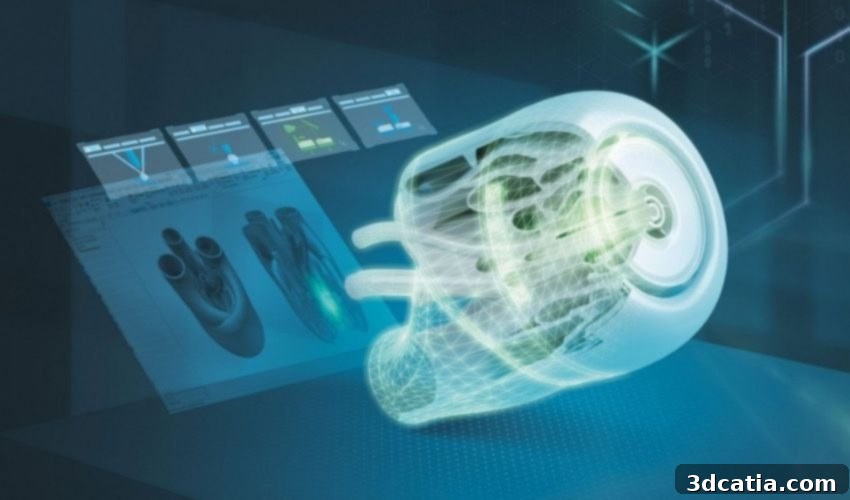
Machine Learning and Additive Manufacturing: Revolutionizing 3D Printing with AI
In an era defined by rapid technological advancement, digitalization and automation have become paramount for the sustained growth and evolution of additive manufacturing. Manufacturers globally are increasingly turning to sophisticated cloud-based solutions and integrating advanced algorithms into their 3D printing ecosystems to unlock the technology’s full potential. As an inherently digital process, 3D printing stands at the forefront of Industry 4.0, serving as a critical pillar in an age where artificial intelligence (AI), particularly machine learning, is progressively being leveraged to optimize every segment of the value chain. AI’s unparalleled ability to rapidly process vast quantities of complex data makes it an indispensable tool for informed decision-making. This article delves into the essence of machine learning, exploring its foundational principles and demonstrating how this transformative branch of AI is fundamentally shaping the future landscape of additive manufacturing.
Understanding Machine Learning: Foundations and Evolution
Machine Learning (ML) is a distinct subfield of artificial intelligence, characterized by systems and software that employ algorithms to analyze data, subsequently identify intricate patterns, and determine optimal solutions or make predictions without explicit programming. Contrary to popular misconception, machine learning is not a recent innovation. Its origins trace back to the 1940s, when pioneering researchers began to conceptualize and replicate the neural networks of the human brain using electrical circuits. A significant breakthrough occurred in 1957 with the creation of the Mark I Perceptron. This groundbreaking machine independently demonstrated the capacity to classify input data, crucially learning from errors made in previous attempts and iteratively refining its classification accuracy over time. This seminal achievement laid the groundwork, igniting a fervent fascination among researchers regarding the technology’s immense potential. Today, artificial intelligence, deeply intertwined with machine learning, permeates our daily lives, influencing everything from sophisticated speech recognition systems and intelligent chatbots to highly personalized medical treatment plans across a myriad of applications.
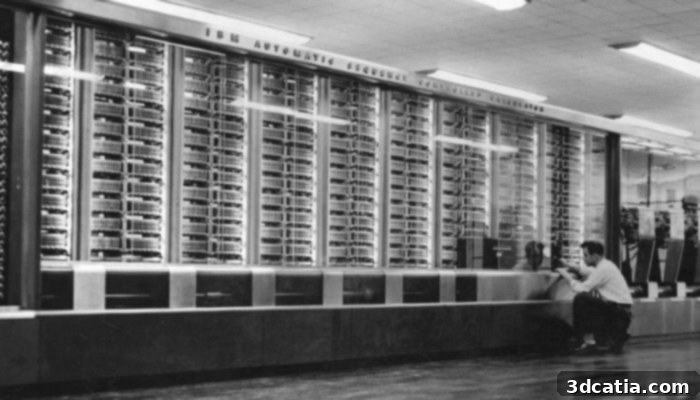
The Mark I Perceptron laid the foundation for machine learning.
Key Paradigms: Supervised, Unsupervised, and Beyond
Within the expansive domain of machine learning, it is crucial to recognize and differentiate between various methodologies and models, as not all approaches are designed for the same tasks. A primary distinction lies between supervised and unsupervised machine learning. In **Supervised Machine Learning**, the model is trained using a dataset that includes both categorized input data and corresponding target variables (output data). From these paired examples, the model learns a mapping function. Once trained, it can then analyze new, uncategorized data to accurately predict or determine its target variable. This form of machine learning is extensively utilized for predictive analytics, such as forecasting maintenance intervals for machinery or classifying emails as spam or legitimate. It thrives on having a clear, labeled dataset from which to learn relationships.
Conversely, **Unsupervised Machine Learning** operates from a different starting point. In this paradigm, the software is not provided with a predefined target variable or labeled output data. Instead, its objective is to independently identify inherent patterns, structures, or relationships within the input data, or to suggest solutions based purely on the data’s intrinsic characteristics. This type of machine learning is commonly applied in areas like marketing for identifying distinct customer segments through a process known as “clustering,” or for anomaly detection in cybersecurity. Beyond these two principal categories, other specialized forms of machine learning exist. **Semi-supervised learning** bridges the gap, utilizing a small amount of labeled data combined with a large volume of unlabeled data to train its model, often proving efficient where extensive labeling is impractical. **Reinforcement learning**, on the other hand, involves a system that learns through trial and error by interacting with an environment, receiving rewards or penalties based on predefined rules, thereby optimizing its behavior over time. The choice of the appropriate machine learning method is therefore contingent upon the nature of the raw data available and the specific objective or target variable an organization aims to achieve.
Transforming Additive Manufacturing with Machine Learning
As a fundamentally digital production process, additive manufacturing is uniquely positioned to capitalize on the robust capabilities of machine learning. The additive value chain generates and processes immense volumes of data, often in real-time, encompassing everything from initial design parameters to post-processing results. This rich data stream provides an invaluable foundation for analyzing current operational states (ACTUAL state) and subsequently redefining optimal targets (TARGET state). For companies, the crucial first step involves meticulously defining which data points are truly relevant, a decision intrinsically linked to the specific additive process being employed. Following this, the integration of suitable measurement tools for data capture is essential, paving the way for the selection and implementation of an appropriate machine learning model or algorithm for subsequent data collection and processing. It’s imperative to recognize that all stages along the additive value chain are interconnected; therefore, adopting an isolated perspective often proves suboptimal. For instance, the initial design choices profoundly influence the eventual component quality, just as desired quality standards can dictate specific design strategies. This holistic interdependency is why an increasing number of companies are striving to develop comprehensive software solutions that harness the power of artificial intelligence to optimize the additive manufacturing process end-to-end.
Pioneering Design with AI: Generative Design and Topology Optimization
Every 3D-printed component begins with a digital file, most frequently a CAD (Computer-Aided Design) file. This initial stage presents a significant opportunity for companies to leverage artificial intelligence. Modern software solutions extensively incorporate AI to assist users by suggesting intelligent design variations based on a set of predefined variables and performance objectives. This revolutionary process is widely recognized as generative design. Furthermore, machine learning plays a pivotal role in topology optimization, an advanced technique that optimizes material distribution within a given design space for a specific set of loads and boundary conditions. Many sophisticated software platforms also provide AI-driven recommendations regarding suitable production methods, optimal material selections, and efficient utilization of build volume. By intelligently automating and optimizing these critical design choices, businesses can achieve substantial cost savings, enhance production efficiency, and significantly improve the sustainability of their manufacturing operations.
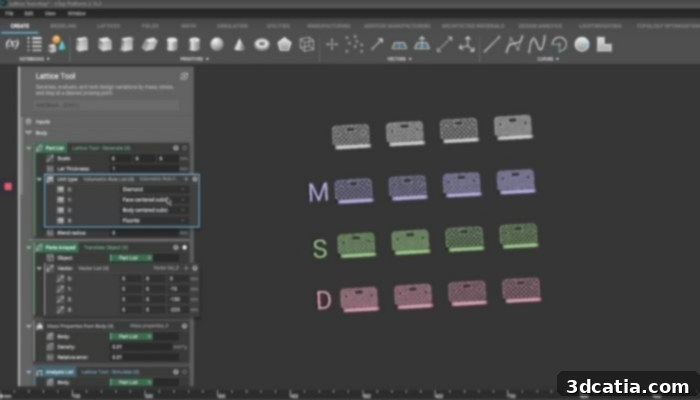
The simulation tool of nTop software proposes several variants of a lattice structure and ranks them based on weight and mechanical performance (photo credits: nTopology)
Ensuring Excellence: AI for Quality Assurance and Process Control in 3D Printing
Once the 3D printable file is optimized, the subsequent focus shifts to the 3D printing process itself, encompassing material quality and the ultimate component quality. Modern additive manufacturing machines increasingly feature integrated cameras and sensors that meticulously track the printing process in real-time. These advanced systems are capable of detecting anomalies, issuing alerts, or even autonomously halting the print if critical deviations occur. A fundamental prerequisite for effective quality assurance is a clear definition of what constitutes “quality” for a particular part during printing, which in turn informs the selection of necessary measurement values. Equally important is establishing the specific actions the machine should undertake when certain threshold values are met. Today, sophisticated algorithms are already capable of autonomously defining these parameters and continuously refining the underlying model based on previously collected data. A practical example vividly illustrates this capability.
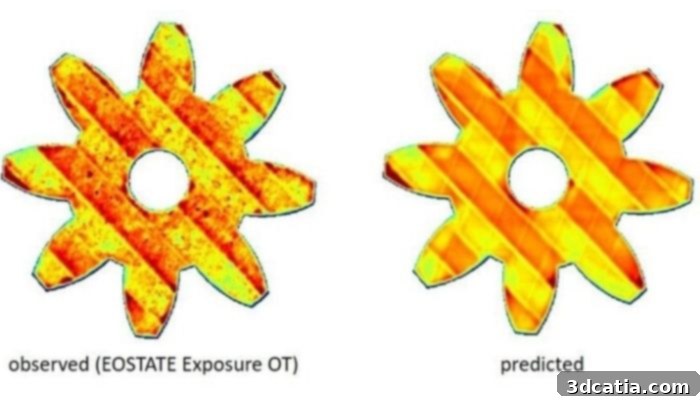
EOS, a pioneer in additive manufacturing, collaborated with NNAISENSE, a Swiss software provider, to develop a digital twin for the Direct Metal Laser Sintering (DMLS) process. During the printing operation, thermal images are captured from each printed layer using optical tomography (OT) and then instantaneously compared against an image predicted by the AI model. This real-time comparison enables the immediate detection of anomalies, allowing the printing process to be paused or stopped if necessary, thereby significantly reducing material waste and production costs. The self-supervised deep learning strategy developed by NNAISENSE represents a significant leap in in-situ monitoring. Siemens further emphasizes that integrating artificial intelligence and machine learning into quality assurance for additive manufacturing (AM) can drastically shorten the time from prototype to finished part and accelerate the efficiency of high-volume production. Siemens highly regards the camera systems integrated by EOS for monitoring individual print layers, as they can identify critical issues such as missing powder on parts (as shown on the left) or powder drops during recoating (as shown on the right) in real time, preventing defects before they propagate.
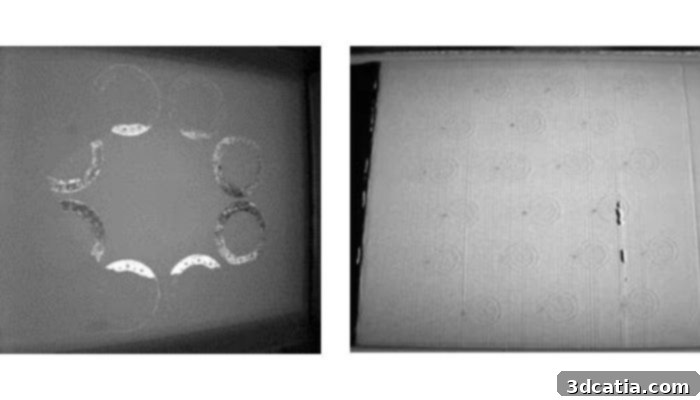
Left: Anomaly due to missing powder; Right: Error during recoating (photo credits: Siemens)
The quality of each powder coating layer is quantitatively recorded as a numerical “severity score” and evaluated automatically by the AI system. When this score reaches a predetermined critical threshold, it signals a potentially serious problem with the coating process, as exemplified by the issues depicted above. This advanced system significantly simplifies optical inspections, as human experts only need to intervene and evaluate layers that have been flagged as critical by the machine learning algorithm, vastly improving efficiency and throughput in quality control.
Expanding Horizons: Post-Processing, Predictive Maintenance, and Future Trends
Beyond design and in-process quality assurance, machine learning is extending its influence across various other facets of additive manufacturing. For instance, PostProcess Technologies’ AUTOMAT3D post-processing software actively monitors key process factors in real-time and responds autonomously to achieve the optimal surface finish for 3D-printed parts. This is achieved by leveraging vast datasets gleaned from hundreds of thousands of benchmark parts, allowing the system to learn and adapt. Furthermore, AI is increasingly being deployed to automate and optimize broader manufacturing workflows. Smart sensors embedded in critical components serve as the intelligent instrumentation for preventive maintenance, commonly referred to as “predictive maintenance.” These sensors, powered by machine learning algorithms, can analyze operational data to forecast equipment failures before they occur, enabling proactive interventions that minimize downtime and extend machine lifespan. The pervasive integration of machine learning into manufacturers’ production processes is an undeniable trend that is set to accelerate significantly in the coming years. Projections indicate that the global market for artificial intelligence and advanced machine learning is expected to reach an astounding $471.39 billion by 2028, growing at a robust Compound Annual Growth Rate (CAGR) of 35.2%.
In your opinion, what potential does machine learning hold for advancing additive manufacturing? Share your insights and perspectives in a comment below or join the conversation on our LinkedIn, Facebook, and Twitter pages! Don’t forget to subscribe to our free weekly Newsletter here to receive the latest 3D printing news directly in your inbox! You can also explore all our informative videos on our dedicated YouTube channel.
*Cover Photo Credits: Siemens