
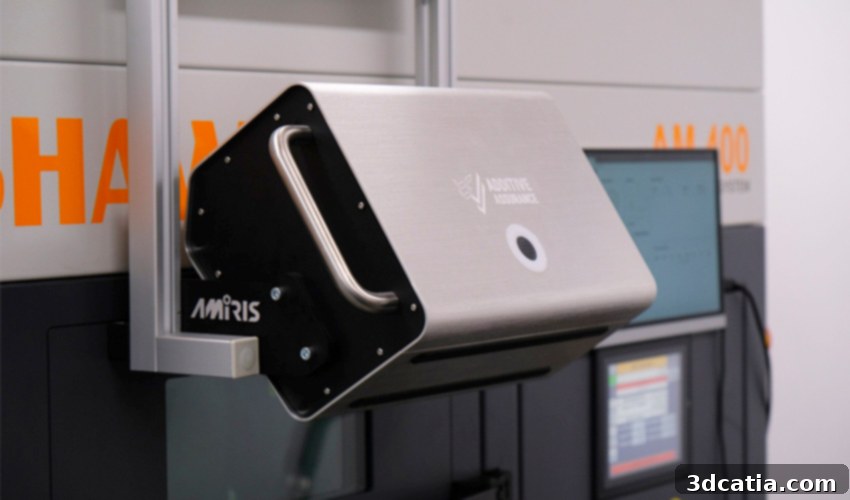
Revolutionizing Metal 3D Printing: Achieving Unprecedented Quality and Certification with Additive Assurance
Metal additive manufacturing, often referred to as metal 3D printing, has emerged as a transformative technology, empowering industries to fabricate complex and highly customized components with remarkable design freedom. From aerospace and defense to medical devices and high-performance automotive parts, its adoption is rapidly accelerating. However, unlocking the full potential of this advanced manufacturing method hinges on one critical factor: ensuring the unwavering quality, reliability, and performance of every printed part. This necessitates rigorous validation and certification processes, indispensable steps for mitigating defects, guaranteeing optimal functionality, and fostering widespread confidence among end-users. Robust certification frameworks not only confirm that components consistently meet stringent specifications and mechanical properties across diverse production batches but also instill trust in their long-term durability and performance, facilitating their seamless integration into demanding applications within the dynamic landscape of Industry 4.0. At the forefront of addressing these critical challenges is Additive Assurance, a pioneering company whose innovative AMiRIS solution is setting new benchmarks for quality control in metal additive manufacturing. To delve deeper into their groundbreaking work, we recently engaged with its visionary founders.
Addressing the Core Challenge of Metal Additive Manufacturing: Repeatability and Consistency
Marten Jurg, an accomplished additive manufacturing engineer and the CEO of Additive Assurance, alongside his co-founder Andrey Molotnikov, embarked on a mission over a decade ago to tackle what they identified as the most significant hurdle in the widespread adoption of 3D printing: achieving consistent part repeatability and uncompromising quality. Their journey began with extensive research and development projects for leading aerospace systems integrators, followed by critical assignments in other high-stakes sectors such as energy and medical devices. This rich experience solidified a fundamental conviction: while the ability to create intricate geometries is impressive, its value is nullified if those parts cannot be reliably certified for their intended use. The early focus of their research centered on understanding the fatigue properties of parts produced via Laser Powder Bed Fusion (L-PBF) for aerospace applications. They quickly observed that the stochastic, or unpredictable, nature of defects inherent in additive manufacturing processes could drastically reduce the design life of parts and severely limit the realization of AM’s true potential. This inherent variability translated into elevated production costs, lengthy qualification cycles, and ultimately, a significant barrier to mainstream industrial adoption. The realization dawned that if they could develop a method to ensure part consistency through precise, in-process inspection, they could dramatically reduce costs and unlock the path to large-scale, reliable production.
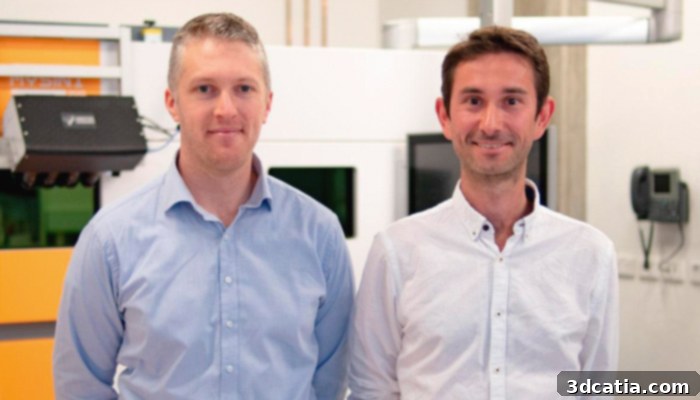
Additive Assurance co-founders Marten Jurg (left) and Andrey Molotnikov (right).
The Genesis of Additive Assurance: From Academic Research to Industrial Solution
Additive Assurance stands today as a leading provider of advanced quality assurance solutions specifically designed for metal L-PBF systems. The foundational concepts for the company were forged during Marten Jurg’s PhD studies with Andrey Molotnikov at Monash University. During this period, their work on the fatigue behavior of AM parts produced with L-PBF brought them face-to-face with the pervasive issues of inconsistency that plagued the process. Like many researchers and manufacturers at the time, they relied heavily on post-process CT scanning to identify defects within fabricated components. While effective, CT scanning proved to be agonizingly slow, prohibitively expensive, and a major bottleneck in the research and development pipeline. It only identified problems after significant time and material investment, often requiring parts to be scrapped or redesigned, leading to costly delays and rework.
The inherent inefficiencies and limitations of post-process inspection fueled their curiosity and led them to explore on-site, in-process monitoring techniques in 2016. They recognized the immense potential of observing melt emissions during the printing process – a rich stream of real-time data that could offer unprecedented insights into the build quality. However, existing monitoring systems presented their own set of challenges: an overwhelming volume of raw data that was difficult to store and manage, coupled with a severe lack of sophisticated analytical tools to interpret this data effectively. Through extensive experimentation with various detection modalities, they meticulously developed what would eventually become AMiRIS. This groundbreaking technique leverages high-resolution, long-exposure near-infrared monitoring, meticulously engineered to be easily adaptable to virtually any L-PBF machine. The resulting high-resolution meltpool images were exceptionally rich in detail, capturing minute process anomalies. Crucially, the format of this data allowed them to develop a sophisticated machine learning approach capable of accurately locating and classifying defects precisely where and when they occurred within the build chamber.
Beyond the technical hurdles, they also identified significant practical barriers with other commercially available solutions. These often suffered from excessive complexity, requiring substantial downtime for installation and configuration, which could void a machine’s manufacturer warranty. Moreover, end-users frequently found themselves overwhelmed by the sheer “mountains of information” these systems produced, lacking the tools and expertise to translate raw data into actionable insights. This led to additional problems like massive data storage requirements and the significant time investment needed to make sense of it all. Additive Assurance was founded with a clear vision to overcome these limitations, working closely with development partners and customers to create a user-friendly, effective, and seamlessly integrated solution.
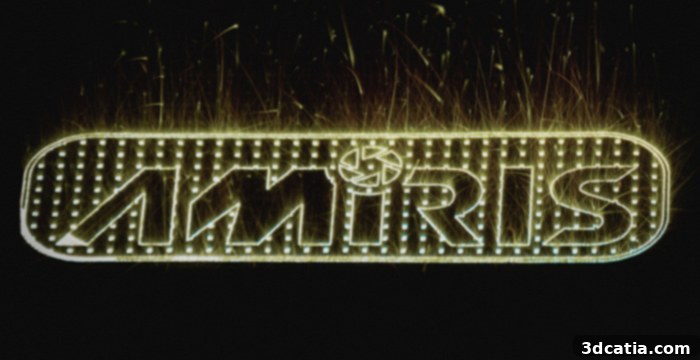
Photo Credits: Additive Assurance
AMiRIS: Intelligent In-Process Quality Control for L-PBF Systems
AMiRIS is Additive Assurance’s flagship quality control sensor suite, designed for universal compatibility with all L-PBF systems, irrespective of the machine supplier. Its core innovation lies in the synergistic combination of advanced near-infrared sensors with sophisticated machine learning techniques. This powerful integration enables AMiRIS to identify and pinpoint defects and anomalies with exceptional micron accuracy during the printing process itself. The intelligent ML models are meticulously trained to automatically locate and classify various types of faults, providing users with immediate and precise feedback. This capability allows manufacturers to proactively halt faulty constructions, thereby saving invaluable time, expensive materials, and significant financial resources that would otherwise be wasted on producing unusable parts. More critically, AMiRIS generates irrefutable proof of construction conformance, establishing a robust and traceable basis for comprehensive part certification – a non-negotiable requirement for critical applications.
The AMiRIS platform offers flexible deployment options, available both as a scalable cloud-based solution and as a local, on-premise installation. Sensing units are strategically installed across entire fleets of different L-PBF machines, meticulously capturing and transmitting critical data to a central server. Here, high-performance GPU compute instances leverage the power of machine learning to meticulously analyze the data, identifying and localizing defects and process inconsistencies with unparalleled precision. By centralizing all this vital information, AMiRIS empowers users to gain a holistic and complete picture of their entire additive manufacturing operations. This comprehensive oversight extends beyond simple defect detection, encompassing critical insights into machine productivity, identifying potential maintenance needs, and optimizing overall operational efficiency. The system’s analytics are finely tuned to merge diverse data streams into clear, actionable pass/fail criteria, which are fully customizable based on user-defined limits and specific application requirements. AMiRIS can detect a wide array of process deviations, including but not limited to machine failures, subtle laser scanning errors, significant geometric variations, coater interference issues, general process variations, and critical issues such as underfusion and overfusion. Designed with user convenience in mind, AMiRIS boasts easy installation, operates non-intrusively, and can be seamlessly integrated onto existing platforms without causing any interruption to ongoing production work or voiding manufacturer warranties.
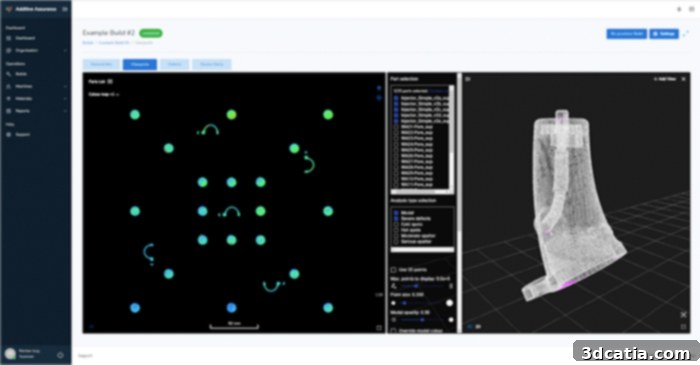
The AMiRIS cloud-based platform (photo credits: Additive Assurance)
Transformative Advantages and Strategic Market Focus
For the additive manufacturing industry to truly scale and fulfill its promise, increasing production capacity and enhancing productivity are absolutely paramount. Crucially, this expansion must occur without compromising the inherently high quality demands of advanced components. Additive Assurance has been diligently collaborating with leading organizations in highly regulated sectors such as aerospace, energy, and orthopedic device manufacturing. Their technology is not merely an inspection tool; it’s a productivity enhancer that simultaneously delivers the invaluable benefit of traceable quality documentation for every single part. This level of granular, verifiable quality control is a game-changer for industries where failure is not an option.
Historically, much of the industry has been forced to rely on laborious and expensive post-process inspections, such as CT scanning, to verify the integrity of L-PBF parts. This approach is inherently inefficient and costly. Imagine a scenario where a complex part undergoes months of intricate manufacturing, only for a post-process inspection to reveal critical defects, rendering the part unusable. The manufacturer then faces the daunting task of reprinting the same components, effectively doubling the production cost, extending lead times significantly, and causing immense operational headaches. AMiRIS fundamentally transforms this paradigm. By providing real-time visibility into part quality during production, it allows users to identify and address defects as they occur, preventing the manufacture of faulty components altogether. This proactive approach saves substantial time, money, and eliminates the frustrations typically associated with the post-processing phase, dramatically reducing scrap rates and rework. With Additive Assurance’s technology, end-users can confidently expect to boost their overall productivity, scale production operations more effectively, and significantly reduce material waste, contributing directly to a more sustainable and efficient manufacturing process.
Additive Assurance strategically targets regulated manufacturers across critical industries including aviation, commercial space, defense, medical, and transportation. These sectors, characterized by stringent regulatory oversight and zero-tolerance for failure, are where the verifiable quality and reliability offered by AMiRIS provide the most profound impact. Beyond these core markets, the company has also discovered valuable applications in a variety of other industrial sectors seeking to optimize their additive manufacturing workflows. Additive Assurance is continually seeking partnerships with forward-thinking experts and organizations globally who share their vision of propelling metal additive manufacturing into mainstream, high-volume production.
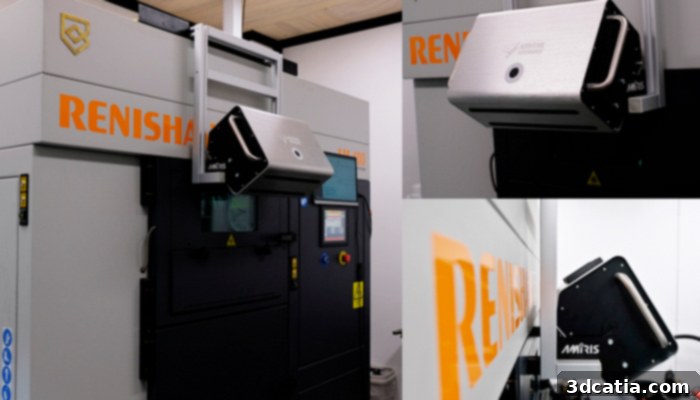
The AMiRIS sensor unit mounted on a Renishaw machine (photo credits: Additive Assurance).
The Future Landscape: Scaling, Integration, and Global Standards
Looking ahead, Additive Assurance, much like the broader advanced manufacturing industry, anticipates and is actively preparing for a significant surge in production capacity within additive manufacturing. As larger-scale printers become more prevalent and capable of producing an even greater volume of parts, the potential for critical defects to emerge will inevitably increase. This necessitates an even greater emphasis on robust, industry-focused, and regulated solutions for quality assurance. To meet this evolving demand, Additive Assurance is committed to fostering deep collaborations with leading machine manufacturers and software providers. The goal is to seamlessly integrate their cutting-edge AMiRIS technology into these fast-growing, high-throughput machines, thereby extending their service capabilities to more platforms in an increasing number of locations worldwide. Global expansion is a paramount priority, driven by the need to support a burgeoning international client base. As the company continues its trajectory of growth and diversification into new markets, building strong strategic alliances will be key to its success. Furthermore, Additive Assurance is actively seeking bright new talent to join their team, individuals who are passionate about leading innovation in this critical field and contributing to the elevation of global quality standards for additive manufacturing.
Embracing a New Era of Confidence in Additive Manufacturing
In recent years, the additive manufacturing industry has demonstrated a clear and determined willingness to assert itself as a truly viable and integral part of the global manufacturing landscape. For too long, the perceived lack of consistent quality and reliable certification acted as a significant obstacle to its widespread adoption, especially in safety-critical applications. However, with the advent of solutions like AMiRIS, that impediment is rapidly becoming a relic of the past. The era of advanced on-site control, intelligent analysis for precise certification, qualified assurance, and comprehensive reporting has not just arrived – it is here to redefine the future of additive manufacturing. Additive Assurance extends a warm invitation to forward-thinking companies, industry experts, and influential personalities to join them on this exciting journey, whether through collaborative partnerships or by becoming part of their esteemed advisory board. We now possess a truly viable and robust solution for certifying the quality of parts directly during production – this is a level of confidence and reliability that manufacturers can unequivocally depend on. For those eager to learn more about the pioneering work and solutions offered by the company, further information is readily available HERE.
What are your thoughts on the innovative quality assurance solution developed by Additive Assurance for metal 3D printing? Share your insights and opinions in a comment below or join the conversation on our LinkedIn, Facebook, and Twitter pages! Don’t forget to sign up for our free weekly newsletter here to receive the latest 3D printing news directly to your inbox. You can also explore all our informative videos on our YouTube channel.
*Cover Photo Credits: Additive Assurance