
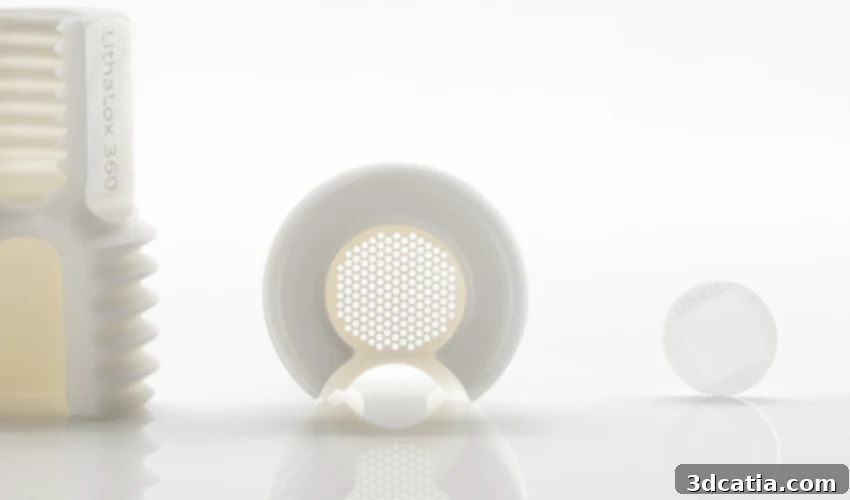
Revolutionizing Aerospace: The Power of High-Performance Ceramic 3D Printing
The aerospace sector stands at the forefront of technological advancement, continuously seeking new and sophisticated materials and processes to elevate product performance and reliability. With the introduction of increasingly rigorous requirements for durability, efficiency, and safety, the industry demands innovative technologies capable of providing robust and efficient solutions. In this demanding landscape, additive manufacturing, commonly known as 3D printing, is rapidly emerging as an ideal and transformative solution for a wide array of aerospace applications. A testament to its growing importance, a report by Research and Markets estimated the aerospace and defense market’s value for 3D printing at an impressive $1.9 billion in 2021, with an anticipated Compound Annual Growth Rate (CAGR) exceeding 24% from 2022 to 2027. These additive technologies are ushering in significant changes and offering profound advantages to the aerospace industry, including the production of lighter, stronger, and more geometrically complex parts, unparalleled design freedom, the ability to consolidate multiple components into a single, integrated unit, a substantial reduction in the waste of costly raw materials, and ultimately, enhanced cost and resource efficiency across the entire manufacturing lifecycle.
Among the innovative materials now accessible through advanced 3D printing techniques, ceramics are rapidly gaining traction and widespread success. These high-performance materials have consistently demonstrated the requisite properties to meet the industry’s exacting demands and the exceptionally high standards mandated in aerospace applications. Leading the charge in ceramic additive manufacturing is the Austrian company Lithoz, which has pioneered Lithography-based Ceramic Manufacturing (LCM) technology. This advanced technique enables the precise production of complex ceramic parts with exceptionally high resolutions and superior surface finishes. Lithoz’s remarkable achievement of doubling the sales of its ceramic 3D printing solutions and overall turnover in 2022 serves as a clear indicator of strong market interest and the increasing adoption of this technology across diverse high-tech industries, most notably in the critical medical and aerospace sectors. This surge highlights the growing recognition of ceramic additive manufacturing’s potential to deliver components with performance characteristics previously considered unattainable.
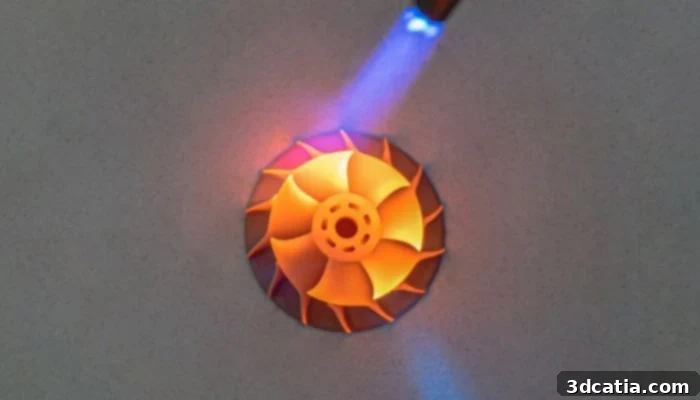
A 3D printed ceramic part showcasing intricate design possibilities.
The Unrivaled Benefits of Advanced Ceramics in Aerospace Applications
Further emphasizing the significance of this material, the research report titled “3D Printing Ceramics 2022-2032: Technology and Market Outlook” underscores the substantial growth of the ceramic 3D printing market, projected to reach an impressive $400 million by 2023. According to the report, the aerospace, defense, dental, and chemical engineering industries exhibit the highest interest in ceramic manufacturing, particularly for the precise production of small-batch, high-value parts. Ceramics have garnered significant attention from the aerospace industry due to their truly exceptional properties. These include outstanding resistance to extreme heat, aggressive oxidation, and severe abrasion, combined with superior mechanical strength and remarkable dimensional stability even under the most challenging operational conditions. These inherent characteristics make advanced ceramics extraordinarily efficient and perfectly suited for deployment in extreme environments, positioning them as an ideal material for the construction of next-generation spacecraft, especially for critical components exposed to immense thermal and mechanical stresses.
The materials we often refer to in this context are “advanced ceramic materials” or “technical ceramics,” which possess a unique combination of properties such as ultra-high strength, unparalleled corrosion resistance, and excellent thermal and electrical insulation capabilities. Some of the most notable and widely utilized advanced ceramics include aluminum oxide (Al2O3), silicon nitride (Si3N4), silicon carbide (SiC), and zirconia (ZrO2). Through the revolutionary capabilities of 3D printing, even Ultra-High Temperature Ceramics (UHTCs) can now be processed. These materials boast extraordinary properties, such as extreme melting points and superior hardness, making them incredibly sought after for cutting-edge applications in the aerospace industry, including hypersonic vehicles, rocket nozzles, and re-entry shields where traditional materials fail to perform.
The superior performance of ceramics has even led to their strategic replacement of some traditional materials, such as specific metal alloys, which were once exclusively used in various aerospace applications. While metals undeniably remain crucial for many structural components, their suitability is increasingly being re-evaluated for certain high-stress, high-temperature, or wear-intensive applications. The critical need to engineer more efficient space thrusters, significantly reduce the generation of space debris through enhanced component longevity, or develop more precise and geometrically complex aviation foundry cores has intensified the search for superior alternative materials. Ceramics now offer highly practical and effective solutions to these pervasive problems. Their inherent wear resistance ensures a significantly slower rate of degradation compared to many metallic counterparts, thus extending component lifespan and reducing maintenance requirements. Furthermore, when combined with the unparalleled design freedom afforded by additive manufacturing, ceramics enable the creation of extraordinarily detailed, lightweight, and functionally optimized parts that are often impossible to produce with conventional metal manufacturing techniques, pushing the boundaries of what is achievable in aerospace design.
Given these substantial advantages, ceramic 3D printing holds immense and transformative potential for the aerospace industry. This potential is vividly evidenced by numerous real-world applications of Lithoz’s advanced LCM technology. A prime example that powerfully demonstrates the exceptional capabilities of advanced ceramics is the 3D printed aerospike engine nozzle, meticulously fabricated from high-performance silicon nitride by Lithoz. This cutting-edge nozzle successfully passed all stringent stress tests, definitively proving its remarkable ability to withstand significant thermal shocks, even when subjected to astonishingly high temperatures exceeding 1200 °C. Such extraordinary performance is critical for next-generation rocket propulsion systems and re-entry vehicles, highlighting the pivotal and evolving role of ceramics in future aerospace endeavors.
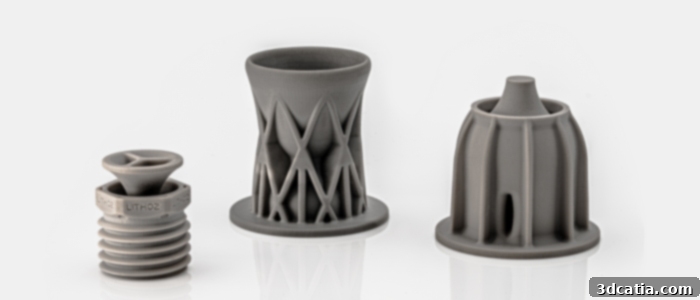
The 3D printed aerospike engine nozzle, engineered for extreme conditions.
Achieving High Resolution and Intricate Geometries with LCM Technology
In the highly specialized ceramic industry, especially for critical aerospace components, precision and accuracy are absolutely paramount. A single, minute defect can potentially lead to the complete failure of a part, thereby compromising the entire application. It is precisely this unwavering commitment to endurance and precision that formed the foundational values upon which Lithoz was established. Over more than a decade of dedicated research and development, the company has meticulously refined its proprietary Lithography-based Ceramic Manufacturing (LCM) technology, achieving an impressive zero-tolerance for error throughout its complex manufacturing processes. This relentless pursuit of perfection ensures the consistent reliability and optimal performance demanded by the most critical aerospace parts, where failure is not an option.
Lithoz’s groundbreaking LCM technology is founded on the principles of photopolymerization. The process initiates within the CeraFab 3D printer, where a carefully prepared ceramic-loaded liquid suspension, commonly referred to as a slurry, is precisely dispensed into a transparent vat. A specialized printing plate then moves incrementally from top to bottom as each layer of the slurry is selectively exposed to high-intensity blue light originating from beneath the vat. Employing a sophisticated digital micro-mirror device (DMD) in conjunction with a state-of-the-art projection system, a layered image is meticulously projected onto the slurry. This light selectively polymerizes the photosensitive binder present in the ceramic slurry, causing it to solidify layer by layer and progressively build a “green” object with the desired geometry. Following this primary printing phase, the process requires crucial thermal post-processing steps. These involve a controlled debinding stage to meticulously remove the polymeric binder, followed by a high-temperature sintering process for the ceramic components. This final stage yields fully dense, remarkably strong, and exceptionally durable ceramic components with optimized material properties, ready for their demanding applications.
A significant and unique advantage inherent to this LCM procedure is the simultaneous exposure of the entire surface area of each layer. This innovative approach ensures a consistent and accurate cure across the entire build platform, effectively achieving zero tolerance for dimensional variations, irrespective of where a part is positioned on the platform. This unparalleled precision in light exposure is what fundamentally enables the creation of extraordinarily complex microstructures, ultra-fine features, and intricate internal geometries that are often unattainable through other additive or conventional manufacturing methods. Such advanced capabilities are absolutely vital for optimizing the performance of aerospace components, where even micron-level accuracy can translate into critical functional benefits, impacting everything from weight reduction to aerodynamic efficiency.
Lithoz currently offers an impressive portfolio of eight distinct 3D printing solutions on the market, each a variation of the versatile CeraFab machine, and each meticulously engineered with its own particular strength to cater to diverse industrial requirements. For instance, the CeraFab S25 has been specifically designed to achieve exceptionally high resolutions, down to a remarkable 25µm, making it perfectly suited for the fabrication of micro-components and intricate structural details. Importantly, Lithoz’s technology is no longer confined to small-batch prototyping but is increasingly being adopted for large-scale serial production. A notable example is Steinbach AG, which successfully utilized Lithoz’s CeraFab System solution for the mass production of complex surgical tubes. The intricate design and demanding functional requirements of these tubes necessitated the use of additive manufacturing, from initial prototyping through to final serial production. Steinbach AG was able to produce an impressive 12,000 parts per year, unequivocally demonstrating the effectiveness and scalability of ceramic additive manufacturing for high-volume production, even at a serial level, thereby significantly expanding its reach beyond niche and specialized applications.
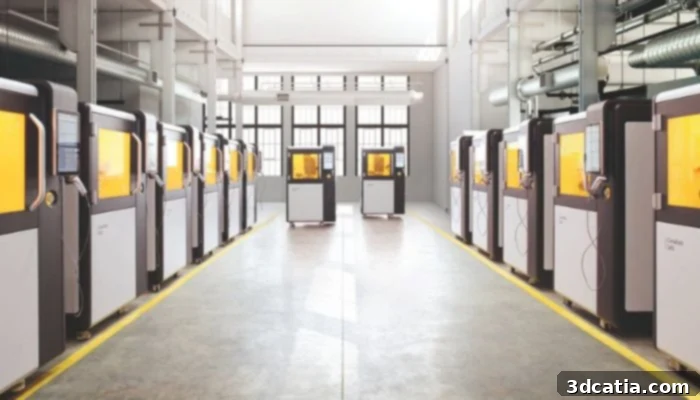
A selection of Lithoz’s CeraFab 3D printing range, engineered for precision ceramic manufacturing.
Achieving Aerospace-Optimized Structures with Ceramic 3D Printing
As previously emphasized, one of the most compelling advantages of deploying ceramic 3D printing in the aerospace sector stems from its unique capability to synergistically combine the superior intrinsic properties of advanced ceramics with the unparalleled design flexibility inherent in additive manufacturing. The power to precisely tailor the design of a component, to intricately modify its internal structure, and even to seamlessly integrate specific functionalities into a single, complex part is a highly coveted feature among industry players when tasked with producing high-performance, critical aerospace components. This innovative approach allows engineers to create previously impossible geometries, leading to enhanced aerodynamic performance, significant weight reduction, and a substantial improvement in overall system efficiency and reliability.
A compelling and practical illustration of this transformative capability is the creation of highly specialized Radio Frequency (RF) filters specifically engineered for demanding aerospace applications. RF filters are indispensable electronic circuits that play a critical role in enhancing signal quality and minimizing unwanted interference across various sophisticated communication systems, including satellite communication networks, radar systems, and advanced avionics. Ceramic 3D printing empowers engineers to design and produce highly engineered resonators with an extensive array of complex shapes, orders, and bandwidths. Crucially, these complex resonators can be seamlessly integrated into a single, compact component, leading to significantly optimized electrical performance, enhanced reliability, and superior durability – all vital attributes for aerospace-grade electronics operating under extreme conditions.
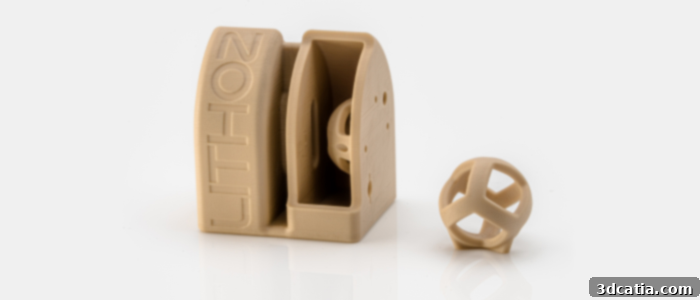
On the left, an RF filter and, on the right, a 3D-printed ceramic resonator. The resonator can be produced in various sizes and complexities.
The deliberate choice to 3D print these critical RF filters using advanced ceramics is driven by several compelling engineering reasons. In the aerospace industry, RF filters are fundamental to ensuring reliable and accurate communications, particularly within high-frequency bands where signal integrity is paramount. Given the incredibly harsh environmental conditions these components must endure – ranging from extreme temperature fluctuations, high-g forces, and intense radiation – these filters must not only be exceptionally high-performing but also meet the most stringent reliability and performance requirements. The desirable material properties inherent to ceramics make them uniquely suited to meet these formidable challenges. Their low loss tangent and high dielectric constant are critical for superior electrical performance, while their exceptional thermal stability ensures consistent operation across vast temperature ranges without degradation. Furthermore, ceramic 3D printing readily facilitates the miniaturization of these filters, directly contributing to a significant reduction in overall system weight – an absolutely crucial factor in every aerospace application where even a few grams can yield considerable benefits. Beyond this, ceramic filters demonstrate exceptional stability over both temperature and time, guaranteeing reliable and consistent performance throughout the extended operational lifespan expected of aerospace components, thus minimizing failure risks and crucial maintenance needs.
Unprecedented Control Over Microstructure in Ceramic Components
Lithoz ceramic 3D printing solutions offer a truly remarkable and distinct advantage for the most complex and demanding aerospace applications: the ability to achieve unprecedented, precise control over a material’s microstructure and porosity. This granular level of control represents a significant limitation for virtually all other additive manufacturing (AM) techniques and conventional manufacturing processes currently available. With Lithoz’s advanced LCM technology, the scope of possibilities expands even further, enabling sophisticated multi-material 3D printing and the innovative creation of functionally-graded ceramics through its cutting-edge two-vat system. This dual-vat setup, especially in the newly developed multi-material LCM printer configuration, allows for more than just assigning one material to any desired layer. It also permits the strategic use of different materials within a single layer by precisely assigning respective materials to selected pixels of the layer image. This unparalleled, granular control at the pixel level opens up an entirely new realm of advanced material engineering.
As a compelling example of this advanced capability, Lithoz, in a strategic collaboration with Fraunhofer IGD, successfully created highly complex parts from aluminum oxide that featured a precisely defined gradient of density, transitioning smoothly from dense to porous regions within a single, monolithic component. This groundbreaking capability is profoundly relevant for a wide array of high-value applications in the aerospace industry, particularly for the 3D printing of complex catalysts, specialized thermal management systems, and advanced filtration media, among other possibilities. For aerospace catalysts, being able to precisely control porosity and surface area within a part can dramatically improve reaction efficiency and reduce emissions. For advanced thermal systems, graded porosity can create highly efficient heat exchangers or insulators that adapt to varying thermal loads. This precision in microstructural engineering is a genuine game-changer for designing aerospace components with tailored properties for specific functional requirements, pushing the very boundaries of material science and application performance to new heights.
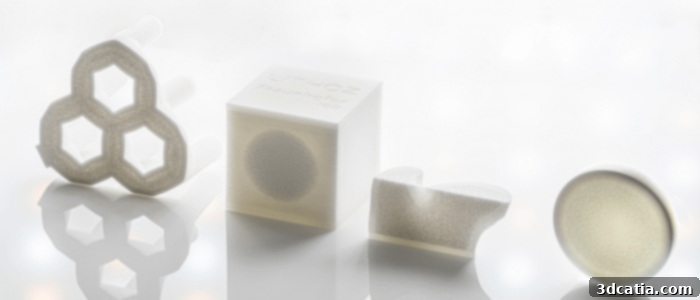
Demonstration parts showcasing a dense to porous gradation, applicable in fields such as aerospace catalysts, filters, or biomimetic bone structures.
In conclusion, by strategically leveraging the transformative power of additive manufacturing to enhance the intrinsic properties of ceramic components, it becomes possible to dramatically increase their geometric complexity and, in turn, significantly improve their overall functional efficiency. This innovative approach not only yields superior, high-performance components but also unlocks entirely new avenues for pioneering research and development within the aerospace industry. With Lithoz LCM technology, engineers can achieve higher complexity and unparalleled resolution compared to other processes currently available on the market. This makes it an ideal, indeed perfect, match for meeting the ever-increasing and highly demanding requirements for intricate geometries and exceptional performance that characterize advanced aerospace components. The powerful synergy between high-performance ceramics and advanced additive manufacturing promises to drive the next generation of aerospace innovation, delivering solutions that are lighter, stronger, more efficient, and more reliable than ever before, truly revolutionizing how we design and build for space. You can find out more about Lithoz and its transformative technology HERE.
What are your thoughts on the revolutionary use of ceramic 3D printing for aerospace parts? We invite you to share your insights in a comment below or join the ongoing conversation on ourLinkedIn,Facebook, andTwitter pages! Don’t forget to sign up for our free weeklyNewsletter here to receive the latest 3D printing news directly to your inbox! You can also explore all our informative videos on ourYouTube channel.
*All Photo Credits: Lithoz